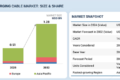
The Switzerland vaccines market is a sophisticated and robust sector integrated within one of the world’s leading pharmaceutical hubs, characterized by record-high revenues and a strong emphasis on research and development. The landscape is defined by a decentralized yet highly efficient healthcare infrastructure that relies on a unique model of international collaboration and significant private capital investment, which reached over CHF 1.15 billion for biotech firms in 2025. While the market has historically seen high stability and trust in immunization programs, it is currently navigating a digital transformation aimed at establishing national registries and interoperable databases to improve surveillance. Despite being a relatively small market with a population of nine million, Switzerland maintains a prioritised global position through early procurement strategies, a streamlined regulatory environment led by Swissmedic, and a growing focus on innovative modalities such as therapeutic proteins and cell therapies, ensuring it remains a competitive and responsive environment for vaccine commercialization.
Key Drivers, Restraints, Opportunities, and Challenges in the Switzerland Vaccines Market
The Switzerland vaccines market is primarily driven by a robust healthcare infrastructure, high per capita GDP, and a strategic government focus on promoting long-term research, development, and production capabilities to enhance pandemic preparedness. Technological advancements, particularly in mRNA platforms and digital surveillance for tracking immunization coverage, further propel growth. However, the market faces significant restraints, including high manufacturing and development costs, a high break-even point for new entrants, and the dual burden of navigating stringent Swissmedic authorizations alongside alignment with Federal Office of Public Health (FOPH) schedule recommendations. Opportunities are emerging in the rise of therapeutic vaccines for oncology and chronic infections, the digital transformation of vaccination registries, and the expansion of the foot-and-mouth disease (FMD) vaccine segment for livestock. Challenges include managing complex, high-integrity cold-chain logistics, addressing stagnating public confidence and vaccine hesitancy fueled by misinformation, and overcoming regulatory delays that can hinder timely access to innovative therapies compared to other high-performance markets.
Customer Segmentation, Needs, Preferences, and Buying Behavior in the Switzerland Vaccines Market
The target customers for the Switzerland vaccines market include the federal and cantonal governments, healthcare providers such as physicians and pharmacists, commercial livestock farms, and individual citizens. Institutional buyers, particularly the government, dominate the market through large-scale procurement and tender supply models for national vaccination strategies, prioritizing high-quality, transparent data and vaccine efficacy to maintain public trust and achieve herd immunity targets. Commercial livestock farms and veterinary centers represent a significant segment with a preference for intramuscular and liquid formulations to manage animal health. Individual consumers in Switzerland value autonomy and the right to information, with purchasing behaviors heavily influenced by physician recommendations and an increasing shift toward the convenience of pharmacy-based administration. Across all segments, customers prioritize safety and reliable access to both baseline vaccines for public health and complementary vaccines for personalized protection, often relying on long-term partnerships with major pharmaceutical players and innovative biotech firms.
Regulatory, Technological, and Economic Factors Impacting the Switzerland Vaccines Market
The Switzerland vaccines market is significantly influenced by a complex interplay of regulatory, technological, and economic factors. Regulated by Swissmedic under the Therapeutic Products Act, the market is characterized by high compliance standards that align with EU regulations, which can pose high entry barriers but ensure quality and safety. Technologically, the integration of digital tools like electronic immunization registries and the development of cutting-edge mRNA and viral vector platforms are driving market expansion by enhancing surveillance and diagnostic accuracy. Economically, while Switzerland’s high GDP per capita and substantial healthcare spending sustain high demand, the market faces challenges such as the immense capital investment required for advanced manufacturing and high R&D costs. Furthermore, while the pharmaceutical sector is a primary economic engine, contributing nearly 10% to the national GDP, the substantial costs of clinical trials and the relatively small size of the domestic market can restrain the profitability and rapid expansion of new entrants.
Current and Emerging Trends in the Switzerland Vaccines Market
The Switzerland vaccines market is undergoing a significant transformation driven by the digital overhaul of vaccination surveillance and a strategic pivot toward advanced manufacturing capabilities. Current trends include the integration of interoperable digital immunization registries and the expansion of vaccine recommendations, such as the 2024 amendment lowering the Tick-Borne Encephalitis vaccination age. These developments are evolving rapidly, as evidenced by the government’s 2025 target to increase HPV vaccine coverage to 90% and the growing role of specialized biomanufacturing as a national competitive differentiator. Furthermore, emerging focus areas like mRNA technology and peptide-based vaccines are reshaping the landscape, supported by Switzerland’s robust translational infrastructure and its position as a global hub for biologics exports and international biotech partnerships.
Technological Innovations and Disruption Potential in the Switzerland Vaccines Market
Technological innovations in the Switzerland vaccines market are increasingly focused on advanced platforms and digital integration to enhance efficacy and supply chain resilience. The adoption of mRNA technology remains a cornerstone of the industry, while emerging platforms such as protein-based immunization, peptide-based vaccines, and the use of virosomes for targeted delivery are gaining significant traction. Additionally, the integration of viral vector manufacturing and precision prevention for neurodegenerative diseases is expanding the therapeutic scope of the market. Beyond drug development, the industry is being disrupted by the application of AI and PK/PD modeling to accelerate clinical timelines, alongside the optimization of vaccine supply chains through geospatial mapping and real-time monitoring to improve national distribution and emergency response capabilities.
Short-Term vs. Long-Term Trends in the Switzerland Vaccines Market
In the Switzerland vaccines market, the massive surge in COVID-19 vaccination volumes and the emergency logistics response of 2021 are increasingly viewed as short-term phenomena that have now stabilized, whereas several other trends represent long-term structural shifts. A fundamental transformation is occurring through the government’s strategic push to increase vaccination coverage rates (VCRs) to 90% by 2030, particularly for HPV, which is driven by the long-term goal of generating significant societal and fiscal returns through averted healthcare costs. Similarly, the integration of advanced biopharmaceutical research and domestic manufacturing capabilities remains a permanent structural pillar of the Swiss economy, ensuring supply chain resilience for routine and complementary immunizations. Other enduring shifts include the transition toward technologically advanced nonavalent and conjugate vaccines, as well as the expansion of adult immunization programs covered by insurance, which are fueled by an aging population and a robust, high-performing healthcare infrastructure.