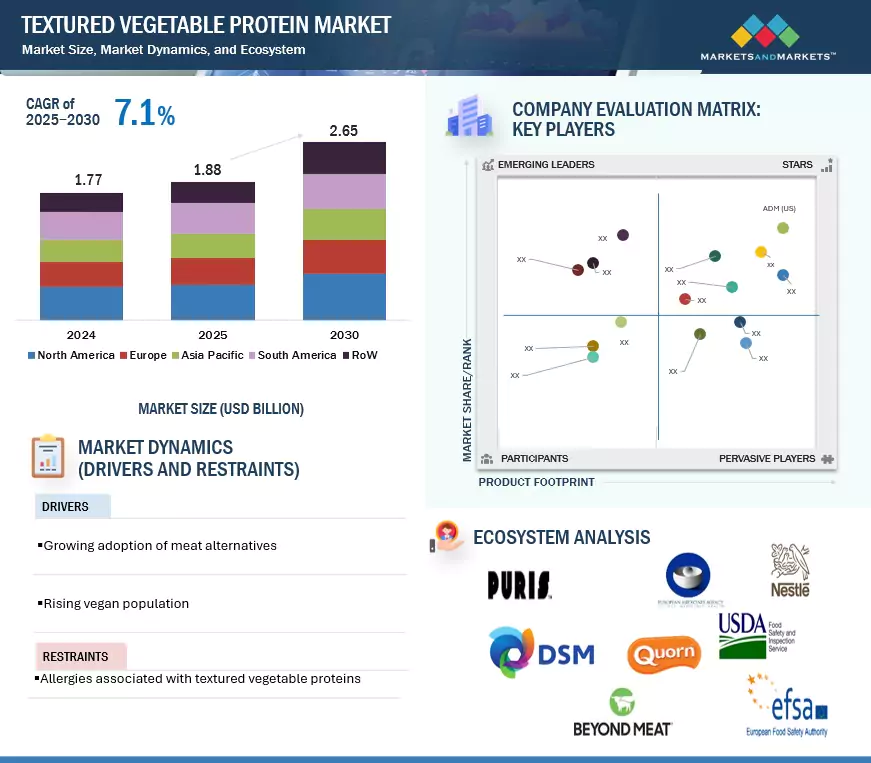
The global textured vegetable protein market is on a strong growth trajectory, projected to increase from USD 1.88 billion in 2025 to USD 2.65 billion by 2030, registering a CAGR of 7.1% during the forecast period.
As consumer preferences continue to shift toward healthier, more sustainable, and plant-based diets, TVP is emerging as one of the most dynamic food sectors worldwide.
What is Textured Vegetable Protein (TVP)?
Textured vegetable protein is primarily derived from soybeans, peas, and wheat. Known for its versatility, texture, and ability to mimic the taste and texture of meat, TVP is a cost-effective, protein-rich, and nutritious alternative. It is widely used in:
- Meat analogs and substitutes
- Ready-to-eat meals
- Bakery products
- Snacks
- Processed food applications
Its texture and mouthfeel make it a leading contender in plant-based proteins, bridging the gap for flexitarian and vegetarian consumers.
Download PDF Brochure: https://www.marketsandmarkets.com/pdfdownloadNew.asp?id=264440297
Key Market Drivers:
The textured vegetable protein market dynamics are shaped by several factors:
- Rising adoption of vegan and vegetarian diets across all demographics.
- Advancements in food processing technologies, making TVP more appealing.
- Increasing demand for sustainable, allergen-free proteins.
- Health, ethical, and environmental considerations, particularly in emerging economies.
This combination is fueling widespread adoption and positioning TVP as a cornerstone of future food systems.
Organic TVP: A Premium Growth Area
Organic textured vegetable protein, produced without GMOs, synthetic fertilizers, or pesticides, is gaining momentum among health-conscious consumers.
- Key Markets: North America and Europe, driven by demand for clean-label, non-GMO, and sustainable food.
- Applications: Premium plant-based meats, snacks, and ready meals.
- Challenges: High production costs, strict regulations, and premium pricing limit penetration in price-sensitive regions.
Companies like Roquette (NUTRALYS® organic pea protein) and Archer Daniels Midland (ADM) are strengthening their presence in this segment.
Textured Vegetable Protein Granules: The Dominant Type
Granules, resembling minced meat, represent the most versatile and cost-effective TVP format.
- Uses: Pasta sauces, taco fillings, meat extenders, burgers, and casseroles.
- Markets: Highly popular in Asia Pacific and Latin America, where affordability is a key driver.
- Institutional Demand: Schools, hospitals, and large kitchens seeking budget-friendly protein solutions.
Due to scalability and cost-effectiveness, granules capture the largest market share in the segment.
Request Sample Pages: https://www.marketsandmarkets.com/requestsampleNew.asp?id=264440297
Regional Spotlight: Asia Pacific
The Asia Pacific region is poised to hold a significant share of the global TVP market. Key factors include:
- Growing health awareness and cultural preference for plant-based diets.
- Expanding urbanization and rising middle-class income.
- High acceptance of soy-based and plant-forward diets in China, India, Japan, and South Korea.
While organic TVP caters to premium markets, conventional TVP dominates due to affordability and broad applications.
Leading Textured Vegetable Protein Manufacturers:
Major companies driving innovation and expansion in the TVP market include:
- ADM (US)
- Roquette Frères (France)
- Ingredion (US)
- DSM-Firmenich (Netherlands)
- The Scoular Company (US)
- Beneo (Germany)
- International Flavors & Fragrances, Inc. (US)
- Cargill, Incorporated (US)
- MGP (US)
- PURIS (US)
These players are investing in product innovation, sustainability initiatives, and expansion into emerging economies, driving the global market forward.