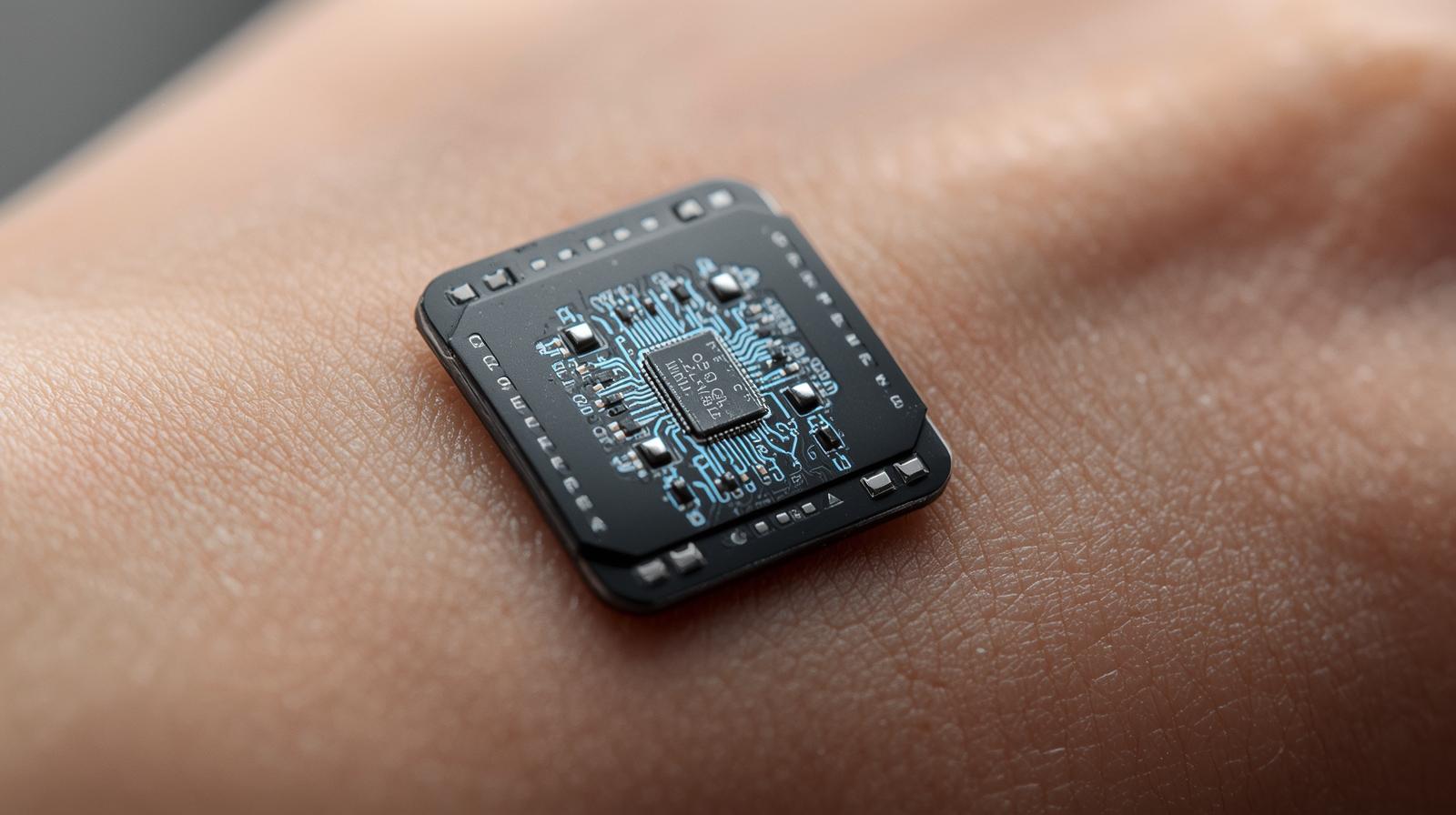
The healthcare technology landscape is undergoing a seismic shift, moving from reactive care in clinical settings to proactive, continuous, and personalized health management. At the heart of this revolution are sensor patches—discreet, wearable, and often disposable devices that adhere to the skin, monitoring a vast array of physiological parameters like heart rate, glucose levels, temperature, oxygen saturation, and even electrophysiological signals. These patches generate a relentless stream of real-time, high-fidelity biometric data. However, raw data alone is merely noise without interpretation. This is where Artificial Intelligence (AI) enters the stage, not merely as an adjunct technology but as the core intelligence transforming the sensor patch market from a data-collection tool into a powerful diagnostic and predictive health platform. The synergistic AI impact on the sensor patch market is creating a new paradigm in digital health, promising unprecedented levels of insight and intervention.
The global Sensor Patch Market size was estimated at USD 4.59 billion in 2024 and is predicted to increase from USD 6.32 billion in 2025 to approximately USD 23.91 billion in 2030, expanding at a CAGR of 30.5% from 2025 to 2030.
Understanding the Sensor Patch Market
Before delving into the role of AI, it is crucial to understand the foundation. The sensor patch market encompasses a diverse range of wearable devices designed for medical, health, and fitness applications. These patches are minimally invasive, user-friendly, and enable continuous monitoring outside traditional healthcare facilities. They represent a significant advancement over sporadic spot-check measurements, providing a holistic view of a patient’s health status over time. Key drivers for this market include the rising prevalence of chronic diseases like diabetes and cardiovascular conditions, a growing geriatric population, increasing health consciousness among consumers, and a strong push towards decentralized healthcare models, especially accelerated by the COVID-19 pandemic. Initially, the value proposition was centered on convenience and continuous data acquisition. The true potential, however, remained locked within the terabytes of data these devices collected, waiting for a key to unlock its meaning. That key is Artificial Intelligence.
The Confluence of AI and Sensor Patches: A Symbiotic Relationship
The integration of AI, particularly machine learning (ML) and deep learning algorithms, with sensor patch technology is a classic symbiotic relationship. Sensor patches provide the continuous, rich data fuel that AI algorithms require to learn, adapt, and become intelligent. In return, AI provides the computational brain that analyzes this data, extracting meaningful patterns, identifying anomalies, and generating actionable insights that would be impossible for humans to discern in real-time. This confluence moves the value chain from simple data presentation to sophisticated health intelligence, fundamentally enhancing the utility and economic value of every sensor patch deployed.
Key Areas of AI Impact on the Sensor Patch Market
The infusion of AI is impacting nearly every facet of the sensor patch ecosystem, from design and operation to data interpretation and business models.
Enhanced Data Accuracy and Noise Reduction
Sensor data, especially from a dynamic environment on the skin, is prone to motion artifacts and signal noise. AI algorithms are exceptionally adept at distinguishing between true physiological signals and irrelevant noise. By training on massive datasets of both clean and corrupted signals, ML models can filter out artifacts caused by movement, poor adhesion, or environmental factors, significantly improving the accuracy and reliability of the readings. This is critical for clinical-grade diagnostics where data integrity is paramount.
Predictive Analytics and Early Warning Systems
This is perhaps the most profound AI impact on the sensor patch market. AI can move beyond reporting what is happening to predicting what will happen. By analyzing continuous longitudinal data, ML models can identify subtle precursors and patterns that precede a major health event.
- For a cardiac patch, AI can detect patterns indicative of an impending atrial fibrillation episode hours before it occurs, allowing for preventive intervention.
- For diabetic patients, AI can analyze glucose trends from a continuous glucose monitor (CGM) patch to predict hypoglycemic or hyperglycemic events, enabling automatic insulin adjustments or alerts.
This shift from diagnostic to predictive healthcare saves lives and reduces emergency hospitalizations.
Personalized Medicine and Adaptive Algorithms
AI enables a move from a one-size-fits-all approach to truly personalized health insights. Algorithms can learn an individual’s unique baselines and patterns. What constitutes a normal heart rate variability for one person might be a warning sign for another. AI-powered patches can adapt their monitoring and alert thresholds to the individual user, reducing false alarms and providing more relevant, personalized feedback. This personalization is the cornerstone of effective long-term health management for chronic conditions.
Automated Diagnostics and Clinical Decision Support
AI algorithms can be trained to automatically diagnose specific conditions from sensor patch data. For example, an ECG patch integrated with AI can not only record heart rhythms but also automatically analyze them in real-time to detect arrhythmias like AFib, bradycardia, or tachycardia with a high degree of accuracy, often matching or exceeding human cardiologists. This provides immediate diagnostic support to physicians, accelerates treatment pathways, and empowers patients with instant insights.
Operational Efficiency and Cost Reduction
The AI impact on the sensor patch market extends to operational economics. By automating the initial analysis and triage of data, AI reduces the immense burden on healthcare professionals who would otherwise be overwhelmed by the constant data stream from thousands of patients. It flags only the critical events that require human attention, drastically improving workflow efficiency and reducing the overall cost of remote patient monitoring programs. This makes large-scale deployment of sensor patches economically viable for healthcare providers and insurers.
Real-World Applications and Use Cases
The theoretical benefits of AI are already materializing in tangible products and applications across the healthcare spectrum. Continuous Glucose Monitors (CGMs) like those from Dexcom and Abbott are increasingly using predictive algorithms to forecast glucose levels and integrate with automated insulin delivery systems, creating an “artificial pancreas.” In cardiology, companies like iRhythm Technologies utilize AI-powered patches (e.g., the Zio patch) for long-term ambulatory ECG monitoring, where their algorithms automatically analyze thousands of hours of data to provide a comprehensive diagnostic report to physicians. In neurology, AI-driven patches are being developed to predict epileptic seizures by analyzing EEG patterns. Furthermore, in clinical trials, AI-powered sensor patches are used to monitor participants’ adherence and physiological responses to new drugs in real-world settings, providing more robust and continuous data endpoints.
Download PDF Brochure for More Info @
https://www.marketsandmarkets.com/pdfdownloadNew.asp?id=50239064
Challenges and Future Directions
Despite its transformative potential, the integration of AI into the sensor patch market faces significant challenges. Data privacy and security are paramount concerns, as highly sensitive health data is transmitted and processed. Regulatory hurdles from bodies like the FDA are complex, as approving an “AI-as-a-medical-device” requires validating not just the hardware but also the algorithm’s performance and its ability to adapt without degrading—a concept known as “algorithmic drift.” There is also the challenge of ensuring algorithmic fairness and avoiding bias, which requires training AI on diverse, representative datasets. Looking forward, the future will involve more advanced edge AI, where processing happens on the patch itself or on a paired smartphone, reducing latency and enhancing privacy. We will also see the rise of multi-modal sensing, where a single patch measures multiple parameters (e.g., ECG, sweat analysis, temperature), and AI fuses these data streams to provide a more holistic health assessment.
The AI impact on the sensor patch market is nothing short of revolutionary. It is the critical catalyst transforming passive data loggers into intelligent health guardians. By enabling predictive analytics, personalized insights, automated diagnostics, and operational efficiency, AI is unlocking the true potential of continuous physiological monitoring. This synergy is paving the way for a future where healthcare is proactive, personalized, and accessible anywhere, anytime. As algorithms become more sophisticated and regulatory frameworks evolve, the fusion of AI and sensor patches will undoubtedly become the standard of care, fundamentally improving patient outcomes and reshaping the entire healthcare ecosystem. The market is no longer just about sensing; it is about understanding, predicting, and preventing.
Explore In-Depth Semiconductor & Electronics Market Research:
https://www.marketsandmarkets.com/semiconductorand-electonics-market-research-87.html
FAQs
1. How does AI specifically improve the accuracy of a sensor patch?
AI, particularly machine learning models, is trained on vast datasets containing both clean physiological signals and known artifacts (e.g., from motion). The algorithm learns to identify the unique fingerprint of a true heartbeat, glucose reading, or other signals and filters out the noise, resulting in a cleaner, more accurate data stream.
2. Can AI in sensor patches replace doctors?
No, AI is not a replacement for physicians. It acts as a powerful tool for augmentation and decision support. It handles the heavy lifting of continuous data analysis and flags potential issues, but the final diagnosis, treatment planning, and human empathy remain the domain of healthcare professionals.
3. What are the privacy concerns with AI-powered sensor patches?
These devices collect and transmit extremely sensitive health data. The primary concerns include unauthorized access to this data, potential data breaches, and how the data is used by companies (e.g., for insurance purposes). Robust encryption, transparent data policies, and strict compliance with regulations like HIPAA are essential to address these concerns.
4. Will AI-driven sensor patches be affordable?
While the initial cost of development and the advanced technology may be higher, the long-term goal is that by preventing costly emergency hospitalizations and improving chronic disease management, they will create significant overall cost savings for the healthcare system, making them cost-effective.
5. How is the data from these patches used to train the AI?
Data is anonymized and aggregated to create large training datasets. Developers use this data to teach machine learning models to recognize patterns, correlations, and anomalies. The process is governed by strict ethical guidelines and patient consent to ensure privacy.
See The Latest Semiconductor Reports:
Radiation Hardened Electronics Market Size, Share & Trends : https://www.marketsandmarkets.com/Market-Reports/radiation-hardened-electronics-market-44047967.html
Smart Appliances Market Size, Share & Trends : https://www.marketsandmarkets.com/Market-Reports/smart-appliances-market-8228252.html
Ultra-low-power Microcontroller Market Size, Share & Trends : https://www.marketsandmarkets.com/Market-Reports/ultra-low-power-microcontroller-market-206772623.html
Quantum Computing Market Size, Share & Trends : https://www.marketsandmarkets.com/Market-Reports/quantum-computing-market-144888301.html
Cold Chain Monitoring Market Size, Share & Trends : https://www.marketsandmarkets.com/Market-Reports/cold-chain-monitoring-market-161738480.html
Printed Electronics Market Size, Share & Trends : https://www.marketsandmarkets.com/Market-Reports/printed-electronics-market-197.html
