The global agricultural landscape is undergoing a profound transformation, shifting from traditional practices to a data-driven, hyper-connected ecosystem. At the heart of this revolution is the Agriculture Internet of Things (IoT), a network of physical devices—sensors, drones, actuators, and connected machinery—that collect, monitor, and analyze data to automate and optimize farming operations. The Agriculture IoT market is experiencing explosive growth, projected to reach multi-billion-dollar valuations in the coming years. But what is fueling this rapid expansion? This article delves deep into the core factors propelling this industry forward, exploring the top 5 growth drivers for the Agriculture IoT market.
The global Agriculture IoT Market size was estimated at USD 8.50 billion in 2024 and is predicted to increase from USD 8.86 billion in 2025 to approximately USD 12.61 billion in 2030, expanding at a CAGR of 7.3% from 2025 to 2030.

The Imperative for Smarter Farming
Traditional farming methods, reliant on intuition and uniform practices, are no longer sufficient. They often lead to resource wastage, environmental degradation, and unpredictable yields. Agriculture IoT presents a viable solution to this pressing dilemma, enabling the “precision agriculture” necessary to do more with less. This overarching need is the bedrock upon which the specific growth drivers for the Agriculture IoT market are built.
1. The Unstoppable Rise of Precision Agriculture
The single most significant catalyst for the adoption of Agriculture IoT is the global shift towards precision agriculture. This farming management concept uses IoT technology to observe, measure, and respond to inter- and intra-field variability in crops. It moves away from treating entire fields as a single unit and instead allows for micro-management of the land.
- Soil and Crop Monitoring: IoT sensors embedded in fields provide real-time data on soil moisture, nutrient levels, pH balance, and temperature. This allows farmers to apply water and fertilizers only where needed and in the exact required quantities, drastically reducing input costs and environmental runoff.
- Variable Rate Technology (VRT): Connected to GPS systems, IoT-enabled machinery can automatically adjust the application rate of seeds, water, and pesticides as it moves across the field. This ensures optimal placement of resources, maximizing yield potential from each square meter of land.
- Yield Monitoring: Harvesters equipped with IoT sensors can map yields across a field as they operate. This data is invaluable for understanding field variability and making more informed decisions for the next planting season.
The drive for efficiency and sustainability makes precision agriculture the cornerstone of modern farming, directly fueling the demand for IoT solutions. This driver is central to understanding the growth trajectory of the Agriculture IoT market.
2. Escalating Concerns Over Climate Change and Water Scarcity
The increasing volatility of global climate patterns is a major concern for the agricultural sector. Erratic rainfall, prolonged droughts, and unseasonal frosts pose significant risks to crop health and yield. Agriculture IoT offers a powerful toolkit for climate resilience and resource conservation.
IoT-based smart irrigation systems are a prime example. These systems use data from in-ground soil moisture sensors and weather forecast APIs to water crops with pinpoint accuracy. They only activate when necessary, preventing over-watering and under-watering. This not only conserves a precious resource—often reducing water usage by 20-30%—but also protects crops from water stress. Furthermore, IoT networks can provide early warning systems for frost or heatwaves, allowing farmers to take proactive measures to protect their livelihoods. The critical need to mitigate environmental risks and manage scarce resources is a powerful growth driver for the Agriculture IoT market.
3. Proliferation of Government Initiatives and Support Programs
Governments and international bodies worldwide recognize the strategic importance of food security and sustainable agriculture. Consequently, they are actively promoting the adoption of smart farming technologies through policies, subsidies, and funding programs. This top-down support is a massive growth driver for the Agriculture IoT market.
Many countries in Europe, North America, and Asia-Pacific are offering financial incentives for farmers to invest in precision farming equipment, including IoT sensors and automation systems. Public grants are funding research into more robust and affordable AgriTech solutions. Governments are also investing in rural connectivity infrastructure, such as expanding 5G networks and low-power wide-area networks (LPWANs like LoRaWAN), which are essential for the functionality of IoT devices in remote agricultural areas. This supportive regulatory and financial environment lowers the barrier to entry for farmers and encourages technology providers to innovate, creating a virtuous cycle of adoption and development.
4. The Critical Need for Cost Reduction and Operational Efficiency
Farming is a business with notoriously thin profit margins. Rising costs of labor, fertilizers, pesticides, and energy are squeezing farmers, forcing them to find new ways to optimize operations and reduce expenses. Agriculture IoT delivers tangible returns on investment by automating tasks and improving efficiency.
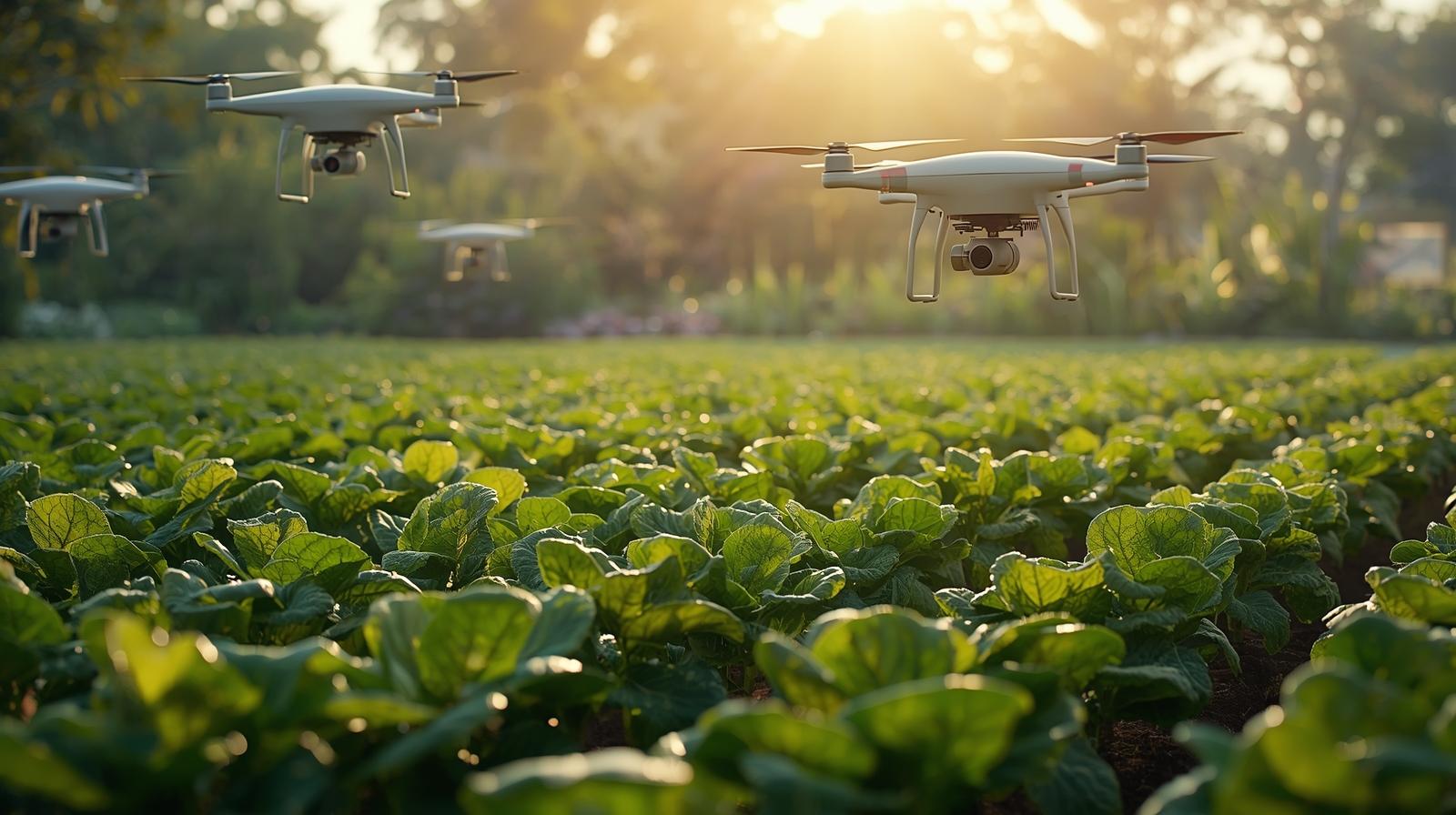
Labor shortages, particularly during critical periods like harvesting, are a chronic issue. IoT and automation offer a solution through autonomous tractors, robotic harvesters, and drone-based field scanning. These technologies reduce reliance on manual labor and can operate 24/7. Furthermore, by precisely applying inputs, farmers see a direct reduction in their spending on water, fertilizers, and chemicals. Predictive maintenance on machinery, enabled by IoT sensors that monitor equipment health, prevents costly breakdowns during crucial operational windows. The compelling economic argument—that IoT saves money and boosts profitability—is a fundamental driver compelling farmers to invest in these technologies.
Download PDF Brochure @
https://www.marketsandmarkets.com/pdfdownloadNew.asp?id=199564903
5. The Transformative Power of Data Analytics and AI Integration
The true value of IoT lies not just in data collection, but in data interpretation. The fifth key growth driver is the integration of advanced data analytics and Artificial Intelligence (AI) with Agriculture IoT platforms. Raw data from sensors is powerful, but it is the insights derived from this data that truly revolutionize decision-making.
AI algorithms can process vast amounts of historical and real-time data to build predictive models. These models can forecast optimal planting and harvesting times, predict potential pest or disease outbreaks before they become visible to the human eye, and provide personalized recommendations for specific crop varieties. This moves farming from a reactive to a proactive discipline. For instance, an AI system might analyze soil data, weather forecasts, and satellite imagery to advise a farmer that a specific quadrant of a field is at high risk for a fungal infection and recommend a targeted treatment. The ability to turn data into actionable intelligence is the ultimate value proposition, making IoT systems indispensable and securing their long-term growth.
The Future Harvest: Where Does Agriculture IoT Go From Here?
The convergence of these five powerful growth drivers ensures that the expansion of the Agriculture IoT market is not a fleeting trend but a fundamental restructuring of agriculture. The future will see even greater integration of technologies like blockchain for supply chain transparency, more sophisticated AI models, and the proliferation of fully autonomous farms. Challenges remain, including the initial investment cost, the need for digital literacy among farmers, and concerns about data privacy and security. However, the imperative to feed a growing planet sustainably is overwhelming. The journey towards smarter, more efficient, and more resilient farming is well underway, and the Agriculture IoT market is positioned squarely at its center, driven by an undeniable need to cultivate a better future.
Explore In-Depth Semiconductor & Electronics Market Research
https://www.marketsandmarkets.com/semiconductorand-electonics-market-research-87.html
FAQs
Q1: What is the biggest challenge hindering the adoption of Agriculture IoT?
While costs are decreasing, the initial investment required for sensors, connectivity, and platform subscriptions remains a significant barrier for many small-to-medium-sized farms. Additionally, a lack of technical knowledge and reliable internet connectivity in rural areas can slow adoption.
Q2: How does IoT specifically help with sustainable farming?
IoT promotes sustainability by enabling precise resource application. This minimizes the runoff of fertilizers and pesticides into waterways, significantly reduces water consumption through smart irrigation, and helps lower the carbon footprint of farming operations by optimizing machinery use and input logistics.
Q3: Are these IoT solutions only for large-scale corporate farms?
No, this is a common misconception. The market is rapidly evolving to offer scalable solutions. Smaller farms can start with basic packages—such as soil moisture sensors linked to a smartphone app—and gradually expand their IoT capabilities as they see a return on investment.
Q4: What kind of data do these IoT sensors collect?
IoT sensors in agriculture collect a wide array of data points, including soil moisture, temperature, and nutrient levels; ambient air temperature and humidity; rainfall; leaf wetness; livestock health indicators; and machinery performance metrics.
Q5: How does AI work with Agriculture IoT?
AI and machine learning algorithms analyze the vast streams of data generated by IoT devices. They identify patterns and correlations that would be impossible for humans to detect, enabling predictive analytics for disease, yield forecasting, and automated decision-making for irrigation and harvesting.
See The Latest Semiconductor Reports:
Sensor Patch Market Size, Share & Trends : https://www.marketsandmarkets.com/Market-Reports/sensor-patch-market-50239064.html
Semiconductor Market for Robots Size, Share & Trends: https://www.marketsandmarkets.com/Market-Reports/semiconductor-market-for-robots-115553523.html
Virtual Production Market Size, Share & Trends: https://www.marketsandmarkets.com/Market-Reports/virtual-production-market-264844353.html
Haptic Technology Market Size, Share & Trends : https://www.marketsandmarkets.com/Market-Reports/haptic-technology-market-443.html
Microgrid Market Size, Share & Trends: https://www.marketsandmarkets.com/Market-Reports/micro-grid-electronics-market-917.html
Oil Condition Monitoring Market Size, Share & Trends: https://www.marketsandmarkets.com/Market-Reports/oil-condition-monitoring-market-62105661.html
