The UV LED (Ultraviolet Light-Emitting Diode) market size has undergone a remarkable transformation in recent years, emerging as one of the most dynamic segments within the broader LED and optoelectronics industry. From healthcare and industrial curing to air and water purification, UV LEDs are finding their way into a diverse range of applications — and the momentum is only accelerating.
Explores the key trends and innovations shaping the UV LED market, with a focus on technological advancements, sustainability efforts, integration into smart devices, new product developments, and future-forward breakthroughs.
The UV LED market is projected to reach a value of USD 1.23 billion in 2025, with growth accelerating to approximately USD 2.16 billion by 2030, reflecting a compound annual growth rate (CAGR) of 11.9% during the forecast period. This growth is primarily driven by the rising demand for energy-efficient, compact, and mercury-free lighting technologies across a wide range of sectors, including industrial, healthcare, and consumer applications.
Amid heightened global awareness around hygiene and sanitation, UV LED systems have gained strong traction for disinfection, purification, and sterilization. These systems offer a safer, longer-lasting, and more energy-efficient alternative to traditional mercury-based UV lamps, addressing both environmental and safety concerns.
Furthermore, the global shift toward sustainable practices and compliance with stricter environmental regulations is accelerating the adoption of UV LED technologies. Their ability to support cleaner, greener, and more eco-conscious operations positions them as a critical enabler in the ongoing transition to low-impact, high-performance solutions across industries.
Technological Advances in UV LED Manufacturing
One of the primary enablers of market growth is the rapid advancement in UV LED fabrication and packaging technologies. Traditionally, UV light sources relied on mercury lamps, which were bulky, fragile, and environmentally hazardous. UV LEDs — especially those in the UV-C range (200–280 nm) — now offer a compact, energy-efficient, and mercury-free alternative.
Recent innovations include:
- Improved substrate materials like aluminum nitride (AlN) and sapphire for better heat dissipation and efficiency.
- Higher external quantum efficiency (EQE) in deep UV wavelengths, overcoming previous limitations in power output.
- Surface texturing and encapsulation techniques that enhance light extraction and extend lifespan.
Manufacturers are also investing in automated wafer-level processing, reducing production costs and enabling scale for high-volume applications such as sterilization in medical devices and household appliances.
Download PDF Brochure @ https://www.marketsandmarkets.com/pdfdownloadNew.asp?id=143107738
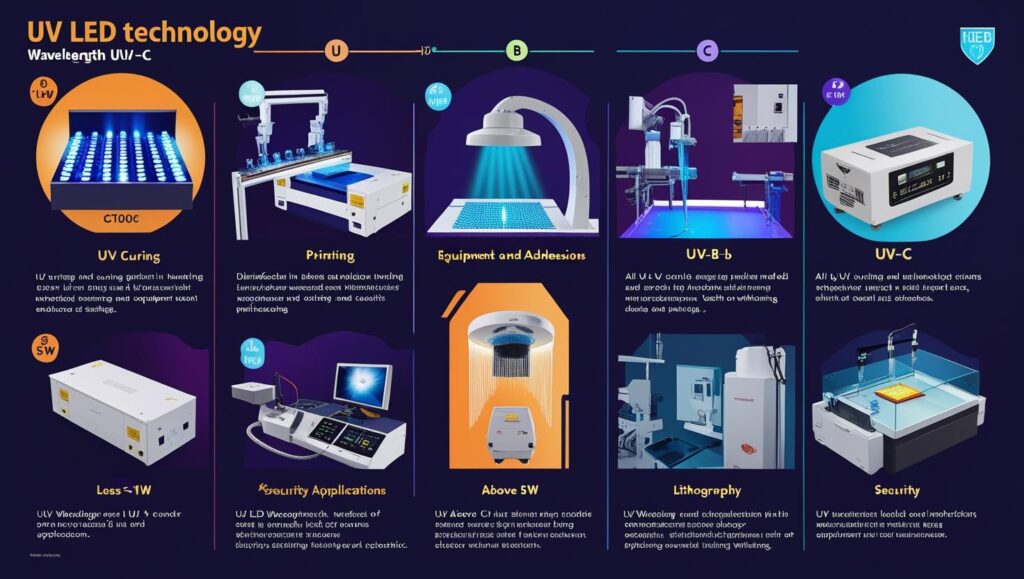
Sustainability and Environmental Impact
UV LED technology contributes significantly to global sustainability goals. Unlike conventional mercury-based lamps, UV LEDs:
- Do not contain toxic materials
- Consume less energy
- Offer longer operational life, reducing e-waste
These environmental benefits are driving adoption in industries seeking to meet ESG standards and regulatory compliance. UV LEDs are increasingly used in eco-friendly water treatment systems, chemical-free disinfection, and low-carbon footprint manufacturing processes.
Additionally, the rise of portable UV-C sterilization products for personal and professional use — especially post-COVID-19 — is aligned with consumer demand for safe, reusable, and sustainable sanitization solutions.
Integration of UV LEDs in Smart Devices
- As the world moves toward smarter homes, cities, and healthcare systems, UV LEDs are finding new roles in IoT-enabled and AI-driven devices.
- Smart air purifiers and HVAC systems now feature UV LEDs with sensors to detect air quality and activate disinfection.
- Wearable health devices use UV-A LEDs for skin therapy and diagnostics.
In consumer electronics, UV LEDs are being integrated into smartphones, wireless earbuds, and smart toilets for surface and self-cleaning functions.
This convergence of UV LED technology with smart ecosystems not only enhances user convenience and hygiene but also opens new revenue streams in the connected devices market.
Innovative Product Developments
- R&D investments are fueling groundbreaking product innovations, transforming how and where UV LEDs are used.
- Flexible and miniaturized UV LED arrays are enabling integration into wearables and flexible displays.
- Hybrid UV LED systems combining UV-A, UV-B, and UV-C offer multifunctional capabilities, such as curing and disinfection in a single unit.
- UV LED printing and coating systems are revolutionizing industrial manufacturing with faster curing times, higher precision, and lower operational costs.
Several startups and established players are also exploring modular UV LED platforms, allowing customizable light engines for different industrial and commercial needs — from food safety inspection to biosensor activation.
Future Trends in UV LED Technology
- Looking ahead, the UV LED market is poised for even more disruption and expansion, driven by:
- Quantum dot-based UV emitters with tunable wavelengths and higher efficiency
- AI-optimized UV exposure systems for dynamic, real-time disinfection
- Wearable and textile-integrated UV LEDs for personal wellness and military applications
- Advancements in UV-C transparent materials to improve optical performance and design flexibility
As costs continue to decline and performance improves, UV LEDs are expected to gain widespread acceptance in sectors like agritech, autonomous cleaning systems, industrial inspection, and public health infrastructure.
The UV LED market is no longer a niche — it’s a fast-evolving ecosystem at the intersection of technology, sustainability, and innovation. As industries demand safer, cleaner, and smarter solutions, UV LEDs are set to play a pivotal role in redefining how we disinfect, detect, and deliver in a digitally connected world.
From healthcare to consumer electronics and industrial manufacturing, the future of UV LEDs is bright — and powered by light.
About MarketsandMarkets™
MarketsandMarkets™ has been recognized as one of America’s Best Management Consulting Firms by Forbes, as per their recent report.
MarketsandMarkets™ is a blue ocean alternative in growth consult611ing and program management, leveraging a man-machine offering to drive supernormal growth for progressive organizations in the B2B space. With the widest lens on emerging technologies, we are proficient in co-creating supernormal growth for clients across the globe.
Today, 80% of Fortune 2000 companies rely on MarketsandMarkets, and 90 of the top 100 companies in each sector trust us to accelerate their revenue growth. With a global clientele of over 13,000 organizations, we help businesses thrive in a disruptive ecosystem.
The B2B economy is witnessing the emergence of $25 trillion in new revenue streams that are replacing existing ones within this decade. We work with clients on growth programs, helping them monetize this $25 trillion opportunity through our service lines – TAM Expansion, Go-to-Market (GTM) Strategy to Execution, Market Share Gain, Account Enablement, and Thought Leadership Marketing.
Built on the ‘GIVE Growth’ principle, we collaborate with several Forbes Global 2000 B2B companies to keep them future-ready. Our insights and strategies are powered by industry experts, cutting-edge AI, and our Market Intelligence Cloud, KnowledgeStore™, which integrates research and provides ecosystem-wide visibility into revenue shifts.
To find out more, visit www.MarketsandMarkets™.com or follow us on Twitter , LinkedIn and Facebook .
Contact:
Mr. Rohan Salgarkar
MarketsandMarkets™ INC.
1615 South Congress Ave.
Suite 103, Delray Beach, FL 33445
USA: +1-888-600-6441
