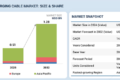
The United Kingdom real world evidence solutions market is a sophisticated and leading regional sector in Europe, characterized by a robust national health data infrastructure and early regulatory acceptance. The landscape is driven by the country’s large geriatric population and the increasing prevalence of chronic illnesses, which necessitate cost-effective, data-driven healthcare strategies. The UK possesses a unique comparative advantage due to its world-class Health Technology Assessment processes and the National Health Service’s ability to generate extensive longitudinal datasets. Key market activity is centered on services, which remain the largest and fastest-growing component as pharmaceutical and biotechnology companies seek specialized expertise for study design and regulatory support. While the market faces challenges such as data privacy hurdles and the need for standardized analytical methods, it is undergoing a structural shift toward value-based healthcare and the integration of artificial intelligence to transform raw data into meaningful clinical insights. Strategic collaborations between healthcare providers, payers, and global industry leaders like IQVIA and ICON further solidify the UK’s position as a critical hub for innovation and evidence-based decision-making.
Key Drivers, Restraints, Opportunities, and Challenges in the United Kingdom Real World Evidence Solutions Market
The United Kingdom real world evidence (RWE) solutions market is primarily driven by a robust national health data infrastructure and the early regulatory acceptance of RWE by the MHRA, which has demonstrated agility in piloting flexible evidence pathways post-Brexit. Significant growth is further propelled by an aging population and a rising prevalence of chronic diseases like cancer and diabetes, necessitating cost-effective, data-driven treatment strategies. However, the market faces restraints such as the lack of universally accepted methodology standards and the increased administrative burden of preparing parallel evidence packages for both UK and EU submissions. Opportunities abound in the integration of artificial intelligence for advanced analytics and the development of genomic registry standards to support precision medicine. Key challenges remain, including the need for international harmonization of data quality principles and persistent concerns regarding patient data privacy and security within fragmented healthcare delivery systems.
Customer Segmentation, Needs, Preferences, and Buying Behavior in the United Kingdom Real World Evidence Solutions Market
The target customers for the United Kingdom real world evidence solutions market primarily include pharmaceutical and biotechnology companies, medical device manufacturers, healthcare payers, and healthcare providers. These stakeholders prioritize the use of real-world data to enhance drug development efficiency, accelerate regulatory approvals, and demonstrate the cost-effectiveness of treatments within value-based care models. Customers increasingly prefer integrated, data-agnostic services that offer end-to-end solutions, including advanced analytics for disease characterization and the development of external control arms to support single-arm trials. Their purchasing behavior is characterized by a strategic shift toward long-term partnerships with specialized providers that can navigate complex regulatory environments and provide high-quality, transparent data from diverse sources like electronic health records and medical claims. Additionally, there is a strong emphasis on evidence that meets the specific appraisal criteria of health technology assessment bodies such as NICE, which are increasingly receptive to real-world evidence for informing reimbursement and coverage decisions.
Regulatory, Technological, and Economic Factors Impacting the United Kingdom Real World Evidence Solutions Market
The United Kingdom real world evidence solutions market is significantly influenced by a complex interplay of regulatory, technological, and economic factors. Regulated by the MHRA and guided by NICE’s 2022 RWE framework, evolving standards for data quality and transparency increase operational complexity but provide a clear pathway for using real-world data in health technology assessments. Technologically, the integration of advanced analytics, artificial intelligence, and machine learning is driving market expansion by enabling more sophisticated insights from the UK’s unique “cradle to grave” healthcare databases, such as the Clinical Practice Research Datalink, though it introduces risks related to data privacy and governance. Economically, while the rising prevalence of chronic diseases among an aging population sustains high demand, the substantial investment required for digital infrastructure and a shortage of skilled data scientists can restrain profitability for smaller entrants. Overcoming stakeholder reluctance to rely on non-randomized studies remains a key challenge, yet the UK’s comparative advantage in lower-cost real-world study setup continues to attract strategic investment from the pharmaceutical industry.
Current and Emerging Trends in the United Kingdom Real World Evidence Solutions Market
The United Kingdom real world evidence (RWE) solutions market is undergoing a rapid transformation driven by the transition from fragmented data silos to a connected, secure ecosystem, with the services segment emerging as the fastest-growing component. These trends are evolving quickly, as evidenced by the establishment of the Health Data Research UK OMOP Network (HERON-UK) in 2024 and the government’s 10 Year Health Plan, which aims to leverage digital platforms like the Health Data Research Service (HDRS) to unlock population-scale datasets. Furthermore, the market is shifting toward decentralized recruitment through the NHS App and the use of RWE for external control arms in clinical trials, supported by a projected CAGR of 8.8% through 2033. While the post-Brexit landscape has introduced operational complexities, the move toward interoperable analytical frameworks and patient-led research models is accelerating to establish the UK as a global leader in high-quality academic and regulatory evidence.
Technological Innovations and Disruption Potential in the United Kingdom Real World Evidence Solutions Market
Technological innovations such as artificial intelligence (AI), machine learning (ML), and the Internet of Things (IoT) are significantly disrupting the United Kingdom real-world evidence solutions market by enabling more sophisticated analysis of large-scale healthcare datasets. The integration of AI-powered analytics is streamlining data processing, cleaning, and harmonization, which helps overcome longstanding interoperability challenges between fragmented data sources like electronic health records (EHRs) and registries. Wearable biosensors and connected devices are gaining traction as vital tools for generating continuous, real-time patient data, allowing for deeper insights into treatment effectiveness and patient outcomes outside of traditional clinical settings. Furthermore, the adoption of cloud-based platforms and predictive modeling is accelerating evidence generation, supporting faster regulatory submissions and more informed value-based reimbursement decisions across the UK healthcare ecosystem.
Short-Term vs. Long-Term Trends in the United Kingdom Real World Evidence Solutions Market
In the United Kingdom real world evidence solutions market, the rapid surge in demand for specialized data to support COVID-19 vaccine and drug development is viewed as a short-term phenomenon that has stabilized post-pandemic, whereas several other trends represent long-term structural shifts. The transition from volume-based to value-based healthcare is a permanent transformation, as national health technology assessment bodies like NICE increasingly demand continuous post-market surveillance and real-world outcomes to justify reimbursement and pricing. Similarly, the integration of artificial intelligence and machine learning into evidence generation is a fundamental shift aimed at managing the increasing volume and complexity of electronic health records and genomic registries. Other enduring structural changes include the focus on personalized medicine and the use of real-world data to offset the high costs of randomized clinical trials, both of which are fueled by the long-term demographic reality of a large, aging population and the rising prevalence of chronic diseases.