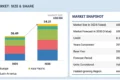
The United Kingdom targeted protein degradation market is a primary European hub for innovation, characterized by a sophisticated clinical infrastructure and strong integration between academic research and the pharmaceutical industry. The landscape is defined by the presence of pioneering native biotech players and significant research activity at world-renowned institutions, such as the Structural Genomics Consortium at Oxford and the MRC Laboratory of Molecular Biology. These collaborative networks are driving advancements in novel cancer treatments and the development of complex degraders like PROTACs and molecular glues. Supported by a progressive regulatory environment and substantial funding for biotechnology, the region is increasingly focusing on personalized medicine and addressing previously undruggable protein targets to meet unmet medical needs in oncology and neurodegenerative diseases.
Key Drivers, Restraints, Opportunities, and Challenges in the United Kingdom Targeted Protein Degradation Market
The United Kingdom targeted protein degradation market is primarily driven by the rising prevalence of chronic diseases like cancer and neurodegenerative disorders, alongside the unique ability of these therapies to target previously undruggable proteins. Significant growth opportunities exist in the expansion of disease indications into inflammatory and autoimmune sectors, the diversification of E3 ligase engagement, and the integration of artificial intelligence to accelerate drug discovery. However, the market faces restraints such as high development and manufacturing costs, which can be five times higher than conventional inhibitors, and unfavorable physicochemical properties that affect oral bioavailability. Key challenges include navigating complex regulatory frameworks for novel mechanisms of action, addressing the risk of off-target toxicity, and overcoming scientific barriers related to consistent target selectivity and blood-brain barrier penetration.
Customer Segmentation, Needs, Preferences, and Buying Behavior in the United Kingdom Targeted Protein Degradation Market
The target customers for the United Kingdom targeted protein degradation market primarily include pharmaceutical companies, biotechnology drug developers, and academic research institutes, such as the University of Dundee and the Institute of Cancer Research. These customers prioritize access to advanced platforms like PROTACs and molecular glues to address previously undruggable targets in therapeutic areas like oncology, neurology, and inflammatory diseases. Their preferences are shifting toward strategic, highly collaborative partnerships with contract research organizations and specialized technology providers to share expertise, mitigate high development costs, and accelerate the transition of novel candidates from discovery to clinical trials. Purchasing behavior is characterized by significant investments in integrated service models and high-throughput screening technologies, alongside a focus on securing licenses for proprietary E3 ligase ligands and innovative linker designs to enhance the efficacy and specificity of protein-degrading therapies.
Regulatory, Technological, and Economic Factors Impacting the United Kingdom Targeted Protein Degradation Market
The United Kingdom targeted protein degradation market is significantly influenced by a complex interplay of regulatory, technological, and economic factors. Regulatory oversight is a primary factor, as bodies such as the Medicines and Healthcare products Regulatory Agency (MHRA) and NICE must establish new safety, efficacy, and cost-effectiveness frameworks for novel modalities like PROTACs and molecular glues, which can extend review periods but provide a clear path for market entry. Technologically, the market is driven by advancements in degrader design, including the development of orally bioavailable compounds and the use of AI to optimize ternary complex pharmacology, though achieving consistent target selectivity remains a challenge. Economically, while high research and development expenditures and substantial manufacturing costs for complex molecules can restrain profitability for smaller firms, the market is bolstered by significant capital inflows, strategic partnerships between academia and biotech hubs like Oxford and London, and the potential for high-value annual revenues as first-in-class therapies transition to commercial launch.
Current and Emerging Trends in the United Kingdom Targeted Protein Degradation Market
The United Kingdom targeted protein degradation market is undergoing a rapid transformation as the region solidifies its position as Europe’s foremost hub for this technology, driven by advanced clinical infrastructure and strong academic-industry linkages. Key emerging trends include a strategic shift toward the development of molecular glues and PROTAC platforms, with a significant focus on oncology and addressing previously undruggable targets. These trends are evolving quickly, supported by substantial philanthropic and private investment—such as the 9 million pound donation to the Centre for Protein Degradation at the ICR—and the expansion of innovative native players like Amphista Therapeutics. Furthermore, the market is quickly moving toward more complex applications, including the integration of degrader-antibody conjugates and the exploration of alternative E3 ligases, as the industry aims to transition from early-stage discovery to breakthrough cancer treatments for patient benefit.
Technological Innovations and Disruption Potential in the United Kingdom Targeted Protein Degradation Market
Technological innovations in the United Kingdom targeted protein degradation market are being driven by the rapid advancement of Proteolysis-Targeting Chimeras (PROTACs) and molecular glues, which leverage the cell’s ubiquitin-proteasome system to eliminate previously undruggable disease-causing proteins. These modalities are gaining significant traction through the integration of artificial intelligence and machine learning, which streamline the identification of novel E3 ligase binders and optimize drug discovery cycles. Furthermore, emerging platforms such as lysosome-targeting chimeras (LYTACs) and autophagy-targeted chimeras (AUTACs) are poised to disrupt the industry by expanding degradation capabilities to extracellular and membrane-associated proteins. Supported by collaborative research hubs like the Centre for Protein Degradation and biotechnology firms such as FIMECS and Monte Rosa Therapeutics, the market is shifting toward these high-precision, event-driven pharmacologies to overcome traditional inhibitor resistance in oncology and neurodegenerative diseases.
Short-Term vs. Long-Term Trends in the United Kingdom Targeted Protein Degradation Market
In the United Kingdom targeted protein degradation market, the rapid influx of venture capital into early-stage biotech startups is often viewed as a short-term trend susceptible to macroeconomic cycles, whereas several other developments represent long-term structural shifts. The move from protein inhibition to degradation is a fundamental transformation driven by the ability of technologies like PROTACs and molecular glues to address previously undruggable targets in oncology and neurodegenerative diseases. Similarly, the transition toward oral bioavailability and the integration of artificial intelligence for degrader design are enduring shifts aimed at improving patient compliance and accelerating drug discovery timelines. Other permanent structural changes include the deepening of strategic, multiyear partnerships between UK academic hubs and global pharmaceutical companies, as well as the evolution of regulatory frameworks to accommodate the unique pharmacokinetic properties of these complex bifunctional molecules.