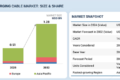
The United States protein A resin market is a high-volume sector and a primary hub for innovation, valued at approximately USD 526 million in 2025 and projected to grow steadily as a critical component of the domestic biopharmaceutical infrastructure. The landscape is defined by the country’s robust research and development environment and a significant concentration of leading monoclonal antibody developers, which drives a consistent demand for high-affinity chromatography tools. Technological advancements are rapidly reshaping the industry, with a notable shift toward alkali-stable recombinant ligands that offer enhanced reusability and the increasing adoption of single-use, pre-packed columns to improve facility turnaround and reduce cross-contamination risks. While the market is dominated by established global players like Danaher, Merck KGaA, and Thermo Fisher Scientific, it remains dynamic due to the rising prevalence of chronic diseases and a record number of FDA approvals for antibody-based therapies and biosimilars. Despite challenges such as high capital costs and the emergence of alternative purification methods like membrane-based systems, the market is poised for sustained expansion as manufacturers prioritize downstream efficiency and supply chain resilience.
Key Drivers, Restraints, Opportunities, and Challenges in the United States Protein A Resin Market
The United States protein A resin market is primarily driven by the increasing demand for monoclonal antibody therapeutics, a rising pipeline of biologics and biosimilars, and significant R&D investments by pharmaceutical companies and government organizations. Technological advancements, such as the development of alkali-tolerant recombinant ligands and high-capacity resins, further propel growth by improving purification efficiency and reusability. However, the market faces significant restraints, including the high upfront cost of agarose-based resins—which can represent over 50% of consumable costs in a campaign—and stringent regulatory requirements regarding ligand leaching and validation. Opportunities abound in the expansion of continuous bioprocessing, the rise of bispecific antibodies and antibody-drug conjugates, and the increasing outsourcing to contract development and manufacturing organizations (CDMOs). Challenges remain centered on resin lifetime variability, supply chain vulnerabilities for raw materials, and the competitive threat from alternative affinity chromatography technologies.
Customer Segmentation, Needs, Preferences, and Buying Behavior in the United States Protein A Resin Market
The target customers for the United States protein A resin market primarily include pharmaceutical and biopharmaceutical companies, contract development and manufacturing organizations (CDMOs), academic and research institutes, and clinical research laboratories. These customers prioritize high binding capacity, alkaline stability, and resin longevity to ensure high purity and yield during the capture of monoclonal antibodies and other Fc-containing proteins. Their preferences are shifting toward recombinant, alkali-tolerant resins and single-use technologies, such as pre-packed columns, to reduce cleaning validation and accelerate clinical timelines. Purchasing behavior is characterized by significant capital investment in bulk resins for large-scale commercial production to lower the cost per gram, while smaller biotech firms and research labs often focus on maximizing resin lifecycles or adopting cartridge formats for smaller campaign volumes. Across all segments, customers value strategic partnerships with suppliers that can provide reliable multi-site supply, robust regulatory dossiers, and high-performance chemistries that align with continuous bioprocessing paradigms.
Regulatory, Technological, and Economic Factors Impacting the United States Protein A Resin Market
The United States protein A resin market is significantly influenced by a complex interplay of regulatory, technological, and economic factors. Regulatory oversight remains a primary hurdle, as the FDA mandates rigorous analytical scrutiny of protein A residuals, including extractables and leachables, which can lengthen development timelines and increase expenses for smaller sponsors. Technologically, the integration of high-capacity, alkali-tolerant engineered resins and the adoption of single-use bioprocessing equipment are driving market expansion by improving manufacturing continuity and reducing capital outlays, although the transition to these advanced platforms requires substantial upfront investment. Economically, while the rising production of monoclonal antibodies and biosimilars sustains high demand, the exorbitant cost of protein A resins—often exceeding $15,000 per liter—acts as a significant restraint on profitability and market entry, frequently compelling manufacturers to prioritize lifecycle economics and validated resin stability to manage high operational expenditures.
Current and Emerging Trends in the United States Protein A Resin Market
The United States protein A resin market is undergoing a rapid evolution driven by the integration of artificial intelligence for predictive ligand design and the widespread adoption of single-use bioprocessing systems, which reduce capital outlays by approximately 40%. These trends are accelerating quickly as manufacturers shift toward high-capacity, alkali-tolerant resins that can withstand over 200 cleaning cycles, significantly improving lifecycle economics and sustainability. Emerging innovations, such as fiber-based media for rapid cycling and the use of digital twins for process optimization, are further reshaping the industry to meet the demands of a record-breaking pipeline of monoclonal antibodies and biosimilars. While agarose-based matrices remain the dominant standard, the market is quickly transitioning toward automated, continuous manufacturing models and dual-sourcing strategies to ensure supply chain resilience against global disruptions.
Technological Innovations and Disruption Potential in the United States Protein A Resin Market
Technological innovations in the United States protein A resin market are centered on enhancing productivity and reducing costs through the development of alkali-stable recombinant ligands and high-capacity agarose-based matrices. These advancements, such as jetted resin technology and ligands capable of withstanding harsh sanitization cycles, are gaining significant traction by extending resin lifespans and improving batch-to-batch reproducibility. Furthermore, the industry is being disrupted by the shift toward process intensification and continuous biomanufacturing, supported by periodic counter-current chromatography and multi-column capture systems that maximize resin utilization. Additionally, the emergence of single-use protein A membrane devices is poised to challenge traditional resin columns by offering up to ten times higher productivity, reduced manufacturing footprints, and lower consumable costs, particularly for the purification of complex monoclonal antibodies and next-generation biologics.
Short-Term vs. Long-Term Trends in the United States Protein A Resin Market
In the United States protein A resin market, the spike in demand for specialized resins used in COVID-19 vaccine purification is increasingly viewed as a short-term phenomenon that has largely stabilized, while several other trends represent long-term structural shifts. The transition toward engineered, recombinant, and alkaline-tolerant resins is a permanent transformation driven by the need for better lifecycle economics, allowing resins to withstand more than 200 cleaning cycles and reducing the cost per gram of monoclonal antibodies. Similarly, the move toward process intensification and continuous chromatography represents a fundamental shift in downstream manufacturing to handle rising upstream titers. Other enduring structural changes include the growth of biosimilars and complex modalities like bispecific antibodies and antibody-drug conjugates, which are fueled by the long-term realities of patent expirations and the clinical need for more targeted biopharmaceuticals. Additionally, the strategic shift toward regional sourcing and qualifying domestic partners is becoming a permanent feature of procurement strategies to ensure supply chain resilience against global trade disruptions and tariff impacts.