In a world where efficiency, accuracy, and safety are increasingly critical in healthcare, Real-Time Location Systems (RTLS) have emerged as one of the most transformative technologies in modern hospitals. The RTLS market in healthcare is no longer a niche trend — it’s a fast-expanding space attracting serious attention from investors, technology providers, and hospital systems alike.
As healthcare organizations strive to optimize operations, reduce waste, and improve patient care, the RTLS market in healthcare is gaining strong momentum. It’s not just about tracking assets — it’s about delivering better healthcare through smart, data-driven environments. For investors looking to make a meaningful impact while capitalizing on high-growth opportunities, this is a sector worth watching closely.
RTLS in Healthcare: More Than Just Location Tracking
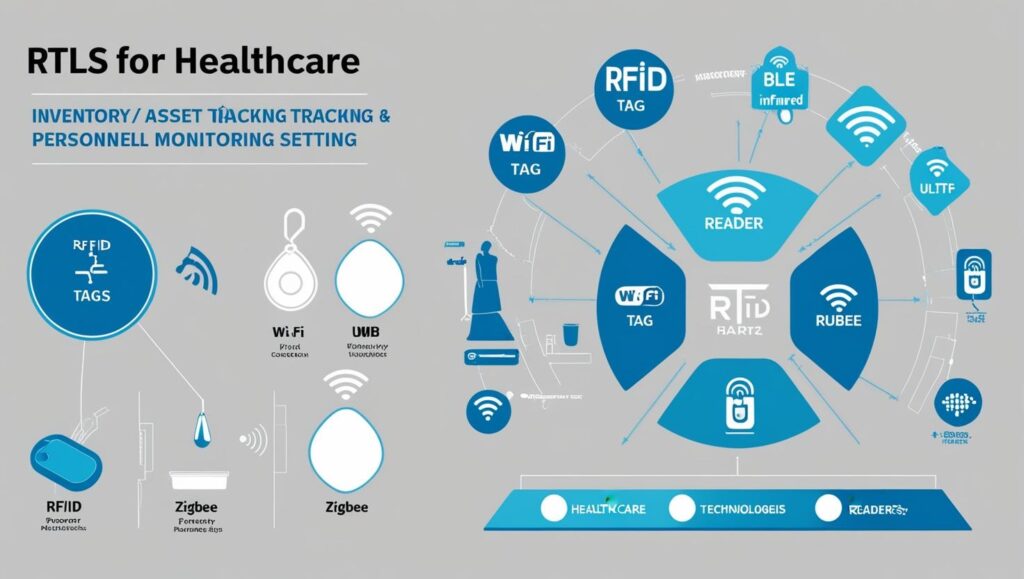
RTLS, or Real-Time Location Systems, use technologies like RFID, Wi-Fi, Bluetooth Low Energy (BLE), and Ultra-Wideband (UWB) to track the movement of people, equipment, and medications inside healthcare facilities. At first glance, it may sound like a logistics solution, but its value goes far beyond that.
In the context of the RTLS market in healthcare, this technology helps hospitals improve patient flow, reduce emergency response time, prevent equipment loss, ensure hand hygiene compliance, and support staff safety. It’s about creating smarter, more responsive hospital environments where every second — and every decision — matters.
Why the RTLS Market in Healthcare Is Catching Investor Attention
The growing interest in the RTLS market in healthcare isn’t just about technology adoption — it’s driven by real-world results and strong financial fundamentals.
First, there’s the massive cost-saving potential. Hospitals lose millions annually due to misplaced equipment, inefficient staff workflows, and prolonged patient wait times. RTLS addresses these issues head-on. From tracking wheelchairs and IV pumps to optimizing surgical suite usage, RTLS allows hospitals to do more with less — a message that resonates powerfully in today’s healthcare climate.
Second, the shift toward digital transformation in healthcare has created tailwinds for RTLS adoption. The post-pandemic push for smart hospitals, contact tracing, infection prevention, and data visibility has placed RTLS front and center as a foundational layer for operational intelligence.
Third, the recurring revenue model of many RTLS solutions makes them attractive to investors. These systems are often sold as subscription-based services or bundled with analytics software, creating long-term contracts and predictable income streams.
Download PDF Brochure @ https://www.marketsandmarkets.com/pdfdownloadNew.asp?id=19089515
Strategic Applications Driving Market Growth
The real beauty of the RTLS market in healthcare lies in its versatility. One hospital might use it to monitor patient movement and reduce wait times in the emergency department. Another might focus on asset utilization and theft prevention. A third might deploy it to improve nurse safety with staff duress buttons linked to real-time alerts.
No matter the application, the value is clear: smarter resource management, better outcomes, and higher patient satisfaction.
Use cases gaining traction include:
- Patient tracking for real-time location within the facility
- Asset tracking to reduce equipment loss and improve utilization
- Environmental monitoring for temperature-sensitive medications and storage
- Staff workflow optimization to reduce burnout and improve care coordination
- Compliance monitoring, especially for hygiene and safety protocols
These aren’t “nice to haves” — they’re increasingly becoming standard in hospitals worldwide. And as healthcare systems face mounting financial and operational pressure, the demand for these solutions continues to grow.
A Market on the Rise
According to multiple industry forecasts, the RTLS for healthcare Industry worth $5.7 billion by 2029, driven by demand for location-based services, AI-powered analytics, and improved hospital performance metrics. North America remains the largest market, but adoption is growing rapidly in Europe and Asia-Pacific as governments invest in digital healthcare infrastructure.
As more hospitals undergo digital transformation, RTLS becomes a critical enabler — not just of cost efficiency but of care quality and safety.
Final Thoughts: An Opportunity with Purpose
Investing in the RTLS market in healthcare isn’t just about riding the next tech wave — it’s about investing in systems that save time, save money, and ultimately, save lives.
For clean tech investors, digital health enthusiasts, or institutional funds looking to align with ESG goals, this market checks multiple boxes. It’s tech-driven, impact-focused, and backed by a growing need across global healthcare systems.
Opportunities in the RTLS Market in Healthcare
1. Asset Tracking & Utilization Optimization
Hospitals lose millions annually due to misplaced equipment and underutilized assets. RTLS provides real-time tracking for wheelchairs, IV pumps, beds, and surgical tools — helping healthcare providers reduce redundancy and maximize the ROI on expensive equipment. This opens doors for solutions that integrate RTLS with predictive maintenance and inventory management.
2. Patient Flow & Experience Management
Long wait times and inefficient patient handoffs can harm both patient outcomes and hospital ratings. RTLS enables real-time tracking of patient movement across departments, helping hospitals streamline scheduling, reduce bottlenecks, and improve overall throughput. There’s a growing need for platforms that combine RTLS with AI to optimize care paths dynamically.
3. Infection Control & Compliance Monitoring
Post-COVID, infection control remains a top priority. RTLS supports automated contact tracing, staff hand hygiene compliance, and isolation area monitoring — all without manual logs. Companies offering robust infection prevention features alongside RTLS will be highly valued by both hospitals and investors.
4. Staff Safety & Workflow Efficiency
Nurse burnout and staff shortages are pressing concerns. RTLS-enabled badges with panic buttons and real-time location data offer immediate safety alerts and optimize staff workflows. This is a powerful opportunity for startups and vendors targeting nurse well-being and workforce management.
5. Smart Hospital Integration & Digital Twin Development
The future of healthcare is smart and data-driven. RTLS acts as a foundational technology for building digital twins of hospitals — virtual models that allow real-time monitoring and scenario planning. This opens investment opportunities in platforms that integrate RTLS data into broader hospital intelligence systems.
6. Global Expansion into Emerging Markets
While North America leads in RTLS adoption, there’s significant untapped potential in Asia-Pacific, Latin America, and the Middle East. Governments in these regions are investing heavily in hospital infrastructure modernization, creating room for RTLS deployment — especially when bundled with IoT or cloud health solutions.
7. Software-as-a-Service (SaaS) and Analytics Layers
RTLS hardware is just the beginning. The real long-term value lies in analytics — dashboards that transform location data into actionable insights. Vendors that offer SaaS-based platforms with rich analytics, AI, and customizable alerts are best positioned for recurring revenue and scalability.
8. Integration with EHR and Hospital IT Systems
Hospitals are demanding seamless integration between RTLS and existing systems like Electronic Health Records (EHR), nurse call systems, and building management tools. There’s an opportunity for middleware providers and integration specialists to bridge these systems for unified digital operations.
9. Vendor Consolidation and M&A Activity
As the market matures, we’re seeing increased consolidation. Larger healthcare tech firms are acquiring smaller RTLS startups with niche solutions or advanced analytics. This presents a strong exit strategy for investors entering the space now.
10. ESG & Impact Investment Alignment
RTLS contributes directly to sustainability and operational efficiency by reducing energy waste, equipment redundancy, and unnecessary staffing strain. For funds focused on ESG and impact investing, the RTLS market in healthcare offers measurable benefits across environmental, social, and governance dimensions.
As hospital leaders continue to prioritize smarter operations and data-driven care, the RTLS market in healthcare stands out as a strategic growth opportunity that delivers both value and vision.
FAQ – RTLS Market in Healthcare (Investor-Focused)
1. What is RTLS and how is it used in healthcare?
Real-Time Location Systems (RTLS) use wireless technologies (like RFID, Wi-Fi, Bluetooth Low Energy, and UWB) to track the location of people, equipment, and assets inside healthcare facilities. In hospitals, RTLS helps with asset tracking, patient flow optimization, staff safety, infection control, and compliance monitoring.
2. Why is the RTLS market in healthcare growing so rapidly?
The market is growing due to rising demand for efficiency, patient safety, and operational transparency. Post-pandemic, hospitals are investing heavily in digital transformation, and RTLS enables real-time data visibility that improves decision-making, reduces costs, and enhances care quality.
3. What are the key growth drivers for the RTLS market in healthcare?
- Increasing need for real-time patient and asset tracking
- Digital transformation initiatives across hospitals
- Demand for infection prevention and contact tracing
- Staff safety and burnout mitigation
- Integration of RTLS with AI, analytics, and EHR systems
4. Which regions show the most promise for RTLS in healthcare?
North America is the most mature market, but Asia-Pacific, Europe, and Latin America are experiencing high growth due to investments in hospital infrastructure, smart health policies, and technology adoption.
About MarketsandMarkets™
MarketsandMarkets™ is a blue ocean alternative in growth consulting and program management, leveraging a man-machine offering to drive supernormal growth for progressive organizations in the B2B space. We have the widest lens on emerging technologies, making us proficient in co-creating supernormal growth for clients.
The B2B economy is witnessing the emergence of $25 trillion of new revenue streams that are substituting existing revenue streams in this decade alone. We work with clients on growth programs, helping them monetize this $25 trillion opportunity through our service lines – TAM Expansion, Go-to-Market (GTM) Strategy to Execution, Market Share Gain, Account Enablement, and Thought Leadership Marketing.
Built on the ’GIVE Growth’ principle, we work with several Forbes Global 2000 B2B companies – helping them stay relevant in a disruptive ecosystem. Our insights and strategies are molded by our industry experts, cutting-edge AI-powered Market Intelligence Cloud, and years of research. The KnowledgeStore™ (our Market Intelligence Cloud) integrates our research, facilitates an analysis of interconnections through a set of applications, helping clients look at the entire ecosystem and understand the revenue shifts happening in their industry.
To find out more, visit www.MarketsandMarkets™.com or follow us on Twitter, LinkedIn and Facebook.
Contact:
Mr. Rohan Salgarkar
MarketsandMarkets™ INC.
1615 South Congress Ave.
Suite 103
Delray Beach, FL 33445
USA : 1-888-600-6441