The global X-ray detectors market is undergoing a significant transformation as healthcare providers, industrial manufacturers, and security organizations increasingly adopt advanced digital imaging technologies. The shift from conventional film-based radiography to digital X-ray systems, coupled with growing demand for portable imaging solutions and high-precision industrial inspection, is fueling steady market expansion worldwide.
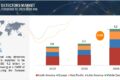
The X-ray detectors market was valued at USD 3.80 billion in 2025 and is expected to reach USD 3.99 billion in 2026. The market is projected to grow to USD 5.35 billion by 2031, registering a CAGR of 5.0% during the forecast period. Rising healthcare investments, increasing diagnostic imaging volumes, technological advancements in flat-panel detectors, and expanding non-destructive testing (NDT) applications are among the primary factors supporting market growth.
X-ray detectors have become an essential component of modern imaging systems, enabling high-resolution image acquisition with lower radiation exposure, faster processing, and improved workflow efficiency across healthcare, industrial inspection, and security applications.
Download PDF Brochure: https://www.marketsandmarkets.com/pdfdownloadNew.asp?id=7004984
Growing Adoption of Digital Radiography Accelerates Market Growth
Healthcare systems across the globe are rapidly transitioning from analog radiography to fully digital imaging technologies.
Digital X-ray detectors provide several advantages over traditional film-based systems, including:
- Faster image acquisition
- Higher image quality
- Reduced radiation exposure
- Improved diagnostic accuracy
- Digital image storage and sharing
- Enhanced workflow efficiency
Hospitals, diagnostic imaging centers, and outpatient clinics are increasingly upgrading legacy radiography infrastructure with advanced digital detector systems to improve patient care while optimizing operational performance.
The growing demand for early disease detection, preventive healthcare, and routine medical screenings is further increasing the number of radiographic examinations performed worldwide.
Rising Demand for Portable and Mobile X-ray Systems
One of the strongest growth drivers for the X-ray detectors market is the expanding adoption of portable and wireless imaging systems.
Mobile X-ray units equipped with lightweight digital detectors allow clinicians to perform diagnostic imaging directly at the patient’s bedside, eliminating unnecessary patient transportation while accelerating clinical decision-making.
Portable X-ray systems have become indispensable across numerous healthcare settings, including:
- Emergency departments
- Intensive Care Units (ICUs)
- Operating rooms
- Rural healthcare facilities
- Home healthcare services
- Military hospitals
- Disaster response operations
These systems improve patient comfort, reduce examination time, and enable rapid diagnosis for critically ill or immobile patients.
As battery technology, wireless connectivity, and detector durability continue improving, portable X-ray solutions are expected to play an increasingly important role in expanding global access to diagnostic imaging.
Preventive Healthcare and Aging Populations Increase Imaging Demand
The growing prevalence of chronic diseases continues to drive demand for diagnostic imaging worldwide.
Conditions such as:
- Cancer
- Cardiovascular disease
- Osteoporosis
- Arthritis
- Respiratory disorders
- Orthopedic injuries
require frequent imaging for diagnosis, treatment planning, and disease monitoring.
At the same time, aging populations across developed and emerging economies are increasing demand for routine radiographic examinations, particularly for musculoskeletal disorders and age-related chronic conditions.
Healthcare providers are investing in advanced detector technologies capable of delivering high-quality diagnostic images while reducing patient radiation exposure.
Industrial Applications Expand Market Opportunities
Although healthcare remains the largest application segment, industrial X-ray inspection continues to create significant growth opportunities.
X-ray detectors are widely used in non-destructive testing (NDT) to inspect internal structures without damaging products or components.
Industries increasingly utilizing advanced X-ray inspection systems include:
- Aerospace
- Automotive
- Electronics
- Semiconductor manufacturing
- Battery production
- Energy infrastructure
- Heavy manufacturing
Manufacturers rely on digital X-ray detectors to identify cracks, voids, weld defects, structural inconsistencies, and microscopic manufacturing flaws that may affect product performance and safety.
Growing investments in electric vehicle batteries, semiconductor fabrication, and advanced manufacturing are expected to further strengthen demand for industrial X-ray detector technologies.
Request Sample Report: https://www.marketsandmarkets.com/requestsampleNew.asp?id=7004984
Security Screening Continues to Support Market Expansion
Beyond healthcare and industrial applications, X-ray detectors play a critical role in modern security infrastructure.
Advanced X-ray inspection systems are extensively deployed across:
- Airports
- Border control checkpoints
- Logistics centers
- Government facilities
- Critical infrastructure
- Public transportation systems
These systems enable rapid detection of concealed weapons, explosives, hazardous materials, and prohibited items while supporting efficient passenger and cargo screening.
Growing concerns regarding public safety and national security continue encouraging governments to invest in next-generation X-ray detection technologies.
Radiation Safety and Workflow Efficiency Drive Technology Adoption
Healthcare providers are placing increasing emphasis on minimizing patient radiation exposure while maintaining exceptional diagnostic image quality.
Modern detector technologies enable clinicians to capture highly detailed images using significantly lower radiation doses compared with older imaging systems.
Additional benefits include:
- Faster image processing
- Reduced repeat examinations
- Higher patient throughput
- Improved diagnostic confidence
- Enhanced workflow automation
Busy healthcare facilities increasingly require high-throughput imaging systems capable of handling growing patient volumes without compromising clinical accuracy or operational efficiency.
These requirements continue accelerating investment in advanced digital detector platforms.
Flat-Panel Detectors Lead the Technology Segment
Among available technologies, flat-panel detectors (FPDs) continue to dominate the global X-ray detectors market.
Their widespread adoption is driven by several performance advantages, including:
- High spatial resolution
- Excellent image contrast
- Rapid image acquisition
- Real-time digital imaging
- Compatibility with PACS and hospital information systems
- Broad clinical applicability
Flat-panel detectors are extensively used across general radiography, fluoroscopy, orthopedic imaging, trauma care, and mammography.
As healthcare providers continue replacing computed radiography (CR) and film-based systems, flat-panel detectors are expected to remain the industry standard for digital imaging.
Cesium Iodide Detectors Experience Strong Growth
Within the flat-panel detector segment, cesium iodide (CsI)-based detectors are projected to record the fastest growth.
Cesium iodide detectors feature a unique needle-shaped crystal structure that improves X-ray absorption while minimizing light scattering, resulting in:
- Higher detection efficiency
- Superior spatial resolution
- Sharper diagnostic images
- Lower radiation dose requirements
These characteristics make CsI detectors particularly valuable for:
- General radiography
- Orthopedic imaging
- Trauma diagnostics
- Fluoroscopy
- Pediatric imaging
Growing emphasis on radiation safety and diagnostic accuracy continues supporting widespread adoption of CsI detector technologies.
Asia Pacific Emerges as the Fastest-Growing Regional Market
The Asia Pacific region is expected to register the highest growth rate during the forecast period.
Several factors are contributing to regional expansion, including:
- Rapid healthcare infrastructure development
- Rising healthcare expenditure
- Growing prevalence of chronic diseases
- Aging populations
- Expansion of hospitals and diagnostic centers
- Government initiatives supporting digital healthcare
- Increasing domestic medical device manufacturing
Countries such as China, India, Japan, and Southeast Asian nations are investing heavily in digital radiography systems as part of broader healthcare modernization initiatives.
Meanwhile, North America continues to maintain a leading market position owing to advanced healthcare infrastructure, widespread adoption of digital imaging technologies, and significant investments in medical innovation.
Competitive Landscape
The global X-ray detectors market remains highly competitive, with leading manufacturers focusing on product innovation, artificial intelligence integration, and strategic collaborations.
Major companies operating in the market include:
- Canon Inc.
- Fujifilm Holdings Corporation
- Konica Minolta Inc.
- Agfa-Gevaert Group
- Varex Imaging
These organizations continue investing in next-generation flat-panel detectors, AI-assisted image processing, wireless imaging technologies, and cloud-enabled diagnostic platforms to improve clinical efficiency and diagnostic accuracy.
Strategic partnerships between medical device manufacturers, healthcare providers, and technology companies are accelerating innovation across the digital imaging ecosystem.
Enquire Before Buying: https://www.marketsandmarkets.com/Enquiry_Before_BuyingNew.asp?id=7004984
Future Outlook
The future of the global X-ray detectors market remains highly promising as digital transformation continues reshaping healthcare, industrial inspection, and security screening. Advances in flat-panel detector technology, artificial intelligence, portable imaging systems, and low-dose radiography are expected to further enhance diagnostic precision while improving operational efficiency. Growing demand for preventive healthcare, expanding industrial quality assurance, and increasing investments in digital healthcare infrastructure will continue supporting long-term market growth. As healthcare providers and industries prioritize faster, safer, and more accurate imaging solutions, the X-ray detectors market is projected to reach USD 5.35 billion by 2031, creating significant opportunities for medical device manufacturers, industrial inspection companies, and technology providers worldwide.