The UV LED industry is witnessing a surge in global demand, as this cutting-edge technology becomes central to solutions in disinfection, manufacturing, healthcare, and environmental sustainability. While ultraviolet (UV) light has long been utilized in industrial processes, the transition from traditional mercury-based UV lamps to solid-state UV LED technology marks a significant shift in both performance and purpose. With growing concerns over mercury toxicity, energy efficiency, and space-saving designs, UV LEDs are quickly emerging as the standard in advanced UV applications.
The Technology Behind the Growth
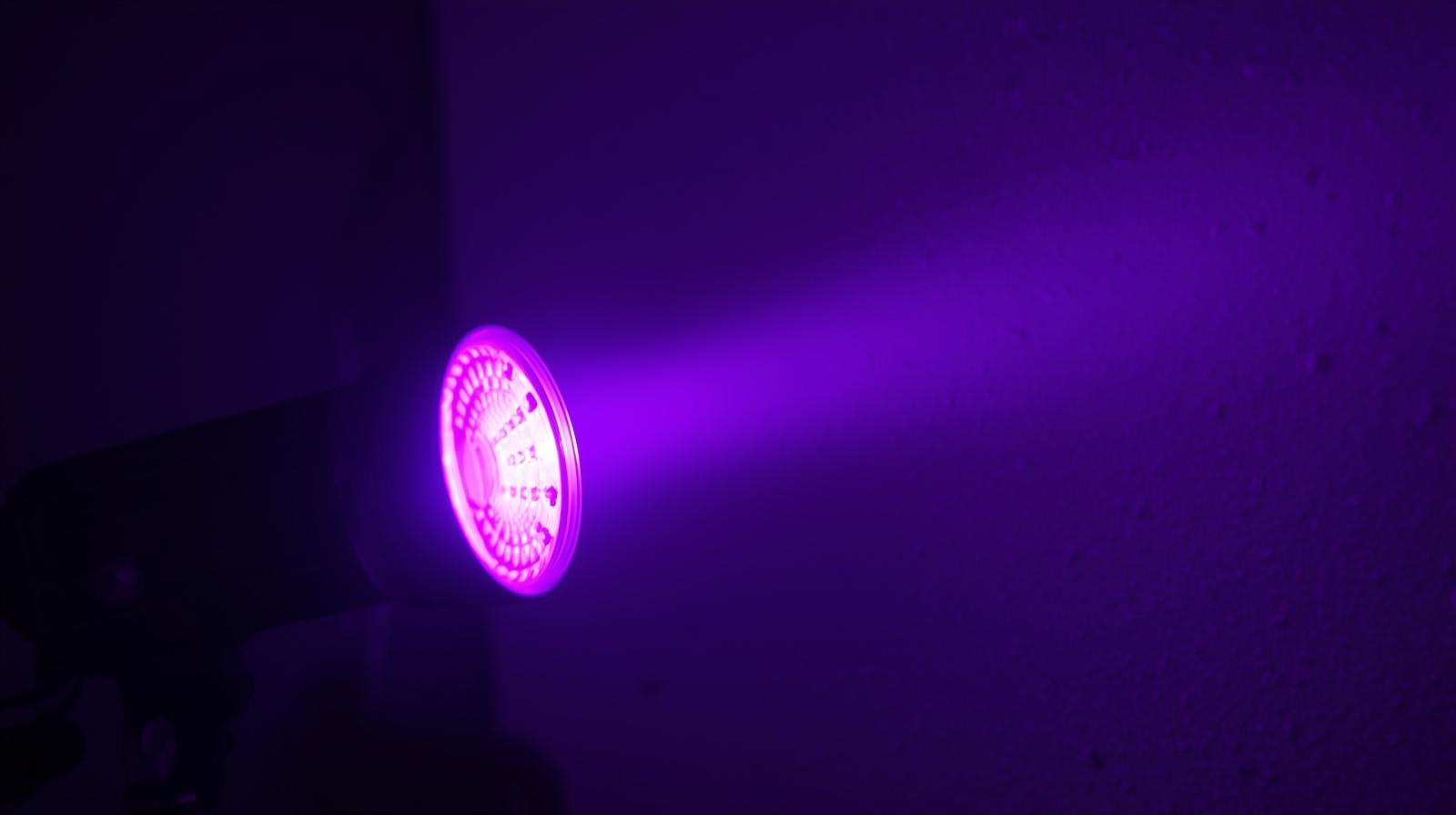
UV LEDs are semiconductor devices that emit light in the ultraviolet spectrum when an electric current passes through them. These devices are engineered to emit specific wavelengths within the UV spectrum—UVA (315–400 nm), UVB (280–315 nm), and UVC (200–280 nm)—depending on their application. UVA LEDs are typically used in industrial curing processes, UVB is utilized in medical therapies such as skin treatments, and UVC is most known for its disinfection and sterilization capabilities.
One of the major advantages of UV LEDs over traditional UV lamps is their compactness and energy efficiency. Unlike mercury vapor lamps, UV LEDs do not contain toxic materials, require no warm-up time, and have a significantly longer operational life. These properties make UV LEDs not only more environmentally friendly but also more economically attractive over the long term. As advances in materials such as aluminum gallium nitride (AlGaN) improve performance and wavelength precision, the technology is becoming more viable for a wide range of industrial and consumer applications.
The UV LED market is expected to be valued at USD 1.23 billion in 2025 and is projected to reach USD 2.16 billion by 2030, registering a CAGR of 11.9%
Download PDF Brochure @ https://www.marketsandmarkets.com/pdfdownloadNew.asp?id=143107738
Expanding Applications Across Industries
The versatility of UV LED technology is one of the key drivers of its market expansion. In healthcare, UVC LEDs are revolutionizing the way hospitals, clinics, and laboratories perform sterilization. Medical devices, surgical tools, and surfaces can now be disinfected in seconds without using chemicals. The COVID-19 pandemic accelerated the demand for UVC-based sterilization, and even in a post-pandemic world, hygiene and infection control remain a top priority—making this growth trajectory sustainable.
In the water and air purification sector, UV LEDs are being incorporated into municipal treatment facilities, industrial purification systems, and residential products. These systems use UV light to neutralize bacteria, viruses, and other microorganisms without leaving chemical residues, offering a clean, energy-efficient alternative to traditional chlorination or ozone treatments.
Manufacturing industries, particularly those involved in printing, electronics, and coatings, are embracing UVA LED technology for curing inks, adhesives, and resins. UV LED curing systems provide faster processing times, reduced energy consumption, and improved production quality. As a result, companies are replacing legacy UV curing systems with LED-based alternatives to meet production and environmental standards.
The food and beverage industry is also turning to UV LEDs for contactless sterilization of packaging, conveyor belts, and processing surfaces. This application enhances food safety and extends shelf life without relying on chemical disinfectants. Meanwhile, consumer electronics and smart home devices are incorporating UV LEDs in products such as toothbrush sanitizers, phone cleaners, and wearable health gadgets—meeting growing consumer demand for hygiene and wellness.
Environmental and Regulatory Catalysts
One of the most significant contributors to the momentum behind the UV LED industry is the global regulatory shift away from mercury-based lighting technologies. Legislation such as the Minamata Convention on Mercury, which aims to eliminate or restrict the use of mercury in products and manufacturing, has created a direct incentive for industries to adopt UV LED alternatives. Governments in Europe, North America, and parts of Asia have either banned or are in the process of phasing out mercury-based UV lamps, creating a vast opportunity for UV LED manufacturers.
In addition to regulatory drivers, environmental concerns are pushing industries to embrace technologies that reduce carbon emissions and resource waste. UV LEDs offer lower power consumption, generate minimal heat, and have a longer lifespan than traditional systems—making them ideal for sustainable technology initiatives and net-zero goals.
Regional Market Insights
The Asia-Pacific region continues to dominate UV LED manufacturing, with countries like China, Japan, and South Korea leading in R&D and large-scale production. China’s growing environmental policies and manufacturing scale have positioned it as a key exporter of UV LED components. Japan and South Korea, meanwhile, are focused on high-precision applications in electronics and medical technologies.
In North America, demand is being driven by the healthcare, air purification, and smart home sectors. The region is also seeing increased investment in UV LED startups and innovations, especially in Silicon Valley and medical device clusters. Europe is prioritizing clean technologies and sustainability, contributing to significant growth in UV LED adoption in water treatment and public health applications.
Innovation and the Road Ahead
The future of the UV LED industry is closely tied to ongoing innovation in materials, miniaturization, and integration with digital ecosystems. Researchers are actively working on improving the power output and efficiency of deep UVC LEDs, which are still more costly and less efficient than their longer-wavelength counterparts. However, with continued investment and breakthroughs, these limitations are rapidly being addressed.
Integration with Internet of Things (IoT) and smart building systems is another area of growth. UV LED-based disinfection devices can now be connected to mobile apps or building management systems, allowing automated operation, monitoring, and data analysis. This opens up possibilities for real-time disinfection in hospitals, airports, offices, and public transportation systems—making UV disinfection not just a feature, but a built-in infrastructure capability.
Conclusion: A Bright Future for UV LEDs
The global UV LED industry is no longer a niche segment—it is a mainstream technology with expanding influence across virtually every sector. From revolutionizing healthcare disinfection to transforming industrial manufacturing, UV LEDs are setting new benchmarks for performance, safety, and sustainability. As technological barriers continue to fall and applications diversify, the industry is poised for continued double-digit growth in the years ahead.
Frequently Asked Questions (FAQ) – UV LED Industry
What are UV LEDs and how do they differ from traditional UV lamps?
UV LEDs (Ultraviolet Light-Emitting Diodes) are solid-state lighting devices that emit UV light when an electric current passes through them. Unlike traditional mercury-based UV lamps, UV LEDs are compact, energy-efficient, environmentally friendly, and do not contain hazardous materials like mercury. They also offer instant-on capabilities, longer operational lifespans, and greater wavelength precision, making them a more advanced and sustainable alternative across various applications.
Why is the UV LED industry experiencing such rapid growth?
The growth of the UV LED industry is driven by a combination of technological advancements, stricter environmental regulations, and expanding application areas. As industries seek alternatives to mercury-containing UV lamps and more energy-efficient solutions, UV LEDs offer a safer and more cost-effective option. The increased need for sterilization, particularly after the COVID-19 pandemic, has also led to greater demand for UV-C LEDs in healthcare, public spaces, and consumer products.
What are the main applications of UV LED technology?
UV LED technology is used across a wide range of sectors. In healthcare, UVC LEDs are used for sterilization of medical instruments and environments. In water and air purification, UV LEDs help neutralize bacteria and viruses without chemicals. In manufacturing, particularly printing and electronics, UVA LEDs are used for curing inks and adhesives. Other applications include food safety, pharmaceutical processing, wearable devices, and consumer electronics such as toothbrush sterilizers and phone sanitizers.
About MarketsandMarkets™
MarketsandMarkets™ has been recognized as one of America’s Best Management Consulting Firms by Forbes, as per their recent report.
MarketsandMarkets™ is a blue ocean alternative in growth consulting and program management, leveraging a man-machine offering to drive supernormal growth for progressive organizations in the B2B space. With the widest lens on emerging technologies, we are proficient in co-creating supernormal growth for clients across the globe.
Today, 80% of Fortune 2000 companies rely on MarketsandMarkets, and 90 of the top 100 companies in each sector trust us to accelerate their revenue growth. With a global clientele of over 13,000 organizations, we help businesses thrive in a disruptive ecosystem.
The B2B economy is witnessing the emergence of $25 trillion in new revenue streams that are replacing existing ones within this decade. We work with clients on growth programs, helping them monetize this $25 trillion opportunity through our service lines – TAM Expansion, Go-to-Market (GTM) Strategy to Execution, Market Share Gain, Account Enablement, and Thought Leadership Marketing.
Built on the ‘GIVE Growth’ principle, we collaborate with several Forbes Global 2000 B2B companies to keep them future-ready. Our insights and strategies are powered by industry experts, cutting-edge AI, and our Market Intelligence Cloud, KnowledgeStore™, which integrates research and provides ecosystem-wide visibility into revenue shifts.
To find out more, visit www.MarketsandMarkets™.com or follow us on Twitter , LinkedIn and Facebook .
Contact:
Mr. Rohan Salgarkar
MarketsandMarkets™ INC.
1615 South Congress Ave.
Suite 103, Delray Beach, FL 33445
USA: +1-888-600-6441
Visit Our Website: https://www.marketsandmarkets.com/
