The exoskeleton technology market is experiencing rapid transformation as innovations in robotics, wearable systems, and artificial intelligence converge to enhance human performance across medical, industrial, and defense applications. Originally designed primarily for clinical rehabilitation, modern exoskeletons are increasingly being used in industrial settings, military operations, and even consumer-focused mobility solutions. The market is expected to grow substantially in the coming years as technology matures and adoption expands into diverse sectors.
Healthcare: Driving Rehabilitation and Mobility
Healthcare remains a foundational driver of exoskeleton adoption. Powered exoskeleton systems are being deployed in hospitals and rehabilitation centers to support patients recovering from spinal cord injuries, strokes, and other conditions that impair mobility. These devices enable guided, repetitive movements that strengthen muscles, improve coordination, and accelerate functional recovery. Rehabilitation programs that incorporate exoskeletons are showing improved patient outcomes, making these devices an increasingly essential tool in modern therapeutic practices. In addition, the evolution of regulatory approvals and reimbursement policies in multiple regions is facilitating broader clinical adoption and making these systems more accessible to patients in need.
Download PDF Brochure @ https://www.marketsandmarkets.com/pdfdownloadNew.asp?id=40697797
Industrial Applications: Enhancing Safety and Efficiency
Industrial adoption of exoskeleton technology is expanding rapidly as manufacturers and logistics companies seek to improve workplace safety and productivity. Exoskeletons designed for industrial use provide support for lifting, bending, and other repetitive tasks, reducing strain on workers’ muscles and joints. By decreasing the risk of musculoskeletal injuries and extending the working life of employees, exoskeletons are becoming a strategic investment for companies in sectors such as automotive manufacturing, warehousing, and construction. The technology also helps organizations address the challenges of an aging workforce, allowing older employees to perform physically demanding tasks safely and efficiently.
Defense and Military Applications
Defense organizations around the world are investing heavily in exoskeletons to enhance soldier performance and endurance. These systems help personnel carry heavier loads, navigate challenging terrain, and reduce fatigue during extended operations. Military programs are also pushing the boundaries of technology through research in adaptive control systems and sensor-based real-time feedback, which allows exoskeletons to respond dynamically to user movements. While military deployment remains specialized, the innovations developed for defense often influence civilian and industrial applications, accelerating broader technological advancement.
Technological Innovations Shaping the Market
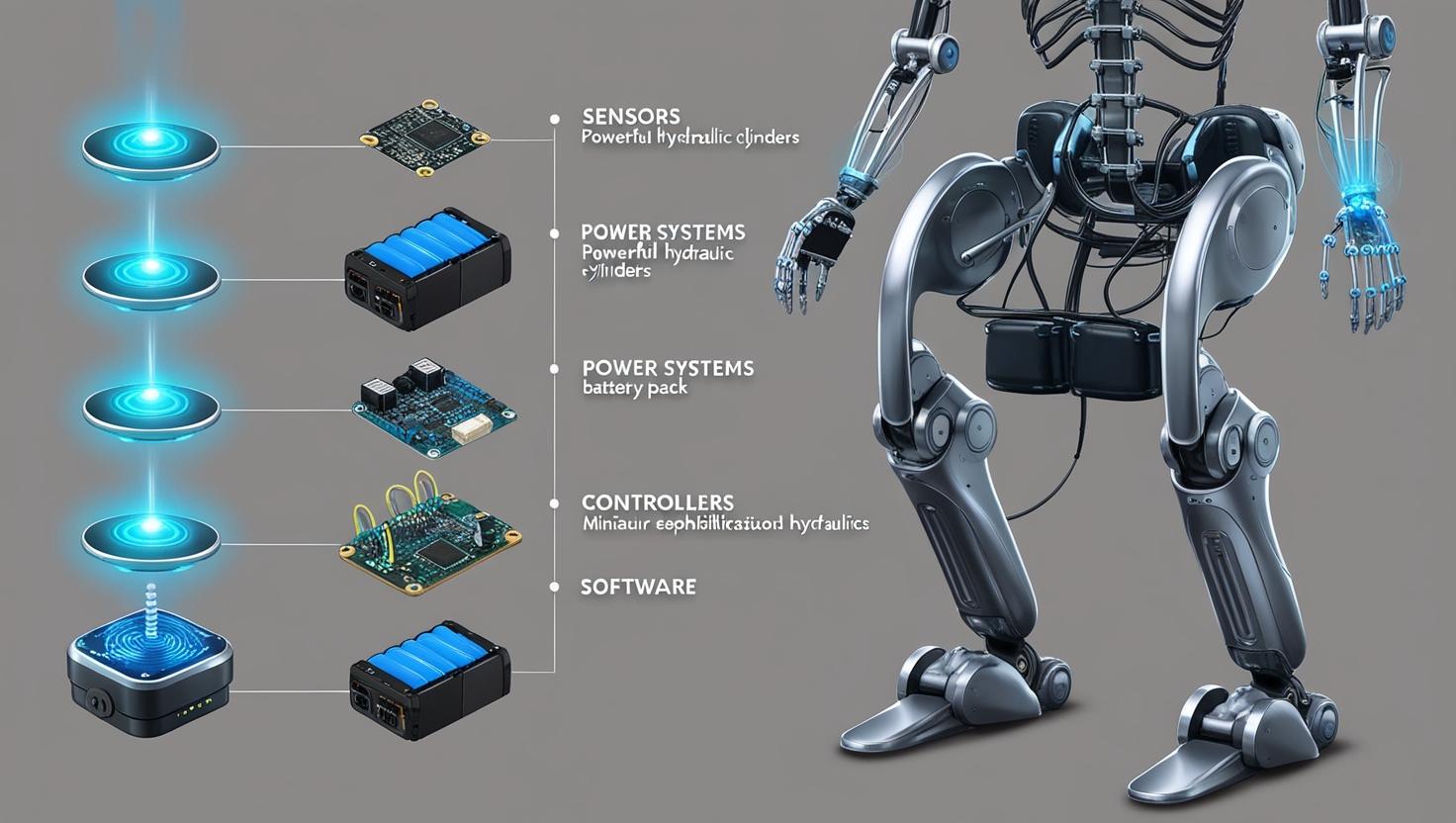
Technological advancements are redefining what exoskeletons can achieve. Integration of artificial intelligence, advanced sensors, and real-time adaptive control systems has improved both functionality and comfort. Modern devices can interpret user intent and adjust assistance dynamically, providing a natural and intuitive experience whether in rehabilitation, industrial work, or personal mobility. Material innovations such as carbon fiber and advanced polymers have significantly reduced device weight while maintaining strength, allowing users to wear exoskeletons comfortably for longer periods. Soft exosuits and flexible wearable designs are further enhancing mobility and usability, making the technology more accessible beyond clinical and industrial settings.
Challenges and Market Barriers
Despite its potential, the exoskeleton market faces significant hurdles. High costs remain a major barrier, limiting accessibility primarily to well-funded institutions and large corporations. Regulatory complexity adds further challenges, as certification requirements vary across regions and delay product launches. Technical limitations, including battery life, weight, and ergonomics, also affect user acceptance, particularly for industrial workers or patients who need to use the devices for extended periods. Overcoming these challenges will be critical for enabling widespread adoption and realizing the full potential of exoskeleton technology.
Future Outlook and Opportunities
The future of the exoskeleton market is poised for significant growth as technological innovation, strategic investment, and increasing user acceptance align. Advances in artificial intelligence, human-machine interfaces, and power management are making exoskeletons more adaptable and intuitive. Industrial safety, eldercare, and rehabilitation applications will continue to drive adoption, while emerging consumer interest in personal mobility enhancement and fitness may open entirely new markets. As costs decrease and ergonomics improve, exoskeletons are likely to become an integral part of everyday human augmentation, reshaping how people work, recover, and move.
Exoskeleton Technology Market FAQ
1. What is an exoskeleton?
An exoskeleton is a wearable device designed to enhance human strength, mobility, or endurance. It can be powered, with motors and sensors to assist movement, or passive, using mechanical structures to reduce strain and improve posture. Exoskeletons are used in healthcare, industrial work, defense, and even consumer applications.
2. What are the main applications of exoskeletons?
Exoskeletons are primarily used in three sectors: healthcare, industry, and defense. In healthcare, they assist rehabilitation and mobility for patients with injuries or disabilities. In industrial environments, they help workers lift heavy loads, reduce fatigue, and prevent injuries. Defense applications focus on increasing soldier endurance, load-carrying capacity, and overall efficiency.
3. How is technology improving exoskeletons?
Modern exoskeletons incorporate artificial intelligence, advanced sensors, and adaptive control systems. These allow the device to respond dynamically to user movements, provide natural assistance, and collect performance data. Advances in lightweight materials and ergonomic design also make exoskeletons more comfortable for extended use.
4. What challenges does the exoskeleton market face?
High costs, regulatory complexity, and technical limitations such as battery life and weight are the main challenges. Limited insurance coverage and the need for specialized training in clinical or industrial settings can also slow adoption.
About MarketsandMarkets™
MarketsandMarkets™ is a blue ocean alternative in growth consulting and program management, leveraging a man-machine offering to drive supernormal growth for progressive organizations in the B2B space. We have the widest lens on emerging technologies, making us proficient in co-creating supernormal growth for clients.
The B2B economy is witnessing the emergence of $25 trillion of new revenue streams that are substituting existing revenue streams in this decade alone. We work with clients on growth programs, helping them monetize this $25 trillion opportunity through our service lines – TAM Expansion, Go-to-Market (GTM) Strategy to Execution, Market Share Gain, Account Enablement, and Thought Leadership Marketing.
Built on the ’GIVE Growth’ principle, we work with several Forbes Global 2000 B2B companies – helping them stay relevant in a disruptive ecosystem. Our insights and strategies are molded by our industry experts, cutting-edge AI-powered Market Intelligence Cloud, and years of research. The KnowledgeStore™ (our Market Intelligence Cloud) integrates our research, facilitates an analysis of interconnections through a set of applications, helping clients look at the entire ecosystem and understand the revenue shifts happening in their industry.
To find out more, visit www.MarketsandMarkets™.com or follow us on Twitter, LinkedIn and Facebook.
Contact:
Mr. Rohan Salgarkar
MarketsandMarkets™ INC.
630 Dundee Road
Suite 430
Northbrook, IL 60062
USA : 1-888-600-6441
