The exoskeleton technology market is undergoing a transformative shift, rapidly evolving from experimental prototypes to real-world applications across healthcare, industrial, military, and consumer sectors. With rising investments, technological advancements, and a growing focus on human augmentation, the exoskeleton technology market is positioned for significant global growth in the coming years.The global exoskeleton market is projected to grow from USD 0.56 billion in 2025 to USD 2.03 billion by 2030, at a CAGR of 29.4%
What Is Driving Growth in the Exoskeleton Technology Market?
Several key factors are contributing to the acceleration of the exoskeleton technology market worldwide:
1. Rising Demand in Healthcare and Rehabilitation
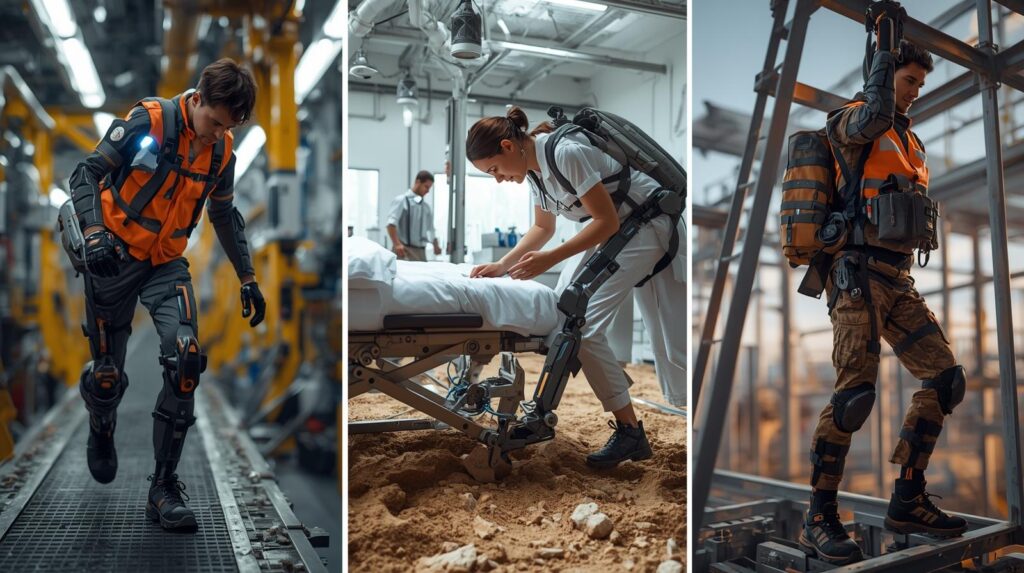
One of the most significant drivers of the exoskeleton technology market is its application in the healthcare sector, particularly for rehabilitation and mobility assistance. Patients suffering from spinal cord injuries, strokes, or neuromuscular disorders are now benefiting from robotic exoskeletons that help restore mobility and support recovery. Hospitals and rehab centers around the world are adopting these devices to improve patient outcomes and reduce long-term care costs.
2. Industrial Applications to Reduce Worker Fatigue and Injury
In the industrial sector, the exoskeleton technology market is gaining momentum as companies seek to improve worker safety and productivity. Wearable exoskeletons are being deployed in manufacturing, logistics, and construction environments to assist with heavy lifting, repetitive tasks, and overhead work. By reducing physical strain, exoskeletons help lower the risk of musculoskeletal injuries and enhance operational efficiency.
3. Military and Defense Adoption
Governments and defense organizations are investing heavily in the exoskeleton technology market to enhance soldier performance and endurance. Military-grade exoskeletons allow personnel to carry heavy loads with less fatigue, improving mobility and reducing the risk of injury in combat or training scenarios. This strategic interest is expected to significantly boost market growth over the next decade.
Download PDF Brochure @ https://www.marketsandmarkets.com/pdfdownloadNew.asp?id=40697797
4. Technological Advancements and AI Integration
As artificial intelligence (AI), sensor technology, and lightweight materials continue to evolve, the capabilities of wearable robotics have expanded. These advancements are enabling smarter, more responsive exoskeleton systems that adapt to user movements in real time. This innovation is a key factor behind the increasing adoption and investment in the exoskeleton technology market globally.
5. Aging Population and Mobility Challenges
The global rise in aging populations, especially in developed countries, is creating new demand in the exoskeleton technology market for personal mobility aids. Lightweight, user-friendly exoskeletons are emerging as practical solutions to help elderly individuals maintain independence and improve quality of life.
Regional Growth and Market Outlook
North America currently leads the exoskeleton market, driven by robust R&D, supportive regulatory frameworks, and high healthcare spending. However, the Asia-Pacific region is projected to see the fastest growth, fueled by expanding manufacturing sectors, aging demographics, and increased government initiatives in countries like China, Japan, and South Korea.
Europe also remains a strong player in the exoskeleton technology market, particularly in healthcare and rehabilitation applications, supported by technological innovation and public-private partnerships.
Challenges in the Exoskeleton Technology Market
- Despite its rapid growth, the exoskeleton technology market still faces several challenges:
- High development and production costs
- Regulatory and safety concerns
- Limited user acceptance in some sectors
- Battery life and mobility constraints
However, as technology matures and economies of scale are achieved, many of these barriers are expected to diminish, making exoskeletons more accessible and affordable across industries.
The exoskeleton technology market is no longer just a futuristic concept—it is a fast-developing global industry with tangible applications that improve human capability, safety, and well-being. From assisting stroke patients to empowering industrial workers and soldiers, the potential of exoskeletons is vast and still expanding.
With continuous innovation, rising demand, and increasing investment, the exoskeleton technology market is poised to become a critical part of the future of work, mobility, and healthcare.
The exoskeleton companies includes significant Tier I and II players like Ekso Bionics (US), Ottobock (Germany), DIH Medical (Switzerland), Comau (Italy), Myomo Inc. (US), CYBERDYNE Inc. (Japan), Lifeward Ltd. (Israel), Hyundai Motor Group Robotics LAB (South Korea), B-Temia (Canada), Rex Bionics Ltd. (New Zealand), ABLE Human Motion (Spain), Laevo Exoskeletons (Netherlands), German Bionic Systems GmbH (Germany), Levitate Technologies, Inc. (US), and others.
FAQ: Exoskeleton Technology Market
Q1: What is the current size and growth rate of the exoskeleton technology market?
A: The exoskeleton technology market is growing rapidly, with estimates projecting it to reach several billion dollars globally within the next decade. The market’s compound annual growth rate (CAGR) is typically expected to be in the high double digits due to rising adoption in healthcare, industrial, and military sectors.
Q2: What are the main drivers of growth in this market?
A: Key drivers include increasing demand for rehabilitation devices, industrial applications to reduce worker injury, military adoption for enhanced soldier performance, technological advancements (AI, sensors, materials), and a growing elderly population seeking mobility assistance.
Q3: What are the main challenges facing companies in this market?
A: Challenges include high R&D and manufacturing costs, regulatory hurdles, user acceptance and training, battery life limitations, and integration with existing workflows.
Q4: Which regions offer the best investment opportunities?
A: North America currently leads the market due to advanced healthcare infrastructure and defense spending. Asia-Pacific is expected to offer the fastest growth opportunities, especially in countries like China, Japan, and South Korea. Europe remains strong in healthcare-related applications.
Q5: What sectors are the biggest adopters of exoskeleton technology?
A: Healthcare (rehabilitation and mobility), industrial manufacturing and logistics, and military/defense are the primary sectors driving demand.
