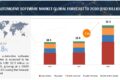
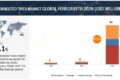
The automotive HUD market is projected to grow from USD 2.41 billion in 2026 to USD 4.71 billion by 2033, at a CAGR of 10.1%
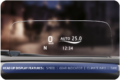
The automotive HUD market is expanding on the back of increasing penetration of factory-fitted HUD systems and growing integration of digital cockpit technologies across passenger and commercial vehicles. The rising demand for enhanced driver visibility and real-time access to critical driving information is strengthening the role of HUD systems as a key driver assistance interface. At the same time, the market is shifting toward advanced and augmented reality-based HUD systems with improved display capabilities, enabling contextual navigation, real-time alerts, and enhanced driving experience, with participation from players such as Panasonic Automotive and Nippon Seiki driving the adoption of next-generation HUD solutions.
By vehicle class, the luxury cars segment is expected to account for the largest share during the forecast period. The early adoption of advanced head-up display systems and strong integration of digital cockpit technologies drives this. Consumers in this segment increasingly demand enhanced driving experience and real-time access to critical information, with HUDs providing navigation, speed, and driver assistance data directly within the line of sight. OEMs are offering HUDs as a standard or optional feature in premium models, supported by increasing focus on safety, convenience, and in-vehicle digitalization. The price gap between luxury and mid-segment HUD systems is gradually narrowing, making the technology more accessible across a broader range of vehicles. In parallel, rising vehicle production in mid-segment categories and growing demand for connected and feature-rich vehicles are increasing the adoption of HUD systems beyond premium cars, particularly across Asia Pacific and other high-growth automotive markets.
Download PDF Brochure @ https://www.marketsandmarkets.com/pdfdownloadNew.asp?id=11272971
By technology, the 2D HUD segment is expected to account for the largest share during the forecast period. This is driven by its widespread adoption across passenger vehicles and cost-effective integration within existing vehicle display systems. Automakers are increasingly deploying 2D HUDs to provide essential driving information, such as speed, navigation, and alerts, directly within the driver’s line of sight, ensuring minimal distraction and improved situational awareness. OEMs are integrating these systems across mid-segment and premium vehicles, supported by increasing focus on vehicle safety and enhanced driver assistance features. The cost advantage of 2D HUD systems compared to AR and 3D HUD technologies is making them more accessible for broader vehicle segments, particularly in mid-range vehicles. In parallel, rising production volumes and increasing demand for advanced in-vehicle display technologies are supporting the adoption of next-generation HUD systems, with AR and 3D HUDs expected to gain traction over time, particularly in premium vehicles and technologically advanced automotive markets.
Asia Pacific is expected to account for the largest and fastest-growing market in the automotive HUD market due to strong automotive production, increasing adoption of advanced in-vehicle technologies, and rising demand for connected and electric vehicles. Markets such as China, Japan, South Korea, and India are witnessing accelerated adoption as OEMs integrate HUD systems within digital cockpit platforms to enhance driver awareness and safety. The growing penetration of electric vehicles and connected car ecosystems is further supporting the demand for HUD systems, particularly for real-time display of critical driving and vehicle information. The increasing availability of cost-optimized HUD technologies and large-scale manufacturing capabilities in the region is reducing system costs, enabling broader adoption across mid-segment and premium passenger vehicles. At the same time, rising consumer preference for advanced safety and convenience features is driving OEMs to standardize HUD integration across vehicle segments. For instance, Nippon Seiki supplies head-up display systems to OEMs such as Toyota Motor Corporation and Honda Motor Co., Ltd., supporting widespread adoption of HUD technologies across Asia Pacific.
Key Players
Major players in the automotive HUD market are dominated by global players, such as Robert Bosch GmbH (Germany), Denso (Japan), Nippon Seiki (Japan), Aumovio SE (Germany), and Panasonic Automotive (Germany). These players have been adopting various strategies to sustain their positions in the market.
Request Free Sample Report @ https://www.marketsandmarkets.com/requestsampleNew.asp?id=11272971