A renewable energy certificate (REC) is an industry-based instrument that represents the property rights to the environmental, social, and other non-power attributes of renewable electricity generation. Renewable energy certificates are issued when one megawatt-hour (MWh) of electricity is generated and delivered to the electricity grid from a renewable energy resource like wind energy, solar energy, hydro energy, biomass, biogas, and geothermal energy.
Renewable Energy Certificate (REC) Industry is projected to grow from USD 27.99 billion in 2025 to USD 45.45 billion by 2030, at a CAGR of 10.2%,as per the recent study by MarketsandMarkets™. Majority of the countries are expected to develop REC trading platforms, making access and trading more convenient. The market is primarily driven by the growing corporate emphasis on sustainability to align with consumer preferences and increasing national disclosure requirements. Additionally, long-term factors such as corporate interest in Power Purchase Agreements (PPAs) and evolving regulations reinforce renewable energy certificates (RECs) as the key instrument for legitimately claiming renewable energy usage.
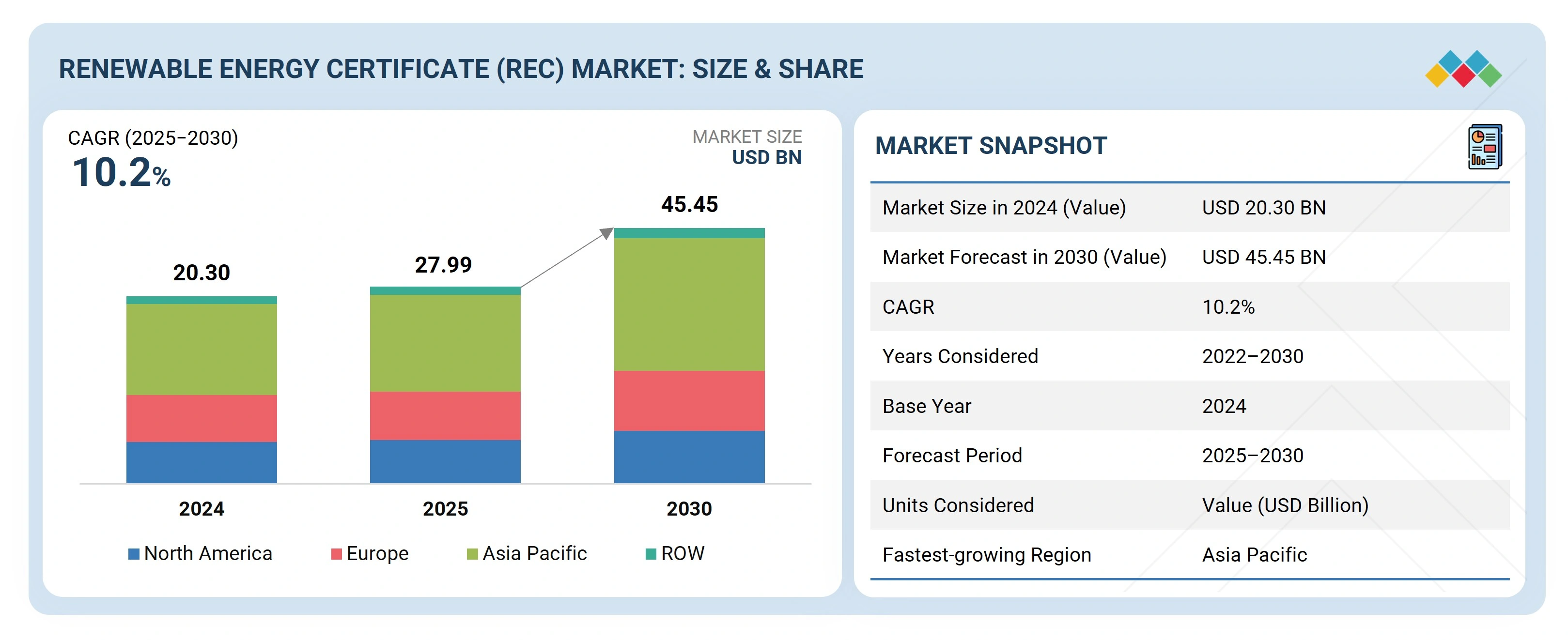
The growth of the renewable energy certificate (REC) industry is driven by the significant focus of organizations on minimizing their greenhouse gas emissions and increasing investments in renewable energy globally. Also, government policies mandating renewable energy targets are strongly propelling the renewable energy certificate (REC) market as they establish a formal framework to encourage power generation using renewable energy sources. The market exhibits promising growth, given the increasing demand from businesses and individuals seeking to neutralize their carbon footprint.
Download PDF Brochure: https://www.marketsandmarkets.com/pdfdownloadNew.asp?id=15096856
List of Key Players in Renewable Energy Certificate (REC) Industry:
- 3Degrees, Inc. (US)
- Shell Energy (UK)
- EDF Trading Limited (UK)
- ENGIE (France)
- Enel Spa (Italy)
- Ecohz (Norway)
- Statkraft (Norway)
- STX Group (Netherlands)
Drivers, Opportunities and Challenges in Renewable Energy Certificate (REC) Industry:
- Driver: Government policies and mandates regarding renewable energy targets
- Restraint: Fluctuating prices of renewable energy certificates
- Opportunity: Increasing investments in clean energy projects
- Challenge: Standardization gaps and duplicate counting issues
Solar power by energy type
RECs, or Renewable Energy Certificates, are all about the environmental benefits of electricity produced from renewable sources like solar, wind, hydro, biomass, and geothermal energy. These certificates are essential for boosting the solar industry, acting as a financial motivator for solar power producers. As the world moves more decisively to cleaner forms of energy, so will RECs take on greater importance in this transition. With RECs, stakeholders can hence move towards a more sustainable future and speed up the use of renewable energy solutions.
Get Sample Pages: https://www.marketsandmarkets.com/requestsampleNew.asp?id=15096856
Regional Analysis
In the recent past, the countries in Asia-Pacific have significantly started increasing the generation of renewable energy with the most focus on solar and wind energy. To facilitate the transition, they have set up several mechanisms and incentives like feed-in tariffs, RECs (renewable energy certificate) programs, and Renewable Energy targets. Key developments responsible for REC market growth in the region are China, Japan, and Australia. As an International Renewable Energy Certificate (I-REC), the market is booming across the region as a global framework for certification of production and usage of renewable equipment.
