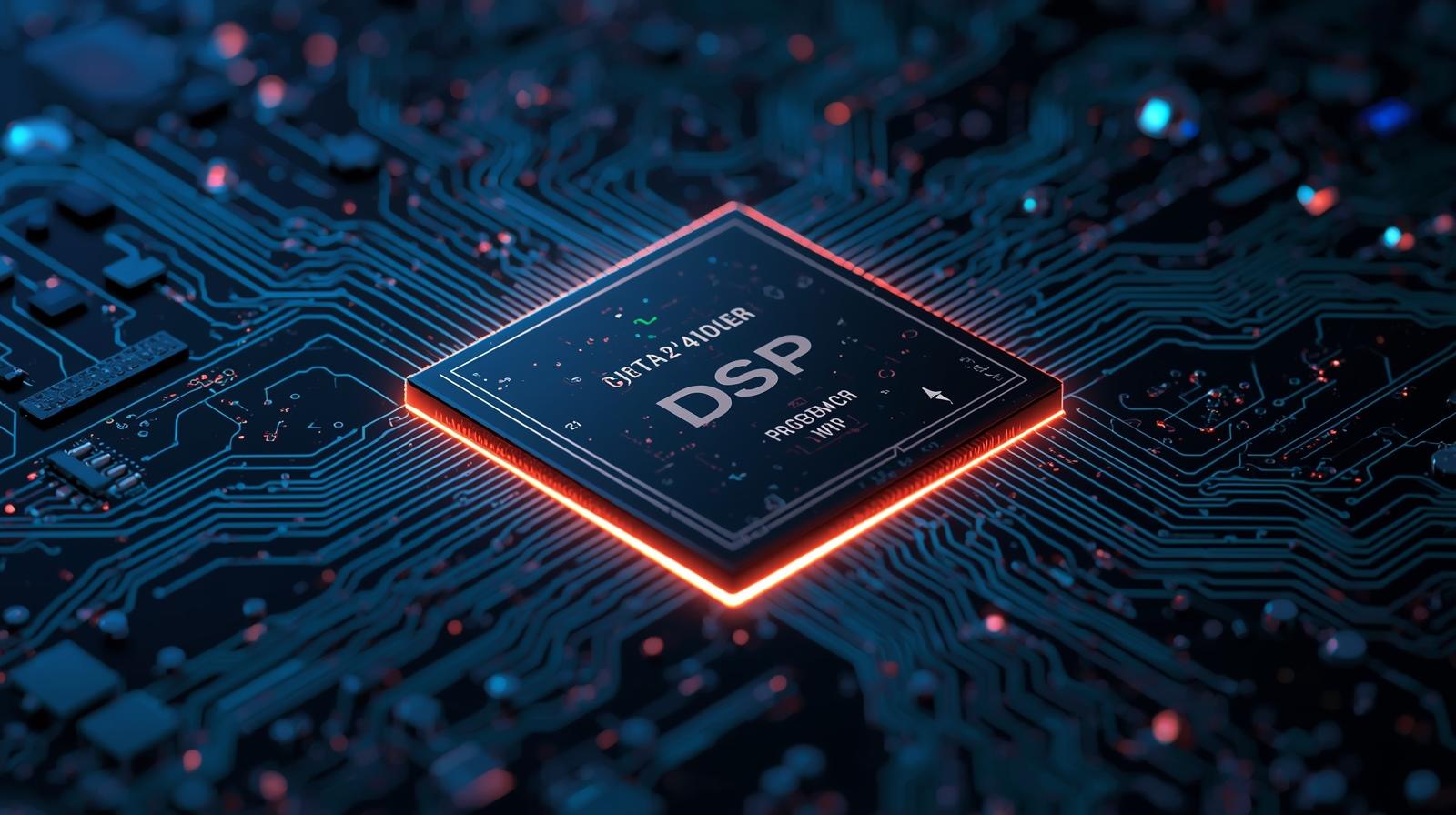
The global Digital Signal Processors (DSP) market is experiencing strong growth as demand for high-performance computing continues to surge across industries. Digital Signal Processors Market Growth are specialized microprocessors designed to efficiently process real-time signals such as audio, video, voice, temperature, and sensor data. With the rapid expansion of artificial intelligence (AI), 5G networks, edge computing, and advanced consumer electronics, DSPs have become a critical component in modern digital systems.
As industries increasingly rely on real-time data processing and intelligent systems, DSP technology is evolving to deliver higher speed, lower latency, and improved energy efficiency. This growing reliance on data-intensive applications is accelerating the global DSP market growth across automotive, telecommunications, healthcare, industrial automation, and consumer electronics sectors.
Rising Demand for High-Performance Computing Driving DSP Adoption
One of the primary factors fueling the growth of the digital signal processors market is the rising demand for high-performance computing (HPC). Modern applications generate massive volumes of data that require fast and efficient processing capabilities. DSPs are specifically optimized for repetitive mathematical operations such as multiplication and accumulation, making them ideal for handling complex signal processing tasks in real time.
Industries such as telecommunications, defense, automotive, and robotics increasingly depend on DSPs to process signals with minimal delay. In telecommunications, DSPs are essential for managing voice and data transmission, improving signal quality, and enabling seamless communication in high-speed networks.
With the expansion of data-heavy technologies like AI-powered analytics and machine learning, DSPs are becoming even more important in supporting computational workloads at the edge. Their ability to deliver high performance with lower power consumption compared to general-purpose processors makes them a preferred choice in embedded systems and portable devices.
Download PDF Brochure @ https://www.marketsandmarkets.com/pdfdownloadNew.asp?id=794
Impact of 5G Technology on DSP Market Growth
The global rollout of 5G networks is significantly contributing to the growth of the DSP market. 5G technology requires ultra-fast data processing, low latency, and high reliability, all of which depend heavily on advanced signal processing capabilities.
Digital Signal Processors play a crucial role in base stations, network infrastructure, and mobile devices by enabling efficient modulation, encoding, decoding, and signal filtering. As telecom operators continue to expand 5G infrastructure globally, the demand for high-performance DSPs is increasing rapidly.
Additionally, 5G-enabled applications such as autonomous vehicles, smart cities, augmented reality (AR), and virtual reality (VR) require real-time data processing, further boosting DSP adoption. The combination of high-speed connectivity and intelligent edge computing is expected to drive long-term market expansion.
Automotive Industry Emerging as a Key Growth Driver
The automotive sector is another major contributor to the expansion of the digital signal processors market. Modern vehicles are becoming increasingly software-driven, integrating advanced driver assistance systems (ADAS), infotainment systems, electric powertrains, and autonomous driving technologies.
DSPs are widely used in automotive applications for processing sensor data, enhancing audio systems, enabling radar and LiDAR signal interpretation, and supporting vehicle-to-everything (V2X) communication. In electric vehicles (EVs), DSPs play a critical role in battery management systems and motor control applications.
As the automotive industry transitions toward electrification and autonomous mobility, the demand for real-time processing and intelligent decision-making systems is increasing. This trend is expected to significantly boost DSP adoption in the coming years.
Growing Use in Consumer Electronics and Smart Devices
Consumer electronics represent one of the largest application areas for digital signal processors. DSPs are widely used in smartphones, smart speakers, televisions, gaming consoles, and wearable devices to enhance audio quality, image processing, and voice recognition capabilities.
The rising popularity of smart assistants and voice-controlled devices has further strengthened DSP demand. Applications such as noise cancellation, speech recognition, and image enhancement rely heavily on DSP technology for real-time processing and improved user experience.
In addition, the increasing demand for immersive media experiences, including high-definition video streaming and gaming, is driving the need for advanced signal processing capabilities in consumer devices. Manufacturers are continuously integrating more powerful DSPs to support these evolving user expectations.
Industrial Automation and IoT Expansion Supporting Market Growth
The rapid growth of industrial automation and the Internet of Things (IoT) is also contributing significantly to the DSP market expansion. Smart factories and connected industrial systems generate large volumes of sensor data that must be processed in real time for monitoring, control, and predictive maintenance.
DSPs are widely used in industrial robotics, motor control systems, and sensor-based monitoring devices. Their ability to handle real-time signal processing with high efficiency makes them ideal for industrial environments where precision and reliability are critical.
As industries move toward Industry 4.0 adoption, the integration of DSPs into automated systems is becoming increasingly important. These processors enable faster decision-making, improved system efficiency, and reduced operational downtime.
Advancements in AI and Edge Computing Technologies
Artificial intelligence and edge computing are reshaping the DSP market landscape. AI-powered applications require efficient processing of large datasets, often at the edge of networks rather than centralized cloud systems. DSPs are well-suited for these tasks due to their ability to perform parallel processing and handle complex mathematical computations efficiently.
In edge devices such as smart cameras, drones, and autonomous machines, DSPs enable real-time image recognition, object detection, and predictive analytics. This reduces dependency on cloud computing and improves response times, making systems more efficient and reliable.
The integration of DSPs with AI accelerators and machine learning frameworks is further expanding their capabilities. This convergence of technologies is expected to play a key role in the next generation of intelligent systems.
Challenges in the DSP Market
Despite strong growth prospects, the Digital Signal Processors Market Growth faces certain challenges. The increasing complexity of semiconductor design, high development costs, and intense competition from alternative processing technologies such as GPUs and FPGAs can impact market growth.
Additionally, the rapid pace of technological change requires continuous innovation, which can increase research and development costs for manufacturers. However, ongoing advancements in chip design, energy efficiency, and integration capabilities are helping address these challenges.
Regional Outlook
Asia Pacific dominates the digital signal processors market due to strong electronics manufacturing bases in countries such as China, Japan, South Korea, and India. The region’s rapid adoption of consumer electronics, automotive technologies, and industrial automation systems is driving demand.
North America remains a key market due to the presence of major semiconductor companies and early adoption of advanced technologies such as AI, 5G, and autonomous systems. Europe also holds a significant share, supported by strong automotive and industrial sectors.
Future Outlook
The Digital Signal Processors Market Growth is expected to witness sustained growth as industries continue to demand faster, smarter, and more efficient computing solutions. The convergence of AI, 5G, IoT, and edge computing will further strengthen the importance of DSPs in modern digital infrastructure.
As applications become more data-intensive and real-time decision-making becomes essential, DSPs will remain a foundational technology powering next-generation systems. With continuous innovation in semiconductor technology, the DSP market is well-positioned for long-term expansion driven by high-performance computing demand across multiple industries.
Frequently Asked Questions (FAQs) – Digital Signal Processors (DSP) Market Growth
1. What is a Digital Signal Processor (DSP)?
A Digital Signal Processor (DSP) is a specialized microprocessor designed to quickly process real-time digital signals such as audio, video, sensor data, and communication signals with high efficiency and low latency.
2. Why is the DSP market growing rapidly?
The DSP market is growing due to rising demand for high-performance computing, increasing adoption of AI and IoT technologies, expansion of 5G networks, and growing use of smart electronic devices.
3. How does high-performance computing impact DSP demand?
High-performance computing requires fast and efficient processing of large data sets. DSPs are optimized for mathematical operations, making them ideal for real-time data processing in applications such as telecommunications, automotive systems, and industrial automation.
4. Which industries are driving DSP market growth?
Key industries driving DSP adoption include:
Consumer electronics
Telecommunications
Automotive
Healthcare
Industrial automation
Aerospace and defense
5. What role does DSP play in 5G technology?
DSPs are essential in 5G infrastructure for signal modulation, encoding, decoding, and filtering. They enable high-speed, low-latency communication in mobile devices and network systems.
About MarketsandMarkets™
MarketsandMarkets™ has been recognized as one of America’s Best Management Consulting Firms by Forbes, as per their recent report.
MarketsandMarkets™ is a blue ocean alternative in growth consulting and program management, leveraging a man-machine offering to drive supernormal growth for progressive organizations in the B2B space. With the widest lens on emerging technologies, we are proficient in co-creating supernormal growth for clients across the globe.
Today, 80% of Fortune 2000 companies rely on MarketsandMarkets, and 90 of the top 100 companies in each sector trust us to accelerate their revenue growth. With a global clientele of over 13,000 organizations, we help businesses thrive in a disruptive ecosystem.
The B2B economy is witnessing the emergence of $25 trillion in new revenue streams that are replacing existing ones within this decade. We work with clients on growth programs, helping them monetize this $25 trillion opportunity through our service lines – TAM Expansion, Go-to-Market (GTM) Strategy to Execution, Market Share Gain, Account Enablement, and Thought Leadership Marketing.
Built on the ‘GIVE Growth’ principle, we collaborate with several Forbes Global 2000 B2B companies to keep them future-ready. Our insights and strategies are powered by industry experts, cutting-edge AI, and our Market Intelligence Cloud, KnowledgeStore™, which integrates research and provides ecosystem-wide visibility into revenue shifts.
To find out more, visit www.MarketsandMarkets™.com or follow us on Twitter , LinkedIn and Facebook .
Contact:
Mr. Rohan Salgarkar
MarketsandMarkets™ INC.
1615 South Congress Ave.
Suite 103, Delray Beach, FL 33445
USA: +1-888-600-6441
