Single cell sequencing has emerged as one of the most transformative technologies in modern life sciences and precision medicine. Unlike conventional bulk sequencing methods that analyze averaged genetic information from millions of cells, single cell sequencing enables researchers to study the genomic, transcriptomic, and epigenomic profiles of individual cells. This powerful capability is accelerating breakthroughs in oncology, immunology, neuroscience, stem cell biology, and drug discovery.
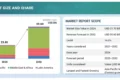
The global single-cell sequencing market is expected to reach USD 3.46 billion by 2030 from USD 1.95 billion in 2025, at a CAGR of 12.2% during the forecast period of 2025–2030. Single-cell sequencing is a genomic technique that helps researchers study the genetic materials of individual cells, aiding in identifying differences between individual cells and offering a clear understanding of cellular functions, disease mechanisms, and treatment responses.
The growing demand for personalized medicine, early disease detection, and advanced biomarker discovery has fueled rapid expansion in the single cell sequencing market. Pharmaceutical companies, biotechnology firms, academic institutes, and clinical laboratories are increasingly adopting these technologies to better understand cellular heterogeneity and complex disease mechanisms. Several leading companies are driving innovation through advanced sequencing platforms, microfluidics technologies, bioinformatics solutions, and integrated workflows.
Download PDF Brochure: https://www.marketsandmarkets.com/pdfdownloadNew.asp?id=244864213
Key Companies Leading the Single Cell Sequencing Market
10x Genomics
10x Genomics is widely recognized as a pioneer in the single cell sequencing industry. The company revolutionized the field with its Chromium platform, which enables high-throughput analysis of thousands of individual cells simultaneously. Its solutions support single cell RNA sequencing, immune profiling, ATAC sequencing, and spatial transcriptomics.
The company’s technology is extensively used in cancer research, immunology studies, and neuroscience applications. Strong investments in product innovation and software integration have positioned 10x Genomics as a dominant player in the global market.
Illumina
Illumina plays a foundational role in the single cell sequencing ecosystem through its next-generation sequencing platforms. Illumina’s high-throughput sequencing systems, including NovaSeq and NextSeq, are commonly paired with single cell preparation technologies to generate highly accurate genomic data.
The company continues to expand its capabilities in multiomics and precision medicine, supporting researchers with scalable sequencing workflows and advanced analytical tools. Illumina’s global presence and strong customer base make it one of the most influential companies in genomic sciences.
Thermo Fisher Scientific
Thermo Fisher Scientific offers a broad portfolio of single cell analysis solutions through its Ion Torrent sequencing systems, reagents, and laboratory automation technologies. The company provides end-to-end workflows that support cell isolation, sequencing preparation, and data analysis.
Thermo Fisher’s strong focus on clinical research and translational medicine has expanded its influence in oncology and immunotherapy applications. Its comprehensive life sciences portfolio gives researchers access to integrated genomic and proteomic tools.
Bio-Rad Laboratories
Bio-Rad Laboratories is a major player in digital PCR and single cell analysis technologies. The company provides advanced droplet-based platforms for cellular analysis and gene expression studies. Its solutions are widely used in molecular diagnostics, cell biology, and precision medicine research.
Bio-Rad continues to strengthen its market position through technological advancements in droplet digital PCR and collaborations with research institutions worldwide.
Pacific Biosciences
Pacific Biosciences, commonly known as PacBio, is recognized for its long-read sequencing technologies. The company’s highly accurate sequencing systems are increasingly being integrated into single cell genomics workflows to improve transcriptome characterization and structural variant detection.
PacBio’s advanced HiFi sequencing technology offers researchers deeper insights into complex genomic regions, supporting applications in rare disease analysis, oncology research, and immune profiling.
Oxford Nanopore Technologies
Oxford Nanopore Technologies has gained strong market attention for its portable and real-time sequencing platforms. The company’s nanopore sequencing technology enables direct analysis of DNA and RNA molecules, making it valuable for rapid single cell sequencing applications.
Its scalable devices, including MinION and PromethION, are widely adopted in genomic research, infectious disease monitoring, and decentralized testing environments.
BD
BD is actively involved in single cell multiomics and flow cytometry technologies. The company’s single cell analysis platforms support immune profiling, cancer research, and biomarker discovery. BD’s expertise in cell sorting and diagnostics enhances its competitive position within the market.
The company continues to invest in advanced bioinformatics and integrated workflow solutions to improve single cell research efficiency.
Market Trends Driving Industry Growth
Several trends are accelerating growth in the single cell sequencing industry:
- Rising demand for precision medicine and targeted therapies
- Increasing adoption of multiomics research approaches
- Growing applications in cancer immunotherapy and biomarker discovery
- Expansion of artificial intelligence and bioinformatics integration
- Higher investments in genomic research and drug development
- Advancements in microfluidics and high-throughput sequencing technologies
Academic institutions and pharmaceutical companies are increasingly collaborating with sequencing technology providers to develop innovative clinical and research applications.
Future Outlook
The future of the single cell sequencing market appears highly promising as researchers continue to uncover the complexity of cellular biology. Advances in automation, sequencing accuracy, and computational analysis are expected to improve scalability and reduce costs, enabling broader adoption across clinical diagnostics and translational medicine.
Leading companies are focusing on integrated multiomics platforms, spatial biology solutions, and AI-powered analytics to strengthen their competitive positions. As precision healthcare continues to evolve, single cell sequencing technologies will remain central to next-generation biomedical discoveries and personalized therapeutic development.
Request Sample Pages : https://www.marketsandmarkets.com/requestsampleNew.asp?id=244864213