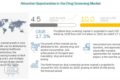
The global Drug Screening Industry is undergoing a major transformation as governments, healthcare systems, employers, and law enforcement agencies intensify efforts to address rising substance abuse and workplace safety concerns. According to the latest analysis, the global drug screening market is projected to grow from USD 10.36 billion in 2025 to USD 21.29 billion by 2030, registering a robust CAGR of 15.5% during the forecast period.
The increasing prevalence of polysubstance abuse, growing demand for rapid and accurate testing technologies, stricter workplace compliance regulations, and the expansion of roadside and forensic testing programs are collectively driving market growth worldwide.
Rising Polysubstance Use Driving Demand for Advanced Drug Testing
One of the primary factors accelerating the growth of the drug screening market is the global rise in polysubstance use. Drug consumption patterns have evolved significantly over the last decade, with individuals increasingly using multiple substances simultaneously, including opioids, stimulants, sedatives, alcohol, cannabis, and synthetic drugs.
This trend has created substantial demand for comprehensive multi-analyte testing solutions capable of detecting a broad spectrum of substances quickly and accurately.
According to the 2022–2023 National Drug Strategy Household Survey (NDSHS) in Australia, approximately 10.2 million people aged 14 years and above had used illicit drugs at some point in their lifetime, while nearly 3.9 million people reported illicit drug use in the previous 12 months. These numbers have steadily increased compared to earlier years, highlighting the long-term expansion of substance use globally.
Similarly, research published in Osong Public Health and Research Perspectives revealed increasing substance use prevalence among school-going children in Arab and African countries. Tobacco and alcohol emerged as the most commonly used substances, while alcohol use showed a particularly notable increase after 2019.
The diversification of drug consumption patterns is pushing healthcare providers, toxicology laboratories, employers, and law enforcement agencies toward more sophisticated and highly sensitive screening technologies.
Workplace Safety and Compliance Fueling Market Expansion
Workplace drug testing continues to represent one of the largest application areas for drug screening technologies. Safety-sensitive industries such as transportation, construction, manufacturing, mining, logistics, and energy are increasingly implementing mandatory drug testing programs to reduce workplace accidents and maintain operational safety.
Employers are conducting pre-employment, random, post-incident, and return-to-duty testing programs more frequently than ever before. Regulatory agencies across several countries also continue to strengthen workplace safety guidelines, further supporting market growth.
The construction sector, in particular, has demonstrated elevated positivity rates in random drug testing programs, emphasizing the need for routine monitoring in high-risk occupational settings.
Growing awareness regarding the economic impact of workplace substance abuse—including absenteeism, reduced productivity, legal liabilities, and accident-related costs—is further encouraging organizations to adopt regular drug screening programs.
Oral Fluid Testing Emerging as the Fastest-Growing Segment
Among various sample types, the oral fluid segment is expected to witness the fastest growth during the forecast period. Oral fluid testing is gaining substantial traction because it offers several operational and clinical advantages compared to traditional urine-based testing.
The growing adoption of oral fluid testing is largely driven by:
- Non-invasive sample collection
- Directly observed testing procedures
- Reduced risk of sample adulteration or substitution
- Faster testing workflows
- Improved suitability for detecting recent drug use
- Greater convenience in roadside and workplace testing
These advantages make oral fluid testing particularly valuable for workplace safety monitoring, roadside law enforcement testing, post-incident investigations, and sports anti-doping programs.
A 2023 workplace drug testing study conducted in Sweden involving nearly 23,900 urine and oral fluid samples found that 4.6% of tests were positive for controlled substances. The highest positivity rates were associated with accident investigations and suspicion-based testing, areas where recent drug detection is critically important.
Cannabis and stimulants were among the most commonly detected substances, reinforcing the effectiveness of oral fluid testing in identifying recent impairment.
The increasing adoption of oral fluid testing in sports anti-doping initiatives is also contributing to market growth. Global anti-doping organizations are increasingly favoring observed specimen collection methods that minimize opportunities for tampering and cheating.
Laboratory Testing Services Continue to Dominate the Market
While rapid and point-of-care testing technologies continue to expand, laboratory testing services accounted for the largest share of the drug screening market in 2024.
The complexity of modern drug use patterns has made laboratory confirmation testing increasingly essential. Large-scale patient analyses have shown that most fentanyl-positive individuals simultaneously use multiple substances, highlighting the limitations of single-drug screening approaches.
Rapid immunoassay-based screening technologies remain valuable for preliminary detection; however, false positives and cross-reactivity issues continue to present challenges. Initial screening test accuracy rates generally range between 85% and 95%, creating a strong need for confirmatory laboratory analysis.
Advanced laboratory technologies such as:
- Gas Chromatography-Mass Spectrometry (GC-MS)
- Liquid Chromatography-Tandem Mass Spectrometry (LC-MS/MS)
provide analytical accuracy levels approaching 99.9%, making them indispensable in forensic toxicology, workplace compliance testing, legal investigations, and clinical diagnostics.
As legal defensibility and analytical precision become increasingly important, demand for laboratory-based confirmatory testing services is expected to remain strong throughout the forecast period.
North America Maintains Market Leadership
North America accounted for the largest share of the global drug screening market in 2024 and is expected to maintain its leadership position during the forecast period.
The region benefits from:
- Extensive workplace drug testing programs
- Strong regulatory frameworks
- High healthcare spending
- Advanced laboratory infrastructure
- Significant law enforcement testing activities
- Growing clinical toxicology demand
The United States remains the primary contributor to regional growth due to the ongoing opioid epidemic and the increasing prevalence of synthetic opioid abuse.
According to the DEA’s 2024 National Drug Threat Assessment, synthetic opioids—particularly fentanyl—continue to dominate drug-related threats across the country. Fentanyl and related synthetic opioids are implicated in nearly 70% of drug-related deaths in the US.
The increasing frequency of polydrug combinations in forensic investigations has further intensified the need for advanced multi-panel drug testing systems.
Additionally, federally mandated workplace testing requirements across transportation and other safety-sensitive sectors continue to generate sustained demand for routine drug screening services.
Future Outlook
The future of the global drug screening market appears highly promising as substance abuse patterns continue to evolve and testing requirements become more comprehensive. Technological advancements in rapid diagnostics, oral fluid testing, laboratory automation, and multi-analyte detection systems are expected to reshape the competitive landscape over the coming years.
The increasing emphasis on workplace safety, roadside drug enforcement, forensic toxicology, sports anti-doping, and clinical substance abuse monitoring will continue to support long-term market expansion.
As healthcare systems and regulatory authorities worldwide intensify efforts to combat rising drug abuse and improve public safety, the demand for accurate, rapid, and legally defensible drug screening solutions is expected to grow substantially through 2030.