The concept of a smart home has evolved far beyond basic automation. What once began with simple programmable thermostats and remote-controlled lighting has now transformed into a fully connected digital ecosystem where homes can think, respond, and adapt to human behavior in real time.
Today, smart homes are powered by a combination of Internet of Things (IoT), artificial intelligence (AI), machine learning, cloud computing, and advanced sensor technologies. These innovations are reshaping residential living, improving safety, enhancing convenience, and optimizing energy consumption.
According to insights from MarketsandMarkets, Smart home market is projected to reach USD 230.76 billion in 2026 and USD 450.20 billion by 2032, exhibiting a CAGR of 11.8%, the global smart home market is experiencing strong expansion driven by increasing adoption of connected devices, rising demand for home automation, and growing awareness of energy efficiency and security solutions.
But the key question remains: How big will the smart home market become, and what is driving this growth?
Let’s explore the market in detail.
The Rise of Smart Homes: A Connected Living Revolution
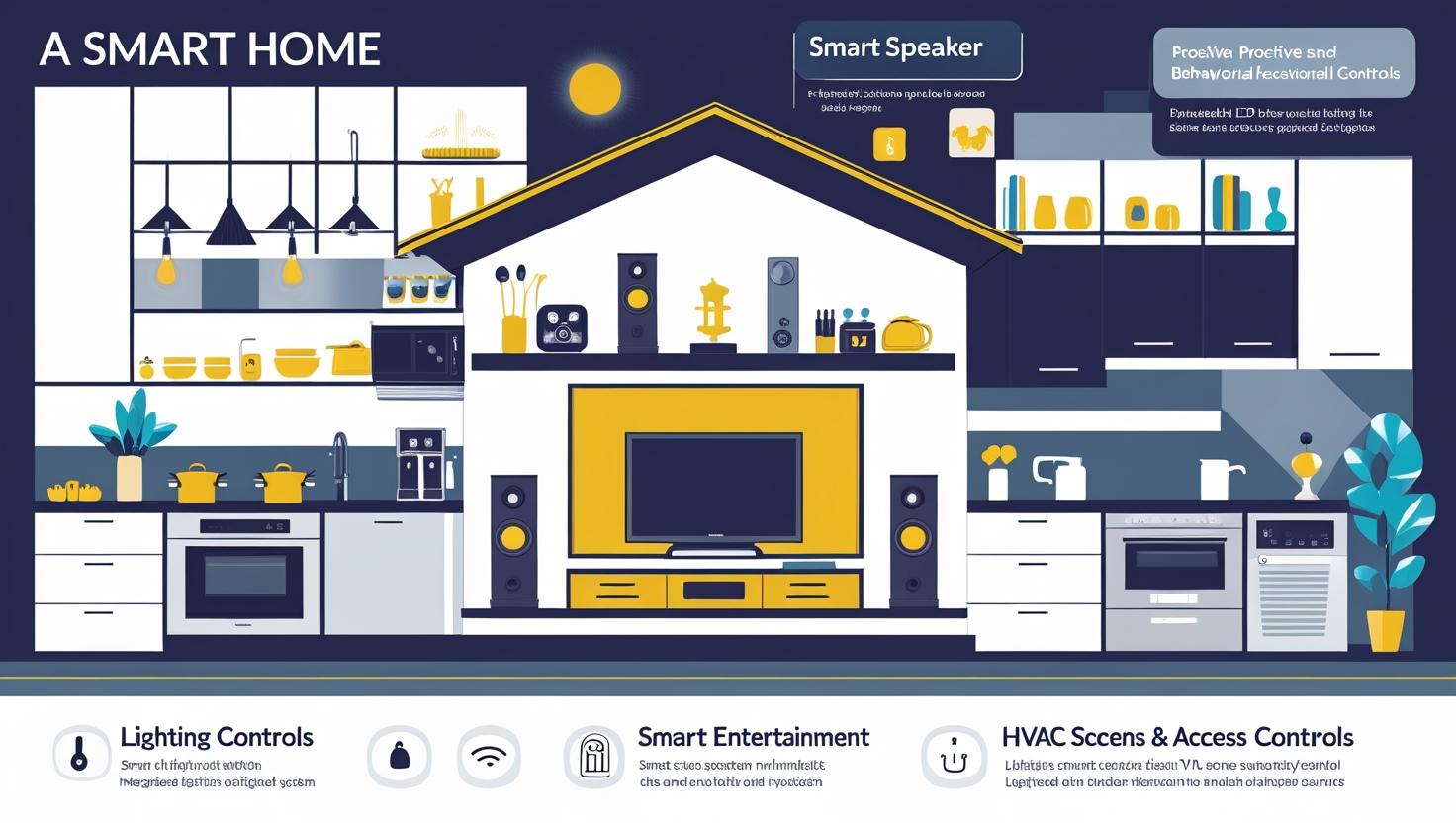
A smart home integrates multiple devices and systems that communicate with each other through a centralized platform. These systems can include lighting, heating, ventilation, air conditioning (HVAC), security systems, entertainment devices, kitchen appliances, and even healthcare monitoring tools.
The main goal is simple: to make homes more intelligent, efficient, secure, and personalized.
The rapid growth of this market is being fueled by changing consumer expectations. Modern homeowners are no longer satisfied with manual control of household systems. Instead, they expect automation, remote access, voice control, and predictive intelligence.
Smart homes are no longer a luxury—they are quickly becoming a mainstream necessity.
Key Drivers of Smart Home Market Growth
Several powerful forces are driving the expansion of the smart home industry.
1. Rapid Adoption of IoT Devices
At the core of every smart home is IoT technology. Devices such as smart speakers, cameras, thermostats, lighting systems, and appliances are now interconnected through wireless networks.
This connectivity allows users to control multiple systems through smartphones or voice assistants, creating a seamless living experience.
The increasing affordability of IoT devices is also accelerating adoption across middle-income households, not just premium segments.
2. Growing Focus on Energy Efficiency
Energy management is one of the most important benefits of smart homes. Smart thermostats, automated lighting systems, and energy-monitoring devices help reduce electricity consumption significantly.
For example, smart HVAC systems can learn user behavior and adjust temperature settings automatically, optimizing both comfort and cost savings.
As global energy prices continue to rise and environmental concerns increase, energy-efficient smart homes are becoming more attractive.
Download PDF Brochure @ https://www.marketsandmarkets.com/pdfdownloadNew.asp?id=121
3. Increasing Demand for Home Security Solutions
Security is a major driver of smart home adoption. Modern smart security systems include:
- Video doorbells
- Motion detection cameras
- Smart locks
- AI-powered surveillance systems
These devices provide real-time alerts, remote monitoring, and advanced threat detection capabilities.
Homeowners are increasingly investing in smart security solutions to enhance safety and gain peace of mind.
4. Integration of Artificial Intelligence
Artificial intelligence is transforming smart homes from reactive systems into predictive ecosystems.
AI enables devices to learn user preferences and behaviors over time. For example, a smart home system can automatically adjust lighting, temperature, and entertainment settings based on daily routines.
Voice assistants powered by AI further enhance user interaction, making home control more intuitive and hands-free.
5. Expansion of Smart Healthcare at Home
One of the fastest-growing segments in the smart home ecosystem is home healthcare and assisted living.
Smart health devices can monitor vital signs, track medication schedules, and alert caregivers in case of emergencies. This is particularly beneficial for elderly individuals and patients requiring continuous monitoring.
The integration of healthcare into smart homes is creating new opportunities in remote patient care and aging-in-place solutions.
Major Segments of the Smart Home Market
The smart home ecosystem is diverse and continues to expand across multiple categories:
Smart Lighting Systems
Automated lighting solutions that adjust brightness, color, and timing based on occupancy and user preferences.
Security & Access Control
Smart locks, cameras, alarm systems, and biometric access solutions that enhance home safety.
HVAC Automation
Intelligent heating and cooling systems that optimize energy usage and comfort.
Home Entertainment Systems
Connected TVs, speakers, streaming devices, and immersive audio-visual systems.
Smart Kitchen Appliances
Refrigerators, ovens, and cooking devices that support automation and remote control.
Home Healthcare Devices
Wearables and monitoring systems that track health conditions and support assisted living.
Smart Home Appliances
Connected washing machines, vacuum cleaners, and air purifiers that simplify daily tasks.
Smart Furniture
Furniture embedded with sensors, charging ports, and adaptive features.
Smart Speakers & Voice Assistants
Central control systems for managing all connected devices through voice commands.
Control Interfaces
Mobile apps, centralized dashboards, and touch panels that integrate entire smart home ecosystems.
Technological Foundations of Smart Homes
The growth of smart homes is supported by several key technologies:
Internet of Things (IoT)
IoT enables communication between devices and creates a unified ecosystem.
Artificial Intelligence (AI)
AI provides automation, personalization, and predictive intelligence.
Cloud Computing
Cloud platforms store and process large volumes of data generated by smart devices.
5G Connectivity
High-speed networks enable real-time communication and low-latency device control.
Edge Computing
Processing data closer to devices improves response time and reduces bandwidth usage.
Market Outlook: How Big Will the Smart Home Industry Become?
The smart home market is expected to grow significantly over the coming years, driven by increasing global demand for automation, energy efficiency, and connected living solutions.
According to market research insights from MarketsandMarkets, the industry is projected to witness strong growth due to rising adoption of IoT-enabled devices and expanding smart infrastructure development.
Several trends will shape its future:
- Increased adoption of AI-powered automation
- Expansion of smart cities and connected infrastructure
- Integration of healthcare with home automation
- Growth in subscription-based smart home services
- Rising demand in emerging economies
As technology becomes more affordable and accessible, smart homes will transition from premium offerings to standard residential features.
Challenges in the Smart Home Market
Despite strong growth potential, the industry faces several challenges:
Data Privacy and Security Concerns
With increased connectivity comes increased vulnerability to cyber threats.
Interoperability Issues
Different devices and platforms often struggle to communicate seamlessly.
High Initial Costs
Advanced smart home systems can still be expensive for many consumers.
Complexity of Installation
Some systems require technical expertise for setup and maintenance.
Addressing these challenges will be critical for sustained market growth.
The Future of Smart Homes
The future of smart homes lies in full automation and predictive intelligence. Homes will not only respond to commands but also anticipate user needs.
For example:
- Lights will adjust based on mood and time of day
- Appliances will operate based on usage patterns
- Security systems will detect threats before they occur
- Energy systems will optimize consumption automatically
Ultimately, smart homes will evolve into self-learning ecosystems that continuously improve the quality of life for residents.
The smart home market is undergoing a major transformation driven by IoT, AI, connectivity, and rising consumer expectations. It is evolving into a multi-billion-dollar industry that is redefining modern living.
From lighting and security to healthcare and entertainment, every aspect of home life is becoming more intelligent and connected.
The future of living is not just smart—it is adaptive, predictive, and deeply personalized.
FAQs
1. What is a smart home?
A smart home is a residential setup where devices and systems are connected through the internet and can be controlled remotely or automatically using smartphones, voice assistants, or AI systems.
2. What are the main benefits of smart homes?
Smart homes offer benefits such as convenience, energy efficiency, improved security, cost savings, and enhanced lifestyle comfort.
3. Which technologies power smart homes?
Smart homes rely on IoT, artificial intelligence, cloud computing, machine learning, 5G connectivity, and edge computing.
4. Is the smart home market growing?
Yes, the smart home market is experiencing strong growth due to increasing adoption of connected devices and rising demand for automation and energy-efficient solutions.
5. What are examples of smart home devices?
Examples include smart speakers, smart thermostats, security cameras, smart locks, lighting systems, connected appliances, and home healthcare devices.
About MarketsandMarkets™
MarketsandMarkets™ has been recognized as one of America’s Best Management Consulting Firms by Forbes, as per their recent report.
MarketsandMarkets™ is a blue ocean alternative in growth consulting and program management, leveraging a man-machine offering to drive supernormal growth for progressive organizations in the B2B space. With the widest lens on emerging technologies, we are proficient in co-creating supernormal growth for clients across the globe.
Today, 80% of Fortune 2000 companies rely on MarketsandMarkets, and 90 of the top 100 companies in each sector trust us to accelerate their revenue growth. With a global clientele of over 13,000 organizations, we help businesses thrive in a disruptive ecosystem.
The B2B economy is witnessing the emergence of $25 trillion in new revenue streams that are replacing existing ones within this decade. We work with clients on growth programs, helping them monetize this $25 trillion opportunity through our service lines – TAM Expansion, Go-to-Market (GTM) Strategy to Execution, Market Share Gain, Account Enablement, and Thought Leadership Marketing.
Built on the ‘GIVE Growth’ principle, we collaborate with several Forbes Global 2000 B2B companies to keep them future-ready. Our insights and strategies are powered by industry experts, cutting-edge AI, and our Market Intelligence Cloud, KnowledgeStore™, which integrates research and provides ecosystem-wide visibility into revenue shifts.
To find out more, visit www.MarketsandMarkets™.com or follow us on Twitter , LinkedIn and Facebook .
Contact:
Mr. Rohan Salgarkar
MarketsandMarkets™ INC.
1615 South Congress Ave.
Suite 103, Delray Beach, FL 33445
USA: +1-888-600-6441
