The way people interact with their homes is undergoing a significant transformation as artificial intelligence (AI), Internet of Things (IoT), automation, and connected technologies reshape modern living environments. Smart homes are evolving from simple automated systems into intelligent ecosystems capable of learning user preferences, improving energy efficiency, enhancing security, and providing greater convenience.
The Smart Home Market Trends landscape is experiencing rapid growth as consumers and businesses increasingly adopt connected devices such as smart speakers, security systems, lighting solutions, thermostats, appliances, and energy management platforms. The integration of AI and IoT is enabling homes to become more responsive, predictive, and personalized.
Growing demand for convenience, rising energy costs, increasing security concerns, and advancements in wireless connectivity are driving the expansion of smart home technologies worldwide. As artificial intelligence continues to improve device intelligence and IoT enables seamless connectivity between products, smarter homes are becoming an essential part of the connected lifestyle.
Understanding Smart Home Technology
A smart home refers to a residential environment equipped with connected devices and automated systems that can be controlled remotely or operate intelligently based on user behavior.
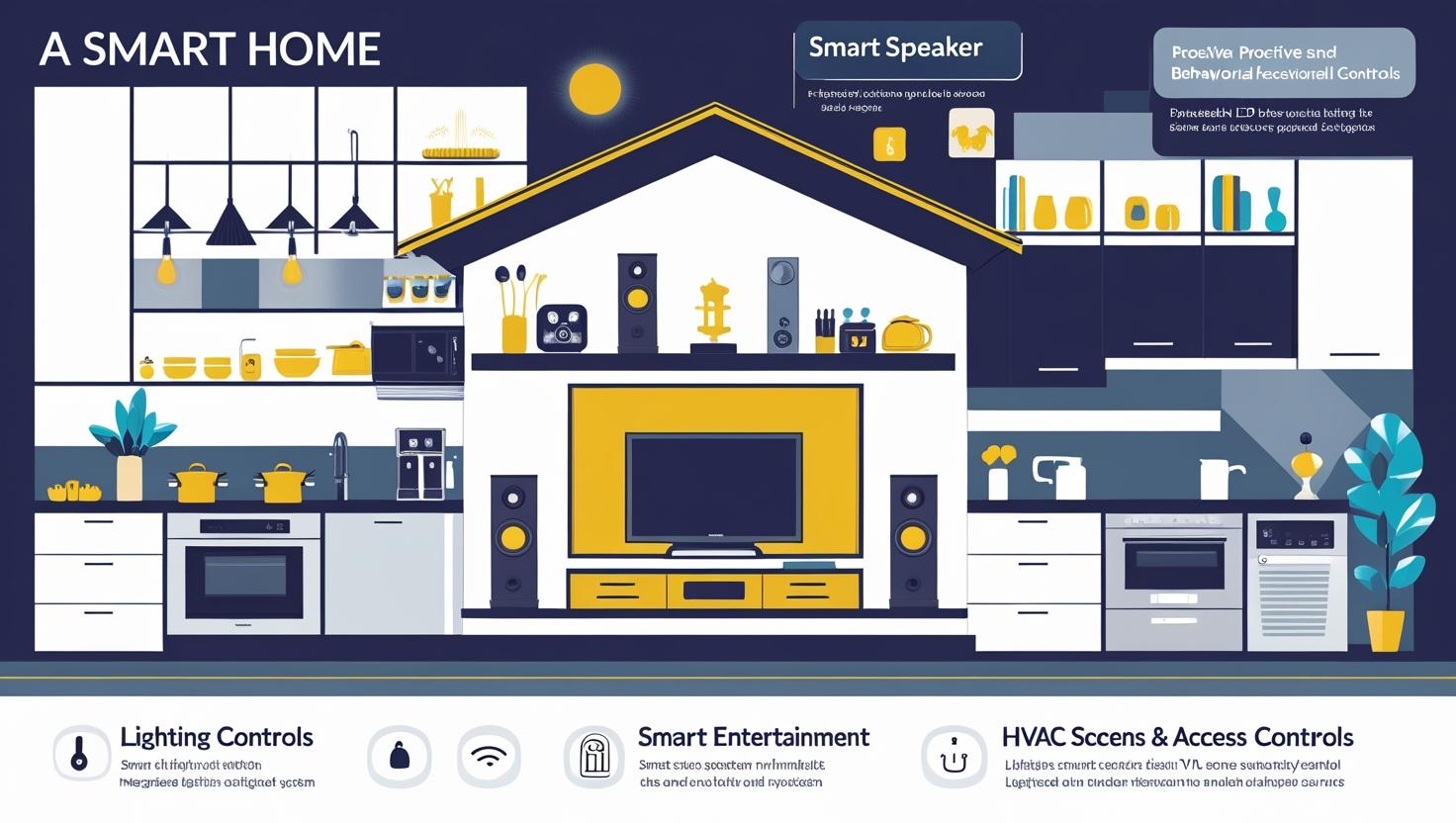
Smart home ecosystems typically include:
- Smart lighting systems
- Connected security cameras
- Smart locks
- Voice-controlled assistants
- Intelligent thermostats
- Smart appliances
- Automated entertainment systems
- Energy management solutions
These devices communicate through wireless networks and IoT platforms, allowing homeowners to monitor and control various functions through smartphones, voice commands, or automated routines.Smart Home Market Trends is projected to reach USD 230.76 billion in 2026 and USD 450.20 billion by 2032, exhibiting a CAGR of 11.8%
The combination of AI and IoT is transforming traditional homes into intelligent environments that can adapt to individual needs.
Key Smart Home Market Trends Driving Growth
AI-Powered Home Automation
One of the most important Smart Home Market Trends is the growing integration of artificial intelligence into connected devices.
AI enables smart home systems to analyze user behavior, identify patterns, and make automated decisions.
Examples include:
- Smart thermostats adjusting temperatures based on occupancy
- Lighting systems learning user preferences
- Security systems recognizing unusual activity
- Voice assistants providing personalized responses
Unlike traditional automation systems that follow fixed instructions, AI-powered smart homes continuously learn and improve performance over time.
This shift toward intelligent automation is increasing consumer adoption and creating new opportunities for technology providers.
Expansion of IoT-Connected Devices
The growth of IoT is one of the strongest factors influencing Smart Home Market Trends.
IoT allows different smart devices to communicate with each other, creating a connected ecosystem within homes.
Examples of IoT-enabled smart devices include:
- Smart refrigerators
- Connected washing machines
- Smart security systems
- Automated lighting
- Smart irrigation systems
- Connected energy monitors
Through IoT connectivity, homeowners can manage multiple devices through centralized platforms, improving convenience and efficiency.
The increasing availability of affordable connected devices is accelerating smart home adoption among consumers worldwide.
Download PDF Brochure @ https://www.marketsandmarkets.com/pdfdownloadNew.asp?id=121
Rising Demand for Smart Security Solutions
Home security is becoming a major driver of Smart Home Market Trends as consumers seek advanced protection solutions.
Smart security technologies include:
- Video doorbells
- Smart surveillance cameras
- Motion sensors
- Biometric locks
- Automated alarms
AI-powered security systems can identify unusual activity, recognize familiar faces, and provide real-time alerts.
These capabilities offer improved protection compared with traditional security systems.
Growing concerns about safety, property protection, and remote monitoring are expected to continue driving demand for smart security solutions.
Energy Efficiency and Smart Energy Management
Energy management has become a critical focus area for smart home adoption.
Rising energy costs and increasing environmental awareness are encouraging homeowners to invest in technologies that optimize energy consumption.
Smart energy solutions include:
- Intelligent thermostats
- Smart meters
- Automated lighting controls
- Solar energy management systems
- Energy monitoring platforms
AI algorithms analyze usage patterns and automatically optimize energy consumption.
Benefits include:
- Reduced electricity costs
- Improved sustainability
- Better resource management
- Lower environmental impact
Energy efficiency is expected to remain a major factor shaping future Smart Home Market Trends.
Voice Assistants and Natural Language Interaction
Voice-controlled technology has become a central feature of modern smart homes.
AI-powered voice assistants allow users to control devices through natural conversations.
Applications include:
- Adjusting lighting
- Managing entertainment systems
- Controlling appliances
- Setting reminders
- Accessing information
Advancements in natural language processing are making voice assistants more accurate and intuitive.
As voice technology improves, it is expected to become an increasingly important interface for smart home ecosystems.
Smart Appliances Transforming Household Experiences
Connected appliances are changing how consumers interact with everyday household products.
Smart appliances provide features such as:
- Remote monitoring
- Automated operation
- Energy optimization
- Maintenance alerts
- Personalized settings
Examples include:
- AI-enabled refrigerators
- Smart ovens
- Connected washing machines
- Intelligent coffee makers
Manufacturers are increasingly integrating AI capabilities into appliances to deliver more personalized and efficient experiences.
Role of Wireless Connectivity in Smart Home Growth
Reliable connectivity is essential for smart home ecosystems.
Technologies supporting smart homes include:
- Wi-Fi
- Bluetooth
- Zigbee
- Z-Wave
- Matter protocol
- 5G connectivity
The development of interoperable connectivity standards is helping different smart devices communicate more effectively.
Improved connectivity is reducing complexity and encouraging broader adoption of smart home solutions.
Smart Home Applications Across Different Areas
Smart Lighting
Smart lighting systems allow homeowners to control brightness, color, and schedules automatically.
AI-powered lighting can adjust based on:
- Time of day
- User preferences
- Room occupancy
- Natural lighting conditions
These systems improve comfort while reducing energy consumption.
Smart Healthcare and Assisted Living
Smart home technologies are increasingly being used to support elderly individuals and healthcare monitoring.
Applications include:
- Remote health monitoring
- Medication reminders
- Emergency alerts
- Activity tracking
As aging populations increase globally, smart healthcare solutions are expected to become an important area of market growth.
Smart Entertainment Systems
Connected entertainment solutions are enhancing home experiences through:
- Smart televisions
- Connected speakers
- Streaming platforms
- Automated media systems
AI recommendations personalize entertainment choices based on user preferences.
Emerging Technologies Shaping Smart Home Market Trends
Artificial Intelligence and Machine Learning
AI is enabling smart homes to become more predictive and personalized.
Future AI applications may include:
- Predictive maintenance
- Automated lifestyle adjustments
- Intelligent energy optimization
- Advanced security analytics
Matter and Device Interoperability
The adoption of universal connectivity standards is helping address one of the biggest challenges in smart home adoption: device compatibility.
Improved interoperability allows consumers to connect products from different manufacturers more easily.
Edge Computing in Smart Homes
Edge computing allows devices to process data locally rather than relying entirely on cloud platforms.
Benefits include:
- Faster response times
- Improved privacy
- Reduced network dependence
- Enhanced reliability
Edge AI is expected to play a larger role in future smart home systems.
Challenges Affecting Smart Home Market Growth
Despite strong opportunities, several challenges remain.
Privacy and Data Security Concerns
Smart home devices collect large amounts of user data, creating concerns related to privacy and cybersecurity.
Manufacturers must implement:
- Strong encryption
- Secure authentication
- Regular software updates
- Privacy-focused designs
High Initial Costs
Advanced smart home systems can require significant upfront investment, which may limit adoption among some consumers.
However, declining device prices and increasing competition are gradually improving affordability.
Device Compatibility Issues
Different manufacturers have historically used different connectivity standards, creating challenges for consumers.
Industry efforts toward universal standards are helping improve interoperability.
Future Outlook of Smart Home Market Trends
The future of smart homes will be shaped by deeper AI integration, improved connectivity, sustainability initiatives, and personalized automation.
Future smart homes are expected to offer:
- Fully automated environments
- AI-driven energy management
- Advanced security intelligence
- Predictive maintenance
- Connected healthcare solutions
- Seamless device interaction
As consumers increasingly prioritize convenience, security, and efficiency, smart home technologies will become a more integrated part of everyday life.
The Smart Home Market Trends are being shaped by the powerful combination of AI and IoT, transforming traditional houses into intelligent, connected ecosystems. From automated lighting and smart security to energy management and personalized experiences, smart technologies are redefining modern living.
AI enables homes to learn and adapt, while IoT provides the connectivity needed for seamless device communication. Together, these technologies are driving innovation across consumer electronics, security, healthcare, and energy management.
As technology continues advancing, smarter homes will become more efficient, secure, sustainable, and responsive, creating significant growth opportunities in the global smart home market.
