The global Extended Reality (XR) market is entering a transformative growth phase as businesses and consumers increasingly embrace immersive technologies to enhance experiences, improve operational efficiency, and accelerate digital transformation. Extended Reality is an umbrella term encompassing Augmented Reality (AR), Virtual Reality (VR), and Mixed Reality (MR), each enabling users to interact with digital content in increasingly immersive ways.
Once primarily associated with gaming and entertainment, XR has evolved into a strategic technology across industries including manufacturing, healthcare, retail, education, automotive, aerospace, defense, real estate, and enterprise collaboration. Organizations are leveraging XR to improve workforce training, accelerate product development, optimize maintenance operations, and create engaging customer experiences.
According to MarketsandMarkets,The extended reality market is expected to reach USD 84.86 billion by 2029, up from USD 24.42 billion in 2024, at a CAGR of 28.3% from 2024 to 2029. This rapid expansion is driven by enterprise digital transformation, AI integration, advances in XR hardware, and increasing adoption across commercial and consumer applications.
Top 10 Key Takeaways
- Extended Reality combines AR, VR, and MR technologies to create immersive digital experiences.
- Enterprise adoption is becoming a major growth driver for the XR market.
- AI integration is improving XR intelligence, personalization, and automation.
- Spatial computing is expanding the capabilities of immersive technologies.
- 5G and cloud computing are enabling scalable XR applications.
- Healthcare, manufacturing, retail, and education are key growth sectors.
- Digital twins and industrial metaverse applications are creating new opportunities.
- Advances in XR hardware are improving accessibility and user experience.
- Asia Pacific is emerging as a high-growth region for XR adoption.
- The future of XR will be shaped by AI, connectivity, and enterprise innovation.
Understanding Extended Reality Technology
Extended Reality represents a broader ecosystem of immersive technologies designed to enhance human interaction with digital environments.
Augmented Reality (AR) overlays digital information, images, and interactive elements onto the real-world environment. AR applications are widely used in retail visualization, industrial maintenance, navigation, and mobile experiences.
Virtual Reality (VR) creates a completely simulated digital environment where users can interact through specialized headsets and controllers. VR is widely adopted in gaming, training simulations, healthcare, and virtual collaboration.
Mixed Reality (MR) combines real and virtual environments by allowing digital objects to interact with physical surroundings. MR is gaining attention in engineering, manufacturing, medical visualization, and enterprise applications.
The combination of XR with technologies such as artificial intelligence, cloud computing, 5G connectivity, computer vision, and spatial computing is creating more intelligent and realistic immersive experiences.
Major Factors Driving the Extended Reality Market Growth
Rising Enterprise Adoption of Immersive Technologies
Enterprises across industries are increasingly adopting XR solutions to improve efficiency and create innovative customer experiences. Companies are moving beyond experimental XR projects and implementing real-world applications that deliver measurable business value.
Manufacturing companies use XR for virtual product design, assembly guidance, equipment maintenance, and employee training. Healthcare organizations are adopting immersive solutions for surgical simulations, medical education, rehabilitation, and patient treatment.
The ability of XR to provide realistic simulations and interactive experiences makes it valuable for industries where practical training, visualization, and remote collaboration are critical.
Artificial Intelligence Accelerating XR Innovation
Artificial Intelligence is becoming one of the most influential technologies shaping the future of Extended Reality. AI improves XR systems by enabling intelligent recognition, personalization, automation, and real-time decision-making.
AI-powered computer vision allows XR devices to understand environments, recognize objects, and track user movements more accurately. Machine learning algorithms help personalize experiences by analyzing user behavior and preferences.
Generative AI is also creating new opportunities by enabling faster development of immersive content, virtual environments, digital assistants, and interactive 3D experiences.
The integration of AI and XR is expected to make immersive technologies more intuitive, scalable, and accessible across industries.
Growth of Spatial Computing
Spatial computing is emerging as a major trend within the XR ecosystem. It enables computers to understand and interact with the physical world by combining sensors, cameras, AI, and immersive interfaces.
Unlike traditional computing methods based on screens and keyboards, spatial computing allows users to interact naturally with digital content through gestures, voice commands, and real-world movement.
Applications of spatial computing include:
- Digital twins
- Industrial design
- Virtual collaboration
- Medical visualization
- Smart manufacturing
- Interactive learning
As spatial computing platforms mature, they are expected to expand XR adoption across enterprise and consumer markets.
Impact of 5G and Cloud Technologies on XR Adoption
High-speed connectivity and cloud infrastructure are playing an important role in improving XR experiences.
Traditional XR applications often require powerful local hardware to process complex graphics and data. Cloud-based XR solutions shift processing workloads to remote servers, enabling lighter devices and improved accessibility.
The combination of XR with 5G networks provides:
- Lower latency
- Faster data transmission
- Improved multi-user experiences
- Real-time collaboration
- High-quality streaming
These capabilities are particularly valuable for remote training, industrial operations, healthcare services, and enterprise collaboration.
Download PDF Brochure @ https://www.marketsandmarkets.com/pdfdownloadNew.asp?id=147143592
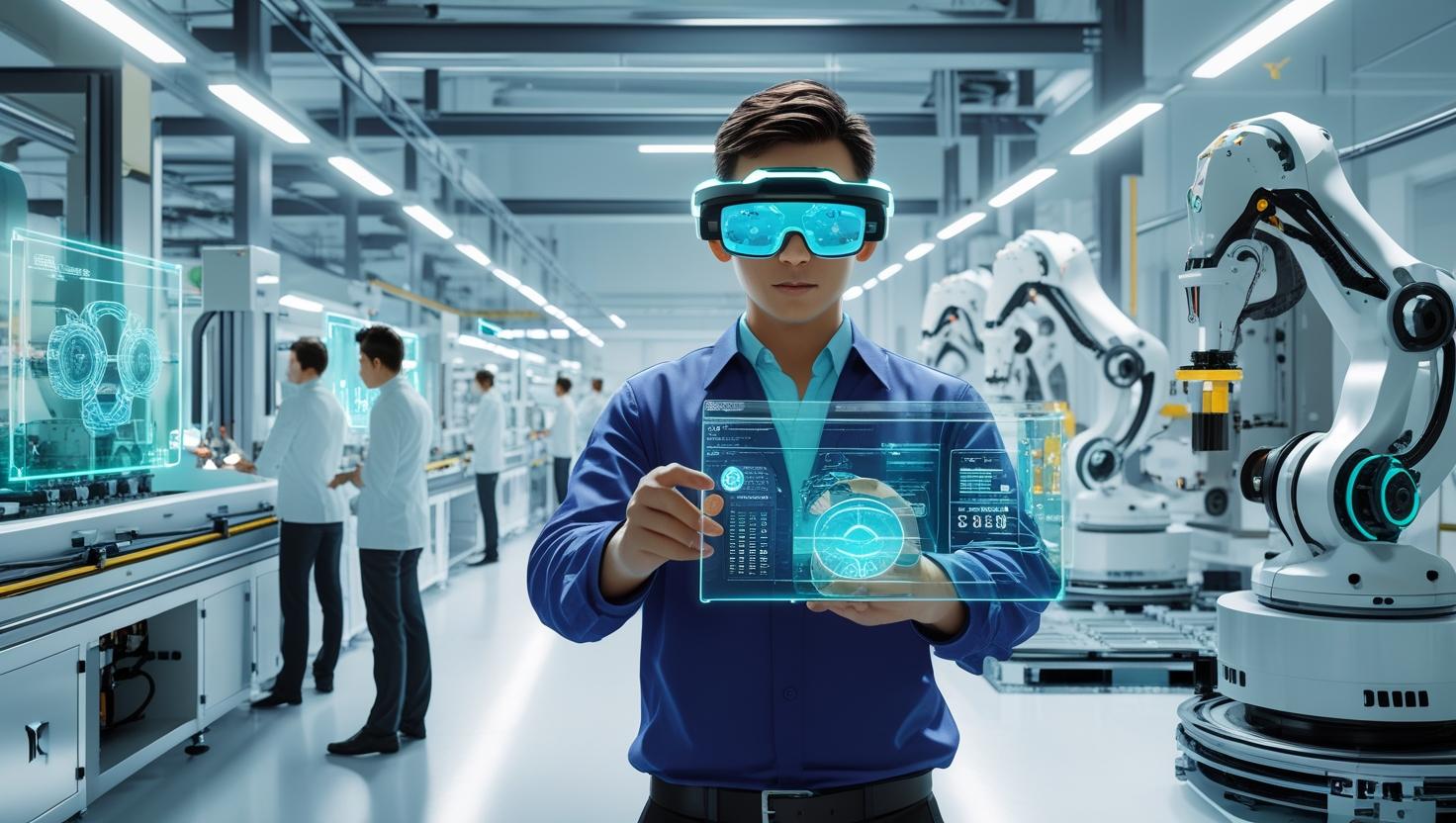
Key Industry Applications Driving Market Opportunities
Healthcare and Life Sciences
Healthcare is one of the most promising sectors for XR adoption. Medical professionals are using immersive technologies to improve diagnosis, training, and treatment procedures.
XR applications in healthcare include:
- Surgical simulations
- Medical education
- Anatomy visualization
- Rehabilitation therapy
- Mental health treatment
- Remote healthcare assistance
Virtual training environments allow medical professionals to practice complex procedures without risks associated with real-world operations.
Manufacturing and Industrial Applications
The manufacturing industry is among the largest adopters of XR technologies due to the need for improved efficiency, automation, and workforce training.
XR helps manufacturers with:
- Product design visualization
- Factory planning
- Equipment maintenance
- Worker training
- Quality inspection
- Remote assistance
AR-based solutions allow technicians to access digital instructions and real-time information while performing complex tasks.
The integration of XR with Industrial IoT and digital twins is creating smarter manufacturing environments.
Retail and E-Commerce Transformation
Retailers are using XR to improve customer experiences and bridge the gap between online and physical shopping.
Applications include:
- Virtual product demonstrations
- AR-based product visualization
- Virtual fitting rooms
- Interactive advertisements
- Digital showrooms
Consumers can visualize products before purchase, increasing confidence and improving engagement.
Education and Training
XR is transforming traditional education by enabling immersive and interactive learning experiences.
Educational institutions and companies are using XR for:
- Virtual classrooms
- Laboratory simulations
- Technical training
- Skill development
- Professional education
Immersive learning improves knowledge retention by allowing users to experience concepts rather than simply reading about them.
Automotive and Aerospace Industries
Automotive and aerospace companies are integrating XR throughout product development and operations.
Applications include:
- Vehicle design visualization
- Engineering collaboration
- Virtual testing
- Maintenance training
- Customer experiences
XR reduces development cycles by enabling engineers to test and modify designs digitally before physical production.
Emerging Trends Creating New Growth Opportunities
Industrial Metaverse Development
The industrial metaverse is becoming a major opportunity for XR technologies. Organizations are creating digital representations of factories, machines, and operational environments.
These digital environments allow companies to:
- Simulate processes
- Predict equipment failures
- Optimize production
- Train employees
- Improve decision-making
The combination of XR, AI, IoT, and digital twins is expected to redefine industrial operations.
Expansion of Wearable XR Devices
Hardware innovation remains critical to XR market growth. Manufacturers are developing lighter, more powerful, and more comfortable devices.
Future XR devices are expected to offer:
- Better display quality
- Improved battery performance
- Advanced sensors
- AI-powered assistance
- Enhanced comfort
The evolution of wearable technology will help increase consumer and enterprise adoption.
Generative AI-Powered XR Experiences
Generative AI is reducing the complexity of creating immersive experiences. Developers can use AI tools to generate virtual environments, digital objects, and interactive content faster than traditional methods.
This trend will enable smaller companies and creators to participate in the XR ecosystem.
Regional Market Outlook
North America
North America remains a major contributor to XR market growth due to strong technology adoption, significant investment in immersive solutions, and the presence of leading technology companies.
Industries such as healthcare, defense, manufacturing, and entertainment are actively implementing XR applications.
Europe
Europe is experiencing increased XR adoption driven by Industry 4.0 initiatives, automotive innovation, healthcare modernization, and digital transformation programs.
The region’s focus on advanced manufacturing and sustainability is creating opportunities for XR-based solutions.
Asia Pacific
Asia Pacific is expected to witness strong growth due to expanding technology infrastructure, manufacturing capabilities, gaming adoption, and government support for digital transformation.
Countries across the region are investing in smart factories, education technologies, and immersive consumer applications.
Middle East, Africa, and Latin America
Emerging markets are exploring XR solutions for education, healthcare access, tourism, industrial development, and workforce training.
Growing digital infrastructure investments are expected to create additional opportunities.
Challenges Impacting XR Market Expansion
Despite strong growth potential, the XR market faces several challenges:
- High hardware costs
- Limited availability of immersive content
- Privacy and security concerns
- User comfort issues
- Technical complexity
- Lack of standardized platforms
Addressing these challenges will be essential for widespread adoption.
Future Outlook of the Extended Reality Market
The future of Extended Reality will be defined by deeper integration with AI, cloud computing, spatial computing, and connected technologies.
XR is expected to evolve from a specialized technology into a mainstream platform supporting business operations, communication, education, entertainment, and digital experiences.
Organizations that successfully integrate XR into their strategies can benefit from improved productivity, enhanced customer engagement, and innovative business models.
As technology continues to mature, Extended Reality will become a fundamental component of the next generation of digital transformation.
Frequently Asked Questions (FAQs)
1. What is the Extended Reality market?
The Extended Reality market includes technologies such as Augmented Reality, Virtual Reality, and Mixed Reality that create immersive digital experiences by combining virtual and physical environments.
2. What industries are adopting Extended Reality solutions?
Major industries adopting XR include healthcare, manufacturing, automotive, retail, education, aerospace, defense, real estate, and entertainment.
3. How is AI impacting the Extended Reality market?
AI improves XR through advanced computer vision, intelligent automation, personalized experiences, voice recognition, and AI-generated immersive content.
4. What technologies are supporting XR market growth?
Key supporting technologies include artificial intelligence, 5G connectivity, cloud computing, spatial computing, computer vision, and digital twins.
5. What is the future outlook for the Extended Reality market?
The XR market is expected to expand as organizations increasingly adopt immersive solutions for training, collaboration, customer engagement, automation, and digital transformation.
About MarketsandMarkets™
MarketsandMarkets™ has been recognized as one of America’s Best Management Consulting Firms by Forbes, as per their recent report.
MarketsandMarkets™ is a blue ocean alternative in growth consulting and program management, leveraging a man-machine offering to drive supernormal growth for progressive organizations in the B2B space. With the widest lens on emerging technologies, we are proficient in co-creating supernormal growth for clients across the globe.
Today, 80% of Fortune 2000 companies rely on MarketsandMarkets, and 90 of the top 100 companies in each sector trust us to accelerate their revenue growth. With a global clientele of over 13,000 organizations, we help businesses thrive in a disruptive ecosystem.
The B2B economy is witnessing the emergence of $25 trillion in new revenue streams that are replacing existing ones within this decade. We work with clients on growth programs, helping them monetize this $25 trillion opportunity through our service lines – TAM Expansion, Go-to-Market (GTM) Strategy to Execution, Market Share Gain, Account Enablement, and Thought Leadership Marketing.
Built on the ‘GIVE Growth’ principle, we collaborate with several Forbes Global 2000 B2B companies to keep them future-ready. Our insights and strategies are powered by industry experts, cutting-edge AI, and our Market Intelligence Cloud, KnowledgeStore™, which integrates research and provides ecosystem-wide visibility into revenue shifts.
To find out more, visit www.MarketsandMarkets™.com or follow us on Twitter , LinkedIn and Facebook .
Contact:
Mr. Rohan Salgarkar
MarketsandMarkets™ INC.
1615 South Congress Ave.
Suite 103, Delray Beach, FL 33445
USA: +1-888-600-6441
