The automotive head-up display (HUD) market is evolving from a premium vehicle feature into an increasingly important part of the modern digital cockpit. Automakers are using HUDs to place critical driving information directly within the driver’s line of sight, helping reduce distraction while improving situational awareness.
As vehicles become more connected, electrified, and automated, drivers need access to increasing amounts of information, including navigation directions, vehicle speed, ADAS warnings, battery information, and other real-time data. HUD technology provides a way to present this information without requiring drivers to look down at conventional instrument clusters or infotainment screens.
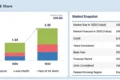
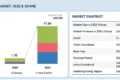
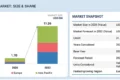
According to MarketsandMarkets, the global automotive HUD market is projected to grow from USD 2.41 billion in 2026 to USD 4.71 billion by 2033, registering a CAGR of 10.1% during the forecast period. Growing emphasis on driver safety, increasing ADAS adoption, rising demand for premium in-vehicle experiences, EV adoption, and advances in augmented reality (AR) technologies are supporting this growth.
Download the Automotive HUD Market PDF :
These developments are creating opportunities across the automotive HUD value chain, from projection and optical technologies to display systems, semiconductors, software, digital cockpits, and vehicle integration.
Automotive HUD Market Ecosystem and Value Chain
The automotive HUD ecosystem includes component suppliers, software providers, HUD manufacturers, Tier 1 suppliers, and automotive OEMs.
At the upstream level, component suppliers provide semiconductors, processors, optical components, projection technologies, and other hardware required for HUD systems.
The middle of the value chain includes HUD suppliers that integrate hardware and software into combiner HUD, windshield HUD, 2D, 3D, and AR HUD systems.
At the downstream level, automotive OEMs integrate HUD technology into passenger vehicles and increasingly connect these systems with navigation, infotainment, ADAS, vehicle connectivity, and digital cockpit platforms.
MarketsandMarkets identifies component suppliers such as Renesas Electronics, NVIDIA, and Bosch; software providers such as Radiant Vision Systems, MicroVision, and Embitel Technologies; and HUD providers including DENSO, Visteon, Continental, Yazaki, and ADAYO within the broader market ecosystem.
This interconnected value chain is moving the HUD market beyond simple display hardware toward software-driven, connected, and intelligent visualization systems.
Why Head-Up Displays Are Becoming Important in Modern Vehicles
Traditional instrument clusters require drivers to shift their gaze away from the road to access information.
A head-up display addresses this issue by projecting selected information into the driver’s field of view.
Typical HUD information can include:
- Vehicle speed
- Navigation directions
- ADAS alerts
- Lane information
- Traffic information
- Safety warnings
- Vehicle status
- EV battery and energy information
The growing focus on reducing driver distraction is one of the major factors supporting HUD adoption. MarketsandMarkets highlights increasing regulatory and consumer focus on driver safety and distraction reduction as a key market driver.
As ADAS functionality expands, the ability to communicate warnings and system status clearly and intuitively is becoming increasingly important.
From Basic HUDs to Augmented Reality HUDs
The automotive HUD market is undergoing a transition from basic displays toward more advanced augmented reality (AR) HUD systems.
Traditional 2D HUDs typically display information such as speed, navigation, and basic safety alerts. AR HUDs can provide a more immersive experience by aligning digital information with the driver’s view of the road.
For example, navigation guidance can be presented in a way that corresponds more closely with the physical roadway, while safety alerts can be displayed in the driver’s field of view.
MarketsandMarkets projects the AR HUD segment to register the highest CAGR of 17.4% from 2026 to 2033.
This shift represents one of the most important changes in the automotive HUD industry: the technology is moving from simply displaying information toward contextualizing information.
Windshield HUDs and the Move Toward Wider Displays
By HUD type, windshield HUDs are expected to account for the largest share of the automotive HUD market during the forecast period.
Unlike combiner HUDs, windshield HUDs project information onto the windshield, allowing for a wider field of view and more comprehensive information presentation.
This makes windshield HUDs particularly suitable for navigation, ADAS alerts, and other driving information.
MarketsandMarkets projects the windshield HUD segment to grow from USD 1.08 billion in 2026 to USD 1.53 billion by 2033, at a CAGR of 5.0%.
As HUD technology becomes more capable, the windshield is increasingly being viewed as an extension of the vehicle’s digital interface.
2D, 3D, and AR HUD Technology
Automotive HUD technologies can be broadly categorized into 2D, 3D, and AR HUDs.
2D HUD
2D HUDs are currently the most widely adopted technology because they provide essential information while maintaining relatively low system complexity and cost.
They can display:
- Speed
- Navigation
- Basic ADAS alerts
- Vehicle information
MarketsandMarkets expects 2D HUDs to account for the largest share during the forecast period because of their cost-effectiveness and broad adoption across mid-segment and premium vehicles.
3D HUD
3D HUD technologies provide more depth and visual richness compared with traditional 2D systems.
They can potentially improve the presentation of complex driving information and create a more immersive cockpit experience.
AR HUD
AR HUDs represent the next stage of development by connecting projected digital information with the driver’s real-world environment.
Their ability to provide contextual navigation and ADAS information makes them particularly relevant to increasingly automated vehicles.
Automotive HUD and ADAS
The relationship between automotive HUDs and ADAS is becoming increasingly important.
Modern vehicles can generate large amounts of information from cameras, radar, LiDAR, navigation systems, and other sensors.
However, collecting information is only part of the challenge. The vehicle must also communicate important information to the driver.
HUDs provide a direct interface for communicating:
- Forward collision warnings
- Lane departure warnings
- Navigation instructions
- Speed information
- Driver assistance status
- Road-related alerts
As vehicles move toward higher levels of automation, intuitive human-machine interfaces will become increasingly important.
MarketsandMarkets identifies the growing adoption of ADAS and higher levels of vehicle automation as important factors supporting automotive HUD demand.
Automotive HUD in Electric Vehicles
The growth of electric vehicles (EVs) is creating another opportunity for automotive HUD technology.
EVs are increasingly positioned as software-driven, connected technology platforms rather than simply electric versions of conventional vehicles.
This creates opportunities to integrate HUDs with:
- Battery status
- Remaining range
- Energy consumption
- Charging information
- Navigation
- Charging station locations
- ADAS functions
MarketsandMarkets identifies growing EV adoption as an important opportunity for automotive HUD integration. The report also projects the BEV segment to register the highest CAGR of 17.9% from 2026 to 2033.
As EV manufacturers compete on digital user experience, HUDs can become an important element of vehicle differentiation.
Automotive HUD and Software-Defined Vehicles
The emergence of software-defined vehicles (SDVs) is changing the role of automotive HUDs.
In conventional vehicles, HUD functionality may be largely determined by the hardware installed during manufacturing.
In software-defined vehicles, however, display functionality can increasingly be connected to software platforms, cloud services, vehicle data, and over-the-air updates.
This opens opportunities for:
- OTA-enabled HUD functionality
- Feature updates
- Personalized displays
- Real-time navigation
- Context-aware information
- Feature-on-demand services
- Integration with centralized vehicle computing
MarketsandMarkets identifies the transition toward software-driven HUD solutions, ADAS integration, OTA-enabled features, and feature-on-demand models as a key trend shaping the market.
Digital Cockpit Integration
The HUD is increasingly becoming part of a larger digital cockpit ecosystem.
Instead of operating independently, HUDs can interact with:
- Digital instrument clusters
- Infotainment systems
- Navigation
- ADAS
- Connectivity platforms
- Voice assistants
- Vehicle operating systems
This integration can help distribute information across multiple interfaces according to its importance.
For example, routine vehicle information can remain within the instrument cluster, while navigation guidance or urgent safety alerts can be presented directly in the driver’s field of view.
This makes the HUD an increasingly important component of the vehicle’s human-machine interface.
What Is Driving the Automotive HUD Market?
Several factors are accelerating growth in the automotive HUD market.
Growing Focus on Driver Safety
Governments, automakers, and consumers are placing greater emphasis on reducing driver distraction and improving situational awareness.
Rising ADAS Adoption
As vehicles become equipped with more advanced driver-assistance features, intuitive interfaces are needed to communicate alerts and system status.
Growing Premium and Mid-Segment Adoption
HUDs are expanding beyond luxury vehicles as component costs decline and production scales increase.
EV Adoption
Technology-focused EV platforms are creating new opportunities for HUD integration with digital cockpit and vehicle systems.
AR Technology
AR HUDs are enabling more contextual and immersive information displays.
Software-Defined Vehicles
Connected software architectures are creating opportunities for OTA updates, personalization, and new HUD-based features.
These factors are collectively moving HUDs from a premium feature toward a more integrated vehicle interface technology.
Challenges Facing the Automotive HUD Market
Despite strong growth potential, several challenges remain.
Space Constraints
Automotive cockpits have limited space, making the physical integration of HUD hardware challenging.
Luminance and Power Consumption
HUDs need sufficient brightness and visibility under different lighting conditions. Achieving high luminance can increase power consumption.
Optical Complexity
Designing systems that deliver clear, stable, and accurately positioned images presents significant optical challenges.
Complex Vehicle Integration
HUDs must communicate with navigation, infotainment, ADAS, and other onboard systems, requiring extensive testing and validation.
MarketsandMarkets identifies space constraints, luminance and power consumption limitations, optical challenges, and complex integration processes among the key challenges and restraints affecting the market.
Global Automotive HUD Market
The automotive HUD market is developing across major automotive manufacturing regions as OEMs increase their focus on safety, digital cockpits, connected vehicles, and advanced driving technologies.
Asia Pacific is projected to grow from USD 0.74 billion in 2026 to USD 0.94 billion by 2033, according to MarketsandMarkets.
The region benefits from its large automotive manufacturing base and growing adoption of EVs and advanced vehicle technologies.
Europe and North America also represent important markets as premium automakers and technology companies continue to develop advanced cockpit and ADAS systems.
Automotive HUD Market by Vehicle Type
Passenger cars represent a major application area for automotive HUD technology.
MarketsandMarkets projects the passenger car segment to grow from USD 1.17 billion in 2026 to USD 1.74 billion by 2033, at a CAGR of 5.8%.
Luxury vehicles are currently an important application area because automakers use advanced cockpit technologies to differentiate premium models.
However, falling component costs and improving scalability are helping expand HUD adoption into mid-segment vehicles.
This expansion could be particularly important for the long-term growth of the automotive HUD market because it increases the addressable vehicle population beyond the traditional luxury segment.
Key Trends Shaping the Automotive HUD Market
Several trends are expected to influence the next phase of HUD development.
AR HUDs: Augmented reality is moving HUDs toward more contextual and immersive information displays.
Software-driven HUDs: Software is becoming increasingly important to HUD functionality and differentiation.
ADAS integration: HUDs are increasingly being used to communicate safety alerts and driver-assistance information.
Digital cockpit integration: HUDs are becoming interconnected with instrument clusters, infotainment, navigation, and vehicle computing.
EV integration: EV manufacturers are incorporating HUDs to display battery, range, charging, and navigation information.
OTA functionality: Connected HUDs can potentially receive software updates and new features throughout the vehicle lifecycle.
Feature-on-demand: Software-enabled functions can create opportunities for new revenue models beyond the initial vehicle sale.
Semi-autonomous driving: Higher levels of automation are increasing the importance of intuitive human-machine interfaces.
Key Players in the Automotive HUD Market
The competitive landscape includes automotive technology suppliers, HUD manufacturers, display companies, semiconductor providers, and technology companies.
Key companies operating in the market include:
- Continental AG
- DENSO Corporation
- Visteon Corporation
- Yazaki Corporation
- Nippon Seiki Co., Ltd.
- Panasonic Automotive Systems Co., Ltd.
- Valeo
- Robert Bosch GmbH
- Garmin Ltd.
- LG Electronics
- HARMAN International
- MicroVision, Inc.
These companies are developing technologies spanning windshield HUDs, combiner HUDs, AR displays, projection systems, software, optical technologies, and digital cockpit integration.
Future Growth Opportunities in the Automotive HUD Market
The future of automotive HUDs will depend on the industry’s ability to combine display quality, safety, software intelligence, affordability, and seamless vehicle integration.
For HUD manufacturers, opportunities exist in developing larger fields of view, improved brightness, higher resolution, compact optical architectures, and AR capabilities.
For automotive OEMs, HUDs can provide a way to differentiate vehicle interiors while improving driver interaction with ADAS and navigation systems.
For software and technology providers, opportunities are emerging around contextual information, personalization, OTA functionality, feature-on-demand services, and integration with software-defined vehicle platforms.
The broader opportunity is therefore moving from a simple display system toward an intelligent human-machine interface for the vehicle.
The Future of Automotive HUD
The automotive HUD market is entering a new stage of development.
What was once primarily a premium feature is increasingly becoming part of the broader digital cockpit and advanced vehicle architecture. The combination of ADAS, EVs, software-defined vehicles, connected services, and AR technology is expanding the role of HUDs beyond simply displaying speed and navigation.
With the market projected to reach USD 4.71 billion by 2033, growing at a 10.1% CAGR from 2026 to 2033, HUD technology is positioned to become an increasingly important interface between the vehicle, its software systems, and the driver.
The long-term direction is clear: the automotive HUD is moving beyond the windshield as a simple display and becoming part of the intelligent, connected, and increasingly automated vehicle experience.
Frequently Asked Questions About the Automotive HUD Market
What is an automotive head-up display?
An automotive head-up display (HUD) is a system that projects important vehicle and driving information into the driver’s field of view, reducing the need to look away from the road.
What is driving the automotive HUD market?
Key factors include increasing focus on driver safety, growing ADAS adoption, demand for enhanced in-vehicle experiences, EV adoption, AR technology, and the integration of HUDs with digital cockpit systems.
What is the size of the automotive HUD market?
According to MarketsandMarkets, the automotive HUD market is projected to grow from USD 2.41 billion in 2026 to USD 4.71 billion by 2033, at a CAGR of 10.1%.
Which HUD technology is expected to grow fastest?
The AR HUD segment is projected to register the highest CAGR of 17.4% from 2026 to 2033.
Which HUD type is expected to hold the largest market share?
The windshield HUD segment is expected to account for the largest share during the forecast period.
How are EVs driving HUD adoption?
EVs are increasingly designed around connected and software-driven architectures. HUDs can display information such as speed, navigation, battery status, energy consumption, range, and charging information within the driver’s line of sight.
What is the future of automotive HUD technology?
The future is expected to be shaped by AR HUDs, ADAS integration, software-defined vehicles, digital cockpit integration, OTA functionality, EV adoption, and increasingly personalized in-vehicle experiences.
Who are the key players in the automotive HUD market?
Key players include Continental, DENSO, Visteon, Yazaki, Nippon Seiki, Panasonic Automotive Systems, Valeo, Bosch, Garmin, LG Electronics, HARMAN, and MicroVision.
Where can I find detailed automotive HUD market data?
Detailed market size, forecasts, segmentation, regional analysis, competitive landscape, trends, and company analysis are available in the MarketsandMarkets Automotive HUD Market report.
Explore the Automotive HUD Market Report
Source: MarketsandMarkets, Automotive HUD Market, Global Forecast to 2033.