The demand for energy-efficient smart home devices is accelerating as consumers, residential developers, property operators, and businesses look for practical ways to reduce energy consumption while improving comfort, security, and automation. For wholesalers and distributors, this shift is creating opportunities across smart thermostats, connected HVAC systems, intelligent lighting, energy-monitoring devices, smart plugs, connected appliances, and integrated home energy-management solutions.
According to MarketsandMarkets, the global Smart Home Market is valued at USD 230.76 billion in 2026 and is projected to reach USD 450.20 billion by 2032, registering a CAGR of 11.8% from 2026 to 2032. The market is being supported by increasing internet penetration, proliferation of connected devices, rising consumer focus on energy efficiency, growing demand for remote home monitoring, and the expansion of AI- and IoT-enabled automation.
For wholesale distributors, these trends point toward product categories that combine energy savings with automation, connectivity, and easy installation. The following device categories represent important areas of demand.
Smart Thermostats and Connected HVAC Controls
Smart thermostats and connected HVAC controls are among the most attractive categories for energy-focused smart home distribution. MarketsandMarkets identifies Smart Home HVAC as the product segment expected to register the highest CAGR, at approximately 20%, during the forecast period.
Unlike conventional thermostats, smart models can connect to smartphones, home networks, and broader automation platforms. They can enable remote temperature control, scheduling, occupancy-based adjustments, and automated heating or cooling management.
For wholesalers, the opportunity extends beyond individual thermostats. Distributors can build product portfolios around temperature sensors, HVAC controllers, smart vents, connected air-conditioning controls, and integrated climate-management systems.
HVAC products can also appeal to residential builders and property managers because energy management can be incorporated into larger building automation projects. MarketsandMarkets specifically identifies connected thermostats and residential HVAC automation as solutions that can improve comfort, optimize heating and cooling efficiency, and reduce household energy expenses.
Smart Lighting and Connected Lighting Controllers
Smart lighting is another major category for wholesale distribution. Connected LED bulbs, smart switches, dimmers, occupancy sensors, motion sensors, and lighting controllers can help consumers automate lighting according to occupancy, schedules, and usage patterns.
MarketsandMarkets identifies the integration of IoT-enabled lighting controllers with built-in connectivity as an opportunity within the Smart Home Market.
For distributors, lighting products can be particularly attractive because they are suitable for both new installations and retrofit projects. Wireless products can be added to existing homes without extensive rewiring, while connected lighting controllers can be incorporated into larger residential automation systems.
Wholesale portfolios can therefore include entry-level smart bulbs alongside more advanced switches, sensors, centralized controllers, and energy-management products. This creates opportunities to serve both individual consumers and professional installers.
Download PDF Brochure @ https://www.marketsandmarkets.com/pdfdownloadNew.asp?id=121
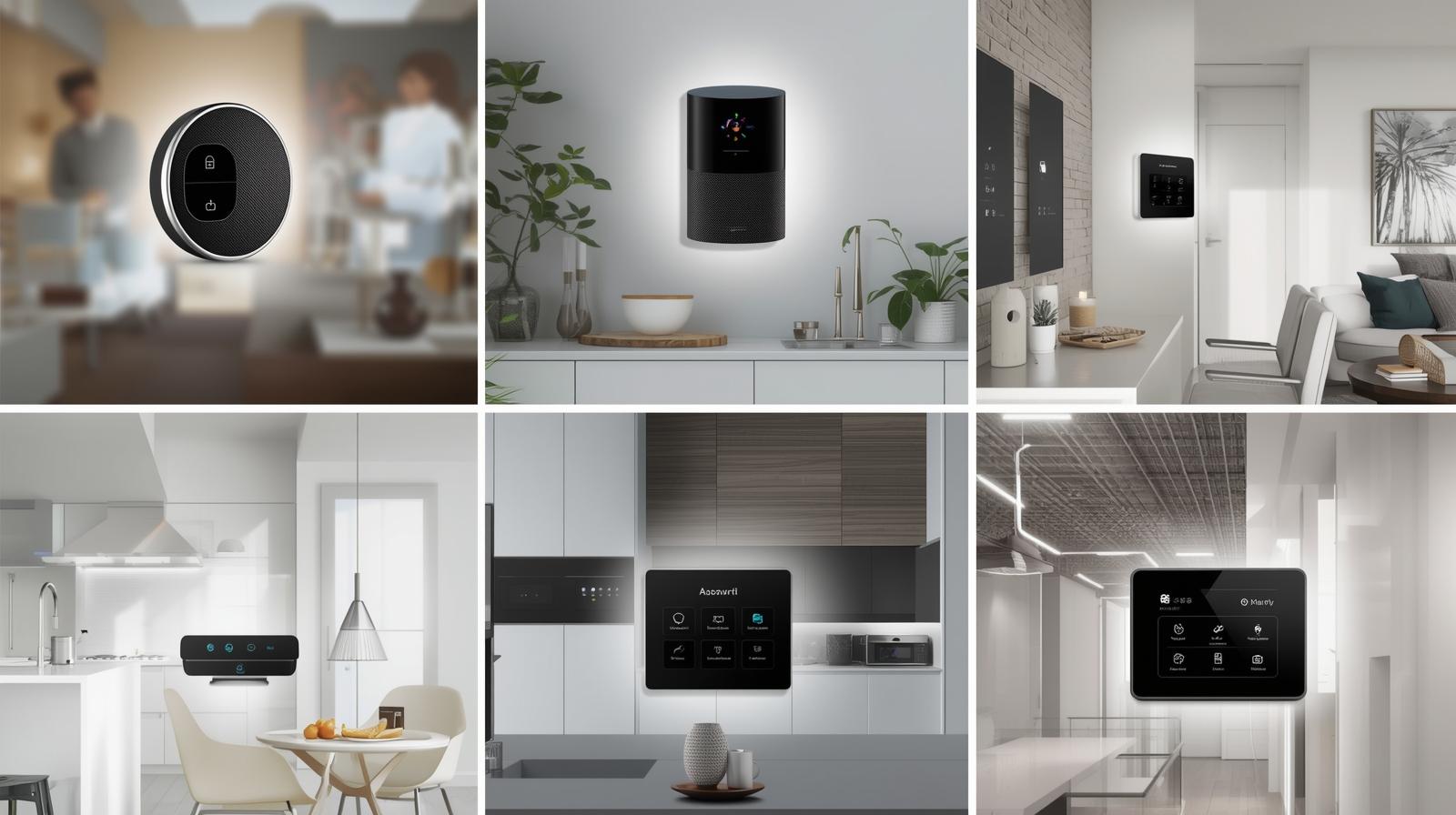
Smart Plugs and Energy Monitoring Devices
Smart plugs and energy-monitoring devices provide a relatively simple entry point into energy-efficient smart homes. These devices allow consumers to monitor or control the operation of connected appliances through smartphones, voice assistants, schedules, or automated routines.
Energy monitoring is becoming more important as consumers seek greater visibility into household electricity consumption. MarketsandMarkets highlights energy management as one of the key applications within the Smart Home Market and points to residential energy-management systems that connect smart meters, rooftop solar, and connected home devices for real-time monitoring and optimization.
For wholesalers, smart plugs can provide a scalable product category because of their relatively straightforward installation and broad compatibility with household equipment. Advanced versions can add power-consumption measurement, scheduling, overload protection, and integration with wider smart home ecosystems.
Smart Energy Management Systems
Beyond individual devices, demand is expanding toward integrated energy-management systems. These solutions can connect multiple devices and provide centralized visibility into household energy use.
A residential energy-management platform can integrate smart meters, lighting, HVAC, appliances, solar generation, batteries, and other connected equipment. This creates a more comprehensive approach to energy optimization compared with isolated smart devices.
MarketsandMarkets identifies integrated residential energy-management systems as an important use case and notes that connected energy technologies can provide real-time energy visibility and support residential sustainability objectives.
For wholesale distributors, integrated energy management represents a higher-value opportunity because it can involve multiple hardware categories, gateways, controllers, sensors, and software platforms. Distributors that can supply compatible product bundles may be better positioned to serve installers and residential developers seeking complete solutions.
Smart Appliances
Connected home appliances are also becoming increasingly relevant to energy-efficient smart home ecosystems. Smart refrigerators, washing machines, dishwashers, ovens, and other connected appliances can provide remote monitoring, scheduling, usage information, and automated operation.
The Smart Home Market covered by MarketsandMarkets includes smart kitchen appliances and smart home appliances as important product categories. The report also highlights the broader integration of connected appliances into IoT ecosystems.
For wholesale distribution, energy efficiency can become an important differentiating feature. Products that combine connectivity with efficient operation can address consumer demand for convenience while supporting energy-management objectives.
Distributors can also consider appliances that integrate with major smart home platforms, since interoperability is increasingly important as consumers connect multiple categories of products.
Occupancy and Environmental Sensors
Sensors form the foundation of automated energy management. Occupancy sensors can detect whether rooms are being used and support automated lighting and HVAC adjustments. Temperature, humidity, air-quality, and environmental sensors can provide additional information for intelligent home control.
MarketsandMarkets describes the Smart Home Market as increasingly focused on integrated platforms that enable seamless control, monitoring, and automation.
This creates opportunities for wholesalers to supply sensor products alongside lighting and HVAC equipment. For example, an occupancy sensor can trigger lighting adjustments, while temperature and environmental sensors can support automated climate management.
Sensor-based products are also compatible with retrofit applications, which MarketsandMarkets expects to register fast growth.
Smart Power Management and Connected Outlets
Smart outlets and connected power-management devices are becoming another relevant category. These products can provide remote switching, scheduling, power monitoring, and automation for household electronics and appliances.
The growing focus on energy efficiency creates a strong use case for products that help consumers understand and control electricity consumption. Connected outlets can also provide a relatively simple way to add smart functionality to conventional equipment.
For wholesalers, smart outlets offer opportunities across residential retail, electrical distribution, home automation installation, and property-management channels. Products with wireless connectivity and broad platform compatibility can be particularly useful for retrofit projects.
Wireless Devices for Retrofit Distribution
The wireless segment accounted for approximately 64% of the Smart Home Market by protocol and communication technology in 2025, according to MarketsandMarkets.
This is important for wholesalers because wireless products can reduce installation complexity. Homeowners can upgrade existing properties without major structural modifications, making wireless smart devices suitable for retrofit distribution.
Wireless thermostats, lighting controllers, sensors, smart plugs, switches, locks, and energy-monitoring devices can be distributed individually or as coordinated product bundles.
The retrofit opportunity is particularly relevant because MarketsandMarkets identifies retrofit installations as a fast-growing segment, supported by consumer demand to modernize existing homes without extensive structural changes.
AI-Enabled Energy Optimization Devices
Artificial intelligence is adding another layer of value to energy-efficient smart home products. AI can analyze usage patterns and support automated decisions around lighting, HVAC, appliances, and other household systems.
MarketsandMarkets identifies AI-powered automation as a key Smart Home Market growth driver because AI can enable smarter control, personalization, and improved home efficiency.
For wholesale distributors, this means that future demand is likely to extend beyond basic connectivity. Devices with learning capabilities, predictive control, automated scheduling, and intelligent energy optimization can provide greater differentiation.
For example, an AI-enabled energy-management system could learn household routines and adjust connected devices according to occupancy, schedules, and energy consumption patterns.
Smart Solar and Residential Energy Integration
The integration of smart homes with renewable energy is creating another opportunity for distributors. Smart energy systems can connect rooftop solar, energy storage, smart meters, HVAC systems, appliances, and other connected loads.
MarketsandMarkets specifically identifies residential energy-management systems connecting smart meters, rooftop solar, and connected home devices as an important use case for energy monitoring and optimization.
This creates opportunities for wholesalers to expand beyond conventional smart home products into energy-management ecosystems. Distributors serving electrical contractors, solar installers, builders, and home automation integrators can potentially cross-sell smart controllers, monitoring equipment, connected loads, and energy-management hardware.
Why Energy-Efficient Devices Matter to Wholesale Distributors
The growth opportunity for wholesalers is not limited to individual product sales. Energy-efficient smart home technology creates opportunities to develop complete product ecosystems.
MarketsandMarkets reports that the Smart Home Market is increasingly moving from standalone devices toward integrated platforms that provide control, monitoring, and automation across lighting, HVAC, security, appliances, entertainment, healthcare, and energy management.
This means distributors can increasingly organize product portfolios around use cases rather than individual devices. An energy-efficiency package, for example, could combine smart thermostats, temperature sensors, smart lighting controllers, smart plugs, energy monitors, and a centralized gateway.
Such bundled approaches can simplify purchasing for installers and residential developers while increasing the number of products supplied per project.
Key Considerations When Selecting Smart Home Products for Wholesale
Wholesale distributors should evaluate several factors before expanding their energy-efficient smart home portfolios. Interoperability is particularly important because MarketsandMarkets identifies compatibility gaps and the lack of unified standards as challenges for the industry.
Products should ideally support widely adopted connectivity standards and integrate with established smart home ecosystems. Cybersecurity, product reliability, software-update policies, installation requirements, warranty support, and regional certifications are also important considerations.
Wireless and retrofit-friendly products can provide broader market applicability, while products with measurable energy-management capabilities can offer a clearer value proposition to customers.
Regional Opportunities for Wholesale Distribution
Asia Pacific represents an important growth opportunity. MarketsandMarkets projects the region to register the highest CAGR of approximately 17% in the global Smart Home Market during the forecast period.
Rapid urbanization, expanding digital infrastructure, rising middle-class incomes, government support for smart-city development, and growing adoption of connected technologies are supporting regional demand.
For wholesalers, this creates opportunities across residential construction, retrofit installations, apartments, villas, and technology-enabled housing developments. Energy-efficient HVAC, smart lighting, energy monitoring, and connected appliances can be particularly relevant in markets where consumers and developers are increasingly focused on energy management.
Energy-efficient smart home devices are becoming an increasingly important opportunity for wholesale distribution as consumers seek lower energy consumption, greater convenience, and automated control. Smart thermostats and HVAC controls, connected lighting, smart plugs, energy monitors, smart appliances, occupancy sensors, smart power-management devices, and integrated energy-management systems are among the key categories distributors can consider.
The broader market outlook supports this opportunity. MarketsandMarkets projects the global Smart Home Market to grow from USD 230.76 billion in 2026 to USD 450.20 billion by 2032, at a CAGR of 11.8%. Smart HVAC is expected to be the fastest-growing product category, while wireless connectivity and retrofit installations are supporting broader deployment.
For wholesalers, the most significant opportunity lies in moving beyond standalone connected products toward integrated, energy-focused solutions. Products that combine energy efficiency, wireless connectivity, AI-powered automation, interoperability, and easy retrofit installation can address the evolving requirements of homeowners, installers, builders, and property operators.
As smart homes become increasingly connected and energy-conscious, wholesale distributors that develop portfolios around complete energy-management ecosystems can participate in the expanding demand for more efficient, automated, and connected residential environments.
FAQ
Which energy-efficient smart home devices are in high demand for wholesale distribution?
Smart thermostats, connected HVAC controls, smart lighting, smart plugs, energy monitors, occupancy sensors, connected appliances, and residential energy-management systems are key high-demand categories.
What is driving demand for energy-efficient smart home devices? Rising energy costs, consumer demand for energy savings, increasing IoT adoption, greater awareness of sustainability, and demand for automated home management are driving demand.
Which smart home product segment is expected to grow fastest?
The smart HVAC segment is expected to register strong growth, supported by demand for automated temperature control, energy optimization, and connected climate-management solutions.
Why are wireless smart home devices important for wholesale distributors?
Wireless devices simplify installation and are well suited for retrofit projects, enabling homeowners to upgrade existing properties without extensive rewiring.
What is the outlook for the global Smart Home Market?
According to MarketsandMarkets, the global Smart Home Market is projected to grow from USD 230.76 billion in 2026 to USD 450.20 billion by 2032, at a CAGR of 11.8%.
About MarketsandMarkets™
MarketsandMarkets™ is a blue ocean alternative in growth consulting and program management, leveraging a man-machine offering to drive supernormal growth for progressive organizations in the B2B space. We have the widest lens on emerging technologies, making us proficient in co-creating supernormal growth for clients.
The B2B economy is witnessing the emergence of $25 trillion of new revenue streams that are substituting existing revenue streams in this decade alone. We work with clients on growth programs, helping them monetize this $25 trillion opportunity through our service lines – TAM Expansion, Go-to-Market (GTM) Strategy to Execution, Market Share Gain, Account Enablement, and Thought Leadership Marketing.
Built on the ’GIVE Growth’ principle, we work with several Forbes Global 2000 B2B companies – helping them stay relevant in a disruptive ecosystem. Our insights and strategies are molded by our industry experts, cutting-edge AI-powered Market Intelligence Cloud, and years of research. The KnowledgeStore™ (our Market Intelligence Cloud) integrates our research, facilitates an analysis of interconnections through a set of applications, helping clients look at the entire ecosystem and understand the revenue shifts happening in their industry.
To find out more, visit www.MarketsandMarkets™.com or follow us on Twitter, LinkedIn and Facebook.
Contact:
Mr. Rohan Salgarkar
MarketsandMarkets™ INC.
630 Dundee Road
Suite 430
Northbrook, IL 60062
USA : 1-888-600-6441
