The aerospace industry is undergoing significant transformation as aircraft manufacturers, defense organizations, airlines, and space companies invest in advanced technologies to improve safety, efficiency, and performance. From next-generation commercial aircraft and unmanned aerial vehicles (UAVs) to advanced propulsion systems and space exploration missions, aerospace technologies are becoming increasingly complex. This evolution is creating new demand for specialized testing, validation, and performance assessment solutions.
The Aerospace Testing Market plays a critical role in ensuring that aircraft, engines, avionics, materials, and aerospace components meet strict safety, quality, and regulatory requirements. Testing helps manufacturers identify potential defects, evaluate performance under demanding operating conditions, and verify that aerospace systems function reliably before entering service.
According to MarketsandMarkets, the global Aerospace Testing Market is projected to grow from USD 5.50 billion in 2025 to USD 6.91 billion by 2030, registering a compound annual growth rate (CAGR) of 4.6% during the forecast period. Rising commercial aircraft demand, increasing adoption of UAVs, and advancements in aerospace technologies are among the key factors supporting this growth.
As aerospace platforms incorporate lightweight materials, sophisticated electronics, autonomous capabilities, and new propulsion technologies, testing requirements are expanding beyond conventional inspection procedures. Advanced simulation, environmental testing, structural validation, and avionics testing are becoming increasingly important throughout the product development lifecycle.
Top 10 Key Takeaways
- The Aerospace Testing Market is projected to reach USD 6.91 billion by 2030.
- The market is expected to grow at a CAGR of 4.6% from 2025 to 2030.
- Commercial aircraft demand remains an important growth driver.
- UAV adoption is expanding testing requirements across commercial and defense applications.
- Avionics, flight, and electronics testing is expected to register the highest CAGR among testing types.
- Digital twins, AI, and simulation are creating opportunities to improve testing workflows.
- Environmental, structural, material, and propulsion testing remain essential for aerospace safety.
- Space exploration is expected to be the fastest-growing end-user segment.
- Outsourced testing is expected to register the highest CAGR among sourcing models.
- Asia Pacific is expected to be the fastest-growing regional market.
Download PDF Brochure @ https://www.marketsandmarkets.com/pdfdownloadNew.asp?id=32924426
Rising Commercial Aircraft Demand Is Driving Testing Requirements
One of the major factors supporting the Aerospace Testing Market is the growing demand for commercial aircraft, particularly in developing economies. Increasing passenger traffic, expanding airline networks, and rising demand for air connectivity are encouraging airlines to expand and modernize their fleets.
Aircraft manufacturers must demonstrate that new aircraft and components meet stringent performance, reliability, and safety requirements. This creates demand for extensive testing throughout aircraft design, manufacturing, assembly, and maintenance.
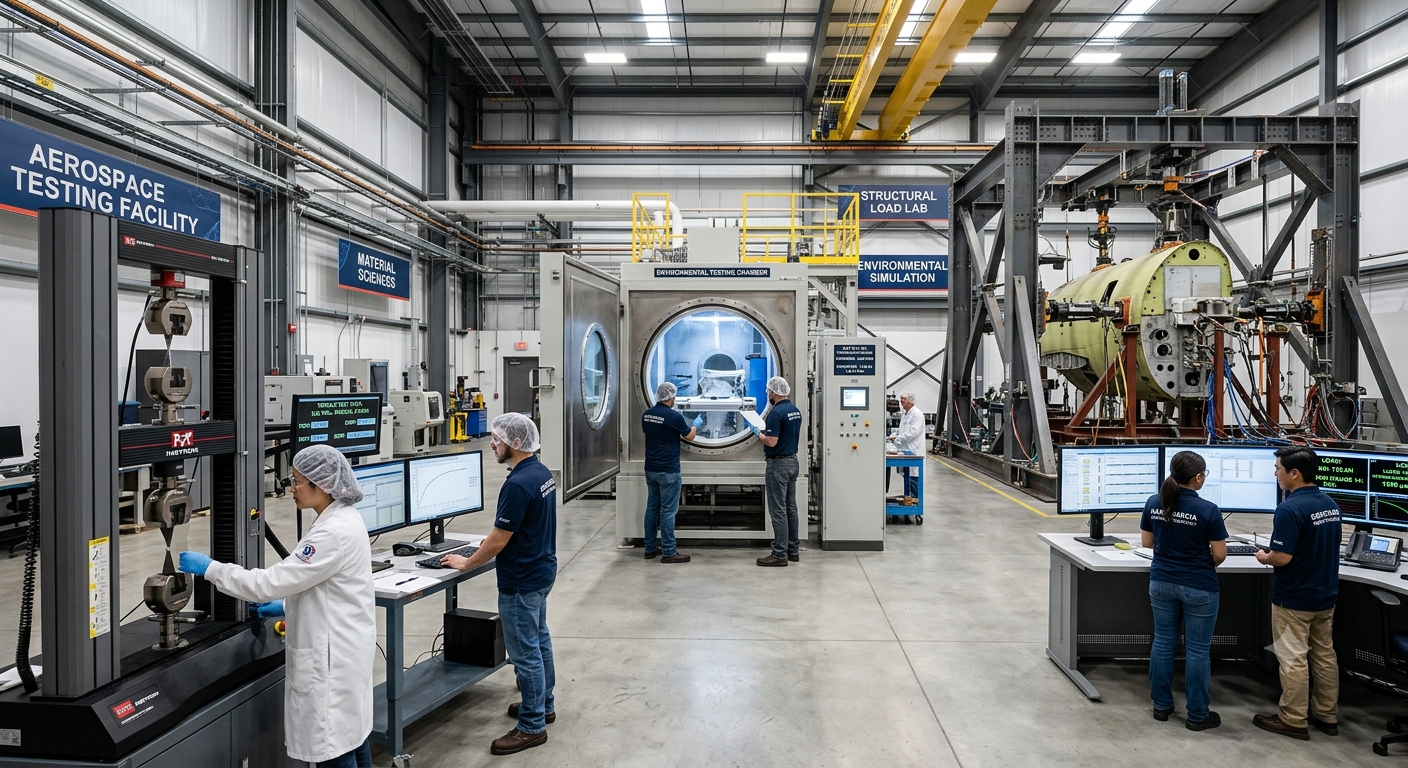
Structural testing evaluates an aircraft’s ability to withstand mechanical loads, vibration, fatigue, and other operational stresses. Environmental testing assesses the performance of components under changing temperatures, humidity, pressure, and other challenging conditions. Material testing helps manufacturers verify the strength, durability, and suitability of metals, composites, and other aerospace-grade materials.
As manufacturers develop aircraft with improved fuel efficiency and lower operating costs, testing is also becoming essential for validating new designs and materials. These requirements create opportunities for testing laboratories, aerospace engineering companies, equipment suppliers, and specialized service providers.
Increasing Adoption of UAVs and Autonomous Aircraft
The growing use of unmanned aerial vehicles across commercial and military applications is creating additional opportunities in the Aerospace Testing Market. UAVs are used for surveillance, reconnaissance, infrastructure inspection, agriculture, logistics, mapping, and emergency response. Their expanding role requires dependable flight control systems, communication technologies, sensors, batteries, and propulsion components.
Testing helps ensure that UAVs can operate safely and reliably under different environmental and mission conditions. Manufacturers must validate flight stability, navigation accuracy, communication performance, battery reliability, and resistance to vibration and temperature changes.
The development of autonomous aircraft is further increasing the importance of avionics and electronics testing. These platforms depend on interconnected sensors, embedded software, navigation systems, and automated decision-making capabilities. Testing must verify that individual components and integrated systems perform as intended under normal and exceptional operating conditions.
Military UAVs also require specialized qualification procedures because they may operate in demanding environments and perform mission-critical tasks. As UAV designs become more sophisticated, demand is expected to increase for flexible testing platforms, simulation systems, and advanced electronic test equipment.
Technological Advancements Are Reshaping the Aerospace Testing Market
Technological innovation is changing how aerospace products are designed, evaluated, and validated. Modern aircraft increasingly use lightweight composite materials, advanced avionics, integrated digital systems, and innovative propulsion technologies. These developments require testing methodologies that can assess performance, reliability, and safety with greater precision.
Advanced Materials and Structural Testing
Lightweight materials are helping aerospace manufacturers improve fuel efficiency, increase payload capacity, and reduce emissions. However, composites and advanced alloys can behave differently from conventional materials under stress, heat, vibration, and repeated loading.
Structural and material testing helps manufacturers evaluate fatigue resistance, impact performance, crack formation, and long-term durability. Non-destructive testing (NDT) techniques are also important because they allow defects to be identified without damaging components.
As composite materials become more widely used in aircraft structures, manufacturers and testing providers need specialized equipment and expertise to validate material quality and structural integrity.
Avionics, Flight, and Electronics Testing
Modern aircraft rely on sophisticated electronic systems for navigation, communication, flight control, monitoring, and safety. The integration of more advanced electronics is increasing the complexity of system-level testing.
Avionics, flight, and electronics testing evaluates whether aircraft systems operate accurately and reliably under different conditions. This includes testing communication interfaces, electronic components, navigation systems, flight-control technologies, and integrated systems.
MarketsandMarkets identifies avionics, flight, and electronics testing as the testing type expected to register the highest CAGR during the forecast period. The growing complexity of aircraft electronics, combined with increasing interest in autonomous and electric aircraft, is supporting demand for these specialized testing services.
Propulsion System Testing
Aircraft engines and propulsion systems must operate reliably under demanding temperature, pressure, vibration, and performance conditions. Testing is essential for validating engine efficiency, durability, emissions performance, and operational safety.
Developments in advanced turbine engines, electric propulsion, and emerging aerospace platforms are increasing the need for specialized propulsion testing infrastructure. Manufacturers also use test results to improve component designs, reduce operational risks, and support product qualification.
As aerospace propulsion systems evolve, testing providers with advanced facilities, instrumentation, and engineering expertise can benefit from opportunities across commercial aviation, defense, and space applications.
Digital Twins, AI, and Simulation Create New Opportunities
Digital transformation is creating new possibilities for aerospace testing. Digital twins, artificial intelligence (AI), simulation platforms, and data analytics can help manufacturers identify potential problems earlier and improve the efficiency of testing programs.
Digital twins create virtual representations of physical products or systems using engineering data and, where available, operational information. They can help engineers study how aircraft components may respond to different operating conditions before conducting certain physical tests. However, digital simulations must be appropriately validated, and they do not replace every physical test or regulatory requirement.
AI-based analytics can help engineers process large volumes of test data, recognize patterns, and identify potential anomalies. When integrated into established engineering workflows, these tools can support fault detection, test planning, and predictive maintenance.
Simulation technologies can also help evaluate aerodynamic behavior, structural performance, thermal conditions, and system interactions. By combining digital tools with physical testing, aerospace organizations can improve development workflows and make better-informed engineering decisions.
For testing providers, these developments create opportunities to offer integrated solutions that combine laboratory testing, simulation, data analytics, and engineering consultancy. Providers that invest in digital capabilities may be better positioned to address the evolving requirements of aerospace manufacturers.
Environmental Testing and Regulatory Compliance Remain Essential
Aerospace components must perform reliably in environments that can involve extreme temperatures, pressure variations, vibration, humidity, and mechanical stress. Environmental testing evaluates whether components and systems can withstand these conditions without compromising safety or performance.
These procedures are particularly important for avionics, sensors, electronic assemblies, propulsion components, and equipment intended for military or space applications. Space systems may also require specialized testing to evaluate their suitability for launch and operation in the space environment.
Regulatory compliance is another fundamental driver of the Aerospace Testing Market. Manufacturers must demonstrate that aircraft and components satisfy applicable aviation safety requirements, technical specifications, and certification procedures.
The process can be complex and time-consuming because testing programs often involve detailed documentation, repeated validation, and coordination among manufacturers, laboratories, suppliers, and regulatory authorities. Although these requirements can increase development costs, they are essential for ensuring operational safety and product reliability.
The growing sophistication of aerospace products is therefore creating demand for testing providers that understand certification requirements and can deliver accurate, traceable, and technically reliable results.
Commercial Aviation, Defense, and Space Exploration Expand Market Opportunities
The Aerospace Testing Market serves multiple end users, each with distinct testing requirements.
Commercial aviation represents a major source of demand because aircraft manufacturers and operators must validate aircraft structures, engines, avionics, and other components throughout their lifecycle. Fleet expansion, aircraft modernization, and the introduction of new models continue to support the need for testing and qualification services.
Military and defense applications require testing for aircraft, UAVs, mission electronics, propulsion systems, and specialized materials. Defense platforms often operate in demanding conditions, making reliability and performance validation particularly important. Investments in next-generation aircraft and autonomous systems can create additional demand for advanced testing capabilities.
Space exploration is another important opportunity area. Launch vehicles, satellites, propulsion systems, and spacecraft components must meet demanding reliability requirements. Testing is needed to validate structural integrity, thermal performance, vibration resistance, electronic functionality, and other mission-critical characteristics.
MarketsandMarkets projects that the space exploration segment will register the highest CAGR among end users during the forecast period. Increasing technological complexity and the need to validate space systems before launch are supporting demand for specialized aerospace testing solutions.
In-House and Outsourced Testing Models Shape Industry Competition
Aerospace companies use both in-house and outsourced testing, depending on their technical capabilities, program requirements, confidentiality needs, and budgets.
In-house testing enables manufacturers to maintain close control over testing procedures, proprietary information, scheduling, and quality management. Companies with substantial engineering resources may operate dedicated facilities for structural testing, environmental qualification, avionics validation, and propulsion testing.
Outsourced testing provides access to specialized equipment, independent technical expertise, accredited laboratories, and capabilities that may be expensive to develop internally. It can also help aerospace organizations manage demand peaks and access advanced testing methods without making significant capital investments.
According to MarketsandMarkets, outsourced sourcing is expected to register the highest CAGR during the forecast period. This creates opportunities for independent testing laboratories and service providers that can demonstrate technical expertise, reliable turnaround times, and compliance with applicable standards.
The competitive landscape includes established testing and certification companies, aerospace manufacturers with internal testing capabilities, and specialist engineering organizations. Key companies identified in the MarketsandMarkets report include Element Materials Technology, SGS, Intertek, Applus+, TÜV SÜD, TÜV Rheinland, TÜV NORD Group, Rohde & Schwarz, Eurofins Scientific, Boeing, Airbus, MISTRAS Group, Lockheed Martin, Bureau Veritas, and DEKRA.
Competition increasingly depends on technical capabilities, laboratory infrastructure, geographic reach, accreditation, specialized equipment, and the ability to support complex aerospace programs.
Asia Pacific Emerges as an Important Growth Region
Asia Pacific is expected to be the fastest-growing regional market for aerospace testing during the forecast period. Growth in commercial aviation, expanding aircraft manufacturing activities, defense investments, and space programs is supporting demand for testing infrastructure across the region.
Countries such as China, India, and Japan are strengthening their aerospace capabilities through investments in manufacturing, research, engineering, and advanced technologies. As regional manufacturers and suppliers participate more actively in global aerospace supply chains, the need for reliable testing and qualification services is increasing.
India offers opportunities associated with expanding aerospace manufacturing, defense programs, and participation in international supply chains. Government initiatives supporting domestic manufacturing, along with growing demand for advanced avionics and structural testing, can create opportunities for local testing providers.
For companies operating in the Aerospace Testing Market, Asia Pacific offers potential for partnerships, laboratory expansion, technology investment, and specialized services. However, market participants must continue to meet customer qualification requirements, maintain appropriate technical capabilities, and comply with applicable regulatory frameworks.
Challenges Affecting the Aerospace Testing Market
Despite its growth potential, the Aerospace Testing Market faces several challenges. Strict regulatory requirements can extend testing timelines and increase the cost of product development. Complex aerospace systems may require specialized equipment, skilled engineers, extensive documentation, and repeated testing under different conditions.
The high capital cost of testing infrastructure can also create barriers for new entrants. Facilities for structural validation, propulsion testing, environmental simulation, and advanced electronics testing may require significant investment, maintenance, and technical expertise.
Budget constraints are another concern, particularly when aerospace manufacturers seek to control development costs while maintaining stringent safety standards. Testing providers must balance efficiency and affordability with accuracy, traceability, and compliance.
Rapid technological change presents an additional challenge. The emergence of electric aircraft, autonomous systems, advanced composites, and next-generation avionics requires continuous investment in equipment, software, and workforce training. Companies that cannot keep pace with these developments may find it difficult to compete for specialized testing programs.
Future Outlook: What Will Drive the Next Wave of Growth?
The future of the Aerospace Testing Market will be shaped by the combination of aircraft demand, technological innovation, safety requirements, and investment in defense and space systems. As aerospace products become more complex, manufacturers will need testing capabilities that can validate not only individual components but also integrated systems and software-driven functionality.
AI-enabled data analysis, digital twins, automated testing equipment, advanced NDT, and improved simulation tools are expected to influence how testing programs are designed and executed. At the same time, physical testing and compliance procedures will remain essential for verifying performance and demonstrating safety.
The growing use of UAVs, developments in electric and autonomous aircraft, and continued investments in space exploration are likely to create demand for specialized testing capabilities. Outsourced testing providers may also benefit as manufacturers seek access to advanced infrastructure and external expertise.
For market participants, the strongest opportunities may lie in developing specialized avionics and electronics testing, expanding environmental and propulsion testing capabilities, integrating digital tools into existing workflows, and strengthening regional service networks.
Conclusion
The next wave of growth in the Aerospace Testing Market will be driven by the need to validate increasingly sophisticated aircraft, electronic systems, materials, propulsion technologies, and space platforms. Commercial aircraft demand, growing UAV adoption, advancements in avionics, and investments in space exploration are expanding the range of testing requirements across the aerospace value chain.
According to MarketsandMarkets, the global market is projected to increase from USD 5.50 billion in 2025 to USD 6.91 billion by 2030, at a CAGR of 4.6%. Avionics, flight, and electronics testing, outsourced testing services, and space exploration are important areas to watch.
As AI, digital twins, simulation, and advanced testing technologies become more integrated into aerospace engineering, companies that combine technical expertise with reliable testing infrastructure and regulatory knowledge will be well positioned to capture emerging opportunities.
Frequently Asked Questions (FAQs)
1. What is driving growth in the Aerospace Testing Market?
Growth is driven by rising commercial aircraft demand, increasing use of UAVs, advancements in avionics and propulsion systems, stricter safety requirements, and expanding space exploration activities.
2. What is the projected size of the Aerospace Testing Market?
According to MarketsandMarkets, the market is projected to grow from USD 5.50 billion in 2025 to USD 6.91 billion by 2030, at a CAGR of 4.6%.
3. Which testing segment is expected to grow the fastest?
Avionics, flight, and electronics testing is projected to register the highest CAGR among testing types during the forecast period, supported by increasingly sophisticated aircraft electronics and autonomous systems.
4. Which region is expected to grow fastest in the Aerospace Testing Market?
Asia Pacific is expected to be the fastest-growing region, supported by commercial aviation demand, aerospace manufacturing, defense investments, and space programs.
5. What role will AI and digital twins play in aerospace testing?
AI and digital twins can support test-data analysis, anomaly identification, simulation, and engineering decision-making. They complement physical testing and must be validated appropriately for the intended application.