The global power grid is undergoing a fundamental transformation. As utilities confront aging infrastructure, rising electricity demand, and the imperative to integrate distributed renewable energy sources, the traditional analog substation is rapidly becoming a bottleneck. In its place, the digital substation has emerged as the cornerstone of modern grid architecture. By replacing copper wiring with fiber-optic communication networks, deploying intelligent electronic devices (IEDs), and leveraging the interoperability of the IEC 61850 standard, digital substations promise unprecedented levels of visibility, control, and operational efficiency. For stakeholders across the energy value chain, identifying and capitalizing on Digital Substation Market Opportunities is no longer a speculative exercise but a strategic necessity. This article provides a detailed examination of the forces driving this market, the segments where value is concentrating, and the practical pathways for vendors, utilities, and investors to seize the moment.
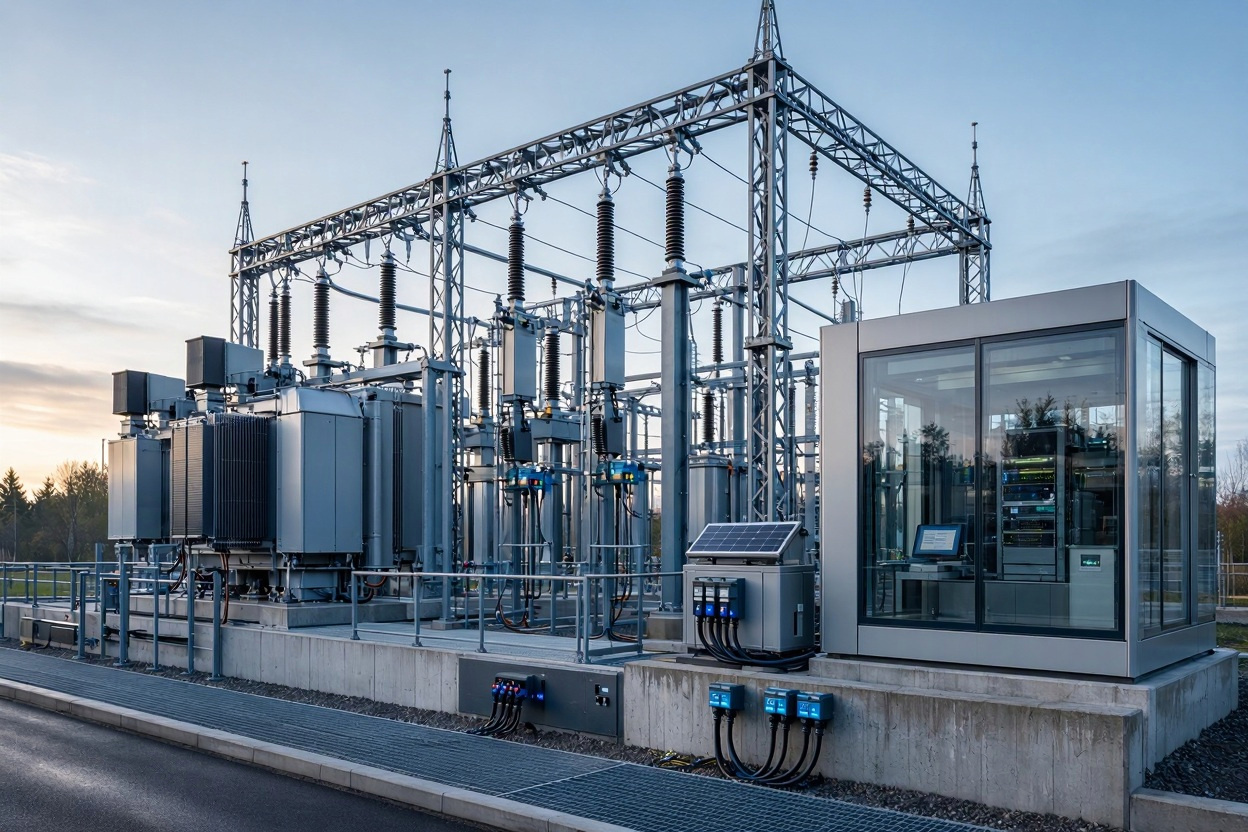
According to Marketsandmarkets, the global digital substation market size is projected to grow from USD 15.62 billion in 2026 to USD 23.39 billion by 2032, growing at a CAGR of 7.0 from 2026 to 2032.
Download PDF Brochure @ https://www.marketsandmarkets.com/pdfdownloadNew.asp?id=43227003
The shift toward digital substations is not merely a technological upgrade; it represents a re-architecture of how power systems are monitored and managed. The urgency is palpable. In the United States, for instance, nearly 70% of transmission and distribution lines were constructed before the 1970s, making modernization critical for reliability and resilience. Simultaneously, the integration of variable renewable energy sources demands a grid that can react in milliseconds rather than seconds. This context creates a fertile ground for Digital Substation Market Opportunities, spanning from hardware retrofits to software-defined automation and cybersecurity services. The following sections dissect these opportunities in depth, providing a roadmap for navigating a market that is as complex as it is rewarding.
The Foundation: Why Digital Substations Are Reshaping Grid Economics
To fully appreciate the scope of Digital Substation Market Opportunities, one must first understand the economic and operational logic underpinning the transition. The conventional substation, reliant on miles of copper control cables, is inherently limited. It is capital-intensive to install, difficult to modify, and offers limited data for predictive maintenance. Digital substations, by contrast, utilize process bus technology and merging units to digitize signals at the source. This reduces wiring complexity, shrinks physical footprint, and enables the seamless flow of high-fidelity data to protection and control systems. The economic case is compelling: lower installation and maintenance costs, reduced downtime through remote diagnostics, and the ability to defer capital expenditure by optimizing existing assets.
This economic logic is being reinforced by massive policy and investment tailwinds. In the United States, the Department of Energy’s Grid Resilience and Innovation Partnerships (GRIP) initiative has allocated up to USD 3 billion in smart grid grants, with nearly USD 2 billion awarded in October 2024 alone across 38 projects to enhance transmission capacity and bolster automation. In Europe, the European Grids Action Plan estimates that approximately Euro 584 billion will be required for grid investments by 2030 to accommodate a projected 60% rise in electricity consumption due to electrification. These figures are not abstract; they translate directly into procurement budgets for digital substation technology. The Digital Substation Market Opportunities are therefore not just theoretical—they are backed by some of the largest public and private investment programs in the history of the power sector.
Key Growth Drivers Fueling Digital Substation Market Opportunities
The expansion of the digital substation market is propelled by a confluence of technological, regulatory, and economic factors. Understanding these drivers is essential for anyone seeking to capitalize on Digital Substation Market Opportunities.
The Imperative of Renewable Energy Integration
The most significant driver is the global push toward decarbonization. Renewable energy sources, such as solar and wind, are inherently intermittent and distributed. Integrating them into a centralized grid requires a level of visibility and control that analog substations cannot provide. Digital substations enable real-time monitoring of power quality, precise fault detection, and rapid isolation of outages, which are critical for maintaining grid stability when renewable penetration is high. For example, China’s State Grid Corporation is deploying thousands of digital substations specifically to support its renewable integration goals. This creates a sustained demand for digital protection relays, merging units, and communication infrastructure, representing a core pillar of Digital Substation Market Opportunities.
Aging Infrastructure and the Retrofit Imperative
As noted earlier, a vast proportion of grid infrastructure in advanced economies is approaching or exceeding its design life. Rebuilding these substations from scratch is prohibitively expensive and disruptive. This has given rise to a massive brownfield retrofit market. Utilities are seeking staged modernization packages that replace protection panels, add merging units, and upgrade communications without requiring long outages or complete site reconstruction. The opportunity here lies in pre-engineered templates and low-disruption migration strategies. Vendors that can demonstrate a clear pathway from legacy copper-based systems to digital architectures, while reusing existing civil infrastructure, will find a receptive audience among cautious utility capital approval committees. This retrofit focus is one of the most practical and immediate Digital Substation Market Opportunities available.
The Cybersecurity Imperative as a Market Catalyst
While often viewed as a challenge, cybersecurity is also a significant market driver. The digitization of substations introduces new attack surfaces. Consequently, regulators and utilities are prioritizing secure communication protocols, access control, and encryption. This has spawned a specialized segment within the Digital Substation Market Opportunities landscape: cybersecurity solutions tailored for operational technology (OT) environments. Vendors that can offer substation automation systems with embedded secure boot, encrypted communication, and continuous monitoring capabilities are gaining a competitive edge. The shift from mere compliance to active security governance is forcing utilities to invest in hardened digital architectures, thereby expanding the addressable market for secure digital substation solutions.
Segment Analysis: Where the Most Promising Digital Substation Market Opportunities Lie
A granular view of the market reveals that Digital Substation Market Opportunities are not uniformly distributed. They vary significantly by component, voltage level, application, and end-user segment.
Component-Level Opportunities: Hardware Still Rules, but Software and Services Accelerate
In terms of components, hardware—including IEDs, merging units, and digital transformers—currently dominates revenue. The hardware segment is driven by the fundamental need to replace aging primary and secondary equipment with digital-ready alternatives. However, the most dynamic Digital Substation Market Opportunities are emerging in software and services. As utilities accumulate digital substations, the challenge shifts from installation to integration, data management, and lifecycle maintenance. Demand is rising for software platforms that can aggregate substation data into actionable intelligence, as well as for specialized services in system integration, commissioning, and cybersecurity consulting. For new entrants and specialized technology firms, this software and services layer offers a less capital-intensive entry point compared to hardware manufacturing.
Voltage-Level Opportunities: Medium Voltage Dominates, High Voltage Offers Strategic Value
By voltage level, the medium voltage range (often categorized as 220–550 kV in some analyses) represents the largest share of the market. This is because medium-voltage substations are the workhorses of grid interconnections and long-distance transmission, and they are the focus of significant modernization investments in rapidly growing economies. However, high-voltage (above 550 kV) substations present distinct Digital Substation Market Opportunities for high-value, low-volume projects. These are typically interregional transmission links and ultra-high-voltage projects where the cost of failure is enormous, and the demand for advanced monitoring and control is correspondingly high. Vendors with proven high-voltage expertise and a track record of reliability can command premium margins in this segment.
Application-Based Opportunities: Transmission Leads, Distribution Grows Faster
Transmission substations currently account for the majority of digital substation spending, owing to the high cost of equipment and the criticality of grid stability at high voltage levels. However, the distribution segment is widely expected to be the faster-growing area for Digital Substation Market Opportunities. This growth is fueled by the proliferation of distributed energy resources (DERs) such as rooftop solar and battery storage, the electrification of transport, and the need for more granular voltage regulation and load management at the edge of the grid. Digital substations in distribution networks enable active network management, which is essential for accommodating two-way power flows and maintaining power quality for end customers. Suppliers that can offer cost-effective, scalable digital solutions for the distribution grid will tap into a vast and underpenetrated market.
Regional Hotspots: Geographic Distribution of Digital Substation Market Opportunities
The geography of Digital Substation Market Opportunities is shaped by investment capacity, policy ambition, and the state of existing infrastructure.
Asia-Pacific: The Volume Leader
Asia-Pacific currently represents the largest regional market for digital substations. Rapid urbanization, industrial expansion, and ambitious renewable energy targets in countries like China and India are driving massive investments. India’s power consumption has crossed 1,500 billion units, prompting utilities like PGCIL and Tata Power to invest heavily in IEC 61850-based automation. India’s digital substation market is growing at a notably faster pace than the global average, reflecting accelerated investment in grid modernization. The Digital Substation Market Opportunities in this region are characterized by high volume, diverse voltage requirements, and a growing preference for locally manufactured equipment under initiatives like “Make in India.”
North America and Europe: The Retrofit and Innovation Frontiers
In North America and Europe, the primary driver is the modernization of aging assets. The U.S. market, supported by federal grants and utility commitments, is focused on enhancing grid resilience and integrating renewables. Europe, with nearly 40% of its distribution grids over 40 years old, is similarly focused on modernization, but with a strong emphasis on innovation. Programs like Horizon Europe are funding projects such as ESTELAR, which is developing virtualization and digital twin technologies for substations. The Digital Substation Market Opportunities in these regions are therefore skewed toward high-value, technologically advanced solutions: virtualization, software-defined automation, and advanced cybersecurity. The focus is less on building new substations and more on extracting maximum value from existing sites through digital overlays.
Middle East and Africa: The Emerging Frontier
The Middle East, particularly the Gulf Cooperation Council (GCC) countries, is emerging as a significant market for digital substations. Nations such as Saudi Arabia and the UAE are investing billions under programs like Vision 2030 to modernize grids and integrate solar and wind energy. These regions face harsh environmental conditions and rising peak loads, making remote monitoring and reliable digital control essential. While the absolute market size is smaller than in Asia-Pacific, the growth rates are high, and the projects are often high-profile, offering attractive Digital Substation Market Opportunities for vendors with strong project execution capabilities and experience in challenging environments.
Strategic Pathways: How to Capitalize on Digital Substation Market Opportunities
Identifying opportunities is only half the battle. Capturing them requires a clear understanding of the strategic levers available to different market participants.
For Technology Providers and Vendors: Focus on Interoperability and Lifecycle Support
The market is increasingly favoring vendors that can offer more than just hardware. Utilities are seeking partners who can demonstrate proven interoperability based on IEC 61850, provide robust cybersecurity features, and support the entire lifecycle from design to commissioning and maintenance. The opportunity lies in offering integrated solutions that reduce technical risk. For instance, Hitachi and Cisco have collaborated to transform substation control and protection by switching from copper to fiber-optic Ethernet, aiming to reduce installation and maintenance complexity. Similarly, Siemens Energy has advanced its SIPROTEC 5 platform with firmware enhancements supporting process bus compatibility and modular I/O configurations. Vendors should prioritize developing pre-engineered, tested architectures that can be rapidly deployed and easily adapted for retrofit projects.
For Utilities: Adopt a Phased, Risk-Managed Approach
For utilities, the primary Digital Substation Market Opportunities lie in improving operational efficiency and deferring capital expenditure. The most successful strategies involve a phased approach. Rather than attempting a wholesale transformation of an entire substation fleet at once, utilities can target specific “pain points” or high-value nodes. For example, upgrading the protection and control systems on a single critical bay using a process bus architecture can serve as a pilot, proving the concept and building internal expertise before scaling up. This approach aligns with the trend toward bay-level modernization, which allows utilities to upgrade individual switchgear bays without converting the entire site. Utilities should also actively engage with vendors to demand open standards and interoperable products to avoid vendor lock-in.
For Investors and New Entrants: Look Beyond the Hardware
For investors, the most attractive Digital Substation Market Opportunities may not be in the traditional hardware manufacturing space, which is dominated by large incumbents like ABB, Siemens Energy, Schneider Electric, GE Vernova, and Hitachi Energy. Instead, attention should turn to the enabling software and services ecosystem. This includes companies developing advanced analytics platforms for asset health monitoring, specialized cybersecurity solutions for OT networks, and engineering firms that provide integration and commissioning services. The trend toward virtualized protection and centralized automation platforms, where multiple protection functions are consolidated onto commercial off-the-shelf servers, represents a particularly disruptive opportunity. Startups and agile technology firms that can offer software-defined solutions, digital twin platforms, or AI-driven diagnostic tools are well-positioned to capture value as the market matures.
Challenges to Navigate
While the opportunities are substantial, stakeholders must also navigate significant challenges. High initial capital expenditure remains a primary restraint, particularly for utilities in developing economies with limited budgets. The transition from analog to digital requires not just hardware investment but also significant spending on engineering, training, and change management. Furthermore, the cybersecurity threat landscape is constantly evolving, requiring continuous investment and vigilance. Finally, the shortage of skilled personnel trained in both power systems engineering and digital technologies is a bottleneck that could slow deployment. Addressing these challenges—through financing models, standardized designs, and workforce development—is essential for fully realizing Digital Substation Market Opportunities.
Conclusion
The Digital Substation Market Opportunities are expansive and multifaceted, driven by the inexorable forces of decarbonization, digitalization, and the need for grid resilience. From the hardware-heavy retrofit projects in mature markets to the greenfield deployments in Asia-Pacific, the demand for digital substation technology is robust and sustained by policy and investment. However, capturing value requires more than just recognizing the trend. It demands a strategic focus on interoperability, lifecycle support, and cybersecurity, as well as a willingness to look beyond traditional hardware to the software and services layers where future growth is accelerating. For utilities, vendors, and investors alike, the digital substation is not just a market—it is the foundational infrastructure of the future energy system. Those who act decisively to understand and address its nuances will be best positioned to thrive in the coming decade.
Frequently Asked Questions (FAQs)
What is driving the growth of the digital substation market?
The primary drivers include the need to integrate renewable energy sources, the modernization of aging grid infrastructure, the push for greater grid reliability and resilience, and supportive government policies and investment programs aimed at smart grid development.
Which region offers the most significant digital substation market opportunities?
Asia-Pacific currently represents the largest market share, driven by rapid industrialization and energy demand growth in countries like China and India. However, significant opportunities also exist in North America and Europe for retrofit projects and advanced technology adoption, while the Middle East is an emerging high-growth region.
What are the main challenges facing the digital substation market?
Key challenges include high initial capital costs, particularly for full-scale deployments, concerns over cybersecurity, the complexity of integrating new digital systems with legacy infrastructure, and a shortage of skilled personnel capable of designing and maintaining these advanced systems.
How does the IEC 61850 standard impact market opportunities?
IEC 61850 is the foundational communication standard for digital substations. It enables interoperability between devices from different vendors, which is crucial for reducing costs and increasing flexibility. Vendors that offer products fully compliant with and tested against IEC 61850, particularly those supporting process bus architectures, are better positioned to capture market share.
What is the role of retrofits in the digital substation market?
Retrofits represent a massive opportunity. Given the age of existing infrastructure, many utilities cannot afford to rebuild entire substations. They are seeking staged modernization packages that allow them to upgrade protection, control, and monitoring systems while reusing existing civil works and primary equipment, thereby minimizing disruption and capital outlay.