The Light Detection and Ranging (LiDAR) market is experiencing significant transformation as technological advancements, cost reduction strategies, and increasing demand for high-precision sensing solutions reshape the competitive landscape. LiDAR technology uses laser pulses to measure distances and generate highly accurate three-dimensional (3D) representations of surrounding environments. It is becoming an essential technology across autonomous vehicles, robotics, smart infrastructure, industrial automation, geospatial mapping, and environmental monitoring. The LiDAR market is projected to reach USD 12.79 billion by 2030 from USD 3.27 billion in 2025, at a CAGR of 31.3% during the forecast period
Historically, the high cost of LiDAR sensors, complex hardware configurations, and integration requirements limited their adoption across several industries. However, continuous innovation in laser technology, photodetectors, semiconductor components, and manufacturing processes is helping reduce system costs and improve performance.
Cost reduction is also changing competition among LiDAR manufacturers. Companies are increasingly focusing on solid-state LiDAR, frequency-modulated continuous-wave (FMCW) LiDAR, miniaturized sensors, and advanced signal-processing technologies to develop affordable and scalable solutions.
As LiDAR technology becomes more accessible, manufacturers are competing not only on sensor accuracy and detection range but also on pricing, reliability, scalability, and integration capabilities. These developments are creating new growth opportunities and accelerating the commercialization of LiDAR solutions across multiple industries.
Understanding the Impact of Cost Reduction on the LiDAR Market
Cost reduction has become a major factor influencing the growth and adoption of LiDAR technology. Traditional LiDAR systems often relied on expensive mechanical components, including rotating assemblies, specialized laser sources, and complex optical configurations. These components increased manufacturing costs and created challenges related to size, durability, and maintenance.
To overcome these limitations, manufacturers are investing in innovative architectures and semiconductor-based solutions. Solid-state LiDAR eliminates or reduces the need for moving mechanical components, helping manufacturers develop smaller, more durable, and potentially lower-cost sensors.
Similarly, improvements in semiconductor manufacturing, photonic integration, and component standardization are helping reduce production costs. These advancements allow manufacturers to develop LiDAR sensors suitable for high-volume applications, particularly in automotive manufacturing, consumer electronics, and industrial automation.
The reduction in LiDAR system costs is expanding its addressable market by making advanced sensing capabilities more accessible to organizations with different technology budgets.
Download PDF Brochure @ https://www.marketsandmarkets.com/pdfdownloadNew.asp?id=1261
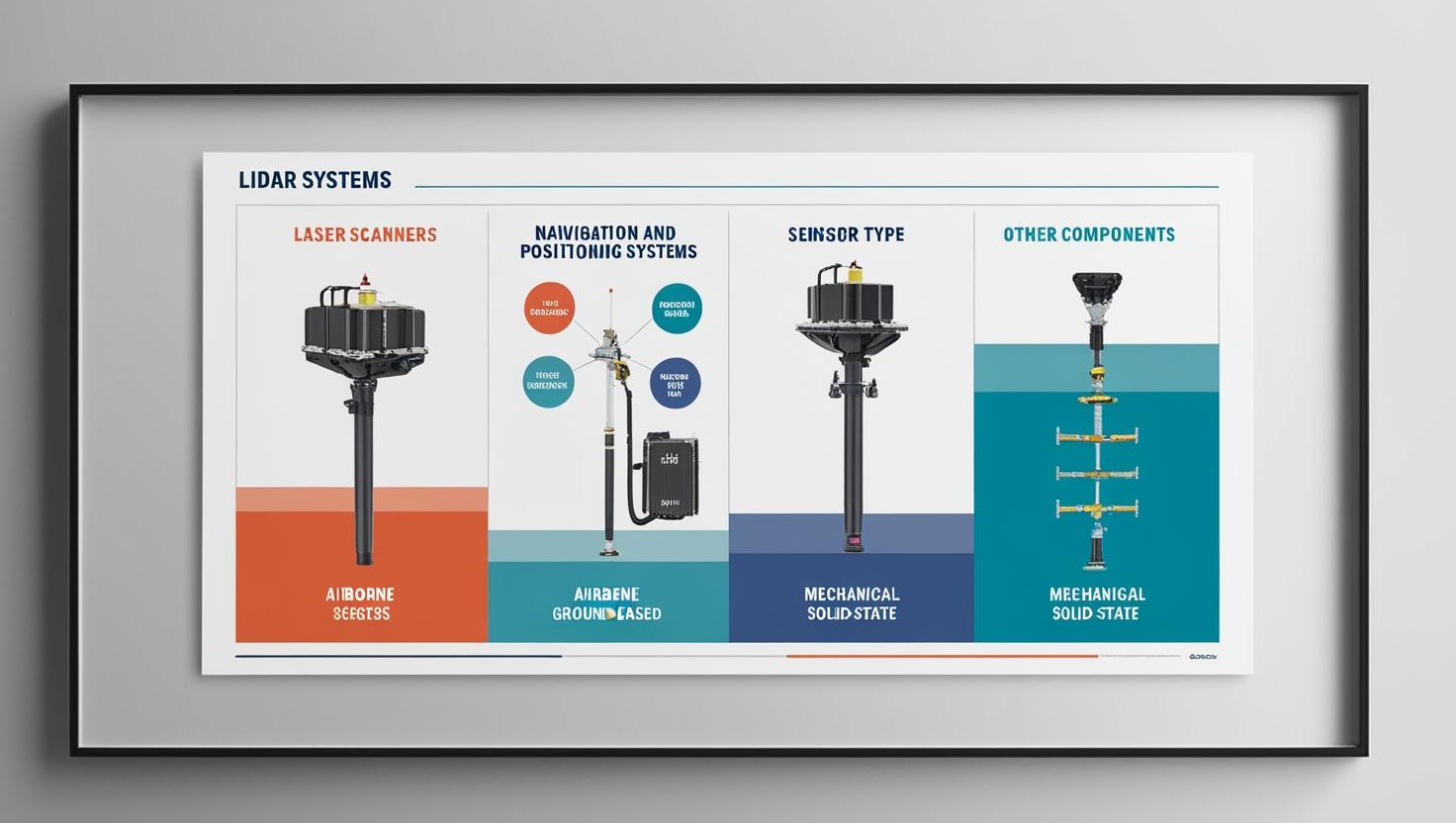
Key Innovation Trends Driving Cost Reduction in the LiDAR Market
1. Shift Toward Solid-State LiDAR Technology
Solid-state LiDAR is one of the most important technological developments influencing the competitive landscape. Unlike traditional mechanical LiDAR systems, solid-state solutions use electronic or semiconductor-based scanning mechanisms to capture environmental information without relying on conventional rotating assemblies.
This architecture reduces mechanical complexity and can improve durability, reliability, and manufacturing scalability.
Manufacturers are exploring technologies such as micro-electromechanical systems (MEMS), flash LiDAR, and optical phased arrays (OPA) to develop compact and cost-effective sensing solutions.
The automotive industry is a major area of application for solid-state LiDAR. Autonomous and advanced driver-assistance systems (ADAS) require reliable environmental perception to detect vehicles, pedestrians, road infrastructure, and other obstacles.
As production volumes increase and semiconductor integration improves, solid-state LiDAR is expected to support broader adoption across automotive and industrial applications.
2. Semiconductor Integration and Miniaturization
Semiconductor integration is helping LiDAR manufacturers reduce hardware costs while improving sensor performance. Integrating multiple optical and electronic functions into compact semiconductor components can reduce the number of individual parts required in a LiDAR system.
Advancements in complementary metal-oxide-semiconductor (CMOS) technology, silicon photonics, and integrated photodetectors are supporting the development of smaller and more efficient LiDAR sensors.
Miniaturized LiDAR systems offer several advantages, including reduced power consumption, simplified installation, lower manufacturing complexity, and improved compatibility with compact electronic devices.
These innovations are particularly relevant to robotics, drones, industrial automation, and automotive applications, where sensor size and integration flexibility are important purchasing considerations.
3. Development of FMCW LiDAR
Frequency-modulated continuous-wave (FMCW) LiDAR is emerging as an innovative approach to distance measurement and environmental sensing.
Unlike conventional time-of-flight LiDAR, which measures distance by calculating the time taken for laser pulses to return, FMCW LiDAR uses frequency-modulated continuous laser signals to determine distance and velocity.
This technology offers potential advantages such as direct velocity measurement, improved resistance to certain forms of interference, and the ability to distinguish moving objects from stationary surroundings.
Although FMCW LiDAR can involve complex and expensive optical components, continued advancements in photonic integration and manufacturing processes could help improve affordability.
As manufacturers work toward commercializing scalable FMCW solutions, the technology could create additional competitive opportunities in autonomous mobility, robotics, and advanced sensing applications.
4. AI-Powered Signal Processing and Data Analytics
Artificial intelligence (AI) and machine learning are improving the ability of LiDAR systems to process large volumes of spatial information.
Modern LiDAR sensors generate detailed point-cloud data that must be processed to identify objects, classify surrounding environments, and support real-time decision-making.
AI-powered algorithms can improve object recognition, obstacle detection, mapping accuracy, and environmental perception. They can also help optimize signal processing and reduce the computational burden associated with certain sensing applications.
Combining affordable LiDAR hardware with advanced AI software creates opportunities to develop more cost-efficient sensing platforms.
This integration is particularly valuable in autonomous vehicles, smart cities, industrial robotics, and intelligent transportation systems.
5. Growing Adoption of Flash LiDAR
Flash LiDAR is gaining attention as manufacturers look for compact and cost-effective sensing technologies. Unlike scanning-based systems that direct laser beams across different points in an environment, flash LiDAR illuminates an entire scene and captures the reflected light using an array of sensors.
This approach can simplify certain system designs and reduce the need for complex scanning mechanisms. It is particularly useful in applications requiring rapid environmental perception, including autonomous vehicles, robotics, drones, and industrial monitoring.
Increasing research into compact flash LiDAR and advanced detector technologies is creating opportunities to improve sensor affordability and performance.
6. Advanced Manufacturing and Economies of Scale
Manufacturing efficiency is another important factor contributing to LiDAR cost reduction. As demand increases across automotive, industrial, and geospatial applications, manufacturers are investing in automated production processes and standardized components.
High-volume manufacturing can help reduce per-unit production costs, improve product consistency, and optimize supply chains.
Automotive applications are particularly important because vehicle manufacturers require sensors that meet strict performance, reliability, and cost requirements. Large-scale production agreements can help LiDAR suppliers improve manufacturing efficiency and strengthen their competitive positioning.
7. Integration of LiDAR with Drones and UAVs
Unmanned aerial vehicles (UAVs) are expanding the use of LiDAR technology in surveying, mapping, infrastructure inspection, and environmental monitoring.
Drone-mounted LiDAR systems provide accurate 3D information about difficult-to-access locations, including forests, mining areas, construction sites, and transportation corridors.
Advancements in lightweight sensors, compact hardware, and integrated data-processing platforms are helping reduce deployment costs. These improvements are making aerial LiDAR surveying more accessible to engineering companies, government agencies, and geospatial service providers.
Competitive Landscape of the LiDAR Market
The competitive landscape of the LiDAR market is becoming increasingly dynamic as established technology companies and emerging manufacturers compete to develop affordable, high-performance sensing solutions.
Companies are differentiating their offerings through sensor architecture, detection range, resolution, accuracy, software capabilities, manufacturing efficiency, and integration flexibility.
How Cost Reduction Is Changing Competitive Strategies
1. Price-Based Competition and Product Differentiation
Lower manufacturing costs are encouraging LiDAR manufacturers to compete more aggressively on pricing. Companies are developing products for different customer segments, ranging from premium long-range automotive sensors to affordable short-range sensors for robotics and industrial automation.
However, price alone is not sufficient to establish a competitive advantage. Manufacturers must also deliver reliable detection, high resolution, accurate measurements, and consistent performance under different environmental conditions.
2. Strategic Partnerships and Collaborations
Partnerships between LiDAR manufacturers, automotive OEMs, semiconductor companies, and technology providers are becoming important for accelerating product development and commercialization.
These collaborations help companies share development costs, improve hardware integration, strengthen supply chains, and gain access to new markets.
Automotive partnerships are particularly valuable because vehicle manufacturers require LiDAR sensors that meet demanding safety and production standards.
3. Research and Development Investments
Companies are increasing investments in research and development to improve sensor architectures, reduce component complexity, and introduce innovative products.
Focus areas include solid-state sensors, digital LiDAR, FMCW technology, quantum dot detectors, and AI-powered perception software.
Continuous innovation enables manufacturers to improve performance while targeting lower production and integration costs.
4. Expansion into Emerging Applications
Cost reduction is allowing LiDAR manufacturers to explore opportunities beyond traditional surveying and automotive applications.
Robotics, smart cities, mining automation, industrial inspection, environmental monitoring, and drone-based mapping are creating additional demand.
By developing application-specific solutions, companies can diversify their revenue streams and strengthen their market positions.
Market Growth Opportunities for LiDAR Manufacturers
The global LiDAR market is witnessing strong growth as industries increasingly adopt 3D sensing, autonomous navigation, and precision mapping technologies.
According to MarketsandMarkets, the global LiDAR market is projected to increase from USD 3.27 billion in 2025 to USD 12.79 billion by 2030, registering a CAGR of 31.3% during 2025–2030. MarketsandMarkets
Several factors are contributing to this expansion:
- Autonomous vehicles and ADAS: Increasing adoption of intelligent vehicles is creating demand for reliable LiDAR sensors for object detection, navigation, and collision avoidance.
- Smart city development: Urban infrastructure projects are increasing the need for accurate 3D mapping, traffic monitoring, and infrastructure assessment.
- Drone-based surveying: UAV-mounted LiDAR systems are supporting cost-effective data collection across construction, mining, forestry, and environmental applications.
- Industrial automation: Robotics and automated machinery require accurate environmental sensing for navigation, positioning, and operational safety.
- Geospatial intelligence: Growing demand for digital elevation models, topographical mapping, and digital twins is creating opportunities for advanced LiDAR solutions.
Regional Opportunities in the LiDAR Market
Asia Pacific is expected to register the highest growth rate in the global LiDAR market during the forecast period. Increasing infrastructure development, automotive production, mining activities, and smart city investments are supporting regional demand.
China, Japan, South Korea, and India are creating opportunities for LiDAR manufacturers through investments in autonomous mobility, industrial automation, surveying, and advanced infrastructure.
North America remains an important market due to investments in autonomous vehicles, ADAS technologies, robotics, and geospatial solutions. Europe is also witnessing growing adoption through automotive innovation, smart mobility initiatives, and infrastructure modernization.
The combination of manufacturing advancements and cost-efficient sensor development is expected to strengthen LiDAR adoption across these regions. MarketsandMarkets
Challenges Affecting Cost Reduction in the LiDAR Industry
Despite technological progress, several challenges continue to influence the cost structure and commercialization of LiDAR solutions.
High Software and Data Processing Costs: LiDAR systems generate large volumes of point-cloud data that require specialized software for processing, visualization, and analysis. High software licensing and post-processing costs can increase the overall project investment.
Complexities in Sensor Miniaturization: Developing compact LiDAR sensors without compromising detection range, resolution, and accuracy remains a technical challenge. Manufacturers must balance size, power consumption, and performance.
Competition from Alternative Technologies: Photogrammetry and other optical sensing technologies can provide lower-cost solutions for certain mapping and surveying applications. This creates pricing pressure for LiDAR manufacturers.
High Testing and Calibration Expenses: LiDAR sensors require extensive testing, calibration, and validation to ensure consistent performance across different environments. These requirements can increase development and manufacturing expenses.
Supply Chain and Component Costs: Specialized laser sources, optical components, detectors, and semiconductor materials can influence production costs. Manufacturers need efficient supply chains and component integration strategies to improve cost competitiveness. MarketsandMarkets
Future Outlook: The Role of Innovation in Making LiDAR More Affordable
The future of the LiDAR market will be shaped by continuous improvements in sensor architecture, semiconductor integration, manufacturing efficiency, and AI-powered data processing.
Solid-state LiDAR and flash LiDAR are expected to create opportunities for compact and scalable sensing solutions. Meanwhile, advancements in photonic integration and detector technologies could support more affordable and efficient systems.
The growing use of LiDAR in autonomous vehicles, robotics, UAVs, and smart infrastructure will encourage manufacturers to develop products that balance affordability with high performance.
Another important development will be the integration of LiDAR with AI, edge computing, and cloud-based analytics. These technologies can improve data processing, object recognition, and real-time environmental monitoring.
Manufacturers that successfully combine cost optimization with technological innovation will be better positioned to compete in the evolving market. Strategic partnerships, increased production capacity, and application-specific product development will also play important roles in strengthening competitive positions.
Conclusion
Cost reduction is becoming a major competitive factor in the LiDAR market. Advancements in solid-state technology, semiconductor integration, flash LiDAR, AI-powered processing, and automated manufacturing are helping reduce hardware complexity and improve sensor affordability.
At the same time, established companies and emerging manufacturers are strengthening their market positions through product innovation, strategic partnerships, and investments in research and development.
With growing demand from autonomous vehicles, robotics, industrial automation, smart cities, and geospatial mapping, affordable LiDAR solutions are expected to gain wider acceptance.
As the market continues to evolve, companies that deliver cost-effective, accurate, reliable, and scalable sensing technologies will have significant opportunities to shape the future of the global LiDAR industry.
FAQ
Q1. How is cost reduction impacting the LiDAR market?
Cost reduction is making LiDAR technology more affordable and accessible across automotive, robotics, industrial automation, smart cities, and geospatial applications. It is also encouraging wider adoption through improved manufacturing efficiency and semiconductor integration.
Q2. What are the key innovation trends driving cost reduction in the LiDAR market?
Key innovation trends include solid-state LiDAR, FMCW LiDAR, flash LiDAR, semiconductor integration, AI-powered signal processing, sensor miniaturization, and automated manufacturing.
Q3. Which companies are leading the competitive landscape of the LiDAR market?
Major companies include Hesai Group, RoboSense, SICK AG, Ouster, Luminar Technologies, Leica Geosystems, Trimble, Teledyne Optech, FARO Technologies, and RIEGL.
Q4. Which industries are benefiting from affordable LiDAR technology?
Automotive, aerospace, construction, mining, robotics, transportation, agriculture, and industrial manufacturing are benefiting from affordable LiDAR solutions for mapping, navigation, object detection, and environmental monitoring.
Q5. What is the future outlook for the global LiDAR market?
The global LiDAR market is projected to grow from USD 3.27 billion in 2025 to USD 12.79 billion by 2030, at a CAGR of 31.3%. Increasing adoption of autonomous vehicles, smart infrastructure, industrial automation, and cost-effective sensing technologies will support market growth.
About MarketsandMarkets™
MarketsandMarkets™ has been recognized as one of America’s Best Management Consulting Firms by Forbes, as per their recent report.
MarketsandMarkets™ is a blue ocean alternative in growth consulting and program management, leveraging a man-machine offering to drive supernormal growth for progressive organizations in the B2B space. With the widest lens on emerging technologies, we are proficient in co-creating supernormal growth for clients across the globe.
Today, 80% of Fortune 2000 companies rely on MarketsandMarkets, and 90 of the top 100 companies in each sector trust us to accelerate their revenue growth. With a global clientele of over 13,000 organizations, we help businesses thrive in a disruptive ecosystem.
The B2B economy is witnessing the emergence of $25 trillion in new revenue streams that are replacing existing ones within this decade. We work with clients on growth programs, helping them monetize this $25 trillion opportunity through our service lines – TAM Expansion, Go-to-Market (GTM) Strategy to Execution, Market Share Gain, Account Enablement, and Thought Leadership Marketing.
Built on the ‘GIVE Growth’ principle, we collaborate with several Forbes Global 2000 B2B companies to keep them future-ready. Our insights and strategies are powered by industry experts, cutting-edge AI, and our Market Intelligence Cloud, KnowledgeStore™, which integrates research and provides ecosystem-wide visibility into revenue shifts.
To find out more, visit www.MarketsandMarkets™.com or follow us on Twitter , LinkedIn and Facebook .
Contact:
Mr. Rohan Salgarkar
MarketsandMarkets™ INC.
1615 South Congress Ave.
Suite 103, Delray Beach, FL 33445
USA: +1-888-600-6441
