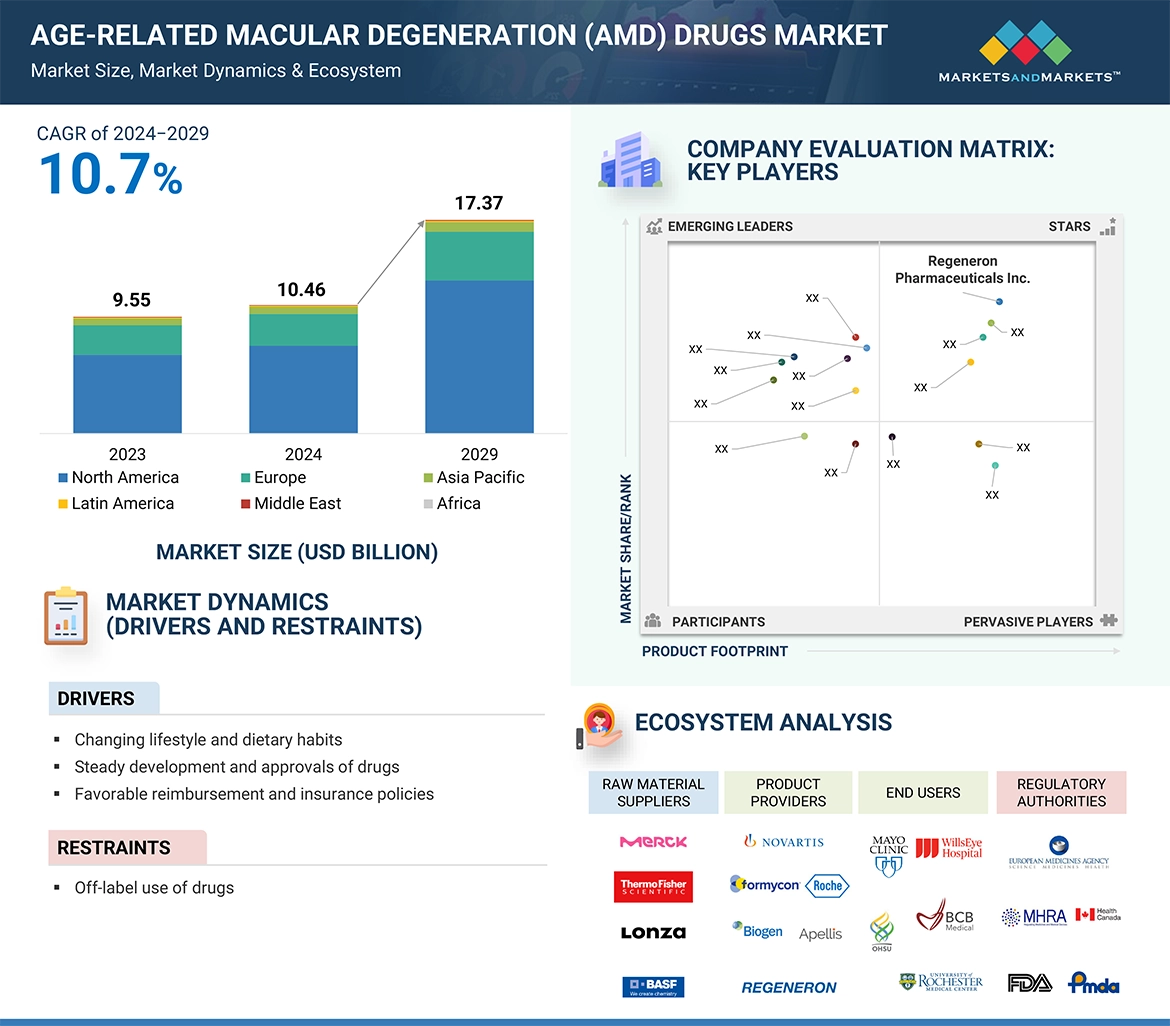
The global Age-related Macular Degeneration (AMD) Drugs Market is projected to grow from USD 10.46 billion in 2024 to USD 17.37 billion by 2029, registering a CAGR of 10.7% during the forecast period. The market is witnessing robust growth fueled by rising prevalence of AMD, increasing geriatric population, and rapid advancements in retinal drug development.
Download PDF Brochure:- https://www.marketsandmarkets.com/pdfdownloadNew.asp?id=37446234
Market Dynamics: Aging Population and Innovation Fuel Demand
The increasing global burden of age-related vision disorders is a major factor driving the AMD drugs market. Lifestyle changes, dietary habits, and longer life expectancy are contributing to a higher incidence of AMD worldwide.
A strong pipeline of novel therapies—many receiving fast-track designations—is accelerating drug approvals and expanding treatment options. Additionally, improved reimbursement frameworks are enhancing patient access and affordability, further supporting market growth.
Emerging markets across Asia Pacific and Latin America are also creating new growth opportunities, while pharmaceutical companies continue to explore next-generation drug modalities to improve treatment efficacy and reduce dosing frequency.
Product Insights: Eylea Maintains Market Leadership
By product, Eylea & Eylea HD accounted for the largest share of the AMD drugs market in 2023. Their widespread adoption is driven by strong clinical efficacy and broad indications, including treatment for retinal vein occlusion (RVO) and diabetic macular edema.
However, increasing competition from newer therapies such as Vabysmo, which offers reduced dosing frequency, is gradually reshaping prescribing patterns and improving patient compliance.
Other key therapies include Lucentis and Syfovre, contributing to a dynamic and competitive product landscape.
Disease Insights: Wet AMD Dominates Treatment Demand
By disease type, wet AMD accounted for the largest share of the market in 2023, driven by its higher severity and the availability of multiple targeted therapies.
The condition affects millions globally and is strongly associated with aging populations. According to projections from the World Health Organization, the number of individuals aged 60 and above is expected to double by 2050—significantly increasing the patient pool for AMD treatments.
Ongoing research by emerging companies such as Stealth BioTherapeutics Inc., Ocular Therapeutix, Inc., and Opthea Limited is further advancing novel treatment approaches for wet AMD.
Regional Outlook: North America Leads Global Market
North America accounted for the largest share of the AMD drugs market in 2023, driven by a high prevalence of AMD, strong healthcare spending, and rapid adoption of advanced therapies.
The region benefits from a well-established pharmaceutical ecosystem, robust clinical trial activity, and continuous drug approvals. The presence of leading drug manufacturers and research institutions further strengthens its market position.
Speak To Analyst:- https://www.marketsandmarkets.com/speaktoanalystNew.asp?id=37446234
Competitive Landscape: Strong Pipeline and Strategic Expansion Drive Competition
The AMD drugs market is highly competitive, with leading pharmaceutical companies focusing on innovation, biologics development, and biosimilar expansion. Key players include:Regeneron Pharmaceuticals Inc. (US), Bayer AG (Germany), F. Hoffmann-La Roche Ltd (Switzerland), Novartis AG (Switzerland), Apellis Pharmaceuticals (US), Coherus BioSciences (US), Astellas Pharma Inc. (Japan), Biogen (US), STADA Arzneimittel AG (Germany), Formycon AG (Germany), Biocon. (India), Outlook Therapeutics, Inc. (US), Intas Pharmaceuticals Ltd. (India), Teva Pharmaceutical Industries Ltd. (Israel), Chengdu Kanghong Biotech Company (China), and Sandoz Group AG (Switzerland).
These companies are investing heavily in next-generation biologics, extended-duration therapies, and biosimilars to improve patient outcomes and expand market reach.
Strategic Outlook: Toward Long-Acting and Patient-Centric Therapies
As the AMD treatment landscape evolves, the focus is shifting toward long-acting therapies, reduced dosing frequency, and personalized treatment approaches.
Advancements in biologics and combination therapies are expected to redefine treatment standards, improving patient adherence and clinical outcomes. With a strong pipeline and increasing global awareness of eye health, the AMD drugs market is poised for sustained high growth in the coming years.
