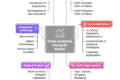
As industries worldwide place greater emphasis on product quality, regulatory compliance, and laboratory accuracy, the demand for analytical standards continues to grow. From pharmaceutical development and food safety testing to environmental monitoring and forensic analysis, analytical standards serve as the foundation for precise and reliable laboratory results.
According to recent market insights, the global analytical standards market is projected to grow from USD 1.53 billion in 2024 to USD 2.16 billion by 2030, registering a CAGR of 5.9% during the forecast period. Rising investments in research and development, increasing food safety concerns, expanding pesticide monitoring programs, and stricter global regulatory requirements are driving sustained demand for certified analytical reference materials.
Download PDF Brochure: https://www.marketsandmarkets.com/pdfdownloadNew.asp?id=8484789
What Are Analytical Standards?
Analytical standards are highly purified substances with certified properties that laboratories use to calibrate instruments, validate analytical methods, and ensure the accuracy of test results. They are essential for maintaining consistency, traceability, and compliance across scientific research and quality control processes.
These standards are widely used in:
- Pharmaceutical quality control
- Food and beverage testing
- Environmental monitoring
- Clinical diagnostics
- Chemical analysis
- Forensic laboratories
- Academic research
- Biotechnology and life sciences
As testing regulations become more stringent, the importance of reliable analytical standards continues to increase.
Key Factors Driving Market Growth
Growing Investment in Research and Development
Governments, pharmaceutical companies, biotechnology firms, and research institutions are significantly increasing R&D spending to accelerate scientific innovation.
Advanced analytical testing plays a critical role in drug discovery, vaccine development, environmental research, and industrial quality assurance, creating strong demand for certified reference materials.
Rising Focus on Food Safety
Consumers and regulatory agencies are placing greater emphasis on food quality and safety than ever before.
Analytical standards help laboratories detect:
- Pesticide residues
- Food contaminants
- Heavy metals
- Veterinary drug residues
- Mycotoxins
- Food additives
As food safety regulations continue to tighten globally, laboratories require increasingly accurate analytical standards for compliance testing.
Request Free Sample Report: https://www.marketsandmarkets.com/requestsampleNew.asp?id=8484789
Expanding Use in Environmental Monitoring
Environmental agencies rely on analytical standards to monitor pollutants in air, water, and soil.
Growing concerns about pollution, industrial emissions, and climate-related environmental challenges are increasing laboratory testing activities worldwide.
Increasing Adoption of Advanced Analytical Techniques
Modern laboratories are adopting sophisticated analytical technologies such as:
- High-performance liquid chromatography (HPLC)
- Gas chromatography (GC)
- Mass spectrometry (MS)
- Liquid chromatography-mass spectrometry (LC-MS)
- Inductively coupled plasma mass spectrometry (ICP-MS)
- Spectroscopy
These advanced techniques require highly accurate certified reference materials to ensure dependable analytical performance.
Strategic Industry Collaborations
Manufacturers are increasingly collaborating with pharmaceutical companies, food testing laboratories, research institutions, and regulatory organizations to develop application-specific analytical standards that support evolving testing requirements.
These partnerships continue expanding product portfolios while accelerating innovation across the market.
Why Analytical Standards Are More Important Than Ever
Laboratories today operate under increasingly strict quality requirements.
Certified analytical standards help organizations:
- Improve testing accuracy
- Meet international regulatory requirements
- Ensure reproducible laboratory results
- Validate analytical methods
- Reduce measurement uncertainty
- Support product development
- Strengthen quality assurance programs
As global regulations become more comprehensive, reliable reference materials have become indispensable for laboratory operations.
Competitive Landscape
The analytical standards market is moderately competitive, with leading global companies accounting for approximately 60–65% of the overall market.
Major industry participants include:
- Merck KGaA
- Agilent Technologies
- Waters Corporation
- LGC Limited
- PerkinElmer
- United States Pharmacopeial Convention (USP)
- SPEX CertiPrep
These organizations continue expanding their capabilities through:
- Product launches
- Strategic collaborations
- Manufacturing expansion
- Research partnerships
- Portfolio diversification
- Geographic expansion
Meanwhile, regional manufacturers and specialized suppliers collectively account for the remaining 35–40% of the market, creating healthy competition and driving continuous innovation.
Leading Companies Driving Market Innovation
Merck KGaA
Merck KGaA remains one of the world’s leading suppliers of analytical standards, serving pharmaceutical, food, environmental, and industrial laboratories across more than 160 countries.
The company’s strengths include:
- Extensive portfolio of certified reference materials
- High-purity analytical standards
- Global manufacturing network
- Strong regulatory expertise
- Broad life science product portfolio
To strengthen manufacturing capacity, the company expanded its production facilities in Nebraska, USA, supporting growing global demand for analytical reference materials.
Merck continues investing in both organic growth and strategic expansion initiatives to reinforce its leadership position.
United States Pharmacopeial Convention (USP)
The United States Pharmacopeial Convention (USP) plays a critical role in developing pharmaceutical reference standards and supporting regulatory compliance worldwide.
USP maintains operations across numerous international markets, including:
- India
- China
- Brazil
- Nigeria
- Singapore
- Switzerland
- Ghana
- The Philippines
Its certified pharmaceutical reference materials help manufacturers ensure drug quality, safety, and consistency while supporting regulatory approvals.
USP remains one of the most trusted organizations in pharmaceutical analytical standardization.
Agilent Technologies
Agilent combines advanced laboratory instrumentation with high-quality certified reference materials to support analytical testing across pharmaceuticals, environmental science, food safety, and chemical analysis.
Its expertise in chromatography and spectroscopy strengthens its competitive position within the analytical standards market.
Waters Corporation
Waters continues expanding its presence through innovative analytical technologies supporting pharmaceutical research, biotechnology, environmental monitoring, and food safety laboratories.
Its integrated analytical solutions help laboratories improve productivity while ensuring highly accurate test results.
LGC Limited
LGC has established itself as a global leader in quality assurance, certified reference materials, and proficiency testing.
The company serves multiple industries by providing high-quality analytical standards that help laboratories maintain regulatory compliance and testing accuracy.
Emerging Trends Shaping the Market
Several important trends are expected to influence the future of analytical standards:
- Growth of biologics and biosimilars testing
- AI-assisted laboratory analytics
- Expansion of precision medicine research
- Increasing environmental testing requirements
- Food authenticity verification
- Advanced pharmaceutical quality control
- Digital laboratory management systems
- Sustainable laboratory practices
- Development of novel certified reference materials
- Increasing adoption of automation in laboratories
These trends are creating new opportunities for manufacturers to develop specialized analytical standards for emerging applications.
Future Outlook
The analytical standards market is expected to experience steady growth as industries continue emphasizing quality assurance, regulatory compliance, and scientific precision.
Growing investments in pharmaceutical research, expanding food safety regulations, and increasing environmental monitoring activities will sustain demand for certified reference materials over the coming years.
Companies that invest in innovation, global manufacturing capabilities, and application-specific analytical standards will be well-positioned to capitalize on future market opportunities.
Conclusion
Analytical standards have become indispensable tools for modern laboratories, ensuring the accuracy, reliability, and consistency of scientific testing across industries.
As pharmaceutical development, food safety, environmental protection, and biotechnology research continue expanding worldwide, demand for high-quality certified reference materials will remain strong. Supported by technological innovation, evolving regulations, and growing global research investments, the analytical standards market is set for sustained growth through 2030, reinforcing its critical role in advancing scientific excellence and public safety.
Request 10% Customization: https://www.marketsandmarkets.com/requestCustomizationNew.asp?id=8484789