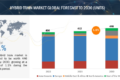
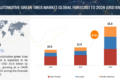
The Autonomous Driving Software Market size is projected to grow from USD 1.8 billion in 2024 to USD 7.0 billion by 2035, registering a CAGR of 13.3% during the forecast period. Rising adoption of Level 2+ and Level 3 autonomous vehicles, expanding implementation of ADAS technologies, and increasing demand for software-defined vehicle architectures are expected to drive sustained market growth.
The global Autonomous Driving Software Market is experiencing significant growth as automotive manufacturers accelerate the transition toward software-defined vehicles and intelligent mobility. Advances in artificial intelligence, machine learning, sensor fusion, high-performance computing, and cloud connectivity are enabling vehicles to perceive their surroundings, make real-time driving decisions, and deliver increasingly autonomous driving capabilities. Growing investments by OEMs, technology companies, and semiconductor manufacturers are further driving innovation across autonomous vehicle software platforms.
Autonomous Driving Software Industry Overview
Autonomous driving software serves as the intelligence behind self-driving vehicles, enabling perception, localization, path planning, decision-making, vehicle control, interior sensing, and continuous monitoring. These software platforms process information from cameras, LiDAR, radar, ultrasonic sensors, GPS, and high-definition maps to safely navigate complex traffic environments.
Automotive manufacturers are increasingly adopting modular software architectures that support over-the-air (OTA) updates, AI model improvements, cybersecurity, and continuous feature enhancements. As autonomous technologies evolve, software has become one of the most valuable components of next-generation vehicles.
AI and ADAS Driving Autonomous Driving Software Market Growth
Artificial intelligence and advanced driver assistance systems (ADAS) remain the primary growth drivers of the Autonomous Driving Software Market. Features such as adaptive cruise control, lane centering, automatic emergency braking, traffic jam assist, intelligent parking, and driver monitoring systems rely heavily on advanced software algorithms.
Governments worldwide continue strengthening vehicle safety regulations, encouraging manufacturers to integrate increasingly sophisticated ADAS technologies into passenger and commercial vehicles. These regulatory requirements, combined with consumer demand for safer driving experiences, continue accelerating software adoption across the automotive industry.
Download PDF Brochure @ https://www.marketsandmarkets.com/pdfdownloadNew.asp?id=247907500
Level 2+ and Level 3 Vehicles Leading Software Adoption
Level 2+ and Level 3 autonomous vehicles are expected to generate the largest demand for autonomous driving software during the forecast period. These vehicles require highly advanced perception, planning, and control software capable of managing complex driving scenarios while maintaining high levels of functional safety.
Automakers continue introducing hands-free highway driving, automated lane changes, intelligent overtaking, and traffic congestion assistance powered by increasingly sophisticated software stacks. As regulatory approvals expand and consumer confidence grows, software demand is expected to increase substantially across premium and mass-market vehicle segments.
Software-Defined Vehicles Transforming Automotive Software Development
The transition toward Software-Defined Vehicles (SDVs) is fundamentally reshaping automotive software development. Rather than relying primarily on hardware upgrades, manufacturers are increasingly delivering new vehicle features through software updates throughout the vehicle lifecycle.
Centralized computing platforms, domain controllers, cloud-native software architectures, and over-the-air updates enable faster deployment of autonomous driving capabilities while reducing development complexity. The growing collaboration between automotive OEMs, semiconductor companies, and software providers is accelerating innovation across the SDV ecosystem.
The shift toward software-first vehicle architectures will remain one of the most influential trends shaping the autonomous driving software market.
Perception, Planning and Chauffeur Software Driving Innovation
Perception and planning software represent some of the fastest-growing segments within the autonomous driving software market. AI-powered perception systems continuously analyze sensor data to identify vehicles, pedestrians, cyclists, road markings, and traffic signs, while planning software determines optimal driving decisions based on real-time environmental conditions.
Chauffeur software, interior sensing systems, and supervision software further enhance passenger safety by monitoring driver engagement, detecting occupant behavior, and enabling advanced automated driving capabilities. Continuous improvements in AI models and sensor fusion algorithms are significantly improving autonomous driving performance.
Cloud Computing, AI and Sensor Fusion Accelerating Autonomous Driving
Cloud computing, edge AI, digital twins, and sensor fusion technologies are transforming autonomous driving software development. Modern software platforms combine information from LiDAR, radar, cameras, GPS, and high-definition maps to create a highly accurate representation of the vehicle’s surroundings.
Machine learning continuously improves perception accuracy while predictive AI enhances decision-making across complex driving scenarios. Cloud-based development environments and over-the-air software deployment further enable rapid feature enhancements and cybersecurity updates throughout the vehicle lifecycle.
These digital innovations will continue driving technological advancement across autonomous mobility.
North America Leading the Autonomous Driving Software Market Share
North America is expected to account for the largest Autonomous Driving Software Market share, supported by strong investments in artificial intelligence, autonomous vehicle development, semiconductor technologies, and connected mobility solutions. The region benefits from the presence of leading software providers, automotive technology companies, and autonomous driving innovators developing next-generation vehicle platforms.
Increasing commercialization of autonomous driving technologies, favorable regulatory initiatives, and strategic collaborations between OEMs and technology companies continue strengthening regional market leadership.
Future Outlook for the Autonomous Driving Software Market
The future of the Autonomous Driving Software Market will be shaped by artificial intelligence, software-defined vehicles, connected mobility, cloud computing, sensor fusion, and next-generation autonomous driving technologies. As vehicle intelligence becomes increasingly software-centric, manufacturers will continue investing in scalable software platforms capable of supporting higher levels of vehicle autonomy.
Growing investments in AI-powered perception software, autonomous driving platforms, OTA software updates, cloud-native automotive architectures, cybersecurity, and intelligent mobility ecosystems will continue creating significant opportunities for OEMs, software developers, semiconductor manufacturers, and technology providers. As a result, the Autonomous Driving Software Market is expected to witness sustained innovation, expanding market share, and strong global growth through 2035.
Request Free Sample Report @ https://www.marketsandmarkets.com/requestsampleNew.asp?id=247907500