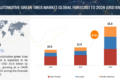
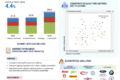
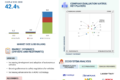
The global Hybrid Train Market size is projected to grow from 412 units in 2023 to 446 units by 2030, registering a CAGR of 1.1% during the forecast period. Increasing emphasis on reducing fuel consumption and emissions, along with the development of advanced battery technologies, is supporting demand for hybrid trains across passenger and freight transportation applications.
The global Hybrid Train Market is evolving as railway operators and manufacturers increasingly focus on energy efficiency, reduced emissions, and sustainable rail transportation. Hybrid trains combine multiple propulsion or energy technologies to improve operational efficiency and reduce dependence on conventional fossil-fuel-based propulsion systems.
Hybrid Train Market Overview
Hybrid trains combine conventional propulsion systems with alternative energy technologies such as batteries. Depending on the configuration, hybrid trains can use energy stored in batteries together with diesel or other propulsion systems to improve efficiency.
The Hybrid Train Market is segmented by battery type, application, operating speed, service power, propulsion, and region. Battery types covered include lead-acid, lithium-ion, sodium-ion, and nickel-cadmium. Applications include passenger and freight transportation, while operating-speed categories include below 100 km/h, 100–200 km/h, and above 200 km/h.
Energy Efficiency Driving Hybrid Train Market Growth
Improving energy efficiency is one of the major factors supporting the growth of the Hybrid Train Market. Rail operators are increasingly looking for technologies that can reduce fuel consumption and operating costs while maintaining reliable transportation services.
Hybrid propulsion enables trains to use stored electrical energy in combination with conventional propulsion, potentially improving energy utilization during different operating conditions.
The focus on reducing lifecycle costs and improving operational efficiency is expected to support continued adoption of hybrid train technologies.
Passenger Applications Driving Hybrid Train Market Demand
The passenger segment represents an important application area for hybrid trains. Passenger rail operators are increasingly evaluating energy-efficient propulsion technologies for regional and commuter services.
Hybrid trains can provide an alternative for routes where full railway electrification may not be economically or technically practical. This makes hybrid propulsion particularly relevant for railway networks with partially electrified infrastructure or routes where operators seek to reduce diesel consumption.
Growing demand for cleaner and more efficient passenger transportation is expected to create opportunities for hybrid train manufacturers and technology suppliers.
Download PDF Brochure @ https://www.marketsandmarkets.com/pdfdownloadNew.asp?id=238438631
Lithium-Ion Batteries Supporting Hybrid Train Adoption
Lithium-ion batteries are an important technology within the Hybrid Train Market because of their high energy density, relatively low weight, and suitability for repeated charging and discharging cycles.
Battery technology plays an important role in determining the performance, range, energy efficiency, and operating economics of hybrid trains. Continued improvements in battery capacity, charging technologies, thermal management, and lifecycle performance can further enhance hybrid train capabilities.
The development of next-generation battery technologies, including lithium-ion and emerging alternatives such as sodium-ion, is expected to influence the future of hybrid rail propulsion.
Hybrid Trains Reducing Fuel Consumption and Emissions
Reducing fuel consumption and emissions is an important trend influencing the Hybrid Train Market. Conventional diesel-powered trains can generate significant emissions, particularly on routes with frequent acceleration and braking.
Hybrid propulsion can recover and store energy during braking and subsequently use that stored energy during acceleration or other operating conditions. This can improve energy utilization and potentially reduce fuel consumption.
As governments and railway operators pursue sustainability objectives, technologies capable of lowering the environmental impact of rail transportation are expected to attract greater attention.
Rail Electrification and Sustainable Transportation Creating Opportunities
Railway electrification is expanding globally, but full electrification can involve substantial infrastructure investments. Hybrid trains can provide an alternative solution for routes where complete electrification is difficult or uneconomical.
This creates opportunities for hybrid railway technology on regional routes, freight corridors, and other sections of rail networks where conventional diesel propulsion remains widely used.
The combination of battery technology and conventional propulsion provides railway operators with greater flexibility while supporting gradual progress toward lower-emission transportation.
High-Speed Hybrid Trains Supporting Future Market Growth
The Hybrid Train Market is segmented according to operating speed, including below 100 km/h, 100–200 km/h, and above 200 km/h. Different speed categories serve different passenger and freight transportation requirements.
Lower-speed hybrid trains can be particularly relevant for commuter, regional, and shunting operations, where frequent acceleration and braking can create opportunities for energy recovery. Higher-speed applications require advanced propulsion, battery, and energy-management technologies capable of delivering reliable performance.
Continued improvements in battery systems and hybrid propulsion architectures could expand the applicability of hybrid trains across different operating conditions.
Asia Pacific Leading the Hybrid Train Market
Asia Pacific is an important region for the Hybrid Train Market due to its large railway networks, high passenger volumes, expanding rail infrastructure, and strong presence of major train manufacturers.
China, Japan, and other Asian countries have significant railway ecosystems and continue investing in technologies that can improve rail efficiency and sustainability.
The region’s established railway manufacturing capabilities and continued modernization of rail networks are expected to create opportunities for hybrid train technologies.
Key Companies in the Hybrid Train Market
The global Hybrid Train Market is dominated by established railway manufacturers and technology providers, including:
- CRRC
- Alstom
- Siemens
- Wabtec Corporation
- Stadler Rail
These companies manufacture trains and develop new technologies while investing in research and development to offer advanced rail transportation solutions.
Future Outlook for the Hybrid Train Market
The future of the Hybrid Train Market will depend on advancements in battery technology, energy-management systems, hybrid propulsion architectures, railway modernization, and global efforts to reduce transportation emissions.
Growing demand for energy-efficient trains, lower-emission rail transportation, and flexible propulsion technologies will create opportunities for hybrid train manufacturers. Battery improvements can further enhance operating efficiency, while hybrid systems can provide a practical solution for railway routes where full electrification is not currently feasible.
With the market projected to increase from 412 units in 2023 to 446 units by 2030 at a CAGR of 1.1%, the Hybrid Train Market is expected to maintain gradual growth as railway operators explore sustainable and energy-efficient propulsion technologies.
Request Free Sample Report @ https://www.marketsandmarkets.com/requestsampleNew.asp?id=238438631