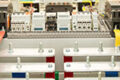
According to MarketsandMarkets, the busbar market size is projected to grow from USD 15.72 billion in 2025 to USD 27.71 billion by 2035, at a CAGR of 5.8%.
The global busbar market is experiencing rapid expansion due to investments in modern infrastructure, renewable energy projects, and technological advancements in commercial, industrial, and residential construction. The market is driven by the increasing need for efficient electrical infrastructure, especially in developing regions and rapid urbanization efforts globally. Key product lines feature busbars, trunking systems, connectors, and enclosures. Renewable energy projects (solar, wind, and hydro) and grid enhancements are a leading force, as these sectors require dependable power handling for efficient transfer and shipment. Growth in IT, telecom, and data centers drives the need for high-quality, low-EMI structured busbar systems. The market has enormous potential, driven by the demand for an effective, efficient, and safe product that can be used in busbar solutions to accommodate global energy, industrial, and digital transformation efforts.
Download PDF Brochure @ https://www.marketsandmarkets.com/pdfdownloadNew.asp?id=181939364
Based on insulation, the busbar market has been divided into laminated, powder-coated, and bare busbars. Laminated busbars are widely used for their excellent electrical insulation and compact design, making them ideal for data centers, industrial automation, and renewable energy systems. Powder-coated busbars are a rapidly growing segment due to their enhanced corrosion resistance and durability, commonly used in outdoor utilities, electric vehicle charging stations, and high-capacity power distribution systems. Bare busbars, offering cost-effectiveness and high conductivity, are increasingly used in industrial plants and large-scale power transmission where safety regulations are less stringent. The world transformation, focus on infrastructure reliability, and increasing safety standards also promote superior product models. This synergy of functionality, durability, and adherence to specifications, such as those outlined by the International Electrotechnical Commission (IEC), is driving market growth. There are new realms of revenue generation in the form of smart buildings integration and industrial automation in the busbar market. The increase in traffic volume on the high-capacity data networks, electric vehicle charging stations, and energy-efficient applications is also spreading their application in other sectors. These types of applications have high growth potential, particularly in developing countries with a high rate of urbanization and rapid technological advancements. Trends such as the integration of the IoT and modular designs are also supporting growth in these applications.
Based on material, the busbar market is segmented into copper and aluminum. Copper busbars are widely used for their superior electrical conductivity and durability. They are suitable for applications where high current-carrying capacity and minimal power losses are expected, such as in data centers, industrial plants, and renewable energy systems. The aluminum busbar segment is a rapidly growing business, driven by its lightweight nature, cost-effectiveness, and corrosion resistance, and is being increasingly utilized in utilities, electric vehicles, and large-scale power transmission. They are growing due to their potential to integrate with smart grid systems, which satisfy energy efficiency and safety requirements. The Asia Pacific is the global busbar market leader, driven by increased market demand, industrialization, dispersed energy requirements, and policies focused on sustainable materials.
Ask Sample Pages of the Report @ https://www.marketsandmarkets.com/requestsampleNew.asp?id=181939364
Asia Pacific is likely to be the fastest-growing busbar market, driven by booming urbanization, a strong manufacturing sector, and a surge in demand for advanced infrastructure solutions. Countries such as China, Japan, South Korea, and India can be regarded as the main hubs of telecommunications, smart city initiatives, and industrial automation, which necessitate government policies that encourage renewable systems in the energy-efficient technologies sector, with a robust supply chain. Moreover, the availability of numerous energy-efficient manufacturers at both local and global levels, along with economical raw materials and large-scale manufacturing facilities, is substantially increasing the adoption and growth of the Asia Pacific busbar market. The International Energy Agency (IEA) states that by the end of the decade, electricity generation from renewables will exceed 17,000 terawatt-hours. This will create a need for specialized solutions such as busbars and trunking systems in solar farms, wind plants, and energy storage facilities. Schneider Electric launched the Canalis busbar system in May 2025, capitalizing on the growing demand for electric vehicle charging infrastructure and industrial electrification. This system offers greater flexibility and higher power capacity for high-demand applications, and it collaborates with partners to integrate with renewable energy sources and the Internet of Things (IoT).