Modern military operations increasingly depend on agile, resilient, and data-centric logistics ecosystems capable of sustaining forces across highly dynamic and contested environments. As defense organizations modernize battlefield operations and multi-domain warfare strategies, data-driven logistics and smart supply networks are emerging as critical enablers of operational readiness, mission continuity, and rapid warfighter support. Advanced digital technologies, artificial intelligence, predictive analytics, autonomous transportation systems, and connected supply chain architectures are transforming how militaries manage inventory, transportation, sustainment, and battlefield resupply.
Download Brochure Analyst-Verified Insights @ https://www.marketsandmarkets.com/pdfdownloadNew.asp?id=155479010
Traditional military logistics systems often relied on fragmented data flows, manual inventory tracking, and reactive maintenance procedures that limited operational efficiency during high-tempo missions. Today’s defense forces require real-time visibility into supply networks, predictive sustainment capabilities, and adaptive logistics infrastructures capable of supporting distributed operations across land, sea, air, cyber, and space domains. Data-driven logistics platforms are helping military organizations achieve faster decision-making, optimized resource allocation, and greater operational resilience in increasingly complex threat environments.
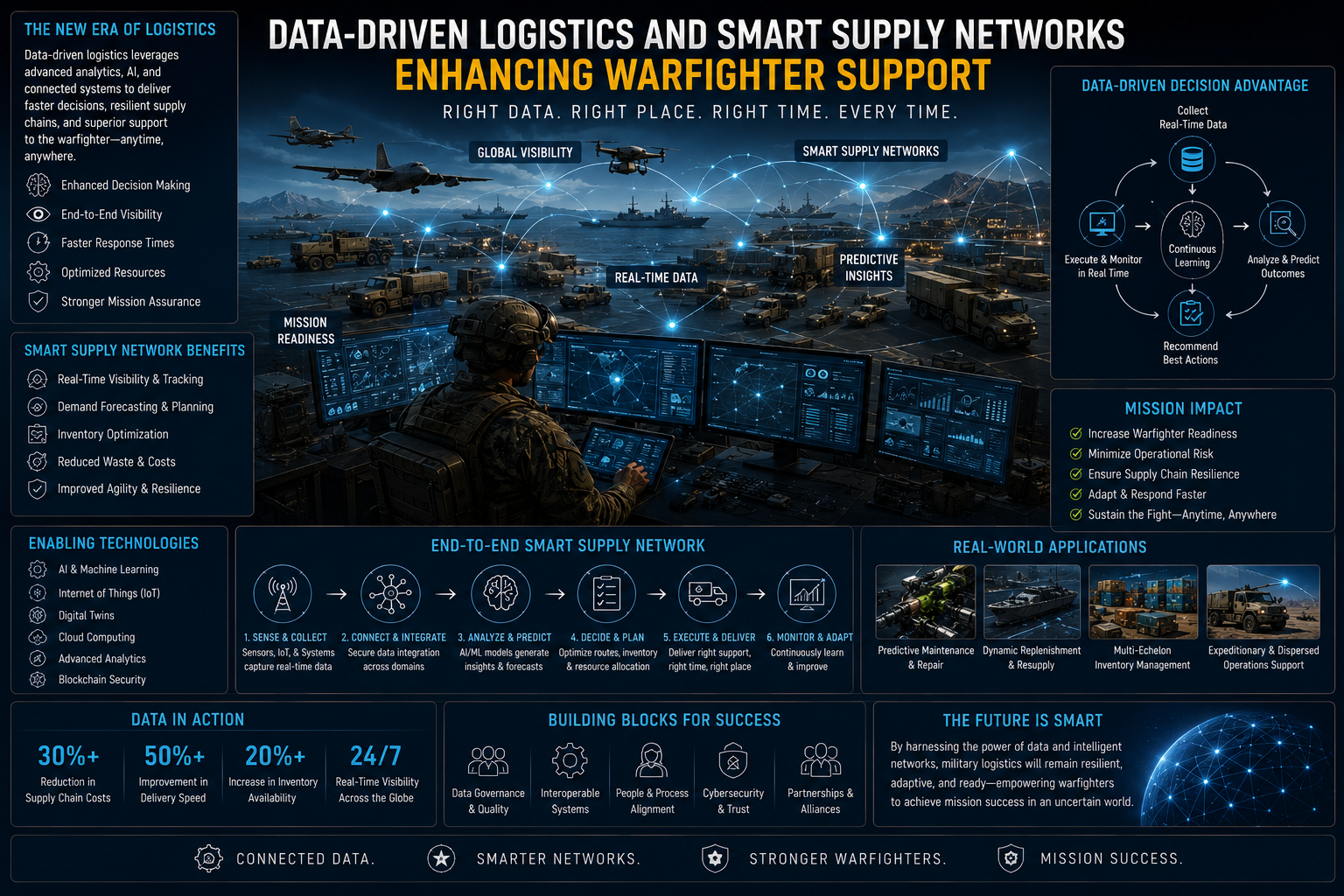
Digital Transformation Reshaping Military Logistics Operations
The digitalization of defense logistics is fundamentally changing military sustainment strategies. Advanced command-and-control platforms now integrate logistics intelligence with operational planning systems, enabling commanders to monitor supply availability, transportation assets, maintenance readiness, and battlefield consumption patterns in real time.
Connected logistics ecosystems powered by cloud computing, IoT-enabled sensors, and edge analytics are improving supply chain transparency across military networks. Smart sensors embedded within vehicles, containers, warehouses, and equipment continuously generate operational data related to location, temperature, fuel levels, component wear, and cargo status. This data is analyzed through AI-driven logistics platforms that provide predictive insights and automated decision support.
Military organizations are increasingly deploying integrated digital logistics architectures capable of synchronizing supply operations across multiple theaters. These systems help reduce logistical bottlenecks, improve inventory accuracy, and accelerate response times during rapidly evolving combat operations.
The transition toward digitally connected logistics ecosystems is particularly important for expeditionary warfare environments where supply routes may face disruption from cyberattacks, electronic warfare, or kinetic threats.
Predictive Analytics Enhancing Sustainment and Readiness
Predictive analytics is becoming one of the most transformative technologies within modern defense logistics. By analyzing operational data from aircraft, combat vehicles, naval systems, and support equipment, predictive maintenance platforms can forecast component failures before they occur.
Traditional maintenance approaches often relied on scheduled inspections or reactive repairs after equipment breakdowns. In contrast, AI-powered predictive sustainment systems continuously monitor equipment health and recommend maintenance actions based on real-time performance conditions. This significantly reduces downtime, lowers maintenance costs, and improves overall mission readiness.
Advanced predictive logistics platforms also help military planners anticipate future supply demands based on mission tempo, environmental conditions, and operational scenarios. By forecasting fuel consumption, ammunition usage, spare part requirements, and medical supply needs, defense organizations can optimize inventory positioning and reduce unnecessary stockpiling.
These capabilities are especially valuable in contested logistics environments where rapid resupply may be limited or vulnerable to enemy interdiction. Predictive logistics helps ensure that critical resources reach frontline units at the right time while minimizing supply chain inefficiencies.
Autonomous Logistics Systems Supporting Battlefield Mobility
Autonomous and unmanned logistics systems are rapidly expanding across modern military operations. Autonomous ground vehicles, cargo drones, robotic warehouses, and AI-enabled transportation platforms are helping defense organizations improve battlefield sustainment while reducing risks to personnel.
Unmanned aerial systems are increasingly used for last-mile resupply missions, delivering ammunition, medical supplies, food, and communication equipment to remote or hostile operational areas. These systems improve logistical flexibility while reducing exposure to ambushes, improvised explosive devices, and contested terrain.
Autonomous convoy technologies are also transforming military ground transportation networks. AI-powered convoy systems equipped with advanced navigation, obstacle detection, and route optimization capabilities can support sustained logistics operations with fewer human operators. This enhances operational efficiency while reducing manpower requirements and convoy vulnerability.
Smart warehouse automation is further improving military logistics efficiency through robotic inventory management, automated sorting systems, and AI-driven demand forecasting. These technologies accelerate supply processing and improve distribution speed during high-volume operations.
Smart Supply Networks Improving Operational Resilience
Smart military supply networks are designed to operate with greater flexibility, adaptability, and survivability in contested environments. Modern defense logistics strategies increasingly emphasize distributed supply architectures that reduce reliance on centralized depots vulnerable to attack.
AI-driven supply chain management systems continuously analyze network conditions, transportation availability, threat intelligence, and operational priorities to dynamically reroute supplies when disruptions occur. This adaptive capability improves resilience against cyber threats, infrastructure damage, and adversarial targeting.
Blockchain technology is also gaining attention for military logistics applications due to its ability to improve supply chain traceability, cybersecurity, and authentication. Blockchain-enabled logistics systems can securely track equipment movement, maintenance histories, and supplier verification while reducing risks associated with counterfeit components and data tampering.
The integration of digital twins into military logistics planning is another major advancement. Digital twin models create virtual replicas of logistics networks, enabling defense planners to simulate operational scenarios, identify vulnerabilities, and optimize sustainment strategies before deployment.
Multi-Domain Operations Increasing Logistics Complexity
The rise of multi-domain operations is significantly increasing the complexity of military logistics planning. Modern military campaigns require synchronized sustainment across land, naval, air, cyber, and space domains, often involving highly dispersed forces operating in contested regions.
Data-driven logistics systems help coordinate these complex operations by integrating information from multiple command structures, transportation platforms, and supply nodes into a unified operational picture. This enables faster coordination between frontline units, logistics hubs, and strategic command centers.
Space-based communications and satellite tracking systems are becoming increasingly important for maintaining global logistics visibility. These technologies support real-time cargo monitoring, navigation, and battlefield communications even in remote operational theaters.
Cybersecurity is also becoming a central concern for smart military logistics networks. As logistics systems become more digitally connected, defense organizations are investing heavily in cyber-resilient architectures capable of protecting operational data and maintaining continuity during cyberattacks.
Commercial Technology Partnerships Accelerating Innovation
Defense organizations are increasingly partnering with commercial technology companies to accelerate logistics modernization initiatives. Innovations originally developed for commercial supply chains, e-commerce, and industrial automation are being adapted for military sustainment applications.
Artificial intelligence, machine learning, cloud computing, and autonomous delivery systems developed within the commercial sector are now playing a major role in defense logistics transformation. Commercial logistics leaders have demonstrated the value of real-time inventory visibility, automated fulfillment systems, and predictive analytics at global scale, creating valuable models for military adaptation.
The convergence of defense and commercial logistics innovation is expected to drive further advancements in autonomous transportation, smart warehousing, and data-centric sustainment operations over the coming decade.
Get More Details @ https://www.marketsandmarkets.com/Market-Reports/military-vehicle-sustainment-market-155479010.html
Future Outlook for Data-Driven Military Logistics
The future battlefield will increasingly rely on intelligent, autonomous, and highly adaptive logistics ecosystems capable of sustaining distributed military operations under contested conditions. Data-driven logistics and smart supply networks will become essential components of operational superiority, enabling defense forces to maintain readiness, mobility, and combat effectiveness across rapidly evolving mission environments.
Emerging technologies such as AI-enabled decision automation, advanced robotics, edge computing, quantum optimization, and autonomous aerial resupply systems are expected to further revolutionize military sustainment operations. These innovations will improve supply chain responsiveness, reduce operational risk, and enhance battlefield survivability.
As geopolitical tensions, global defense modernization, and multi-domain warfare strategies continue to evolve, militaries worldwide will prioritize investments in resilient digital logistics infrastructures capable of supporting future warfighter requirements. Advanced data-driven logistics systems will remain central to achieving operational agility, mission endurance, and strategic force projection in the next generation of defense operations.
