The Machine Control System Market Growth is gaining momentum as construction companies, infrastructure developers, and industrial operators increasingly adopt automation, precision positioning, and digital technologies. Machine control systems combine positioning technologies, sensors, software, and control mechanisms to help equipment perform tasks with greater accuracy and consistency. These systems are particularly important in excavation, grading, paving, earthmoving, and other operations where precision directly affects project costs, productivity, and completion timelines.
Growing investments in roads, railways, airports, commercial buildings, and smart infrastructure are creating new opportunities for machine control technologies. At the same time, construction companies are under pressure to address labor shortages, reduce material waste, improve equipment utilization, and enhance jobsite safety. Machine control systems can support these objectives by providing operators with real-time positioning data and digital design information.
As technology advances, Machine Control System Market Growth will increasingly depend on the integration of Global Navigation Satellite Systems (GNSS), laser scanners, advanced sensors, artificial intelligence (AI), telematics, and digital construction platforms. These technologies are helping equipment operators improve accuracy while enabling contractors to make better-informed decisions throughout project execution.
Machine Control System Market Growth and Industry Overview
Machine control systems use digital information to guide or automate the operation of machinery. Depending on the equipment and application, these systems can provide positioning information, monitor machine movement, compare actual work against digital design models, and help operators achieve specified elevations, slopes, depths, or alignments.
In conventional construction workflows, operators may depend on manual measurements, survey stakes, and repeated site checks. Machine control technologies reduce dependence on these methods by making design and positioning information available directly within the machine or operator interface. This can improve consistency and reduce the need for corrective work.
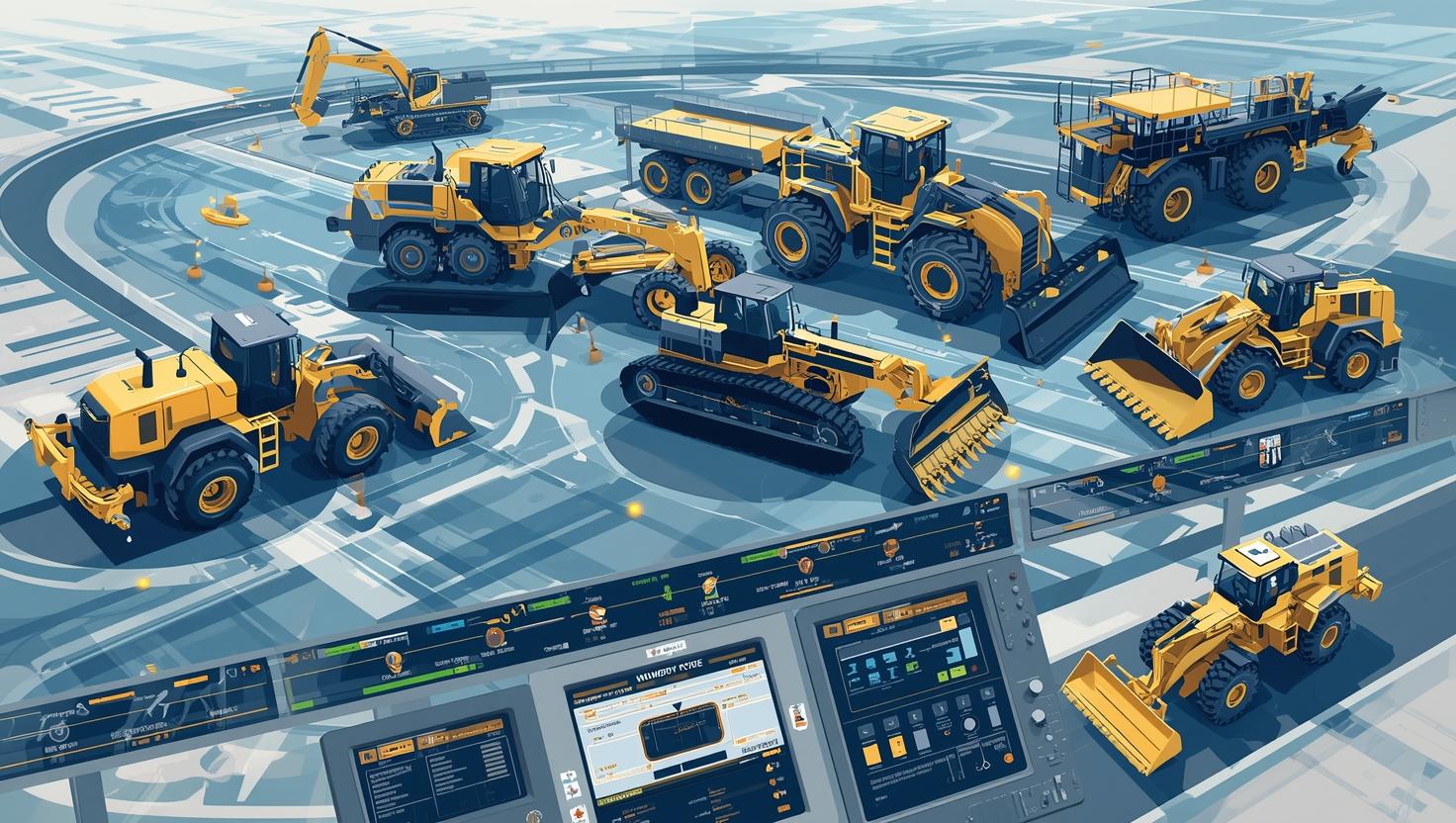
The technology is used across several equipment categories, including excavators, dozers, graders, loaders, scrapers, and paving systems. Its applications extend across infrastructure, commercial construction, residential development, and industrial projects. Machine control solutions can also support mining, agriculture, and other activities requiring accurate positioning and equipment guidance.
The Machine Control System Market Growth outlook is closely connected to the construction industry’s transition toward data-driven operations. Contractors are increasingly combining digital site models, equipment guidance, and project management tools to improve coordination between design teams, surveyors, machine operators, and project managers.
As these workflows become more integrated, machine control systems are evolving from standalone guidance tools into components of connected construction ecosystems. This creates opportunities for suppliers to offer integrated hardware, software, connectivity, and service solutions.
Key Drivers of Machine Control System Market Growth
Increasing Infrastructure Investments
Infrastructure development is a major driver of demand for machine control systems. Road construction, railway projects, airports, bridges, utilities, and urban development require accurate earthmoving and surface preparation. Even relatively small measurement errors can create additional material costs, project delays, and rework.
Machine control technologies help operators follow digital designs and maintain the required levels, slopes, and alignments. These capabilities are valuable in large-scale infrastructure projects where accuracy and consistent execution are essential.
Government investments in transportation infrastructure and smart cities, along with private-sector construction activity, can create additional demand for machine-guidance technologies. As project owners emphasize timely delivery and efficient resource use, contractors have greater incentives to modernize their equipment and workflows.
Rising Demand for Automation and Precision
Construction and earthmoving operations often involve repetitive activities that require a high degree of accuracy. Manual methods can be time-consuming and may require repeated surveying or adjustments.
Machine control systems use positioning data and sensors to help operators perform excavation, grading, leveling, and paving more precisely. By reducing unnecessary passes and corrective work, these technologies can help improve productivity and limit material wastage.
Automation also allows less experienced operators to access digital guidance that supports task execution. Although the degree of automation varies by system, machine control technologies can reduce dependence on manual measurements and help standardize results across equipment fleets.
These benefits are strengthening Machine Control System Market Growth as contractors look for practical ways to improve operational efficiency.
Download PDF Brochure @ https://www.marketsandmarkets.com/pdfdownloadNew.asp?id=62579001
Labor Shortages and Workforce Productivity
Labor shortages and the rising cost of skilled workers are encouraging construction companies to adopt technologies that improve workforce productivity. Machine control systems can help operators access accurate site information without relying on repeated manual checks.
These systems do not eliminate the need for skilled workers. Instead, they can help workers perform tasks more efficiently and allow surveyors and site personnel to focus on higher-value activities. Training and user-friendly interfaces remain important for successful adoption.
As contractors seek to complete more work with available personnel, machine guidance and automation technologies are becoming increasingly relevant to equipment modernization strategies.
Cost Reduction and Improved Equipment Utilization
Rework, excessive fuel consumption, material waste, and equipment downtime can significantly affect project profitability. Machine control systems can help reduce these inefficiencies by improving the accuracy of machine operations and supporting better coordination with digital project plans.
For example, accurate grading can reduce the need for repeated passes, while more precise excavation can help limit unnecessary removal or replacement of material. Telematics and connected equipment data can also support fleet monitoring and maintenance planning.
The resulting operational benefits can strengthen the business case for machine control systems, particularly for contractors managing large projects or multiple equipment units.
Technology Innovations Transforming the Machine Control System Market
Technology innovation is reshaping the way machine control systems are designed, deployed, and integrated with construction equipment. Improvements in positioning accuracy, data processing, connectivity, and automation are expanding the range of applications these systems can support.
Global Navigation Satellite Systems and High-Precision Positioning
GNSS technology is central to machine control applications that require accurate positioning across large outdoor sites. By combining satellite positioning with appropriate correction techniques, GNSS-based solutions can provide machine operators with precise location and elevation information.
These capabilities are especially valuable in road construction, earthmoving, grading, and large infrastructure projects. They can help operators align equipment movements with digital site plans and reduce the need for repeated manual measurements.
As positioning technologies continue to improve, manufacturers are working to enhance reliability, simplify installation, and integrate GNSS solutions with equipment control systems. Demand for high-precision positioning is expected to remain an important contributor to Machine Control System Market Growth.
AI and Intelligent Machine Guidance
AI and machine learning can enhance machine control systems by helping interpret equipment data, identify operating patterns, and support more informed decisions. Intelligent guidance systems can combine positioning information, sensor readings, and digital design data to provide operators with more useful real-time feedback.
AI-assisted tools may also help identify deviations from planned work, support equipment performance analysis, and improve the coordination of construction activities. As these capabilities mature, integration with existing machine control hardware and project software will be important.
However, AI adoption depends on data quality, system reliability, and the ability to demonstrate practical benefits. Suppliers that integrate intelligent features into straightforward, dependable workflows may have an advantage over solutions that add complexity without clear operational value.
Laser Scanners and Advanced Sensors
Laser scanners and sensors help capture information about the machine, its surroundings, and the working surface. They can support accurate measurements, surface mapping, positioning, and machine guidance.
In construction applications, these technologies can complement GNSS and total stations, particularly where a project requires detailed measurements or where satellite positioning alone is not suitable. Sensor integration can also improve awareness of machine movement and operating conditions.
The development of more compact, reliable, and cost-effective sensing technologies can make machine control solutions accessible to a broader range of equipment and projects.
3D Machine Control and Digital Design Models
Three-dimensional machine control systems connect digital terrain models and engineering designs with the equipment performing the work. Operators can use these models to understand target elevations, slopes, and surface requirements while carrying out construction activities.
This approach can improve coordination between design and execution, particularly on complex projects involving multiple machines and work stages. It also supports more consistent results by reducing differences between the intended design and the completed surface.
Integration with building information modeling (BIM), digital terrain modeling, and construction management platforms can further improve information sharing across project teams. As digital construction becomes more common, these connections are likely to remain a key area of innovation.
Telematics, IoT, and Connected Construction
Telematics and IoT technologies enable equipment data to be transmitted to fleet management and project monitoring platforms. Contractors can use this information to review equipment utilization, operating conditions, maintenance requirements, and progress.
Connected construction platforms can also help managers coordinate machinery across different sites and compare performance against project objectives. When integrated with machine control systems, these tools can provide a more complete view of site operations.
The combination of machine guidance and connected data supports the shift toward construction environments where equipment, design information, and project management processes work together.
Machine Control System Market Segmentation
The Machine Control System Market Growth outlook varies by technology type, end-use equipment, application, and region. Each segment presents different operational requirements and opportunities for manufacturers.
By Type
The market includes total stations, Global Navigation Satellite Systems (GNSS), laser scanners, and sensors.
- GNSS: Provides satellite-based positioning and is widely used for outdoor machine guidance and earthmoving operations.
- Total stations: Support high-precision surveying and positioning, particularly where detailed site measurements are required.
- Laser scanners: Capture surface and spatial information to support precise measurement and machine guidance.
- Sensors: Monitor position, movement, and other operating parameters, helping improve system accuracy and responsiveness.
The choice of technology depends on site conditions, required precision, equipment compatibility, and project requirements. Combined solutions can offer more flexibility than relying on a single positioning or measurement method.
By End-Use Equipment
Machine control technologies are integrated into several types of construction equipment.
Excavators use machine guidance to support digging depth, slope, and position requirements. Dozers and graders use control systems to achieve target elevations and surface profiles. Loaders and scrapers can benefit from accurate positioning and improved operational coordination, while paving systems use control technologies to help maintain specified road profiles and surface quality.
Equipment manufacturers and technology providers can expand adoption by integrating guidance systems into new machines or offering retrofit solutions for existing fleets.
By Application and Vertical
Infrastructure is a major application area because roadways, railways, airports, and other large projects require precise earthmoving and grading. Commercial and residential construction create demand for site preparation, foundations, leveling, and related activities.
Industrial applications also provide opportunities where accurate equipment operation supports productivity and operational consistency. Mining and agriculture can benefit from related positioning and guidance technologies, although the specific requirements vary by application.
As contractors increasingly adopt digital workflows, suppliers have opportunities to tailor machine control solutions to particular equipment types, work environments, and project requirements.
Regional Outlook and Future Opportunities
Regional investment patterns, infrastructure development, and automation adoption influence Machine Control System Market Growth.
Asia Pacific
Asia Pacific offers opportunities through transportation infrastructure development, urban expansion, and modernization of construction equipment. Large-scale projects and increasing interest in digital construction can encourage contractors to invest in machine guidance and precision positioning.
India and Southeast Asian economies are also important markets to watch as infrastructure investment and construction activity expand. Suppliers that provide reliable equipment integration, local technical support, and cost-effective solutions may be well positioned to address demand.
North America
North America benefits from established construction technology adoption, investment in infrastructure, and demand for productivity improvements. Contractors are increasingly interested in solutions that improve equipment utilization, reduce rework, and connect machine data with project management systems.
The region offers opportunities for suppliers that combine high-precision positioning with telematics, digital design tools, and automation capabilities.
Europe
Europe presents opportunities associated with construction modernization, infrastructure maintenance, and operational efficiency. Contractors may use machine control systems to improve accuracy, manage resources, and support consistent project execution.
Compatibility with existing equipment, ease of use, and the ability to demonstrate cost savings can influence purchasing decisions.
Middle East, Africa, and Latin America
Infrastructure development and large construction projects create potential opportunities across the Middle East, Africa, and Latin America. Adoption may vary according to project scale, financing, equipment availability, and access to technical support.
For suppliers, partnerships with local distributors, construction equipment providers, and contractors can help build market awareness and establish service capabilities.
Challenges and Barriers to Market Expansion
Despite favorable demand conditions, several challenges may influence the pace of Machine Control System Market Growth.
High Initial Investment
Advanced positioning equipment, sensors, software licenses, installation, and operator training can increase the initial cost of adoption. Smaller contractors may find these expenses difficult to justify, particularly when projects are limited in scale or equipment utilization is inconsistent.
Suppliers can address this challenge by developing scalable solutions, offering retrofit options, and demonstrating the potential return on investment through reduced rework, lower material waste, and improved productivity.
Integration with Existing Equipment
Integrating machine control technologies with different machine models, control architectures, and software platforms can be complex. Older equipment may require additional hardware or modifications, while inconsistent data formats can complicate information exchange.
Manufacturers that prioritize compatibility, straightforward installation, and interoperable software may find it easier to serve customers with mixed equipment fleets.
Skills and Training Requirements
Machine control systems depend on operators and site personnel understanding digital design data, positioning information, and system functions. Insufficient training can limit the benefits of even advanced equipment.
Training programs, intuitive interfaces, and accessible technical support can help reduce this barrier. Collaboration among equipment manufacturers, technology suppliers, and contractors will be important for building the skills required for digital construction.
Signal Limitations and Operating Conditions
GNSS-based systems can experience limitations in environments with obstructed satellite signals, including areas surrounded by tall buildings, tunnels, or dense structures. Construction conditions, equipment movement, and sensor performance can also affect measurement quality.
Combining positioning technologies, sensors, and appropriate calibration methods can help address these challenges. Selecting the right technology for each site remains essential for dependable operation.
Future Opportunities in the Machine Control System Market
The next phase of Machine Control System Market Growth will be shaped by wider automation adoption, connected construction platforms, and the need to improve project economics. Several opportunities stand out.
Autonomous and Semi-Autonomous Equipment
As construction equipment becomes more automated, machine control systems can provide essential positioning, guidance, and feedback capabilities. Semi-autonomous and autonomous equipment may support repetitive tasks under suitable operating conditions, subject to safety requirements and human oversight.
Technology providers that develop reliable machine guidance and integrate it with equipment control platforms can benefit from the gradual shift toward higher levels of automation.
Digital Construction Ecosystems
The integration of machine control with BIM, cloud-based project management, and digital site models creates opportunities for connected construction workflows. These systems can help teams coordinate design, equipment operations, and progress monitoring more effectively.
Suppliers that offer interoperability and consistent data exchange may be better positioned to serve contractors seeking end-to-end digital construction solutions.
Retrofitting Existing Equipment
Not every contractor can replace an entire fleet with new machines. Retrofitting existing equipment with suitable positioning, sensing, and guidance technologies can provide a more accessible path to modernization.
Retrofit solutions can broaden the potential customer base, particularly among contractors looking to improve the accuracy and productivity of equipment already in service.
Sustainability and Resource Efficiency
Construction companies face increasing pressure to manage fuel consumption, material use, and project waste. Machine control systems can support these goals by helping equipment operate more precisely and reducing unnecessary passes or corrective work.
While actual savings depend on the machine, site, operator, and task, improved accuracy and equipment utilization can contribute to more efficient construction practices.
Frequently Asked Questions
1. What is driving Machine Control System Market Growth?
Market growth is driven by infrastructure investments, rising demand for construction automation, labor shortages, and the need to improve accuracy, reduce rework, and optimize equipment utilization.
2. What is the projected size of the machine control system market?
According to MarketsandMarkets, the global machine control system market is projected to increase from USD 6.03 billion in 2025 to USD 8.93 billion by 2030, at a CAGR of 8.2%.
3. Which technologies are shaping the machine control system market?
Key technologies include GNSS, total stations, laser scanners, advanced sensors, 3D machine guidance, AI-assisted workflows, telematics, and connected construction platforms.
4. Which region is expected to grow fastest in the machine control system market?
Asia Pacific is projected to be the fastest-growing region, supported by urbanization, infrastructure development, smart city initiatives, and increasing adoption of construction automation.
5. Who are the major companies in the machine control system market?
Key companies include Hexagon AB, Trimble Inc., Topcon Corporation, MOBA Mobile Automation AG, and Hemisphere GNSS. They compete through technology innovation, equipment integration, software capabilities, and customer support.
