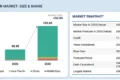
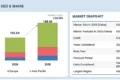
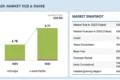
The global ebike market is estimated to grow from USD 46.39 billion in 2026 to USD 74.98 billion by 2035, at a 5.5% CAGR. Asia Pacific ebike sales are rising mainly due to rapid urbanization, high population density, and strong demand for affordable last-mile mobility solutions, especially in countries like China, Vietnam, and Indonesia. Government support for electric mobility, whereas ebike sales in Europe and North America have declined mainly due to market saturation and demand normalization after the COVID-era boom, when purchases were artificially high due to stimulus spending, mobility shifts, and supply shortages. As inventories built up in 2023–2025, retailers faced pressure to discount and saw weaker replacement demand, which slowed new orders from manufacturers.
Government bodies in various cities have initiated projects to build bicycle highways and enhance biking infrastructure. Many governments also plan to develop two-way bike lanes on one-way streets to speed up cycling commutes and encourage the use of ebikes for daily transportation. Prominent companies in the ebike market include Accell Group NV (Netherlands), Pon. Bike (US), Merida Industry Co., Ltd. (Taiwan), Giant Manufacturing Co., Ltd. (Taiwan), and Yamaha Motor Corporation (Japan).
Motor controllers are emerging as a new revenue opportunity in ebikes as they shift from basic hardware components to software-enabled, ecosystem-controlled platforms that define performance, connectivity, and user experience. Major players such as Bosch, Shimano, and Bafang ecosystem partners are integrating advanced controllers with adaptive torque algorithms, ride modes, and battery–motor optimization, locking users into brand ecosystems and enabling recurring revenue through system upgrades, replacement cycles, and premium bundled powertrain packages.
Download PDF Brochure @ https://www.marketsandmarkets.com/pdfdownloadNew.asp?id=110827400
ebikes with 25 km/h assistance are increasingly segmented by application, with mountain and trekking ebikes gaining strong traction in Europe, driven by demand for outdoor recreation, while city/commuter ebikes dominate in Asia Pacific due to dense urban mobility needs. These categories require distinct motor controller characteristics—for instance, mountain and trekking ebikes rely on high-torque, mid-drive motor controllers with advanced torque sensors to improve traction and performance on uneven terrain, whereas urban ebikes prioritize cost-efficient hub motor controllers with smoother cadence-based assistance and energy optimization for daily commuting. Additionally, premium segments are integrating smart controllers with connectivity (IoT/BMS integration) and adaptive power delivery algorithms, enhancing ride efficiency and the user experience. By aligning controller technologies with specific use cases, OEMs and motor controller manufacturers can unlock new revenue streams through premium product differentiation, software-enabled features (e.g., ride modes, diagnostics), and expansion into high-growth segments like adventure and fleet mobility, supporting sustained mid- to long-term growth in the global ebike market.
The cargo ebike segment is estimated to be the fastest-growing segment of the ebike market and will generate new revenue pockets in 2025–2026 by becoming the backbone of urban logistics platforms and solving the inefficiencies of last-mile delivery in densely populated areas. Higher demand for e-commerce products and a significant surge in quick commerce applications have dramatically increased demand for faster, lower-cost delivery models. Last-mile delivery is an expensive and challenging aspect of any logistics operation, and cargo ebikes help reduce fuel costs, toll fees, and unnecessary idle time by easing navigation through traffic and narrow streets, with no parking delays. From 2025 to 2026, major logistics operators in Europe and North America (including parcel and grocery delivery networks) are scaling cargo ebike fleets under subscription-based fleet-leasing (Bike-as-a-Service) models, where operators pay recurring fees covering vehicle, maintenance, battery management, and insurance instead of owning assets outright, turning hardware into a recurring revenue stream. Major OEMs produce cargo ebikes that support payloads of 150-300 kg with modular cargo boxes, serving a range of applications such as food delivery (temperature-controlled units), parcel logistics, quick commerce, and even municipal services. For cargo ebike manufacturers, these factors collectively unlock new revenue pockets through diversified fleet sales, modular add-ons, and recurring income from services like leasing, maintenance, and fleet management solutions at a global level.
The up to 25 km/h segment of the ebike market offers a strong growth opportunity for companies due to minimal regulatory barriers. These ebikes typically do not require licenses, registration, or insurance and often have no strict age restrictions—making them widely accessible. This ease of adoption, combined with a low total cost of ownership (TCO), makes them highly attractive for fleet operators, enterprises, and municipalities for applications such as last-mile delivery, bike sharing, and employee mobility. Additionally, their relatively simple regulatory classification enables modular customization (e.g., cargo attachments, swappable batteries, IoT integration), allowing companies to quickly tailor products for different use cases and markets. As a result, businesses benefit through faster market entry, higher-volume sales, and expanding B2B and B2G opportunities, positioning the 25 km/h segment as a scalable and profitable growth driver in the ebike industry.
Europe is the second-largest market for ebikes, driven by strict regulations and standardized product design. In Europe, most e-bikes are legally classified as “pedelecs” with a 250W motor and a 25 km/h assist speed, meaning they are treated like bicycles (no registration or license required). This classification is the main reason this segment dominates adoption across the region. Recent regulatory tightening (2025 EU safety and compliance updates) has also pushed manufacturers toward safer, more standardized systems and connected e-bike electronics, increasing demand for certified drive units and compliant components.
In terms of product preference, Europe is dominated by urban/commuter ebikes and cargo ebikes, while speed pedelecs remain a smaller niche due to stricter regulations and higher insurance and classification requirements. For battery systems, lithium-ion batteries dominate, with a 90–95% market share in 2026, because they balance range, weight, and charging efficiency. Typical systems are optimized for commuting ranges, with 400–750 W packs most common in city and trekking bikes. Motor preference is also clear. Hub-drive motors hold the majority share (> 50%). in the performance, trekking, and cargo segments due to better hill-climbing efficiency and balance, while hub motors still lead in lower-cost city bikes and shared mobility fleets (around two-thirds share in some analyses) because they are cheaper, easier to maintain, and ideal for high-utilization rental systems.
Key Market Players:
Major players in the market include Pon.Bike (Netherlands), Giant Manufacturing Co., Ltd. (Taiwan), Yadea Group Holdings., Ltd. (China), Yamaha Motor Company (Japan), and Pedego (US).
Request Free Sample Report @ https://www.marketsandmarkets.com/requestsampleNew.asp?id=110827400
E-BIKE MARKET SIZE, SHARE & ANALYSIS: COMPANY EVALUATION MATRIX
Pon.Bike (Star) maintains a strong market presence and offers a wide range of products in the ebike market, enabling widespread adoption in cargo, city, gravel, mountain, and trekking ebikes. Specialized Bicycle Components (Emerging Leader) is gaining traction with innovative ebike with connected features and other services.