The rapid advancement of robotics, artificial intelligence (AI), sensor technology, and wearable engineering is transforming the way humans interact with machines. Among the most promising innovations in this field, exoskeleton technology is emerging as a powerful solution for enhancing human strength, mobility, endurance, and physical capabilities.
The Exoskeleton Market Growth is accelerating as industries increasingly adopt wearable robotic systems for healthcare rehabilitation, industrial assistance, defense applications, and mobility enhancement. These advanced systems combine mechanical structures, actuators, sensors, control systems, and AI algorithms to support human movement and reduce physical strain.
Growing demand for rehabilitation technologies, rising workplace safety concerns, aging populations, and increasing investments in human augmentation technologies are driving the expansion of the global exoskeleton industry.
As robotics continues to evolve, exoskeletons are expected to become an important technology for improving quality of life, enhancing workforce productivity, and enabling new possibilities in human-machine collaboration.
Top 10 Key Takeaways
- Exoskeletons are transforming human mobility through robotics and AI technologies.
- Healthcare rehabilitation is one of the largest growth areas for exoskeleton adoption.
- Industrial applications are increasing due to workplace safety and productivity needs.
- AI enables adaptive and personalized robotic assistance.
- Lightweight materials are improving comfort and usability.
- Defense organizations are exploring exoskeletons for enhanced physical performance.
- Battery advancements are expanding operational capabilities.
- IoT connectivity is enabling smarter monitoring and analytics.
- Aging populations are increasing demand for mobility support solutions.
- Human augmentation technologies will drive long-term exoskeleton market expansion.
Understanding Exoskeleton Technology
An exoskeleton is a wearable robotic device designed to support, assist, or enhance human movement. Unlike traditional machines that operate independently, exoskeletons work together with the human body by sensing movement intentions and providing mechanical assistance.
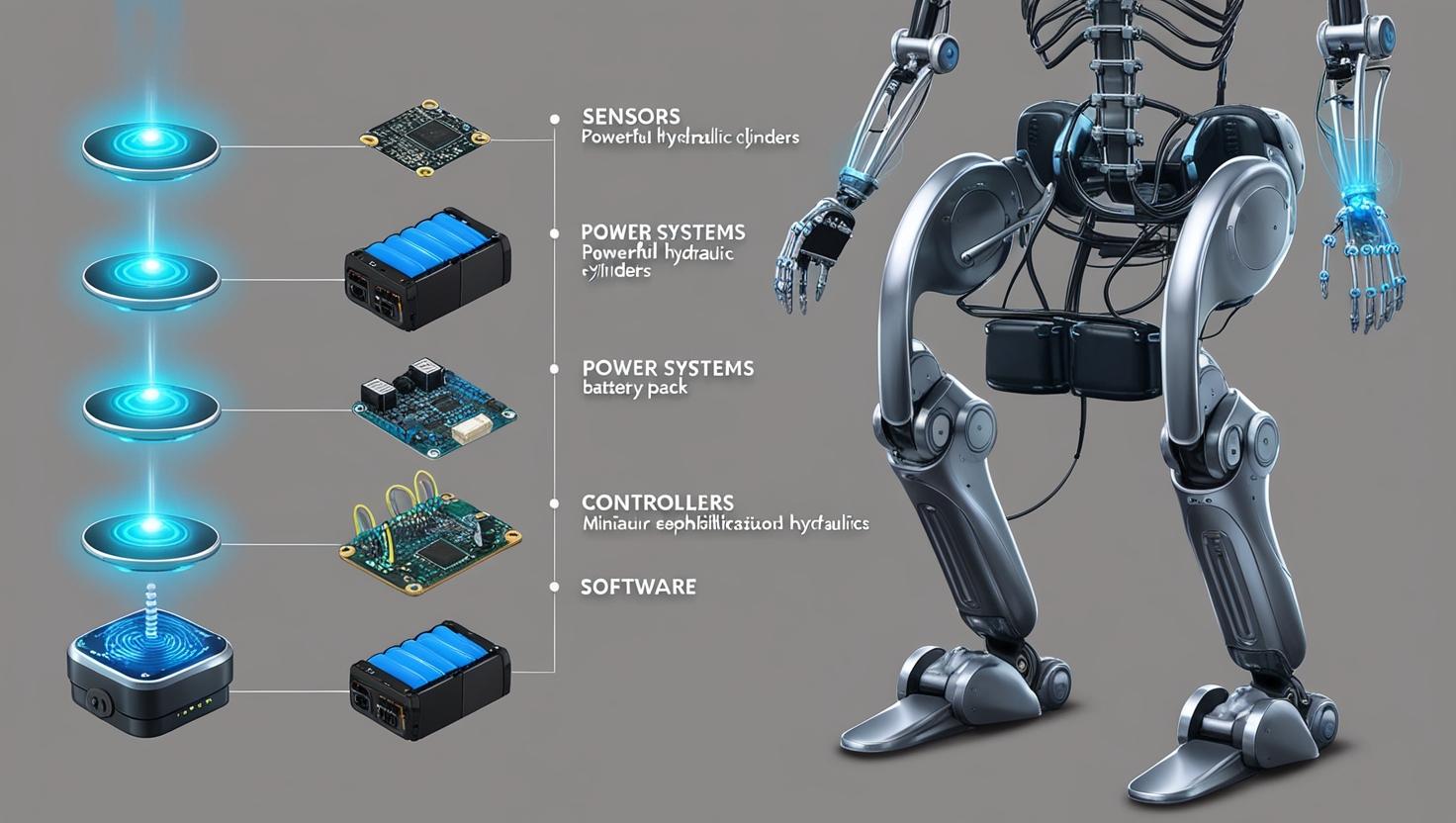
Modern exoskeleton systems include:
- Actuators for powered movement assistance
- Sensors for motion detection and feedback
- Controllers for real-time operation
- Batteries and power management systems
- AI-based algorithms for adaptive performance
These technologies enable users to perform physically demanding tasks with reduced fatigue and improved efficiency.
Key Drivers Fueling Exoskeleton Market Growth
Rising Demand for Medical Rehabilitation Solutions
One of the major factors supporting Exoskeleton Market Growth is the increasing adoption of robotic rehabilitation systems. Healthcare providers are using powered exoskeletons to assist patients recovering from spinal cord injuries, strokes, neurological disorders, and mobility impairments.
Medical exoskeletons help patients by:
- Supporting walking rehabilitation
- Improving muscle movement
- Enhancing physical therapy outcomes
- Providing repetitive training assistance
- Restoring mobility independence
With the global aging population increasing and the prevalence of mobility-related disorders rising, demand for advanced rehabilitation technologies is expected to grow significantly.
Increasing Adoption in Industrial Applications
Industries such as manufacturing, automotive, aerospace, construction, and logistics are adopting exoskeletons to improve worker safety and productivity.
Industrial exoskeletons assist workers by reducing physical stress during tasks involving:
- Heavy lifting
- Overhead operations
- Repetitive movements
- Extended standing activities
- Material handling
By minimizing fatigue and reducing workplace injuries, exoskeleton systems are helping organizations improve operational efficiency while supporting employee well-being.
Advancements in Robotics and Artificial Intelligence
AI and robotics innovations are playing a crucial role in enhancing exoskeleton capabilities. Intelligent control systems allow devices to understand user movements, adapt assistance levels, and provide more natural motion support.
AI-powered exoskeletons enable:
- Real-time movement prediction
- Adaptive assistance
- Improved balance control
- Personalized operation
- Enhanced user comfort
The integration of machine learning algorithms is expected to make future exoskeleton systems more responsive, lightweight, and efficient.
Growing Focus on Human Augmentation Technologies
Human augmentation is becoming a major area of technological development as organizations explore ways to enhance physical capabilities through wearable systems.
Exoskeletons are being researched for applications including:
- Increased worker endurance
- Enhanced mobility
- Military performance improvement
- Emergency response support
- Extreme environment operations
This growing interest in human-machine collaboration is creating new opportunities for exoskeleton manufacturers.
Download PDF Brochure @ https://www.marketsandmarkets.com/pdfdownloadNew.asp?id=40697797
Exoskeleton Market Segmentation
By Type
Powered Exoskeletons
Powered exoskeletons use motors, actuators, and batteries to provide active movement assistance. These systems are widely used in healthcare rehabilitation, industrial applications, and defense.
Benefits include:
- Increased strength assistance
- Improved mobility
- Reduced physical workload
- Enhanced movement capabilities
Passive Exoskeletons
Passive exoskeletons rely on mechanical components such as springs and support structures rather than powered motors.
They are commonly used for:
- Industrial worker support
- Ergonomic assistance
- Fatigue reduction
Passive systems are gaining popularity due to lower costs, lightweight designs, and simpler maintenance requirements.
By Application
Healthcare and Rehabilitation
Healthcare remains one of the most important application areas for exoskeleton technology. Medical exoskeletons help individuals regain mobility and improve rehabilitation outcomes.
Applications include:
- Stroke recovery
- Spinal cord injury rehabilitation
- Physical therapy
- Assisted walking
Industrial Manufacturing
Manufacturing companies use exoskeletons to improve worker safety and productivity in physically demanding environments.
Key benefits include:
- Reduced muscle strain
- Improved workplace ergonomics
- Lower injury risks
- Increased operational efficiency
Defense and Military
Defense organizations are exploring exoskeletons to enhance soldier capabilities by improving strength, endurance, and load-carrying capacity.
Military applications include:
- Heavy equipment transportation
- Extended mission support
- Enhanced physical performance
Logistics and Construction
Workers in logistics and construction environments benefit from exoskeleton systems that assist with lifting, carrying, and repetitive tasks.
Emerging Trends Shaping Exoskeleton Market Growth
Lightweight and Compact Designs
Manufacturers are focusing on developing smaller, lighter, and more comfortable exoskeleton systems. Advanced materials such as carbon fiber composites and lightweight alloys are improving wearability.
AI-Based Adaptive Control
Artificial intelligence is enabling exoskeletons to automatically adjust assistance levels based on user movement patterns and environmental conditions.
Battery Technology Improvements
Longer-lasting batteries are expanding operational capabilities by enabling extended usage without frequent charging.
Integration with IoT and Data Analytics
Connected exoskeleton systems can collect performance data, monitor user activity, and provide insights for improving safety and productivity.
Personalized Human-Machine Interaction
Future exoskeletons will increasingly use personalized settings based on individual body structure, movement patterns, and physical requirements.
Growth Opportunities
Healthcare Modernization
Increasing investments in advanced rehabilitation technologies create significant opportunities for medical exoskeleton providers.
Aging Population Support
As populations age globally, demand for mobility assistance solutions is increasing. Exoskeletons can support elderly individuals seeking improved independence and mobility.
Smart Manufacturing Expansion
The growth of Industry 4.0 and workplace automation is creating demand for technologies that improve human productivity alongside machines.
Defense Innovation
Military modernization programs are exploring wearable robotic technologies to enhance operational capabilities.
Emerging Markets
Growing healthcare investments and industrial development in emerging economies are expected to create new market opportunities.
Challenges Affecting the Market
Despite strong growth potential, the exoskeleton market faces several challenges:
- High development and manufacturing costs
- Limited battery life
- Complex control systems
- User comfort and ergonomics concerns
- Regulatory approval requirements for medical devices
Continuous research and technological innovation are helping address these limitations.
Regional Outlook
North America
North America represents a leading market due to strong investments in robotics, healthcare innovation, defense technologies, and industrial automation.
Europe
Europe is witnessing increased adoption of exoskeleton systems driven by workplace safety initiatives, healthcare advancements, and industrial automation programs.
Asia-Pacific
Asia-Pacific is expected to experience significant growth due to expanding manufacturing industries, aging populations, robotics investments, and government support for advanced technologies.
Middle East and Latin America
These regions are gradually adopting exoskeleton solutions in healthcare, construction, and industrial sectors as technology awareness increases.
Future Outlook
The future of Exoskeleton Market Growth will be shaped by advancements in AI, robotics, materials science, and wearable technologies. Next-generation exoskeletons are expected to become more intelligent, affordable, lightweight, and accessible across industries.
Future developments will focus on:
- Improved human-machine interaction
- Greater mobility assistance
- Longer operating times
- Enhanced safety features
- AI-driven adaptability
As organizations continue exploring ways to enhance human capabilities, exoskeletons will play a critical role in the future of healthcare, industrial productivity, and human augmentation.
The Exoskeleton Market Growth represents a major transformation in the relationship between humans and technology. By combining robotics, artificial intelligence, sensors, and wearable engineering, exoskeleton systems are enabling improved mobility, enhanced productivity, and safer working environments.
From healthcare rehabilitation to industrial automation and defense applications, exoskeletons are unlocking new possibilities for human-machine collaboration. As technology continues to advance, the market is expected to expand significantly, shaping the future of intelligent wearable robotics and human augmentation.
About MarketsandMarkets™
MarketsandMarkets™ provides quantified B2B research on 30,000 high growth niche opportunities/threats which will impact 70% to 80% of worldwide companies’ revenues. Currently servicing 7500 customers worldwide including 80% of global Fortune 1000 companies as clients. Almost 75,000 top officers across eight industries worldwide approach MarketsandMarkets™ for their painpoints around revenues decisions.
Our 850 fulltime analyst and SMEs at MarketsandMarkets™ are tracking global high growth markets following the “Growth Engagement Model – GEM”. The GEM aims at proactive collaboration with the clients to identify new opportunities, identify most important customers, write “Attack, avoid and defend” strategies, identify sources of incremental revenues for both the company and its competitors. MarketsandMarkets™ now coming up with 1,500 MicroQuadrants (Positioning top players across leaders, emerging companies, innovators, strategic players) annually in high growth emerging segments. MarketsandMarkets™ is determined to benefit more than 10,000 companies this year for their revenue planning and help them take their innovations/disruptions early to the market by providing them research ahead of the curve.
MarketsandMarkets’s flagship competitive intelligence and market research platform, “Knowledgestore” connects over 200,000 markets and entire value chains for deeper understanding of the unmet insights along with market sizing and forecasts of niche markets.
Contact:
Mr. Rohan Salgarkar
MarketsandMarkets™ INC.
630 Dundee Road
Suite 430
Northbrook, IL 60062
USA : 1-888-600-6441
