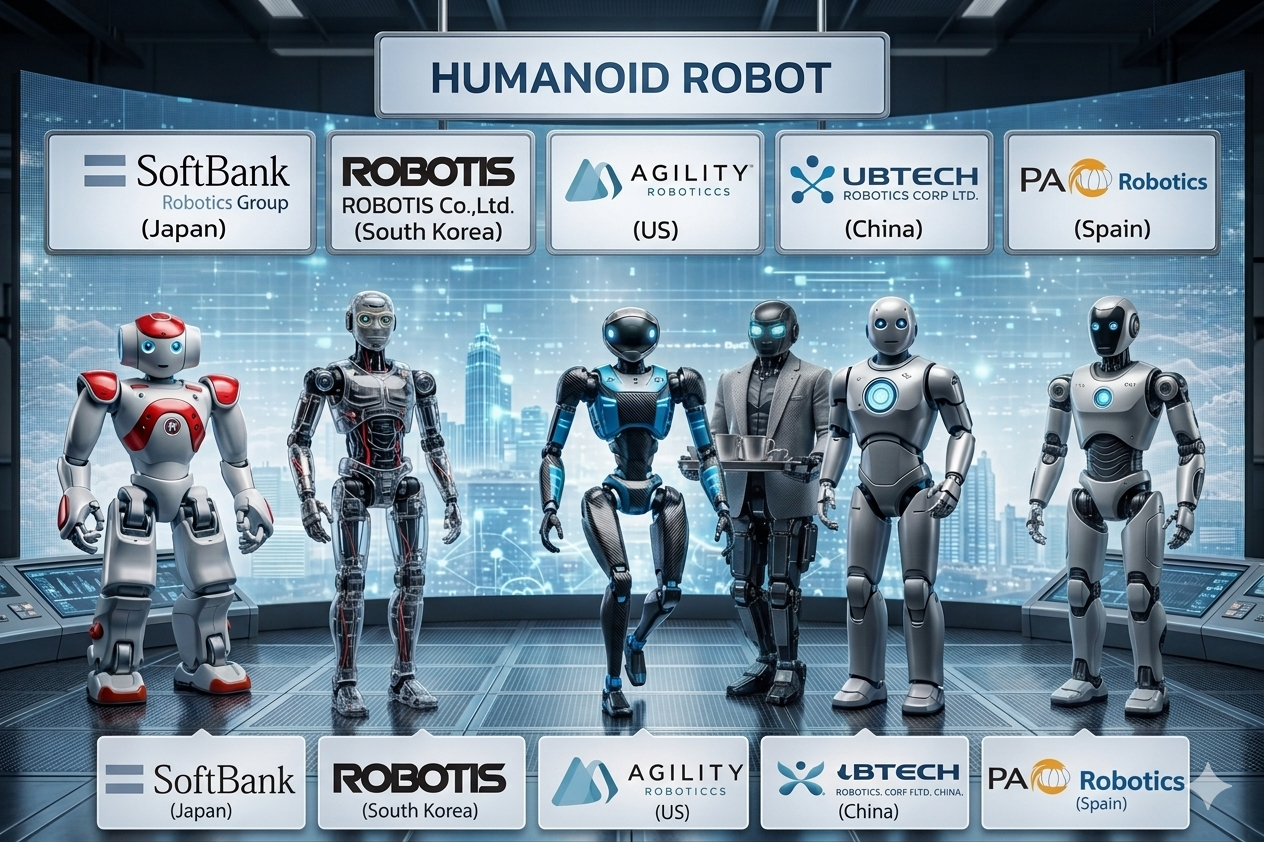
The Future of U.S. humanoid robot market is rapidly evolving, emerging as a key pillar of next-generation automation and intelligent systems. With breakthroughs in artificial intelligence (AI), machine learning, and advanced robotics, humanoid robots are transitioning from experimental prototypes to practical, real-world solutions. Designed to mimic human appearance and behavior, these robots are increasingly being deployed across industries such as manufacturing, healthcare, logistics, retail, and research.
As businesses seek to enhance productivity, reduce operational costs, and address workforce shortages, the demand for humanoid robots is accelerating. The future of the U.S. humanoid robot market is shaped by technological innovation, growing investments, and the expanding scope of applications that redefine how humans and machines collaborate. US Humanoid Robot Market is projected to grow from USD 857.9 million in 2025 to USD 4,601.0 million by 2030, registering a CAGR of 39.9%
U.S. humanoid robot Market Overview
The U.S. humanoid robot market is among the most advanced globally, supported by a strong ecosystem of technology companies, research institutions, and startups. The United States continues to lead in robotics innovation, with significant investments in AI-powered systems and automation technologies.
Humanoid robots are equipped with sophisticated sensors, actuators, and AI-driven software that enable them to perform complex tasks such as walking, object manipulation, speech recognition, and decision-making. These capabilities make them highly adaptable to environments designed for humans, offering a significant advantage over traditional industrial robots.
Key Drivers of Market Growth
1. Advancements in Artificial Intelligence and Machine Learning
AI is at the core of the U.S. humanoid robot market, enabling robots to perceive their surroundings, learn from data, and improve performance over time. Machine learning algorithms allow robots to adapt to dynamic environments, making them suitable for a wide range of applications.
The integration of natural language processing (NLP) further enhances human-robot interaction, enabling robots to communicate effectively with users.
2. Rising Labor Shortages and Workforce Automation
Labor shortages in sectors such as manufacturing, logistics, and healthcare are driving the adoption of humanoid robots. These robots can perform repetitive, physically demanding, or hazardous tasks, reducing reliance on human labor.
As industries face increasing pressure to maintain productivity, humanoid robots provide a scalable solution for workforce challenges, ensuring operational continuity.
Download PDF Brochure @ https://www.marketsandmarkets.com/pdfdownloadNew.asp?id=40542925
3. Growing Investments and Strategic Partnerships
The U.S. humanoid robot market is benefiting from strong financial backing from venture capital firms, technology giants, and government initiatives. Companies are investing heavily in research and development to accelerate the commercialization of humanoid robots.
Collaborations between robotics companies and AI developers are also fostering innovation, leading to the development of more capable and efficient robotic systems.
4. Expansion of Smart Manufacturing and Industry 4.0
The rise of Industry 4.0 is transforming manufacturing processes, with humanoid robots playing a critical role in smart factories. These robots can work alongside human workers, performing tasks such as assembly, inspection, and material handling.
Their ability to operate in human-centric environments makes them ideal for flexible manufacturing systems, where adaptability and efficiency are essential.
Emerging Applications Across Industries
1. Manufacturing and Industrial Automation
In manufacturing, humanoid robots are being deployed to handle repetitive tasks, improve precision, and enhance safety. Their human-like design allows them to use existing tools and infrastructure, reducing the need for costly modifications.
2. Healthcare and Elderly Care
The healthcare sector is a major growth area for the U.S. humanoid robot market. Robots are being used to assist medical professionals, monitor patients, and provide support for elderly individuals.
With the aging population in the United States, humanoid robots are expected to play a significant role in caregiving, offering companionship and assistance with daily activities.
3. Logistics and Warehousing
Humanoid robots are increasingly used in warehouses and distribution centers for tasks such as picking, packing, and sorting. Their ability to navigate complex environments and handle diverse objects makes them valuable in logistics operations.
4. Retail and Customer Service
Retailers are adopting humanoid robots to enhance customer experiences. These robots can assist customers, provide product information, and perform service tasks, improving efficiency and engagement.
5. Research, Education, and Defense
Humanoid robots are also widely used in research and educational institutions to explore advanced robotics technologies. In defense, they can be deployed in hazardous environments for tasks such as surveillance and reconnaissance.
Technological Innovations Driving the Market
Advanced Sensor Technologies
Modern humanoid robots are equipped with high-resolution cameras, LiDAR systems, and tactile sensors that enable precise navigation and interaction with objects.
Improved Mobility and Dexterity
Advancements in robotics engineering have led to significant improvements in robot mobility and dexterity. Humanoid robots can now walk, run, and manipulate objects with greater accuracy and efficiency.
Cloud and Edge Computing Integration
The integration of cloud and edge computing allows robots to process data in real time, improving decision-making and performance. This connectivity also enables remote monitoring and updates.
Human-Robot Collaboration (HRC)
Collaborative robots, or cobots, are designed to work alongside humans safely. The U.S. humanoid robot market is increasingly focusing on HRC to enhance productivity and efficiency in shared workspaces.
Challenges in the Market
High Development and Deployment Costs
The cost of developing and deploying humanoid robots remains high, limiting adoption among small and medium-sized enterprises.
Technical Limitations
Achieving human-like intelligence, adaptability, and dexterity continues to be a challenge. Robots must operate reliably in dynamic and unpredictable environments.
Ethical and Regulatory Concerns
The integration of humanoid robots into society raises concerns related to privacy, security, and job displacement. Regulatory frameworks will play a crucial role in addressing these issues.
Future Outlook
The future of the U.S. humanoid robot market is highly promising, with continued advancements expected in AI, robotics, and automation technologies. The market is projected to experience significant growth over the next decade, driven by increasing demand for intelligent automation solutions.
Key trends shaping the future include:
Development of more affordable and scalable humanoid robots
Increased adoption in service industries
Integration with AI and IoT ecosystems
Expansion of collaborative robotics
As technology matures, humanoid robots will become more accessible and widely adopted across industries, transforming the way businesses operate.
The U.S. humanoid robot market is at the forefront of a technological revolution, offering transformative solutions across industries. From manufacturing and healthcare to retail and logistics, humanoid robots are redefining efficiency, productivity, and human-machine interaction.
With strong investment, continuous innovation, and expanding applications, the future of the U.S. humanoid robot market looks exceptionally bright. As these robots become more advanced and cost-effective, they will play an increasingly integral role in shaping the future of work and society.
About MarketsandMarkets™
MarketsandMarkets™ has been recognized as one of America’s Best Management Consulting Firms by Forbes, as per their recent report.
MarketsandMarkets™ is a blue ocean alternative in growth consulting and program management, leveraging a man-machine offering to drive supernormal growth for progressive organizations in the B2B space. With the widest lens on emerging technologies, we are proficient in co-creating supernormal growth for clients across the globe.
Today, 80% of Fortune 2000 companies rely on MarketsandMarkets, and 90 of the top 100 companies in each sector trust us to accelerate their revenue growth. With a global clientele of over 13,000 organizations, we help businesses thrive in a disruptive ecosystem.
The B2B economy is witnessing the emergence of $25 trillion in new revenue streams that are replacing existing ones within this decade. We work with clients on growth programs, helping them monetize this $25 trillion opportunity through our service lines – TAM Expansion, Go-to-Market (GTM) Strategy to Execution, Market Share Gain, Account Enablement, and Thought Leadership Marketing.
Built on the ‘GIVE Growth’ principle, we collaborate with several Forbes Global 2000 B2B companies to keep them future-ready. Our insights and strategies are powered by industry experts, cutting-edge AI, and our Market Intelligence Cloud, KnowledgeStore™, which integrates research and provides ecosystem-wide visibility into revenue shifts.
To find out more, visit www.MarketsandMarkets™.com or follow us on Twitter , LinkedIn and Facebook .
Contact:
Mr. Rohan Salgarkar
MarketsandMarkets™ INC.
1615 South Congress Ave.
Suite 103, Delray Beach, FL 33445
USA: +1-888-600-6441


