The LiDAR (Light Detection and Ranging) market is poised to revolutionize multiple industries, including automotive, aerospace, and industrial sectors. As the technology matures, falling costs, increased accuracy, and miniaturization of sensors are making LiDAR an indispensable tool for autonomous systems, mapping, industrial automation, and smart infrastructure.
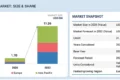
The LiDAR market is projected to reach USD 12.79 billion by 2030 from USD 3.27 billion in 2025, at a CAGR of 31.3% during the forecast period, driven by strong demand across these sectors and continuous technological innovation.
LiDAR in the Automotive Sector
The automotive industry is currently the largest adopter of LiDAR technology, primarily due to the rapid development of autonomous vehicles (AVs) and advanced driver-assistance systems (ADAS). LiDAR sensors provide high-resolution 3D mapping of surroundings, enabling:
- Precise object detection in real time
- Lane detection and obstacle avoidance
- Enhanced safety in urban and highway conditions
As self-driving vehicles move closer to commercial deployment, LiDAR is becoming a critical enabler. Companies are investing in solid-state LiDAR and low-cost sensors to make AVs more feasible for mass production.
Key drivers in automotive LiDAR adoption:
- Autonomous vehicle technology development
- Regulatory push for road safety systems
- Increasing consumer demand for advanced safety features
LiDAR in Aerospace Applications
In the aerospace sector, LiDAR plays a transformative role in terrain mapping, aerial surveying, and drone navigation. Its ability to generate accurate 3D models of landscapes makes it crucial for:
- Topographical mapping and environmental monitoring
- Precision navigation in drones and UAVs
- Infrastructure inspections, including airports, bridges, and pipelines
Commercial and defense aerospace applications are increasingly adopting high-precision LiDAR systems to enhance operational efficiency, safety, and environmental monitoring capabilities.
Download PDF Brochure @ https://www.marketsandmarkets.com/pdfdownloadNew.asp?id=1261

Industrial Sector Transformation through LiDAR
LiDAR is also revolutionizing the industrial sector, particularly in areas such as robotics, warehouse automation, and smart factories. In industrial applications, LiDAR helps in:
- Autonomous guided vehicles (AGVs) navigation
- Obstacle detection in manufacturing environments
- 3D scanning for quality control and asset management
The integration of LiDAR with AI and IoT systems enables smarter operations, predictive maintenance, and improved safety in industrial environments.
Technological Advancements Driving Market Growth
Several technological innovations are accelerating the adoption of LiDAR across sectors:
Solid-State LiDAR: Smaller, cost-effective, and reliable, making mass deployment feasible.
Miniaturization of Sensors: Enables integration into drones, vehicles, and robotics.
AI & Machine Learning Integration: Enhances data processing, object recognition, and real-time decision-making.
Improved Range and Accuracy: Supports autonomous navigation and high-precision mapping.
These advancements reduce costs, improve performance, and expand LiDAR’s applicability beyond high-end or specialized uses.
Regional Insights
The LiDAR market is seeing strong growth in North America, Europe, and Asia Pacific.
North America: Driven by autonomous vehicle development and smart city projects.
Europe: Focused on industrial automation and aerospace applications.
Asia Pacific: Rapid urbanization, industrialization, and drone adoption fuel regional growth.
Future Outlook and Market Potential
The future of the LiDAR market is highly promising:
Automotive: Widespread adoption in autonomous vehicles and ADAS systems.
Aerospace: Expansion in UAV, drone, and geospatial mapping applications.
Industrial: Integration into Industry 4.0 initiatives for automation, robotics, and logistics.
The convergence of LiDAR, AI, and IoT will create smarter ecosystems across industries, making operations safer, more efficient, and highly automated. The LiDAR market is projected to reach USD 12.79 billion by 2030 from USD 3.27 billion in 2025, at a CAGR of 31.3% during the forecast period, driven by adoption in commercial vehicles, smart infrastructure, and industrial automation.
LiDAR technology is no longer a niche innovation; it is becoming a core enabler for future mobility, aerospace exploration, and industrial automation. With advancements in sensor technology, cost reduction, and integration with AI-driven analytics, the LiDAR market is set to transform how industries perceive, navigate, and interact with their environments.
Organizations that invest early in LiDAR-enabled solutions are likely to gain a competitive edge, streamline operations, and deliver safer, smarter, and more efficient systems in the coming decade.
Frequently Asked Questions (FAQs)
1. What is LiDAR technology and how does it work?
LiDAR (Light Detection and Ranging) uses laser pulses to measure distances and create high-resolution 3D maps of the environment. It is widely used in autonomous vehicles, drones, aerospace, and industrial automation for precise navigation and object detection.
2. Why is LiDAR important for the automotive industry?
LiDAR enables autonomous vehicles and advanced driver-assistance systems (ADAS) to detect objects, pedestrians, and obstacles in real time. It enhances safety, accuracy, and reliability, making self-driving technology feasible for commercial deployment.
3. How is LiDAR used in aerospace applications?
In aerospace, LiDAR is used for terrain mapping, drone navigation, aerial surveying, and infrastructure inspections. Its ability to generate precise 3D data helps improve operational efficiency, safety, and environmental monitoring.
4. What industrial applications benefit from LiDAR technology?
LiDAR is transforming industries through automation, robotics, and warehouse management. It assists in navigation of autonomous guided vehicles, obstacle detection, 3D scanning, predictive maintenance, and improving overall operational efficiency.
About MarketsandMarkets™
MarketsandMarkets™ provides quantified B2B research on 30,000 high growth niche opportunities/threats which will impact 70% to 80% of worldwide companies’ revenues. Currently servicing 7500 customers worldwide including 80% of global Fortune 1000 companies as clients. Almost 75,000 top officers across eight industries worldwide approach MarketsandMarkets™ for their painpoints around revenues decisions.
Our 850 fulltime analyst and SMEs at MarketsandMarkets™ are tracking global high growth markets following the “Growth Engagement Model – GEM”. The GEM aims at proactive collaboration with the clients to identify new opportunities, identify most important customers, write “Attack, avoid and defend” strategies, identify sources of incremental revenues for both the company and its competitors. MarketsandMarkets™ now coming up with 1,500 MicroQuadrants (Positioning top players across leaders, emerging companies, innovators, strategic players) annually in high growth emerging segments. MarketsandMarkets™ is determined to benefit more than 10,000 companies this year for their revenue planning and help them take their innovations/disruptions early to the market by providing them research ahead of the curve.
MarketsandMarkets’s flagship competitive intelligence and market research platform, “Knowledgestore” connects over 200,000 markets and entire value chains for deeper understanding of the unmet insights along with market sizing and forecasts of niche markets.
Contact:
Mr. Rohan Salgarkar
MarketsandMarkets™ INC.
630 Dundee Road
Suite 430
Northbrook, IL 60062
USA : 1-888-600-6441