The rapid advancement of Artificial Intelligence (AI), autonomous technologies, and next-generation sensing systems is transforming the global LiDAR market. Light Detection and Ranging (LiDAR) technology, once primarily used for surveying and mapping, has evolved into a critical sensing solution for autonomous vehicles, robotics, smart cities, industrial automation, defense systems, and advanced infrastructure.
LiDAR uses laser pulses to measure distances and create highly accurate three-dimensional representations of environments. By capturing millions of data points, LiDAR systems generate detailed 3D maps, enabling machines to understand surroundings and make intelligent decisions.
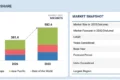
According to MarketsandMarkets, the global LiDAR market is expected to experience strong growth driven by increasing adoption in autonomous vehicles, environmental monitoring, mapping, robotics, and industrial applications. The market expansion is supported by advancements in solid-state LiDAR, AI-based perception systems, and 3D mapping technologies.
The combination of AI-powered analytics, compact solid-state sensors, and advanced mapping capabilities is reshaping how LiDAR technology is developed, deployed, and used across industries.
Understanding LiDAR Technology
LiDAR is a remote sensing technology that uses laser light to measure the distance between a sensor and an object. A LiDAR system emits laser pulses, measures the reflected signals, and calculates the distance based on the time taken for the light to return.
A typical LiDAR system consists of:
- Laser source
- Scanner
- Photodetector
- Processing unit
- Software algorithms
The collected data creates a point cloud—a detailed digital representation of the surrounding environment.
LiDAR technology enables:
- Accurate distance measurement
- 3D object detection
- Environmental perception
- Real-time mapping
- Autonomous navigation
Today, LiDAR is becoming a key component of intelligent systems that require precise spatial awareness.
The Rise of AI-Powered LiDAR Systems
Artificial Intelligence is one of the biggest forces transforming the LiDAR industry. Traditional LiDAR systems generated large volumes of raw data, requiring manual processing and interpretation.
AI has changed this by enabling machines to automatically analyze LiDAR data and extract meaningful information.
AI Enhancing LiDAR Perception
AI algorithms, especially deep learning and machine learning models, improve LiDAR capabilities by enabling:
- Object recognition
- Real-time classification
- Motion detection
- Predictive analysis
- Automated decision-making
For example, autonomous vehicles use AI-powered LiDAR systems to identify:
- Vehicles
- Pedestrians
- Road boundaries
- Traffic signs
- Obstacles
The combination of LiDAR sensors and AI creates a powerful perception system that allows autonomous machines to operate safely.
AI and Autonomous Vehicles
The automotive industry is one of the largest growth areas for LiDAR technology.
Autonomous vehicles require accurate environmental awareness to navigate safely. Cameras and radar systems provide valuable information, but LiDAR adds precise depth perception and 3D understanding.
AI-powered LiDAR enables:
- Autonomous driving
- Collision avoidance
- Lane detection
- Adaptive navigation
- Real-time decision-making
As automotive manufacturers continue developing self-driving vehicles, LiDAR is becoming a crucial technology for higher levels of vehicle autonomy.
Download PDF Brochure @ https://www.marketsandmarkets.com/pdfdownloadNew.asp?id=1261

Solid-State LiDAR: The Future of Sensing
One of the most important trends reshaping the LiDAR market is the development of solid-state LiDAR.
Traditional mechanical LiDAR systems use moving components to scan environments. While effective, these systems are often:
- Larger
- More expensive
- Less durable
- Difficult to integrate
Solid-state LiDAR eliminates moving parts by using semiconductor-based technologies.
Advantages include:
- Smaller size
- Lower cost
- Improved reliability
- Faster scanning
- Easier integration
Solid-state LiDAR technologies include:
Flash LiDAR
Flash LiDAR captures an entire scene using a broad laser pulse instead of scanning point-by-point.
Benefits:
- Faster image capture
- Compact design
- Suitable for automotive applications
MEMS-Based LiDAR
Micro-electromechanical systems (MEMS) use tiny mirrors or components to direct laser beams.
Benefits:
- Compact architecture
- Improved efficiency
- Lower production costs
Optical Phased Array LiDAR
This technology electronically controls laser direction without mechanical movement.
Benefits:
- High reliability
- Fast response
- Advanced beam control
The growth of solid-state LiDAR is expected to accelerate adoption across automotive, robotics, and consumer applications.
3D Mapping Revolutionizing LiDAR Applications
3D mapping is another major trend transforming the LiDAR industry.
LiDAR-based 3D mapping creates highly accurate digital models of physical environments. These maps are used across industries for planning, monitoring, and automation.
Smart Cities
Cities are increasingly using LiDAR-based mapping for:
- Infrastructure planning
- Traffic management
- Urban development
- Disaster management
LiDAR helps create accurate digital twins of urban environments, enabling smarter decision-making.
Construction and Infrastructure
The construction industry uses LiDAR for:
- Site surveying
- Building inspection
- Progress tracking
- Structural analysis
3D models generated from LiDAR data improve accuracy and reduce project risks.
Environmental Monitoring
LiDAR supports environmental applications such as:
- Forest mapping
- Climate studies
- Coastal monitoring
- Disaster prediction
It provides detailed information about terrain, vegetation, and ecosystem changes.
Key Market Drivers
Growing Demand for Autonomous Systems
The expansion of autonomous vehicles, drones, robots, and smart machines is driving demand for advanced LiDAR sensors.
Industries are investing in autonomous technologies to improve:
- Efficiency
- Safety
- Productivity
Increasing Adoption of Robotics
Robots require accurate perception to operate in complex environments.
LiDAR enables robots to:
- Navigate spaces
- Avoid obstacles
- Understand surroundings
Applications include:
- Warehouse robots
- Delivery robots
- Industrial automation
Smart Infrastructure Development
Governments and businesses are investing in smart infrastructure projects that require advanced sensing technologies.
LiDAR supports:
- Smart transportation
- Digital twins
- Infrastructure monitoring
Declining Sensor Costs
As manufacturing improves, LiDAR costs are gradually decreasing.
Lower prices are enabling adoption beyond premium applications and expanding opportunities in:
- Consumer electronics
- Drones
- Industrial equipment
LiDAR Market Segmentation Overview
By Technology
Major LiDAR technology categories include:
- Mechanical LiDAR
- Solid-state LiDAR
- Hybrid LiDAR
Solid-state solutions are gaining momentum due to their compact size and cost advantages.
By Application
Major applications include:
- Automotive
- Mapping
- Robotics
- Aerospace
- Defense
- Environment monitoring
- Industrial automation
By Component
LiDAR systems include:
- Laser components
- Sensors
- Scanning mechanisms
- Processing hardware
- Software platforms
Challenges Affecting LiDAR Adoption
Despite strong growth potential, the LiDAR market faces several challenges.
High Cost
Advanced LiDAR systems remain expensive compared with traditional sensors such as cameras and radar.
Data Processing Complexity
LiDAR generates massive datasets requiring:
- Powerful computing systems
- Advanced algorithms
- AI processing capabilities
Weather and Environmental Limitations
Certain conditions such as:
- Heavy rain
- Fog
- Dust
can affect LiDAR performance.
Integration Challenges
Combining LiDAR with other sensing technologies requires sophisticated software and hardware integration
Future Trends in the LiDAR Market
AI-LiDAR Fusion
Future systems will increasingly combine:
- AI
- LiDAR
- Cameras
- Radar
- Edge computing
This will create more reliable perception systems.
LiDAR for Autonomous Drones
Drone applications are expanding rapidly in:
- Agriculture
- Delivery
- Inspection
- Mapping
Digital Twins and Virtual Environments
LiDAR-generated 3D models will support digital twins for industries such as:
- Manufacturing
- Smart cities
- Energy
Miniaturization of Sensors
Future LiDAR systems will become:
- Smaller
- Cheaper
- More energy efficient
allowing broader adoption.
Regional Outlook
North America
North America remains a major market due to strong investment in:
- Autonomous vehicles
- AI technologies
- Advanced robotics
Europe
Europe is focusing on smart transportation, industrial automation, and environmental applications.
Asia-Pacific
Asia-Pacific is expected to witness significant growth due to:
- Automotive innovation
- Smart city projects
- Manufacturing automation
Countries investing in advanced mobility solutions are creating new opportunities for LiDAR adoption.
Top 10 Key Takeaways
- AI is transforming LiDAR from a sensing tool into an intelligent perception system.
- Solid-state LiDAR is driving the next generation of compact and affordable sensors.
- Autonomous vehicles remain a major growth application.
- 3D mapping is expanding LiDAR adoption across industries.
- Robotics and automation are increasing demand for LiDAR solutions.
- Smart cities are using LiDAR for digital infrastructure planning.
- AI-powered analytics improve LiDAR accuracy and decision-making.
- Lower sensor costs are creating new market opportunities.
- LiDAR fusion with cameras and radar will shape future systems.
- Advanced LiDAR technology will support the growth of autonomous ecosystems.
Frequently Asked Questions (FAQs)
1. What is LiDAR technology?
LiDAR is a remote sensing technology that uses laser pulses to measure distances and create accurate 3D representations of environments.
2. How is AI changing the LiDAR market?
AI improves LiDAR systems by enabling object recognition, real-time data analysis, predictive insights, and autonomous decision-making.
3. What is solid-state LiDAR?
Solid-state LiDAR is a next-generation LiDAR technology that removes mechanical scanning components, making sensors smaller, more reliable, and cost-effective.
4. Why is LiDAR important for autonomous vehicles?
LiDAR provides precise 3D perception, helping autonomous vehicles detect objects, understand surroundings, and navigate safely.
5. What industries use LiDAR technology?
Major industries include automotive, robotics, construction, defense, mapping, environmental monitoring, and smart infrastructure.