The machine control system market is experiencing a paradigm shift as automation and artificial intelligence (AI) technologies reshape the way industries operate. Machine control systems, which manage, monitor, and optimize the performance of heavy machinery and industrial equipment, are no longer simple tools—they are evolving into intelligent systems capable of autonomous decision-making, predictive analytics, and real-time optimization. This transformation is driving rapid adoption across construction, manufacturing, mining, and other industrial sectors.
Automation: Enhancing Efficiency and Precision
Automation has become a cornerstone in the modernization of machine control systems. By reducing human intervention in repetitive or hazardous tasks, automated systems improve accuracy, safety, and overall operational efficiency. In construction and civil engineering, for example, automated machine control systems allow graders, excavators, and bulldozers to execute precise movements with minimal operator input, resulting in faster project completion times and reduced material wastage. The elimination of manual errors not only enhances productivity but also lowers operational costs, making automation a key driver for market growth.
Artificial Intelligence: Enabling Smarter Machines
Artificial intelligence adds another layer of intelligence to machine control systems by enabling predictive maintenance, real-time decision-making, and adaptive performance optimization. AI algorithms can analyze large volumes of data from sensors and IoT devices installed on machinery to predict potential equipment failures, optimize energy consumption, and recommend operational adjustments. This proactive approach allows companies to prevent costly downtime and extend equipment lifespan, increasing both reliability and return on investment.
Download PDF Brochure @ https://www.marketsandmarkets.com/pdfdownloadNew.asp?id=62579001
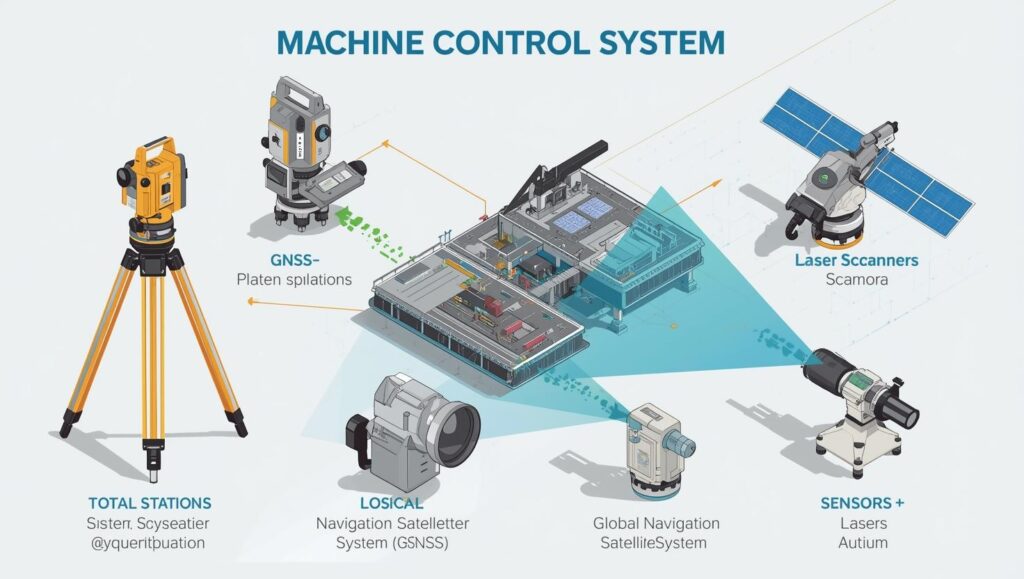
Machine control systems powered by AI are also capable of learning from operational patterns and environmental conditions. For instance, in mining and material handling, AI can automatically adjust machine movements to account for uneven terrain or variable material density, ensuring consistent performance and safety. This adaptability positions AI-driven systems as essential components in industries seeking smarter and more responsive equipment.
Market Adoption Across Industries
The adoption of automated and AI-driven machine control systems is particularly pronounced in sectors where precision, efficiency, and safety are critical. In construction, advanced control systems are integrated with GPS and laser-guided technologies to streamline earthmoving and grading operations. In manufacturing, these systems facilitate real-time monitoring of CNC machines, robotics, and assembly lines, enabling faster production cycles and improved quality control. The mining industry leverages AI-enabled machinery to optimize extraction processes and reduce operational risks, demonstrating the broad applicability of these technologies.
Furthermore, the growing trend of connected and smart factories under the Industry 4.0 framework is driving further integration of automation and AI. Companies are increasingly adopting machine control systems that can communicate with other industrial systems, enabling seamless coordination, remote monitoring, and centralized control.
Challenges and Market Barriers
Despite the rapid growth and clear benefits, the machine control system market faces certain challenges. High upfront costs, complex system integration, and the need for skilled operators can slow adoption, particularly among small and medium-sized enterprises. Additionally, data security concerns arise as AI-driven systems collect and transmit large volumes of operational data. Companies must invest in cybersecurity measures to protect sensitive information and maintain operational integrity.
Future machine control system market Outlook
The future of the machine control system market looks promising, with automation and AI set to drive continued innovation. Advances in machine learning, edge computing, and IoT connectivity are expected to enhance system intelligence, reduce latency in decision-making, and enable fully autonomous operations in certain applications. As technology becomes more accessible and cost-effective, adoption is likely to expand beyond large enterprises into mid-sized companies and emerging markets.
The integration of automation and AI in machine control systems is redefining industrial operations, making equipment smarter, safer, and more efficient. Companies that leverage these technologies are positioned to gain a competitive advantage by optimizing productivity, reducing costs, and achieving higher operational reliability.
Machine Control System Market FAQ
1. What is a machine control system?
A machine control system is a technology used to manage, monitor, and optimize the operation of industrial machinery and heavy equipment. It helps ensure precision, safety, and efficiency in industries such as construction, manufacturing, and mining.
2. How is automation influencing machine control systems?
Automation allows machines to perform repetitive or complex tasks with minimal human intervention. This improves operational accuracy, reduces errors, increases productivity, and enhances safety in industrial processes.
3. What role does artificial intelligence (AI) play in machine control systems?
AI enables machines to analyze data from sensors and IoT devices to make real-time decisions, predict maintenance needs, and optimize performance. AI-driven systems can adapt to changing conditions, improving efficiency and reducing downtime.
4. Which industries are adopting AI and automated machine control systems?
Construction, manufacturing, and mining are the primary adopters. Construction uses them for precise earthmoving and grading, manufacturing leverages them for assembly lines and CNC operations, and mining applies them to optimize extraction and ensure safety.
About MarketsandMarkets™
MarketsandMarkets™ is a blue ocean alternative in growth consulting and program management, leveraging a man-machine offering to drive supernormal growth for progressive organizations in the B2B space. We have the widest lens on emerging technologies, making us proficient in co-creating supernormal growth for clients.
The B2B economy is witnessing the emergence of $25 trillion of new revenue streams that are substituting existing revenue streams in this decade alone. We work with clients on growth programs, helping them monetize this $25 trillion opportunity through our service lines – TAM Expansion, Go-to-Market (GTM) Strategy to Execution, Market Share Gain, Account Enablement, and Thought Leadership Marketing.
Built on the ’GIVE Growth’ principle, we work with several Forbes Global 2000 B2B companies – helping them stay relevant in a disruptive ecosystem. Our insights and strategies are molded by our industry experts, cutting-edge AI-powered Market Intelligence Cloud, and years of research. The KnowledgeStore™ (our Market Intelligence Cloud) integrates our research, facilitates an analysis of interconnections through a set of applications, helping clients look at the entire ecosystem and understand the revenue shifts happening in their industry.
To find out more, visit www.MarketsandMarkets™.com or follow us on Twitter, LinkedIn and Facebook.
Contact:
Mr. Rohan Salgarkar
MarketsandMarkets™ INC.
630 Dundee Road
Suite 430
Northbrook, IL 60062
USA : 1-888-600-6441
