The rapid evolution of artificial intelligence (AI) has ushered in a new era of technological advancement, with AI data centers emerging as a pivotal force in reshaping the global cloud computing industry. These specialized facilities, designed to handle the immense computational demands of AI workloads, are driving unprecedented changes in infrastructure, scalability, and service delivery. As businesses and industries increasingly rely on AI to power innovation, the AI data center market is not only expanding but also redefining how cloud computing operates on a global scale. This article delves into the intricate relationship between AI data centers and the cloud computing industry, exploring their transformative impact, key trends, challenges, and future implications.
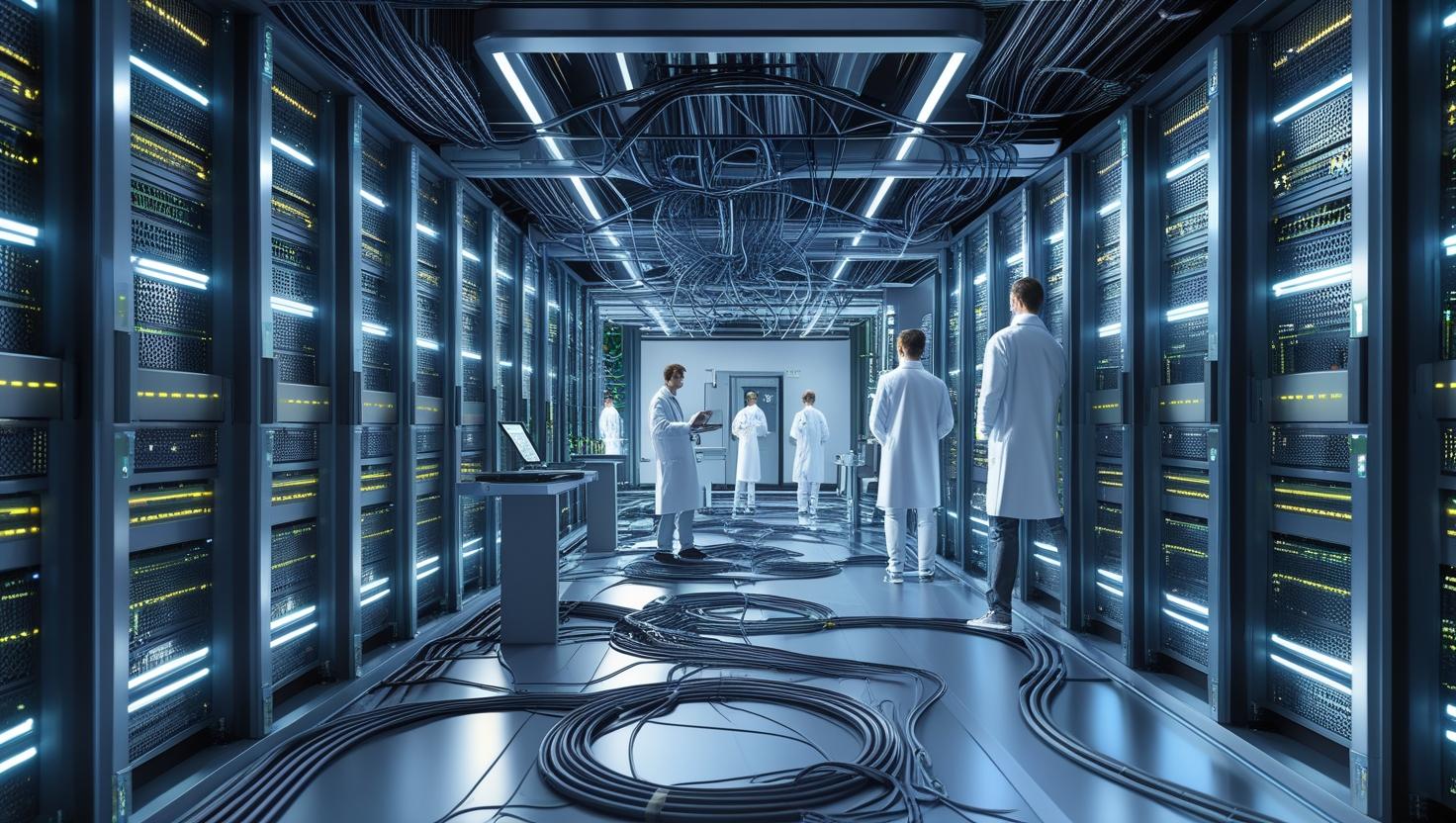
The global AI data center market size is anticipated to grow from USD 236.44 billion in 2025 to USD 933.76 billion by 2030, at a CAGR of 31.6%. Driven by the growing demand for artificial intelligence workloads and emerging data-intensive applications, the market for artificial intelligence data centers is expanding very rapidly.
The Rise of AI Data Centers and Their Role in Cloud Computing Infrastructure Development
The emergence of AI data centers marks a significant shift in the technological landscape, driven by the unique requirements of AI and machine learning (ML) workloads. Unlike traditional data centers, which primarily focus on general-purpose computing and storage, AI data centers are engineered to support high-performance computing (HPC) tasks, such as training large language models, processing vast datasets, and running complex algorithms. These facilities are equipped with specialized hardware, including graphics processing units (GPUs), tensor processing units (TPUs), and advanced cooling systems, to handle the intensive computational demands of AI.
The global cloud computing industry, which provides scalable, on-demand computing resources, has become deeply intertwined with the AI data center market. Cloud providers like Amazon Web Services (AWS), Microsoft Azure, and Google Cloud are investing heavily in AI-optimized data centers to meet the growing demand for AI-driven services. These investments are not merely about expanding capacity but about reengineering infrastructure to support the exponential growth of AI applications. For instance, the need for low-latency processing and real-time data analysis has prompted cloud providers to integrate AI data centers into their ecosystems, enabling seamless delivery of AI-powered solutions to businesses worldwide.
Moreover, the rise of AI data centers is fostering a new wave of innovation in cloud computing infrastructure. Traditional data centers were designed for static workloads, but AI workloads are dynamic, requiring flexible and scalable architectures. This has led to the development of modular data centers that can be rapidly deployed and customized to meet specific AI requirements. Additionally, advancements in energy-efficient cooling systems and sustainable power sources are addressing the environmental concerns associated with the high energy consumption of AI data centers, aligning with the cloud industry’s push toward sustainability.
Driving Scalability and Efficiency in Cloud Computing Through AI Data Centers
Scalability and efficiency are cornerstones of the cloud computing industry, and AI data centers are playing a transformative role in enhancing these attributes. The computational intensity of AI workloads demands data centers that can scale rapidly to accommodate fluctuating demands. Cloud providers are leveraging AI data centers to offer scalable infrastructure-as-a-service (IaaS) and platform-as-a-service (PaaS) solutions tailored to AI applications. This allows businesses to access powerful computing resources without the need for significant upfront investments in hardware.
AI data centers are also driving efficiency through optimized resource allocation. Advanced AI algorithms are used to manage data center operations, predicting workload demands and optimizing resource utilization. For example, machine learning models can forecast peak usage times, enabling data centers to allocate resources dynamically and reduce energy waste. This level of efficiency is critical for cloud providers, as it allows them to offer cost-effective services while maintaining high performance.
Furthermore, the integration of AI data centers into cloud ecosystems is enabling the development of new service models. For instance, AI-as-a-service (AIaaS) platforms allow businesses to access pre-trained AI models and development tools through the cloud, lowering the barrier to entry for AI adoption. These platforms rely on AI data centers to deliver the computational power needed to train and deploy models, making cloud computing a critical enabler of AI innovation.
The Economic Impact of AI Data Centers on the Global Cloud Computing Market
The economic implications of the AI data center market are profound, with significant investments flowing into the sector. According to industry reports, hyperscalers—major cloud providers like AWS, Microsoft, and Google—are projected to invest over $250 billion in data center infrastructure in 2025, with a significant portion allocated to AI-optimized facilities. This investment is driving growth in the global cloud computing market, which is expected to surpass $1 trillion by 2030, fueled by the increasing demand for AI-driven services.
The economic impact extends beyond cloud providers to hardware manufacturers, software developers, and service providers. Companies like NVIDIA and AMD are experiencing a surge in demand for GPUs and other AI-specific chips, which are essential components of AI data centers. Similarly, software companies are developing specialized tools and frameworks to optimize AI workloads in the cloud, creating new revenue streams. The ripple effect of these investments is creating jobs, fostering innovation, and driving的经济 growth across multiple industries.
However, the high cost of building and operating AI data centers poses challenges for smaller players in the cloud computing market. The capital-intensive nature of these facilities requires significant financial resources, which may limit competition and lead to market consolidation. As a result, hyperscalers with deep pockets are likely to dominate the AI data center market, potentially reshaping the competitive landscape of the cloud computing industry.
Addressing Environmental Challenges in AI Data Center Operations for Sustainable Cloud Computing
The environmental footprint of AI data centers is a growing concern, given their substantial energy consumption. Training large AI models requires massive computational power, which can lead to significant electricity usage and carbon emissions. As the cloud computing industry strives to meet sustainability goals, AI data centers are at the forefront of efforts to reduce environmental impact.
Cloud providers are investing in renewable energy sources, such as solar and wind, to power AI data centers. For example, Google has committed to operating its data centers on carbon-free energy by 2030, while Microsoft aims to be carbon-negative by the same year. These initiatives are critical for mitigating the environmental impact of AI data centers and aligning with global sustainability objectives.
In addition to renewable energy, advancements in cooling technologies are improving the energy efficiency of AI data centers. Liquid cooling systems, which are more efficient than traditional air-based cooling, are being adopted to manage the heat generated by high-performance hardware. Furthermore, AI-driven optimization tools are being used to monitor and reduce energy consumption, ensuring that data centers operate at peak efficiency.
The focus on sustainability is not only a response to environmental concerns but also a competitive differentiator in the cloud computing industry. Businesses and consumers are increasingly prioritizing eco-friendly providers, and cloud companies that invest in sustainable AI data centers are likely to gain a competitive edge.
Enhancing Security and Data Privacy in Cloud-Based AI Data Centers
As AI data centers become integral to the cloud computing industry, security and data privacy have emerged as critical considerations. AI workloads often involve sensitive data, such as personal information or proprietary business data, making robust security measures essential. Cloud providers are implementing advanced encryption protocols, secure multi-tenancy architectures, and AI-driven threat detection systems to protect data in AI data centers.
Moreover, regulatory compliance is a key concern, as governments worldwide introduce stricter data privacy laws, such as the General Data Protection Regulation (GDPR) in Europe and the California Consumer Privacy Act (CCPA) in the United States. AI data centers must adhere to these regulations to ensure that data processing and storage comply with legal standards. Cloud providers are investing in compliance frameworks and certifications to build trust with customers and demonstrate their commitment to data privacy.
The integration of AI in security operations is also enhancing the resilience of cloud-based data centers. Machine learning algorithms can detect and respond to cyber threats in real time, reducing the risk of data breaches. This is particularly important for industries like healthcare and finance, where data security is paramount. By leveraging AI-driven security solutions, cloud providers can offer secure and reliable services, further solidifying their position in the market.
The Role of AI Data Centers in Enabling Emerging Technologies in Cloud Computing
AI data centers are not only transforming the cloud computing industry but also enabling the development of emerging technologies. Technologies such as edge computing, the Internet of Things (IoT), and 5G are increasingly reliant on AI to process data at scale. AI data centers provide the computational backbone needed to support these technologies, enabling real-time data analysis and decision-making.
Edge computing, for example, relies on AI data centers to process data closer to the source, reducing latency and improving performance. This is particularly important for applications like autonomous vehicles and smart cities, where real-time data processing is critical. Cloud providers are deploying AI data centers at the edge to support these use cases, creating new opportunities for innovation.
Similarly, the IoT ecosystem generates vast amounts of data that require AI-driven analysis to extract meaningful insights. AI data centers integrated with cloud platforms enable businesses to process IoT data efficiently, driving applications in industries such as manufacturing, healthcare, and logistics. The synergy between AI data centers and emerging technologies is expanding the capabilities of the cloud computing industry, paving the way for new services and business models.
Download PDF Brochure for More Info @ https://www.marketsandmarkets.com/pdfdownloadNew.asp?id=267395404
Challenges and Opportunities in the AI Data Center Market for Cloud Computing Providers
While the AI data center market presents significant opportunities, it also poses challenges for cloud computing providers. One of the primary challenges is the shortage of GPUs and other specialized hardware, which are in high demand due to the growth of AI applications. This scarcity is driving up costs and forcing cloud providers to compete for limited resources, potentially impacting their ability to scale operations.
Another challenge is the complexity of managing AI workloads, which require specialized expertise and infrastructure. Cloud providers must invest in training and hiring skilled professionals to design, operate, and maintain AI data centers. Additionally, the rapid pace of AI innovation requires continuous upgrades to hardware and software, adding to operational costs.
Despite these challenges, the AI data center market offers immense opportunities for growth. Cloud providers that can successfully integrate AI data centers into their ecosystems are well-positioned to capture a significant share of the growing AI market. By offering innovative services, such as AIaaS and edge computing solutions, providers can differentiate themselves and attract new customers.
The Future of AI Data Centers in Shaping the Cloud Computing Industry
The future of the cloud computing industry is inextricably linked to the growth of AI data centers. As AI continues to evolve, the demand for specialized data centers will only increase, driving further investment and innovation. Cloud providers are likely to focus on developing hybrid architectures that combine on-premises, cloud, and edge data centers to deliver seamless AI-driven services.
Additionally, advancements in AI hardware, such as next-generation GPUs and quantum computing processors, will enhance the capabilities of AI data centers, enabling faster and more efficient processing. These advancements will further accelerate the adoption of AI in industries ranging from healthcare to finance, cementing the role of cloud computing as a critical enabler of AI innovation.
The integration of AI data centers with sustainable practices will also shape the future of the industry. As environmental concerns grow, cloud providers will prioritize energy-efficient solutions and renewable energy sources to power their data centers. This focus on sustainability will not only address environmental challenges but also enhance the reputation of cloud providers as responsible corporate citizens.
The Transformative Power of AI Data Centers in Cloud Computing
The AI data center market is revolutionizing the global cloud computing industry, driving innovation, scalability, and efficiency. By providing the infrastructure needed to support AI workloads, these data centers are enabling new service models, enhancing security, and supporting emerging technologies. While challenges such as high costs and environmental concerns remain, the opportunities for growth and innovation are immense. As cloud providers continue to invest in AI data centers, they are shaping the future of the industry, positioning themselves as leaders in the AI-driven technological landscape. The synergy between AI data centers and cloud computing is not just a trend but a fundamental shift that will define the future of technology.
Explore In-Depth Semiconductor & Electronics Market Research –https://www.marketsandmarkets.com/semiconductorand-electonics-market-research-87.html
Frequently Asked Questions
What is an AI data center, and how does it differ from a traditional data center?
An AI data center is a specialized facility designed to handle the computational demands of AI and machine learning workloads. Unlike traditional data centers, which focus on general-purpose computing and storage, AI data centers are equipped with high-performance hardware, such as GPUs and TPUs, and advanced cooling systems to support intensive AI tasks.
How are AI data centers impacting the cloud computing industry?
AI data centers are driving innovation in the cloud computing industry by enabling scalable, efficient, and high-performance infrastructure for AI workloads. They support new service models like AI-as-a-service, enhance resource allocation, and enable emerging technologies like edge computing and IoT.
What are the environmental concerns associated with AI data centers?
AI data centers consume significant amounts of energy due to their computational intensity, raising concerns about carbon emissions. Cloud providers are addressing these concerns by investing in renewable energy, advanced cooling systems, and AI-driven optimization tools to reduce energy consumption.
How do AI data centers enhance security in the cloud computing industry?
AI data centers incorporate advanced encryption, secure multi-tenancy architectures, and AI-driven threat detection to protect sensitive data. They also comply with data privacy regulations, ensuring secure and reliable cloud services.
What is the future outlook for AI data centers in cloud computing?
The future of AI data centers is bright, with continued investment in hybrid architectures, advanced hardware, and sustainable practices. They will play a critical role in enabling AI-driven innovation and supporting emerging technologies in the cloud computing industry.
See The Latest Semiconductor Reports:
Smart Irrigation Market Size, Share & Trends, 2025 To 2030: https://www.marketsandmarkets.com/Market-Reports/smart-irrigation-market-199758913.html
Embodied AI Market Size, Share & Trends, 2025 To 2030: https://www.marketsandmarkets.com/Market-Reports/embodied-ai-market-83867232.html
AI Data Center Market Size, Share & Trends, 2025 To 2030: https://www.marketsandmarkets.com/Market-Reports/ai-data-center-market-267395404.html