The Internet of Things (IoT) is transforming the way businesses, industries, and consumers interact with technology. The growing adoption of connected devices, intelligent sensors, cloud platforms, and advanced communication networks is creating new opportunities across multiple industries. From smart homes and connected healthcare to industrial automation and intelligent transportation, IoT Technology Market Analysis are enabling real-time data exchange, improved operational efficiency, and automated decision-making.
The increasing demand for smart connectivity is encouraging organizations to invest in advanced IoT infrastructure. Technologies such as artificial intelligence (AI), 5G, edge computing, machine learning, and cloud computing are strengthening IoT ecosystems by improving connectivity, data processing, and device management. These innovations are also supporting the development of smart cities, connected vehicles, wearable devices, and Industry 4.0 applications.
According to MarketsandMarkets, the global IoT Technology Market is projected to grow from USD 959.30 billion in 2025 to USD 1,148.62 billion by 2030, registering a compound annual growth rate (CAGR) of 3.7% during the forecast period. The growing adoption of connected devices, increasing internet penetration, expanding industrial automation, and rising demand for real-time analytics are supporting market development.
The IoT Technology Market Analysis highlights how emerging innovations are reshaping the connected ecosystem. As businesses prioritize digital transformation, IoT solutions are becoming essential for improving productivity, optimizing resources, enhancing customer experiences, and enabling intelligent operations.
Artificial Intelligence Integration Transforming IoT Technology
Artificial intelligence is emerging as one of the most influential technologies shaping the future of IoT. The integration of AI with connected devices allows organizations to process large volumes of data, identify patterns, and generate actionable insights. AI-powered IoT systems can analyze information collected from sensors and connected equipment to support automated decisions and predictive operations.
In manufacturing, AI-enabled IoT solutions help organizations monitor production equipment, identify operational abnormalities, and predict potential machinery failures. These capabilities reduce unplanned downtime and improve production efficiency. Similarly, in healthcare, connected medical devices combined with AI analytics support remote patient monitoring, health data analysis, and early identification of potential medical concerns.
Edge AI is another important innovation. Instead of transferring all information to centralized cloud servers, edge-enabled IoT devices can process data closer to the source. This reduces latency, improves response times, and supports applications requiring real-time decision-making.
The combination of AI and IoT is also creating opportunities in smart retail, autonomous transportation, intelligent security systems, and energy management. As AI algorithms become more advanced, intelligent connected devices are expected to deliver greater automation and operational flexibility.
Download PDF Brochure @ https://www.marketsandmarkets.com/pdfdownloadNew.asp?id=258239167
5G Connectivity Accelerating Smart Connectivity
The expansion of 5G networks is creating new opportunities for the IoT ecosystem. Compared with previous generations of cellular connectivity, 5G supports higher data speeds, lower latency, and the ability to connect a large number of devices simultaneously.
These capabilities are particularly important for applications that require continuous communication and real-time data transmission. Smart cities, connected vehicles, industrial robotics, remote healthcare, and intelligent transportation systems can benefit from improved network performance.
In industrial environments, 5G connectivity enables communication between sensors, machines, controllers, and centralized monitoring platforms. Manufacturers can use connected systems to monitor production processes, coordinate automated equipment, and improve supply chain visibility.
The technology also supports the development of connected vehicles and intelligent transportation infrastructure. Vehicles can exchange information with surrounding infrastructure, supporting traffic management, road safety, and advanced driver assistance systems.
The continued expansion of 5G infrastructure, combined with technologies such as Wi-Fi, Bluetooth, Zigbee, and low-power wide-area networks (LPWAN), will strengthen connectivity across diverse IoT applications.
Industrial IoT Driving Industry 4.0 and Smart Manufacturing
Industrial Internet of Things (IIoT) solutions are becoming increasingly important as manufacturers accelerate their Industry 4.0 initiatives. Connected sensors, industrial gateways, intelligent controllers, and automated monitoring systems enable factories to collect and analyze operational information throughout production environments.
The industrial application segment is expected to register the highest CAGR during the forecast period. This growth is supported by increasing investments in smart manufacturing, predictive maintenance, process optimization, and industrial automation.
IoT-enabled manufacturing systems provide real-time visibility into machine performance, production quality, energy consumption, and equipment utilization. By analyzing this information, manufacturers can identify inefficiencies, optimize production schedules, and reduce operational expenses.
Predictive maintenance is another major application of industrial IoT. Connected sensors monitor temperature, vibration, pressure, and other equipment parameters. AI-powered analytics can identify unusual operating patterns and help maintenance teams address potential problems before equipment failures occur.
Industries such as automotive, electronics, aerospace, oil and gas, and pharmaceuticals are increasingly adopting IIoT solutions to improve manufacturing productivity and operational reliability.
Edge Computing and Cloud Platforms Enhancing IoT Performance
Cloud computing and edge computing are playing complementary roles in the development of IoT infrastructure. Cloud platforms provide scalable storage, centralized device management, and advanced data analytics capabilities. Organizations can connect thousands of devices and manage information through centralized digital environments.
Cloud-based IoT solutions are widely used in smart buildings, healthcare, transportation, retail, and manufacturing. They enable businesses to monitor connected devices remotely, manage operational information, and access data from multiple locations.
Edge computing complements cloud infrastructure by processing information closer to connected devices. This approach is particularly useful for applications that require low latency, reliable performance, and reduced network bandwidth consumption.
For example, industrial robots and smart surveillance systems require immediate responses to changing conditions. Edge computing allows these systems to analyze information locally rather than depending entirely on remote cloud servers.
The integration of cloud platforms, edge computing, and AI is expected to strengthen IoT infrastructure and support the development of more responsive and intelligent connected applications.
Smart Homes and Connected Consumer Devices Expanding Adoption
The growing popularity of smart homes and connected consumer electronics is creating significant opportunities in the IoT Technology Market. Consumers are increasingly adopting smart appliances, connected security cameras, intelligent lighting, smart thermostats, and voice-controlled devices.
These technologies allow users to monitor and control household systems remotely through smartphones and connected applications. Smart home ecosystems also support energy management by automatically adjusting lighting, temperature, and appliance operations based on user preferences.
Wearable devices are another important part of the consumer IoT ecosystem. Smartwatches, fitness trackers, and connected health monitoring devices collect information related to physical activity, sleep patterns, and other wellness indicators.
The integration of AI and cloud connectivity is making consumer IoT products more intelligent and personalized. Manufacturers are focusing on improving interoperability, device security, and user experience to encourage wider adoption.
As internet access expands and connected devices become more accessible, smart homes and wearable technologies are expected to remain important contributors to the IoT ecosystem.
IoT Technology Market Segmentation and Emerging Opportunities
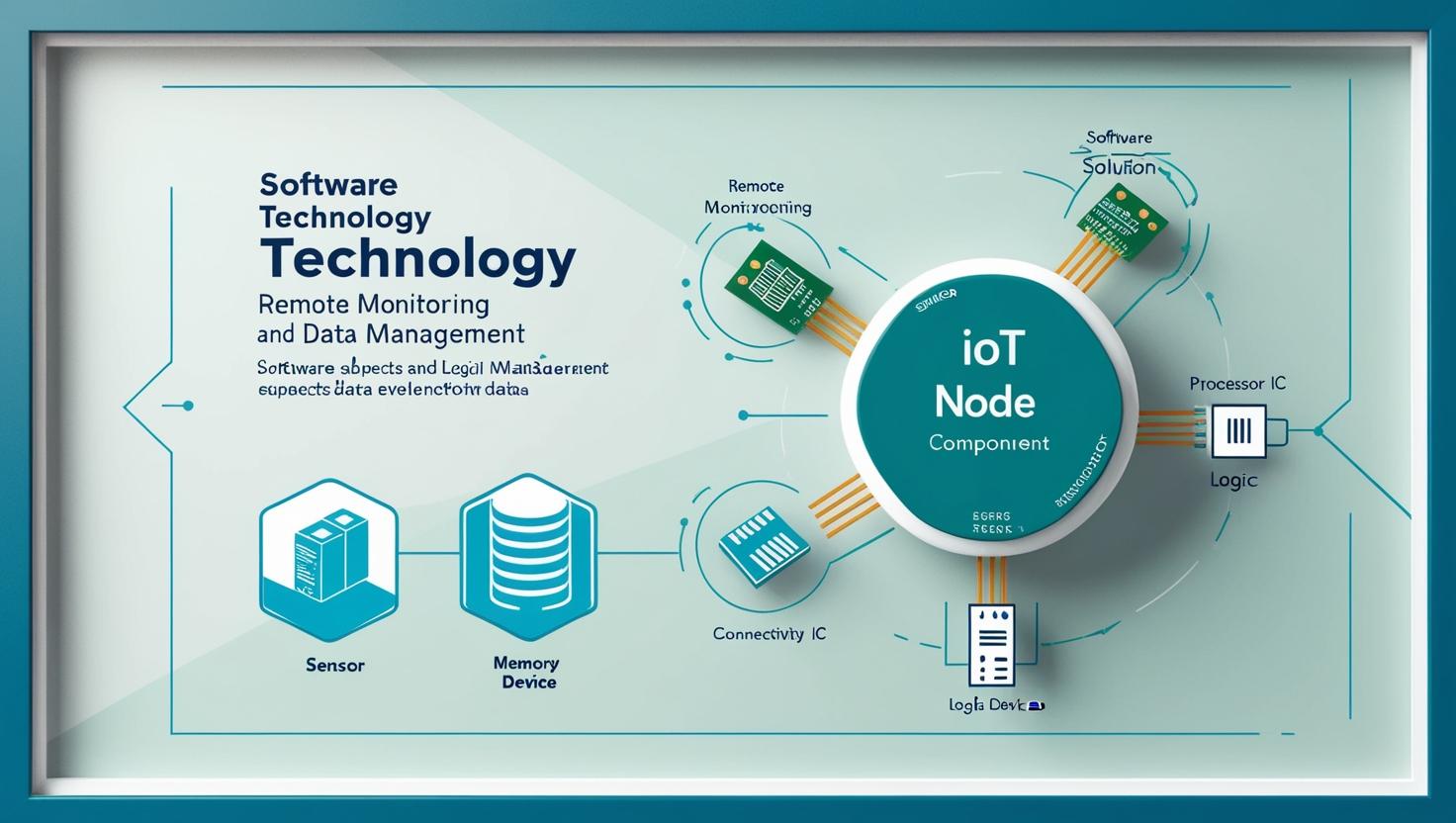
The IoT Technology Market is segmented by node component, software solution, platform, service, end-use application, and region. Each segment plays an important role in supporting connected infrastructure and intelligent applications.
By Node Component: The market includes processors, connectivity ICs, sensors, memory devices, and logic devices. Processors are expected to account for the largest market share during the forecast period because connected devices require processing capabilities to manage data, connectivity, and device functionality. Sensors are equally important because they collect information about environmental conditions, equipment performance, and user activities.
By Software Solution: The segment includes data management, real-time streaming analytics, network bandwidth management, remote monitoring, and security solutions. Software solutions are expected to register the highest growth rate. Increasing connected-device deployments are generating large volumes of data, creating demand for advanced data management, analytics, and cybersecurity platforms.
By Platform: IoT platforms include device management, application management, and network management. Network management held the largest market share in this segment. These platforms support device authentication, provisioning, configuration, monitoring, routing, and firmware management.
By Service: The market includes professional services and managed services. Professional services accounted for a larger share of the service segment. These services include consulting, system integration, deployment, support, maintenance, and IoT infrastructure upgrades.
By End-use Application: The market is divided into industrial and consumer applications. Industrial applications include manufacturing, healthcare, automotive and transportation, building automation, retail, banking, oil and gas, agriculture, and aerospace and defense. Consumer applications include wearable devices and consumer electronics.
Asia Pacific Emerging as the Fastest-Growing IoT Technology Market
Asia Pacific is expected to be the fastest-growing region in the global IoT Technology Market. Rapid industrialization, increasing internet penetration, expanding 5G infrastructure, and government investments in digital transformation are supporting regional market growth.
According to MarketsandMarkets, the Asia Pacific IoT Technology Market is projected to grow from USD 260.76 billion in 2025 to USD 351.03 billion by 2030, registering a CAGR of 6.1% during the forecast period.
China, India, Japan, and South Korea are important markets contributing to regional growth. These countries are investing in smart city infrastructure, connected manufacturing, digital healthcare, intelligent transportation, and advanced communication networks.
India represents a significant opportunity due to the expansion of digital infrastructure, increasing adoption of smart devices, and growing industrial automation. Investments in connected healthcare, smart buildings, logistics, and manufacturing are creating additional demand for IoT technologies.
The growing presence of technology providers, semiconductor manufacturers, and cloud service companies is also strengthening the regional IoT ecosystem.
Data Security and Interoperability Challenges in IoT Adoption
Despite strong growth opportunities, the IoT Technology Market faces several challenges that could influence large-scale adoption. Data security and privacy concerns remain major restraints because connected devices continuously exchange sensitive information across networks and platforms.
Cyberattacks, unauthorized access, data breaches, and insecure device configurations can create significant risks for consumers and enterprises. Organizations must implement strong authentication mechanisms, encryption, secure device management, and continuous security monitoring to protect connected ecosystems.
Interoperability is another important challenge. IoT environments often include devices and software platforms developed by different manufacturers. Differences in communication protocols, data formats, and technical standards can make integration difficult.
The shortage of skilled professionals also affects market adoption. IoT implementation requires expertise in networking, embedded systems, cloud computing, cybersecurity, data analytics, and software development.
Addressing these challenges through standardization, workforce development, and stronger cybersecurity frameworks will be essential for sustainable IoT market growth.
Competitive Landscape and Key Market Players
The competitive landscape of the IoT Technology Market includes semiconductor manufacturers, software providers, cloud service companies, connectivity solution providers, and technology platform developers.
Leading companies are investing in research and development, product innovation, strategic partnerships, and acquisitions to strengthen their market positions.
Major players include Intel Corporation, Qualcomm Technologies, Texas Instruments Incorporated, STMicroelectronics, IBM, Hewlett Packard Enterprise, Cisco Systems, Microsoft Corporation, PTC, and Amazon Web Services.
These companies provide processors, connectivity technologies, IoT platforms, cloud infrastructure, data analytics, and device management solutions.
Innovation in edge computing, AI-enabled processors, industrial IoT platforms, and secure connectivity is becoming increasingly important for competitive differentiation. Partnerships between hardware manufacturers, software developers, and industrial enterprises are also supporting the development of integrated IoT solutions.
Future Outlook: Emerging Innovations Shaping Smart Connectivity
The future of the IoT Technology Market will be shaped by the convergence of AI, 5G, edge computing, cloud platforms, advanced sensors, and intelligent automation. These technologies will enable connected devices to become more efficient, responsive, and capable of supporting complex applications.
The growing adoption of smart cities, connected healthcare, industrial automation, autonomous transportation, and energy-efficient infrastructure will create new opportunities for IoT technology providers.
Cross-domain collaborations between semiconductor companies, cloud providers, telecom operators, and industrial manufacturers will further accelerate innovation. Government-led funding for IoT research and digital infrastructure development will also support market expansion.
Overall, the IoT Technology Market Analysis highlights the increasing importance of smart connectivity in the global digital economy. As industries continue to adopt connected technologies, demand for intelligent hardware, advanced software solutions, scalable platforms, and professional services will increase. Companies investing in AI integration, secure connectivity, and next-generation IoT infrastructure will be well positioned to capitalize on emerging opportunities and shape the future of connected ecosystems.
FAQ:
Frequently Asked Questions (FAQs)
Q1. What is the projected growth of the IoT Technology Market?
The global IoT Technology Market is projected to grow from USD 959.30 billion in 2025 to USD 1,148.62 billion by 2030, registering a CAGR of 3.7% during the forecast period.
Q2. What are the key factors driving the IoT Technology Market?
The market is driven by increasing adoption of connected devices, growing demand for industrial automation, expanding 5G connectivity, smart city development, and rising investments in AI-powered IoT solutions.
Q3. Which technologies are shaping the future of the IoT Technology Market?
Artificial intelligence, 5G, edge computing, cloud computing, machine learning, advanced sensors, and cybersecurity technologies are shaping the future of the IoT ecosystem.
Q4. Which region is expected to grow fastest in the IoT Technology Market?
Asia Pacific is expected to register the highest growth, supported by rapid digitalization, expanding industrial automation, smart infrastructure investments, and increasing adoption of connected devices.
Q5. Who are the key players in the IoT Technology Market?
Major companies operating in the market include Intel Corporation, Qualcomm Technologies, Texas Instruments, STMicroelectronics, IBM, Cisco Systems, Microsoft, Hewlett Packard Enterprise, PTC, and Amazon Web Services.
About MarketsandMarkets™
MarketsandMarkets™ has been recognized as one of America’s Best Management Consulting Firms by Forbes, as per their recent report.
MarketsandMarkets™ is a blue ocean alternative in growth consulting and program management, leveraging a man-machine offering to drive supernormal growth for progressive organizations in the B2B space. With the widest lens on emerging technologies, we are proficient in co-creating supernormal growth for clients across the globe.
Today, 80% of Fortune 2000 companies rely on MarketsandMarkets, and 90 of the top 100 companies in each sector trust us to accelerate their revenue growth. With a global clientele of over 13,000 organizations, we help businesses thrive in a disruptive ecosystem.
The B2B economy is witnessing the emergence of $25 trillion in new revenue streams that are replacing existing ones within this decade. We work with clients on growth programs, helping them monetize this $25 trillion opportunity through our service lines – TAM Expansion, Go-to-Market (GTM) Strategy to Execution, Market Share Gain, Account Enablement, and Thought Leadership Marketing.
Built on the ‘GIVE Growth’ principle, we collaborate with several Forbes Global 2000 B2B companies to keep them future-ready. Our insights and strategies are powered by industry experts, cutting-edge AI, and our Market Intelligence Cloud, KnowledgeStore™, which integrates research and provides ecosystem-wide visibility into revenue shifts.
To find out more, visit www.MarketsandMarkets™.com or follow us on Twitter , LinkedIn and Facebook .
Contact:
Mr. Rohan Salgarkar
MarketsandMarkets™ INC.
1615 South Congress Ave.
Suite 103, Delray Beach, FL 33445
USA: +1-888-600-6441
