The Large Format Printer Market Share landscape is evolving as businesses across advertising, signage, packaging, textiles, décor, and industrial applications increasingly demand faster production, sharper image quality, greater color accuracy, and more versatile printing capabilities. Large format printing has moved well beyond traditional posters and banners, becoming an important component of modern visual communication and commercial production. The global large format printer market is projected to grow from USD 7.94 billion in 2025 to USD 10.36 billion by 2030, growing at a CAGR of 5.5%
As businesses seek to deliver customized graphics and high-impact visual content while controlling production costs, large format printers are gaining importance across both commercial and industrial environments. Technological developments in inkjet printing, digital workflows, automation, printheads, inks, and media compatibility are also changing the competitive dynamics of the industry.
Understanding Large Format Printer Market Share therefore requires looking beyond printer shipments. Market positioning increasingly depends on print speed, resolution, operating costs, sustainability, application versatility, automation, and the ability to handle a wider range of substrates.
Large Format Printing Enters a New Growth Phase
Large format printers are designed to produce graphics and images on substantially wider media than conventional office printers. They are used for applications such as outdoor advertising, retail displays, banners, vehicle graphics, wall décor, textiles, technical drawings, and specialty industrial printing.
Digital transformation is creating new opportunities for large format printing because customers increasingly expect short production runs, personalization, rapid turnaround, and high-quality output. Traditional printing processes can become less economical for customized or short-run jobs, whereas digital large format technologies can provide greater flexibility.
This shift is influencing Large Format Printer Market Share as manufacturers compete to provide solutions that combine productivity with image quality and application flexibility.
High-Speed Printing Is Reshaping Competitive Positioning
Speed has become one of the most important differentiators in the large format printer industry.
Commercial print service providers often need to process substantial volumes within tight deadlines. A printer that can deliver high-quality output at faster speeds can help businesses improve throughput, respond to urgent orders, and maximize equipment utilization.
Modern large format systems increasingly incorporate advanced printheads, optimized ink delivery, automated media handling, and sophisticated software to increase productivity. These improvements allow manufacturers to target applications where both speed and quality are essential.
As a result, Large Format Printer Market Share is increasingly influenced by a company’s ability to deliver productivity without compromising output quality.
The market is moving toward a balance in which customers expect industrial-level productivity from digital printing equipment while maintaining the visual quality required for premium advertising, retail, décor, and branding applications
Download PDF Brochure @ https://www.marketsandmarkets.com/pdfdownloadNew.asp?id=523
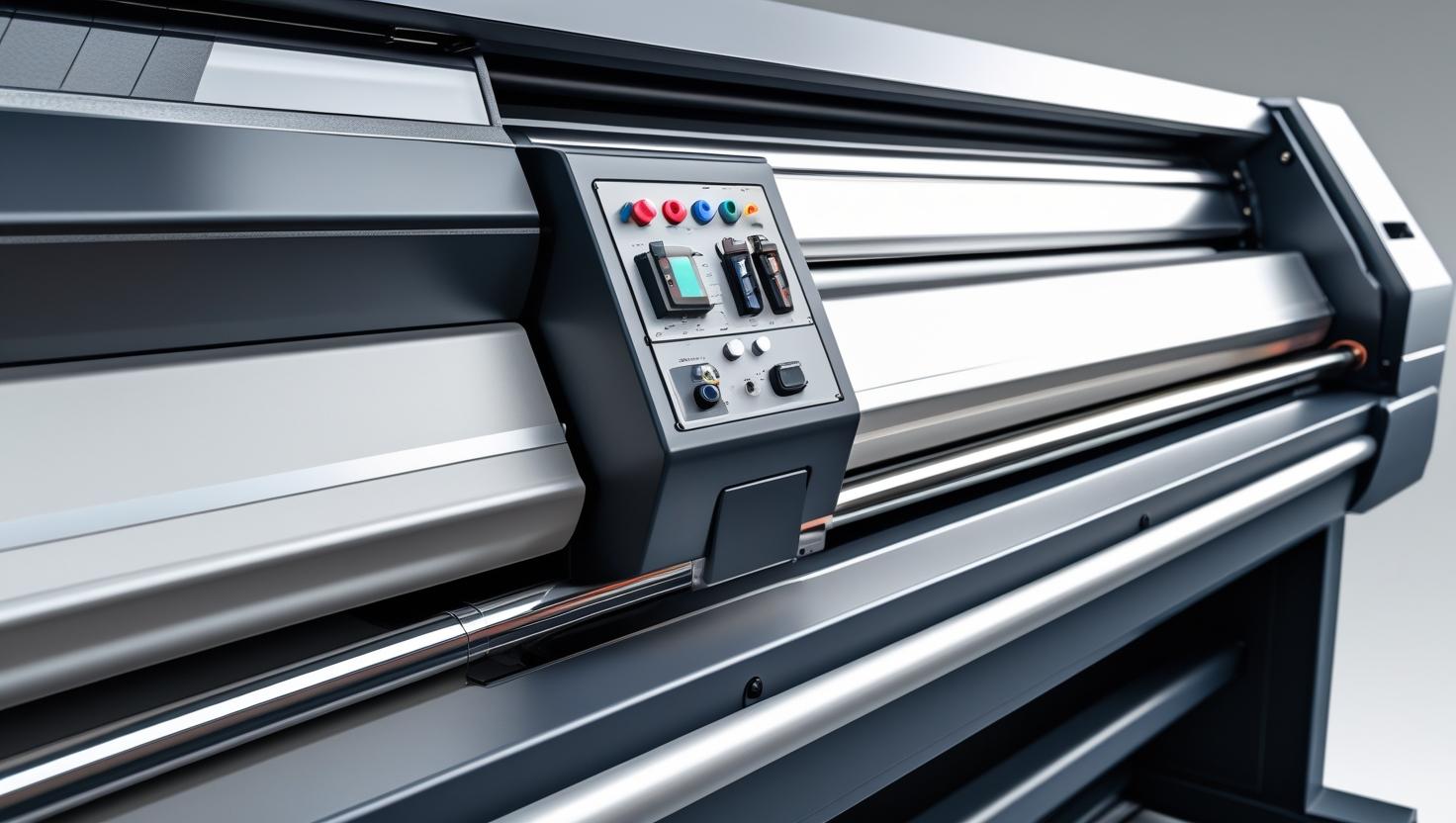
Image Quality Remains a Critical Buying Factor
Speed alone cannot determine market leadership.
Large format printing is frequently used to create highly visible graphics where imperfections can directly affect brand perception. Customers therefore continue to prioritize resolution, color consistency, fine detail, smooth gradients, and accurate reproduction.
Advancements in inkjet printhead technology and ink formulations are enabling manufacturers to improve image quality while maintaining productivity. Sophisticated color-management software also allows print service providers to achieve greater consistency across multiple jobs and substrates.
For premium applications, the combination of high resolution and reliable color reproduction can provide an important competitive advantage.
Consequently, companies seeking to expand their Large Format Printer Market Share are focusing on technologies that can deliver both exceptional image quality and commercially viable production speeds.
Digital Signage Creates Sustained Demand
Digital transformation has changed advertising, but physical signage remains highly relevant across retail, transportation, events, hospitality, and outdoor environments.
Large format printers enable businesses to produce customized banners, posters, displays, backlit graphics, point-of-purchase materials, and other visual communications.
Retailers increasingly use visually compelling graphics to attract customers and reinforce brand identity. Meanwhile, event organizers and advertisers require flexible printing solutions capable of producing graphics in different dimensions and on different substrates.
This creates a broad application base for large format printing and contributes to competitive opportunities within Large Format Printer Market Share.
Packaging and Décor Expand the Addressable Market
One of the most important developments in the industry is the expansion of large format printing beyond conventional signage.
Packaging applications are creating new opportunities for digital printing technologies because brands increasingly seek customization, personalization, shorter production runs, and faster product launches.
Similarly, the décor market is benefiting from digital printing for applications such as wallpapers, interior graphics, floor graphics, furniture surfaces, and customized décor materials.
These applications can require sophisticated color management, precise registration, durable inks, and compatibility with diverse substrates.
As large format printers become more capable of serving specialized applications, manufacturers can diversify their revenue streams and potentially strengthen their Large Format Printer Market Share.
UV Printing Strengthens Versatility
UV printing has become an important technology in the large format printing ecosystem.
UV-curable inks can be cured rapidly using ultraviolet light, allowing printers to produce graphics on a wide range of substrates. This versatility makes UV technology suitable for rigid materials, signage, displays, décor, and industrial applications.
The ability to print directly onto different materials can reduce production complexity and expand the range of products that print service providers can offer.
Manufacturers that combine UV technology with automation, high-speed production, and advanced color management can address a broader customer base, creating opportunities to increase Large Format Printer Market Share.
Sustainability Is Becoming a Competitive Differentiator
Environmental considerations are increasingly influencing printing technology decisions.
Customers are looking for solutions that can reduce waste, energy consumption, emissions, and the environmental impact of printing processes. Manufacturers are responding with more efficient equipment, improved ink formulations, recyclable media options, and technologies designed to minimize material waste.
Water-based and other lower-impact ink technologies can support applications where environmental requirements are particularly important.
Sustainability is therefore becoming part of the competitive discussion surrounding Large Format Printer Market Share. Companies that can demonstrate productivity while reducing environmental impact may be better positioned as sustainability requirements become more important to customers.
Automation Is Improving Printer Productivity
Automation is transforming large format printing workflows.
Modern printers increasingly integrate automated calibration, media loading, printhead maintenance, color management, job scheduling, and quality monitoring. These capabilities can reduce manual intervention and improve consistency.
For high-volume print environments, automation can also reduce downtime and operator workload.
The integration of cloud-based workflow tools and remote monitoring further allows businesses to track equipment performance and manage production more efficiently.
As print operations become increasingly digitized, automation is likely to become an increasingly important factor influencing Large Format Printer Market Share.
Software Becomes as Important as Hardware
The competitive landscape is no longer determined exclusively by printer specifications.
Workflow software, RIP systems, color-management tools, automation platforms, cloud connectivity, and fleet-management capabilities can significantly influence the overall value of a large format printing solution.
Software can optimize ink usage, automate production workflows, manage color profiles, schedule jobs, and reduce errors.
This means printer manufacturers increasingly need to provide integrated ecosystems rather than standalone hardware. Companies capable of combining hardware, software, consumables, and services into a unified offering can create stronger customer relationships and recurring revenue opportunities.
E-Commerce and Customization Support Market Opportunities
The expansion of e-commerce is also influencing the large format printing ecosystem.
Brands and retailers increasingly require customized marketing materials, packaging, displays, and promotional graphics. Digital printing makes it easier to produce short runs and personalized content without the setup requirements associated with conventional printing methods.
Customization is particularly valuable for campaigns targeting specific customer segments or geographic markets.
The growing demand for personalized visual communication can therefore support continued expansion across the large format printing sector and influence future Large Format Printer Market Share.
Competition Is Intensifying
The global large format printer industry includes established imaging and printing technology companies as well as specialized equipment manufacturers.
Competitive strategies increasingly revolve around product innovation, print speed, image quality, operating economics, sustainability, application versatility, and after-sales services.
Manufacturers are also developing specialized solutions for different verticals. A printer optimized for outdoor signage may have very different specifications from one designed for textile printing, interior décor, or industrial applications.
This application-specific approach allows companies to target specialized customer requirements while differentiating their products in a competitive market.
As technology continues to converge across printing, automation, and software, Large Format Printer Market Share is likely to become increasingly fragmented across application segments rather than being determined by a single technology.
Key Factors Influencing Large Format Printer Market Share
Several factors will shape competitive positioning over the coming years:
- Print speed: Higher productivity can improve the economics of high-volume applications.
- Print quality: Resolution and color accuracy remain critical for premium graphics.
- Ink technology: UV, solvent, latex, and water-based technologies address different applications.
- Substrate compatibility: The ability to print across diverse media expands application opportunities.
- Automation: Automated workflows can reduce labor requirements and improve consistency.
- Software integration: Advanced workflow and color-management systems increase productivity.
- Operating costs: Ink consumption, maintenance, energy use, and media efficiency influence total cost of ownership.
- Sustainability: Lower-impact technologies are becoming increasingly attractive to environmentally conscious customers.
- Application diversity: Printers capable of serving signage, décor, packaging, textiles, and industrial applications can address larger markets.
These factors collectively determine how manufacturers compete for Large Format Printer Market Share.
The Future of the Large Format Printer Market
The future of large format printing will likely be characterized by greater automation, faster production, improved image quality, increased personalization, and broader substrate compatibility.
Artificial intelligence and advanced analytics could further enhance printer monitoring, predictive maintenance, color optimization, and workflow management. Cloud-connected systems may enable centralized management of multiple printers across geographically distributed production environments.
At the same time, sustainability will continue to influence product development as customers seek more environmentally responsible printing solutions.
The convergence of digital printing, automation, software, AI, and advanced ink technologies is creating a new generation of large format printing systems that can deliver higher productivity while supporting increasingly sophisticated applications.
Conclusion
The Large Format Printer Market Share landscape reflects a broader transformation in commercial and industrial printing. Customers are no longer evaluating printers solely on their ability to produce large graphics. They are looking for complete production solutions that combine speed, quality, flexibility, automation, reliability, and cost efficiency.
Digital signage, retail graphics, packaging, textiles, décor, events, and industrial applications are expanding the role of large format printing across the global economy.
As demand for personalized and high-impact visual communication increases, manufacturers that successfully combine high-speed production with exceptional print quality will be positioned to compete effectively.
The next stage of the industry will be defined by more intelligent workflows, sustainable technologies, greater automation, and increasingly versatile printing platforms.
For businesses evaluating investments in printing technology, understanding Large Format Printer Market Share is therefore about more than identifying today’s leading suppliers. It is about recognizing the technologies and applications that will shape tomorrow’s competitive landscape.
