The global LiDAR Market Trends are experiencing significant transformation as advanced sensing technologies become increasingly important across autonomous vehicles, robotics, industrial automation, smart infrastructure, and digital mapping applications. Light Detection and Ranging (LiDAR) technology provides highly accurate three-dimensional perception by measuring distances using laser pulses, enabling machines and systems to understand their surroundings with exceptional precision.
The growing adoption of artificial intelligence (AI), automation, and connected technologies is accelerating the demand for LiDAR solutions. As industries seek safer autonomous operations, improved navigation capabilities, and real-time environmental awareness, LiDAR Market Trends are shifting toward compact, cost-effective, and high-performance sensor technologies.
Autonomous driving remains one of the strongest growth areas for LiDAR adoption, while robotics, industrial automation, aerospace, agriculture, and smart city development are creating additional opportunities. The integration of LiDAR with AI and advanced computing platforms is expected to further reshape the future of intelligent sensing systems
Understanding LiDAR Technology and Market Evolution
LiDAR is a remote sensing technology that uses laser beams to create detailed three-dimensional representations of objects and environments. The technology calculates distance by measuring the time taken for laser signals to return after reflecting from surfaces.
Traditional LiDAR systems were mainly used in surveying, mapping, and environmental monitoring. However, recent LiDAR Market Trends show rapid expansion into emerging applications due to improvements in:
- Sensor miniaturization
- Solid-state LiDAR development
- Artificial intelligence integration
- Cost reduction
- Enhanced processing capabilities
- Improved reliability
Modern LiDAR systems are becoming smaller, faster, and more affordable, enabling broader commercial deployment.
Autonomous Driving Accelerates LiDAR Market Trends
The automotive sector is one of the most influential drivers shaping LiDAR Market Trends. Autonomous vehicles require advanced perception systems capable of detecting objects, pedestrians, road conditions, and surrounding environments in real time.
LiDAR provides critical advantages for autonomous driving, including:
- High-resolution 3D mapping
- Accurate distance measurement
- Object detection
- Improved safety
- Reliable performance in different lighting conditions
Automotive manufacturers and technology companies are investing heavily in LiDAR-based solutions to support advanced driver assistance systems (ADAS) and higher levels of vehicle autonomy.
Applications include:
- Autonomous taxis
- Self-driving passenger vehicles
- Delivery robots
- Autonomous trucks
- Smart transportation systems
As autonomous mobility continues evolving, LiDAR is expected to remain a key sensing technology for achieving safer and more reliable autonomous navigation.
Robotics Adoption Creates New Growth Opportunities
Another major factor influencing LiDAR Market Trends is the rapid expansion of robotics applications. Robots operating in dynamic environments require accurate perception and navigation capabilities.
LiDAR sensors enable robots to:
- Navigate complex spaces
- Avoid obstacles
- Build environmental maps
- Perform autonomous tasks
- Improve operational accuracy
Industries adopting LiDAR-powered robotics include:
- Warehousing
- Logistics
- Healthcare
- Manufacturing
- Agriculture
- Defense
Autonomous mobile robots (AMRs) and service robots increasingly rely on LiDAR technology for efficient movement and decision-making.
Download PDF Brochure @ https://www.marketsandmarkets.com/pdfdownloadNew.asp?id=1261
Industrial Automation and Smart Manufacturing Growth
Industrial automation is becoming a major contributor to LiDAR Market Trends as manufacturers adopt intelligent systems to improve productivity and operational efficiency.
LiDAR technology supports industrial applications such as:
- Factory automation
- Warehouse management
- Equipment monitoring
- Safety systems
- Inventory tracking
In smart factories, LiDAR sensors work alongside AI platforms and industrial robots to create highly automated production environments.
The ability of LiDAR systems to provide accurate spatial information helps companies improve workplace safety and optimize workflows.
Solid-State LiDAR Driving Technology Innovation
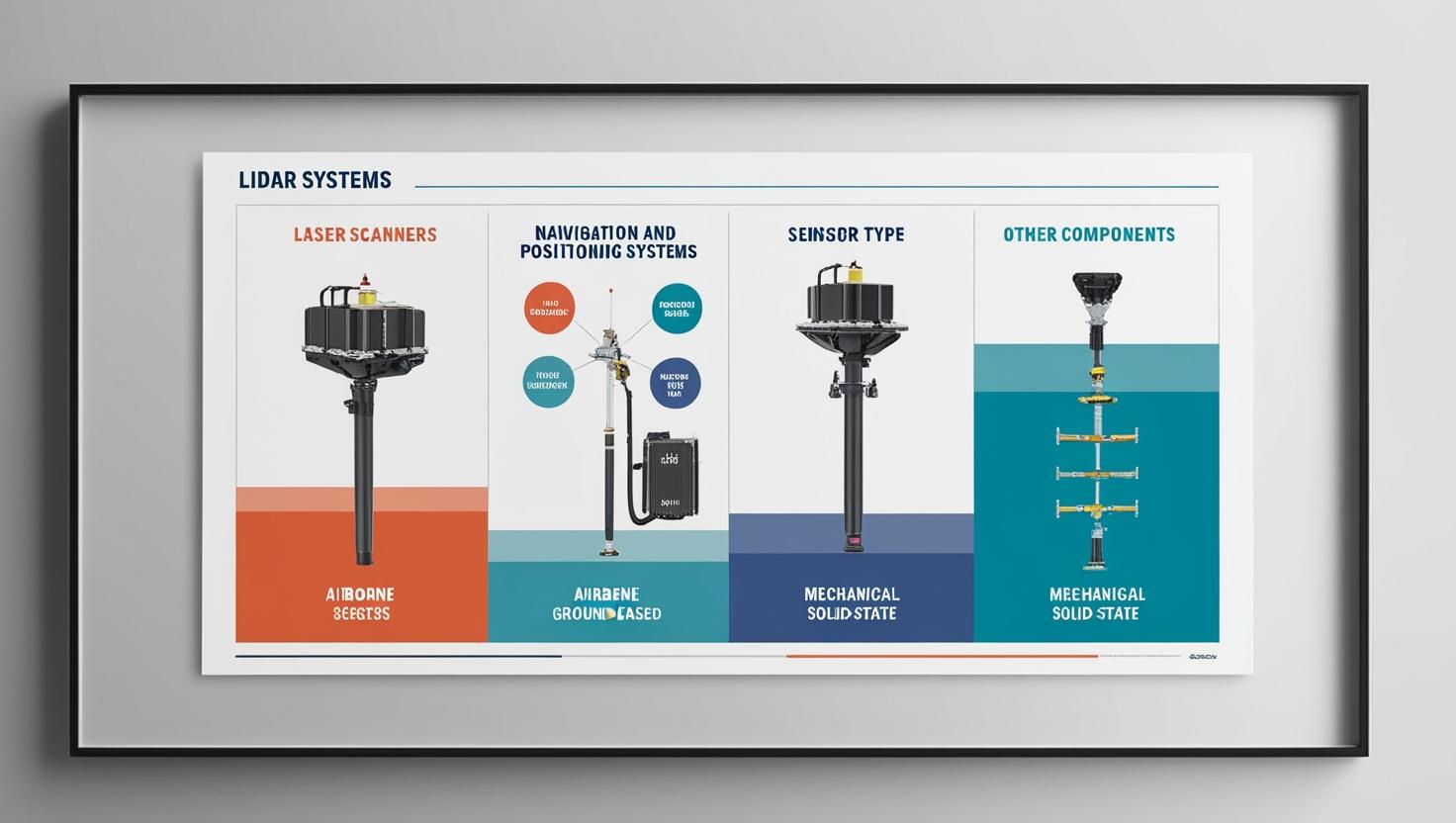
One of the most important LiDAR Market Trends is the transition from traditional mechanical LiDAR systems toward solid-state LiDAR solutions.
Solid-state LiDAR offers several benefits:
- Smaller size
- Lower manufacturing costs
- Increased durability
- Faster scanning capability
- Better integration into vehicles and devices
These advantages make solid-state LiDAR particularly attractive for automotive and consumer applications.
As technology advances, manufacturers are focusing on improving range, resolution, reliability, and affordability to support mass adoption.
Artificial Intelligence Integration Enhancing LiDAR Capabilities
AI integration is transforming how LiDAR data is processed and utilized. Advanced AI algorithms can analyze massive amounts of sensor information quickly, enabling improved decision-making.
AI-powered LiDAR systems support:
- Object classification
- Predictive analysis
- Real-time navigation
- Automated decision-making
- Environmental understanding
The combination of LiDAR and AI is creating smarter systems capable of operating with greater independence and accuracy.
These developments are strengthening LiDAR Market Trends across autonomous vehicles, robotics, and industrial automation
LiDAR Applications Beyond Automotive
While autonomous driving remains a major application, several other sectors are contributing to LiDAR market expansion.
Mapping and Surveying
LiDAR is widely used for:
- Topographic mapping
- Urban planning
- Infrastructure development
- Geographic information systems
High-resolution 3D maps created through LiDAR improve planning accuracy and decision-making.
Smart Cities
Smart city initiatives are adopting LiDAR for:
- Traffic management
- Urban monitoring
- Infrastructure assessment
- Public safety systems
Agriculture
Precision agriculture uses LiDAR for:
- Crop monitoring
- Field mapping
- Land analysis
- Agricultural automation
Aerospace and Defense
LiDAR supports:
- Terrain mapping
- Navigation systems
- Surveillance applications
- Autonomous aerial platforms
Key Factors Driving LiDAR Market Growth
Several factors are supporting positive LiDAR Market Trends, including:
Increasing Demand for Autonomous Systems
Growth in autonomous vehicles, drones, and robots is creating strong demand for advanced sensing technologies.
Rising Focus on Safety
Industries are adopting LiDAR to improve operational safety and reduce human error.
Growth of Smart Infrastructure
Urban development projects are increasing the use of LiDAR-based mapping and monitoring solutions.
Advancements in Sensor Technology
Improved semiconductor components and manufacturing processes are making LiDAR systems more efficient and affordable.
Integration with AI and Machine Learning
AI-powered analysis is increasing the value and usability of LiDAR-generated data.
Challenges Affecting LiDAR Market Trends
Despite strong growth potential, the LiDAR industry faces several challenges.
High System Costs
Advanced LiDAR sensors remain expensive compared with traditional sensing technologies, limiting adoption in some applications.
Technical Limitations
Challenges include:
- Performance in extreme weather conditions
- Data processing requirements
- Sensor integration complexity
Competition from Alternative Technologies
LiDAR faces competition from technologies such as radar and camera-based vision systems, especially in automotive applications.
Manufacturers are focusing on improving affordability and performance to overcome these barriers.
Future Outlook of the LiDAR Market
The future of LiDAR Market Trends is expected to be shaped by continued innovation in autonomous systems, AI-powered sensing, and industrial automation.
Future developments are likely to include:
- Lower-cost LiDAR sensors
- Increased adoption of solid-state technology
- Greater AI integration
- Improved sensor accuracy
- Expansion into consumer applications
As autonomous technologies become more widespread, LiDAR will play an increasingly important role in enabling machines to perceive and interact with the physical world.
The combination of LiDAR, AI, robotics, and advanced computing will create new opportunities across transportation, manufacturing, infrastructure, and smart environments.
LiDAR Market Trends are reshaping industries by enabling advanced perception, automation, and intelligent decision-making. From autonomous vehicles and robotics to industrial applications and smart cities, LiDAR technology is becoming a critical component of next-generation sensing systems.
The continued development of compact, affordable, and AI-integrated LiDAR solutions will accelerate adoption across multiple sectors. As businesses and governments invest in automation and digital transformation, the LiDAR market is positioned for sustained growth, creating significant opportunities for technology providers and end users worldwide.
Frequently Asked Questions (FAQs)
1. What are the major LiDAR Market Trends driving growth?
The major LiDAR Market Trends include increasing adoption in autonomous vehicles, robotics, industrial automation, AI integration, solid-state sensor development, and smart infrastructure applications.
2. Why is LiDAR important for autonomous vehicles?
LiDAR provides accurate 3D perception, object detection, and distance measurement, helping autonomous vehicles understand their surroundings and make safer driving decisions.
3. How is AI improving LiDAR technology?
AI improves LiDAR systems by enabling faster data processing, object recognition, predictive analysis, and enhanced autonomous decision-making.
4. What industries are adopting LiDAR technology?
Key industries using LiDAR include automotive, robotics, manufacturing, agriculture, aerospace, defense, construction, surveying, and smart cities.
5. What is the future outlook for the LiDAR Market?
The LiDAR Market is expected to grow as demand increases for autonomous systems, AI-powered sensing, smart infrastructure, and advanced automation technologies.
Related Report @
About MarketsandMarkets™
MarketsandMarkets™ provides quantified B2B research on 30,000 high growth niche opportunities/threats which will impact 70% to 80% of worldwide companies’ revenues. Currently servicing 7500 customers worldwide including 80% of global Fortune 1000 companies as clients. Almost 75,000 top officers across eight industries worldwide approach MarketsandMarkets™ for their painpoints around revenues decisions.
Our 850 fulltime analyst and SMEs at MarketsandMarkets™ are tracking global high growth markets following the “Growth Engagement Model – GEM”. The GEM aims at proactive collaboration with the clients to identify new opportunities, identify most important customers, write “Attack, avoid and defend” strategies, identify sources of incremental revenues for both the company and its competitors. MarketsandMarkets™ now coming up with 1,500 MicroQuadrants (Positioning top players across leaders, emerging companies, innovators, strategic players) annually in high growth emerging segments. MarketsandMarkets™ is determined to benefit more than 10,000 companies this year for their revenue planning and help them take their innovations/disruptions early to the market by providing them research ahead of the curve.
MarketsandMarkets’s flagship competitive intelligence and market research platform, “Knowledgestore” connects over 200,000 markets and entire value chains for deeper understanding of the unmet insights along with market sizing and forecasts of niche markets.
Contact:
Mr. Rohan Salgarkar
MarketsandMarkets™ INC.
630 Dundee Road
Suite 430
Northbrook, IL 60062
USA : 1-888-600-6441
