The global military drone market is experiencing significant growth, projected to rise from USD 15.80 billion in 2025 to USD 22.81 billion by 2030, at a CAGR of 7.6%. This growth reflects the increasing reliance of defense forces worldwide on unmanned aerial vehicles (UAVs) to strengthen surveillance, reconnaissance, and intelligence capabilities. Heightened geopolitical tensions, maritime piracy, and territorial disputes in regions including Central Asia, South America, East Africa, the Indian subcontinent, Southeast Asia, and West Africa have intensified the demand for UAVs for maritime patrolling, border monitoring, and threat detection.
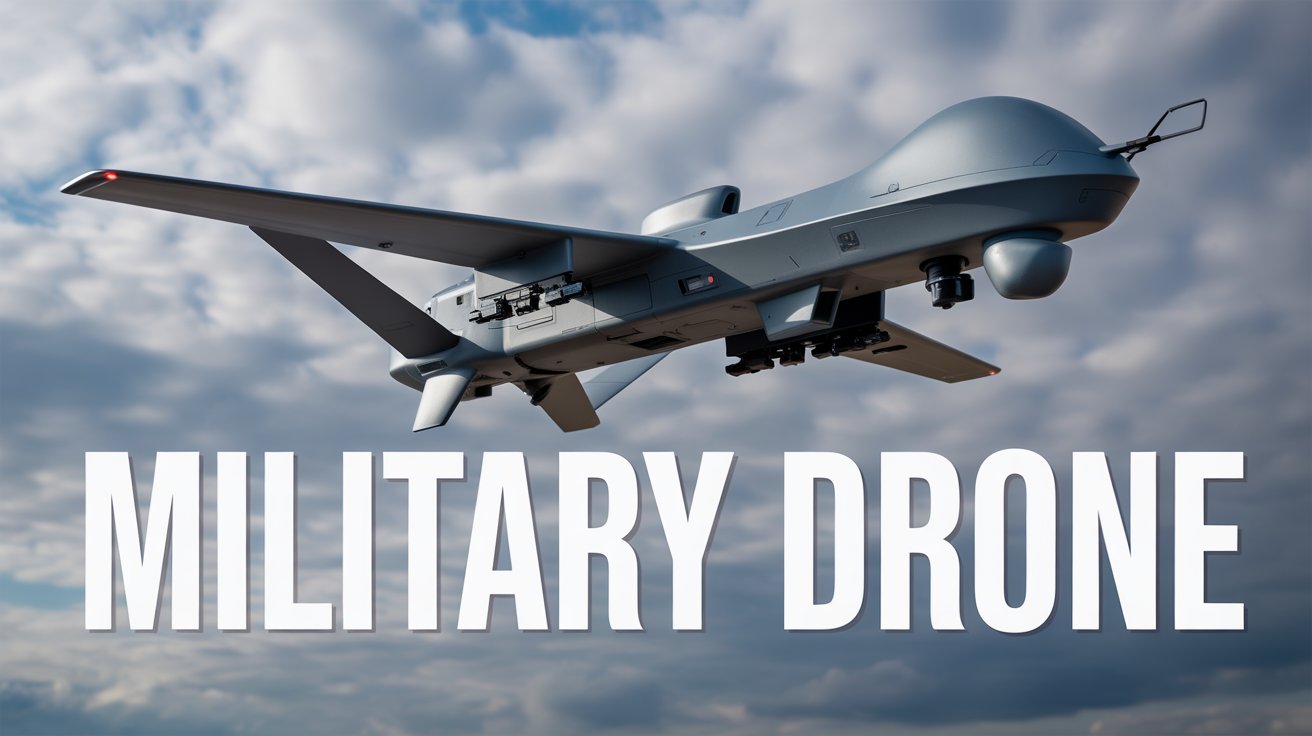
The adoption of military drones has transformed modern defense strategies. These platforms provide a cost-effective alternative to manned aircraft, enabling continuous monitoring of large areas, rapid deployment in critical situations, and enhanced mission accuracy. With rising threats across land, air, and sea, UAVs have become indispensable tools in modern military operations.
Download PDF Brochure @ https://www.marketsandmarkets.com/pdfdownloadNew.asp?id=221577711
Propulsion Insights: Batteries Drive Market Expansion
The military drone market is categorized based on propulsion into turbo engines, piston engines, and battery-powered drones. Among these, battery-powered drones are expected to exhibit the fastest growth, with a CAGR of 16.2% during the forecast period. The rising adoption is fueled by advances in lithium-ion, hybrid, and fuel-cell technologies, which provide drones with longer operational endurance and lower maintenance costs. Battery-based UAVs are particularly suitable for short- and medium-range missions and are increasingly being deployed in reconnaissance, surveillance, and tactical support roles.
High-endurance drones and long-range tactical platforms continue to rely on turbo engines, while piston engines remain a cost-effective solution for small UAVs designed for low-speed operations. The trend toward electric propulsion reflects an emphasis on quiet operations, energy efficiency, and operational flexibility, positioning battery-powered UAVs as the preferred choice for many modern military applications.
Speed-Based Segmentation: Subsonic UAVs Maintain Market Leadership
Military drones are further segmented by speed into subsonic and supersonic categories. The subsonic segment dominates the market due to its versatility in conducting a wide range of military missions. Subsonic drones operate at speeds from less than 100 km/hr to above 300 km/hr, providing reliable flight performance, high endurance, and cost-effective operations. Their ability to remain operational for extended periods makes them suitable for continuous surveillance, intelligence gathering, and target acquisition.
Supersonic drones, although fewer in number, are being developed for specialized applications requiring rapid strike capabilities and high-speed reconnaissance. Overall, subsonic UAVs remain the most widely deployed category across global defense forces.
Regional Insights: Asia Pacific Leads in UAV Adoption
The Asia Pacific region is witnessing robust growth in military drone adoption. Countries such as China, India, South Korea, and Malaysia are making significant investments in UAV development programs and defense modernization initiatives. India continues to import advanced UAVs from North America and Europe to complement domestic capabilities, while China has emerged as a key global player in drone manufacturing and component supply.
Notable Chinese companies contributing to the market include Autel Robotics, China Academy of Aerospace Aerodynamics, Chengdu Rainpoo Technology, Aviation Industry Corporation of China (AVIC), and China Aerospace Science and Technology Corporation (CASC). The region’s rapid technological advancements, coupled with increasing defense budgets, have positioned Asia Pacific as the fastest-growing market for military drones globally.
Competitive Landscape: Key Industry Players
Leading defense companies are actively shaping the military drone market by focusing on autonomous systems, advanced sensors, payload integration, and next-generation propulsion. Major players include Northrop Grumman Corporation, Raytheon Technologies Corporation, Israel Aerospace Industries, General Atomics Aeronautical Systems (GA-ASI), and Teledyne FLIR. These companies are expanding their product portfolios to meet evolving defense requirements and enhance mission effectiveness.
Outlook and Future Trends
The military drone market is poised for sustained growth due to rising global security threats, advancements in UAV technology, and the increasing adoption of autonomous systems. Future trends include the integration of AI-driven navigation, enhanced battery technology, high-resolution imaging payloads, and networked drone operations. Nations worldwide are expected to continue prioritizing intelligence, surveillance, and reconnaissance (ISR) capabilities, ensuring that military drones remain central to modern defense strategies.
