The Smart Home Industry is entering a new phase of transformation as connected devices, artificial intelligence (AI), the Internet of Things (IoT), cloud platforms, and automation become increasingly embedded in residential environments. What was once largely associated with smart speakers, connected lighting, and security cameras is evolving into an integrated ecosystem capable of monitoring, learning, and responding to household needs.
According to MarketsandMarkets, the global smart home market is projected to reach USD 230.76 billion in 2026 and USD 450.20 billion by 2032, exhibiting a CAGR of 11.8% The growth reflects increasing internet penetration, the proliferation of connected devices, rising disposable income in emerging economies, and growing demand for remote home monitoring and control.
The expanding Smart Home Industry is therefore not simply about adding connectivity to household products. It represents a fundamental shift toward homes that can deliver greater convenience, security, energy efficiency, personalization, and wellness.
Smart Home Industry Moves From Connected Devices to Intelligent Ecosystems
Early smart home adoption often centered on individual products. Consumers purchased connected bulbs, smart thermostats, cameras, speakers, or locks that could be controlled through smartphones. Today, the market is moving toward integrated platforms in which multiple devices communicate with one another and operate as part of a coordinated environment.
MarketsandMarkets highlights this transition from standalone devices toward integrated smart home platforms capable of seamless control, monitoring, and automation. The evolution is also expanding the role of smart home technologies into adjacent areas such as building automation and healthcare applications.
For example, a connected home can combine security cameras with access-control systems, synchronize lighting with occupancy, automatically adjust HVAC settings, and monitor energy consumption through a centralized platform. These capabilities create a more responsive residential environment while opening new opportunities for technology providers, manufacturers, developers, and service companies.
AI Is Making Homes More Predictive
Artificial intelligence is becoming one of the most important forces shaping the Smart Home Industry.
Traditional automation relies heavily on predefined commands: a user switches on a light, adjusts a thermostat, or locks a door through an application. AI introduces a more adaptive approach. Systems can analyze patterns, recognize activity, personalize settings, and make automated decisions based on contextual information.
AI-powered smart home systems can support applications such as intelligent security monitoring, personalized comfort, energy optimization, voice interaction, and predictive automation. MarketsandMarkets identifies AI-powered automation as a key growth driver for the market, particularly as consumers seek smarter control and improved household efficiency.
The increasing use of AI also creates opportunities for edge computing and intelligent sensors. Instead of simply collecting information, connected devices can increasingly interpret data and trigger appropriate actions. This could make future homes more autonomous while reducing the need for constant manual interaction.
Energy Efficiency Becomes a Major Market Opportunity
Energy management is becoming a strategic component of the Smart Home Industry.
Consumers, utilities, builders, and governments are placing greater emphasis on energy efficiency and sustainability. Smart thermostats, connected lighting, energy-monitoring systems, smart meters, and automated HVAC solutions can help households understand and manage their energy consumption.
The MarketsandMarkets report identifies the growing focus on energy-efficient and low-carbon smart home solutions as an important factor supporting market expansion. Government regulations promoting green buildings also represent an opportunity for smart home technology providers.
The opportunity extends beyond individual devices. Smart homes can increasingly integrate distributed energy resources such as rooftop solar, connected appliances, batteries, and smart meters. Such integration can help create more intelligent residential energy ecosystems and potentially reduce unnecessary consumption.
Smart Security Remains a Core Adoption Driver
Safety and security continue to be among the most compelling reasons for consumers to adopt connected home technologies.
Smart cameras, video doorbells, connected locks, motion sensors, alarms, and access-control systems enable homeowners to monitor properties remotely and receive real-time alerts. AI can further enhance these systems through intelligent detection and automated monitoring.
MarketsandMarkets reports that safety and security represented a substantial application segment in 2025, supported by increasing adoption of connected surveillance, smart locks, alarms, and AI-based monitoring technologies.
As consumers become more comfortable managing their homes remotely, security solutions are likely to remain an important entry point into the broader smart home ecosystem.
Smart HVAC Could Become a High-Growth Segment
Heating, ventilation, and air conditioning represent another significant opportunity.
According to MarketsandMarkets, Smart Home HVAC is expected to register the highest CAGR among product types, at approximately 20% during the forecast period.
This growth is being supported by the combination of comfort requirements and energy-efficiency objectives. Smart HVAC systems can use sensors, connectivity, automation, and intelligent controls to adjust indoor conditions according to occupancy, schedules, weather conditions, and user preferences.
For homeowners, this can translate into greater comfort and potentially lower energy consumption. For manufacturers and technology providers, it creates opportunities to integrate HVAC equipment with broader smart home platforms.
Download PDF Brochure @ https://www.marketsandmarkets.com/pdfdownloadNew.asp?id=121
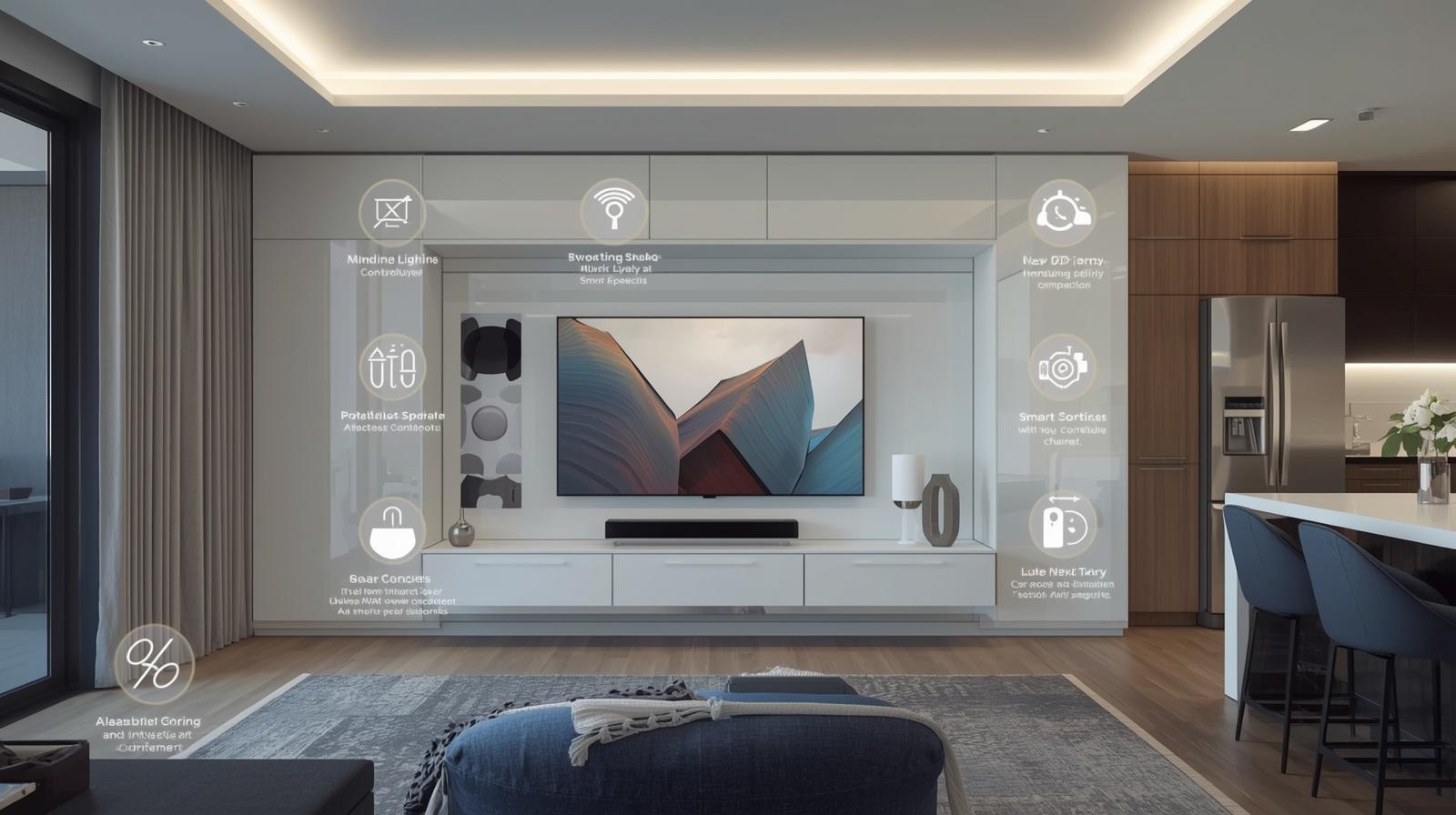
Wireless Connectivity Is Shaping the Smart Home Experience
Connectivity is the foundation of the modern Smart Home Industry.
MarketsandMarkets estimates that the wireless segment accounted for approximately 64% of the market share in 2025, demonstrating the importance of wireless communication technologies in connected residential environments.
Wireless technologies can simplify installation, improve flexibility, and enable consumers to add new devices without extensive modifications to existing infrastructure. This is particularly important for retrofit applications, where homeowners want to modernize properties without undertaking major construction work.
The growing availability of connected devices and improved digital infrastructure should continue to support wireless smart home adoption across developed and emerging markets.
Retrofit Installations Create a Major Growth Path
The future of the Smart Home Industry will not be limited to newly constructed properties.
Retrofit installations are expected to experience fast growth as homeowners seek to upgrade existing residences with smart lighting, security, HVAC, energy management, and automation capabilities.
Retrofit solutions can expand the addressable market because they allow consumers to gradually introduce connected technologies instead of replacing an entire home system at once.
This also creates opportunities for installers, system integrators, electricians, property managers, and technology providers. Companies capable of offering simple installation, interoperability, and scalable solutions could gain an advantage as smart home adoption moves deeper into existing housing stock.
Asia Pacific Emerges as a High-Growth Region
Regional expansion is another defining characteristic of the Smart Home Industry.
MarketsandMarkets projects Asia Pacific to register the highest CAGR, at approximately 17% during the forecast period. The region’s growth is being supported by digitalization, smart city initiatives, increasing connectivity, expanding urban infrastructure, and the adoption of AI-driven automation and connected home technologies.
China, Japan, South Korea, and other markets across the region have strong technology ecosystems and advanced manufacturing capabilities. Rising consumer awareness and the expansion of connected-device ecosystems are also creating favorable conditions for smart home adoption.
The region therefore represents an important growth opportunity for companies developing smart appliances, security technologies, connected HVAC systems, energy-management platforms, and integrated home automation solutions.
Individual Homeowners Lead the End-User Landscape
Individual homeowners remain a major force in smart home adoption. MarketsandMarkets notes that the individual homeowners segment held a significant market share in 2025, supported by growing consumer awareness of convenience, security, energy efficiency, remote accessibility, and personalized living environments
However, the opportunity extends beyond individual consumers. Residential builders and developers can integrate smart technologies into new housing projects, while rental housing owners and operators can use connected solutions to improve property management, security, energy efficiency, and tenant experiences.
This creates a broader ecosystem in which smart home technology becomes part of the property’s overall value proposition rather than simply an optional consumer electronics purchase.
Interoperability and Cybersecurity Remain Critical Challenges
Despite strong growth prospects, the Smart Home Industry faces several barriers.
One of the most important challenges is interoperability. Devices from different manufacturers may use different platforms, protocols, or ecosystems, potentially creating fragmented experiences for consumers. MarketsandMarkets identifies interoperability gaps and the lack of unified standards as a major challenge for market expansion.
Data security is another critical consideration. Connected homes generate substantial amounts of information about household activity, preferences, occupancy, and device usage. Protecting this information will be essential as smart home ecosystems become increasingly sophisticated.
High upfront costs and dependence on reliable internet connectivity can also restrict adoption, particularly in price-sensitive markets and regions with less-developed network infrastructure.
Competitive Landscape Is Becoming More Diverse
The competitive environment reflects the convergence of energy management, industrial automation, consumer electronics, security, HVAC, and digital platforms.
MarketsandMarkets identifies companies including Schneider Electric, Siemens, Amazon, Honeywell International, ASSA ABLOY, Johnson Controls, Robert Bosch, ADT, Daikin Industries, and ABB among the key players in the global smart home market.
The competitive battle is increasingly about ecosystem ownership. Companies are not only developing individual devices; they are seeking to build platforms that connect lighting, security, HVAC, entertainment, appliances, energy systems, and healthcare technologies.
Strategic partnerships and interoperability could therefore become as important as individual product innovation.
The Future of the Smart Home Industry
The next stage of the Smart Home Industry will be defined by convergence.
AI will make systems more adaptive. IoT will connect a growing number of devices. Wireless technologies will simplify deployment. Cloud and edge computing will support data processing and automation. Smart energy technologies will help households manage consumption. Meanwhile, connected healthcare and assisted-living applications could expand the role of smart homes beyond comfort and convenience.
MarketsandMarkets projects the global smart home market to grow from USD 230.76 billion in 2026 to USD 450.20 billion by 2032, highlighting the scale of the opportunity ahead.
The winning solutions are likely to be those that make connected living simpler, safer, more sustainable, and more personalized. Consumers will increasingly expect their devices to work together seamlessly rather than operate as isolated products.
For businesses, the opportunity is equally significant. Device manufacturers, software companies, connectivity providers, real estate developers, security companies, energy technology providers, and system integrators can all participate in the expanding ecosystem.
The Smart Home Industry is transitioning from a collection of connected products into an intelligent, integrated digital ecosystem. Rising internet penetration, AI-powered automation, demand for security, energy-efficiency requirements, and the proliferation of IoT devices are creating strong foundations for continued expansion.
With the global market projected to reach USD 450.20 billion by 2032, the opportunity extends far beyond smart speakers and connected appliances. The future will increasingly center on homes that understand user behavior, optimize resources, improve safety, and respond automatically to changing needs.
For businesses and investors, the message is clear: the smart home is no longer simply connected—it is becoming intelligent.
The companies that successfully combine AI, connectivity, interoperability, cybersecurity, energy management, and intuitive user experiences will be well positioned to capture the next wave of growth in the Smart Home Industry.
