The global Smart Home Market Key Trends are reshaping the way people interact with residential environments by integrating artificial intelligence (AI), Internet of Things (IoT), automation, and connected technologies into everyday living. Smart homes are evolving from simple connected devices into intelligent ecosystems capable of learning user behavior, optimizing energy consumption, improving security, and delivering personalized experiences.
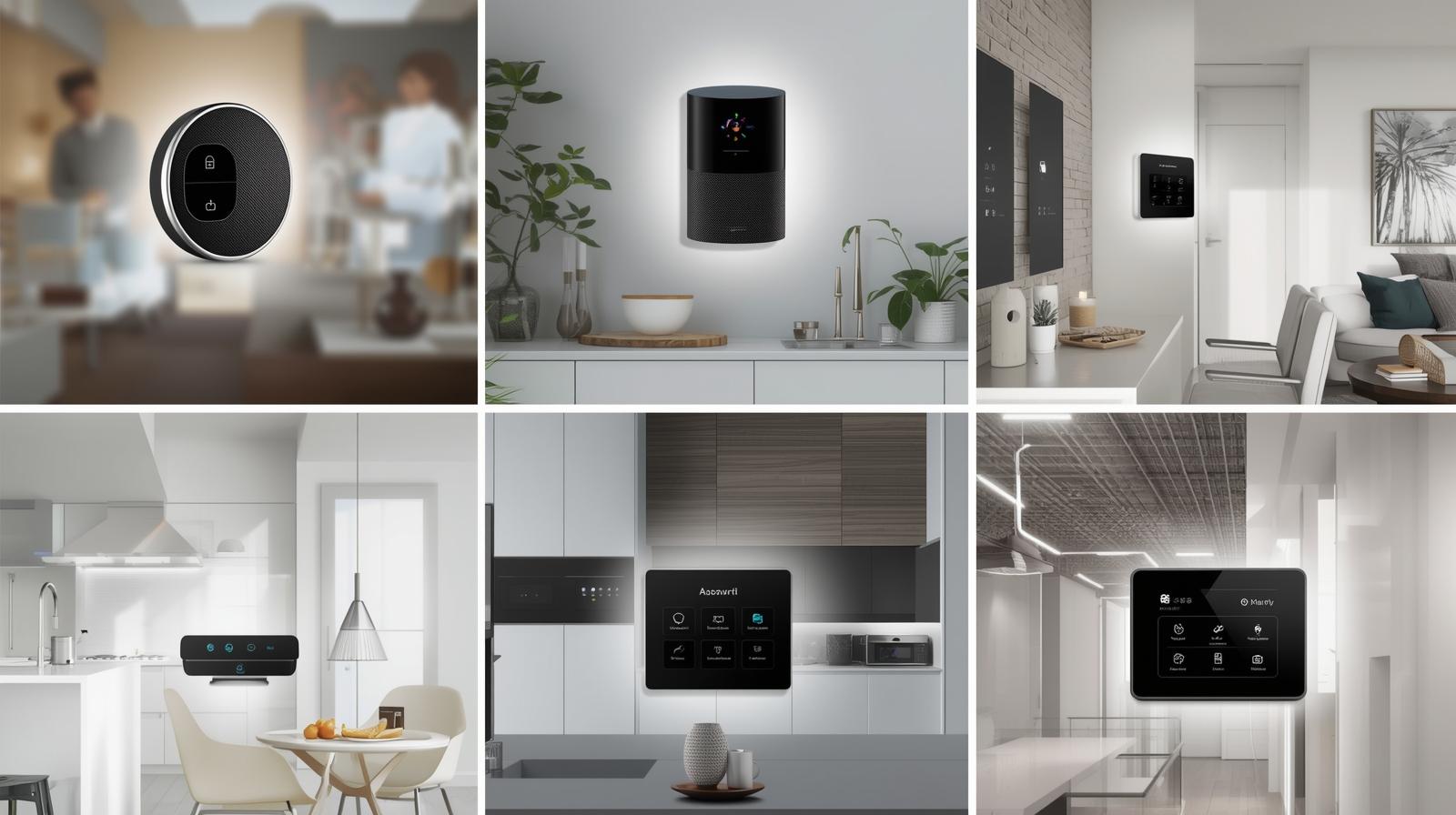
The increasing adoption of smart speakers, connected appliances, intelligent lighting systems, automated security solutions, and energy management platforms is accelerating the growth of the Smart Home Market Key Trends landscape. Consumers are increasingly seeking convenience, safety, sustainability, and seamless connectivity, encouraging technology providers to develop advanced solutions that enhance residential experiences.
The future of smart living will be driven by AI-powered automation, interconnected devices, cloud platforms, and edge computing, making smart homes more adaptive, efficient, and user-centric.
Top 10 Key Takeaways
- AI and IoT are the primary technologies driving smart home transformation.
- Smart security systems remain a major adoption driver among consumers.
- Energy efficiency is becoming a critical focus area for smart home solutions.
- Voice-controlled devices are improving user interaction with connected ecosystems.
- Device interoperability is improving through standards such as Matter.
- Smart appliances and automated systems are increasing household convenience.
- Edge computing is enhancing speed, privacy, and reliability.
- Emerging markets represent significant growth opportunities.
- Sustainability and renewable energy integration will shape future smart homes.
- AI-powered automation will define the next generation of intelligent residential environments.
Understanding the Smart Home Market
The smart home market refers to connected residential solutions that allow users to monitor, control, and automate household devices through smartphones, voice assistants, artificial intelligence platforms, and centralized management systems.
Smart home technologies include:
- Smart lighting systems
- Smart thermostats
- Connected appliances
- Smart security cameras
- Smart locks
- Voice-controlled assistants
- Home entertainment systems
- Energy management solutions
- Automated climate control systems
These technologies enable homeowners to remotely manage their homes, improve energy efficiency, enhance security, and create personalized living environments.
Smart Home Market Key Trends Driving Growth
1. Growing Adoption of AI-Powered Smart Home Solutions
One of the most significant Smart Home Market Key Trends is the increasing integration of artificial intelligence into connected home ecosystems. AI enables smart devices to analyze user preferences, predict behavior, and automatically adjust settings based on real-time conditions.
AI-powered smart homes can:
- Learn household routines
- Optimize energy usage
- Provide personalized recommendations
- Improve security monitoring
- Automate daily activities
For example, AI-enabled thermostats can analyze occupancy patterns and adjust temperatures automatically, while intelligent security systems can identify unusual activities and send real-time alerts.
2. Expansion of IoT Connectivity in Residential Applications
The Internet of Things remains a major growth factor shaping the Smart Home Market Key Trends. IoT connectivity allows multiple devices within a home to communicate, share data, and operate together through connected networks.
The growing availability of wireless technologies such as Wi-Fi, Bluetooth, Zigbee, and Matter-enabled ecosystems is improving interoperability between smart devices.
IoT-enabled homes provide:
- Remote device control
- Real-time monitoring
- Automated workflows
- Improved operational efficiency
- Connected user experiences
As more consumers adopt connected lifestyles, IoT will continue to serve as the foundation of smart home innovation.
3. Rising Demand for Smart Home Security Solutions
Security remains one of the strongest adoption drivers in the smart home market. Homeowners are increasingly investing in intelligent security technologies that provide enhanced protection and remote monitoring capabilities.
Smart security solutions include:
- AI-powered cameras
- Video doorbells
- Smart locks
- Motion sensors
- Intrusion detection systems
- Facial recognition technologies
Advanced security systems use AI and computer vision to differentiate between normal activities and potential threats, improving safety while reducing false alarms.
Download PDF Brochure @ https://www.marketsandmarkets.com/pdfdownloadNew.asp?id=121
4. Energy Efficiency and Sustainable Living
Sustainability has become a major focus within the Smart Home Market Key Trends as consumers and governments prioritize energy conservation and reduced carbon emissions.
Smart home technologies help optimize energy consumption through:
- Smart thermostats
- Automated lighting controls
- Solar energy integration
- Smart energy meters
- Connected appliances
Energy management systems analyze usage patterns and recommend efficiency improvements, helping homeowners reduce electricity costs while supporting environmental goals.
5. Growth of Voice-Controlled Smart Devices
Voice assistants are becoming an essential part of smart home ecosystems. Consumers increasingly prefer hands-free control of connected devices through natural language commands.
Voice-enabled technologies allow users to:
- Control lighting
- Adjust temperature
- Manage entertainment systems
- Operate appliances
- Access information
Advancements in natural language processing (NLP) are making voice interactions more accurate, intuitive, and personalized.
Smart Home Market Segmentation
By Product Type
Smart Home Appliances
Connected appliances such as refrigerators, washing machines, ovens, and robotic vacuum cleaners are gaining popularity due to convenience and automation features.
Smart Lighting
Smart lighting solutions enable users to adjust brightness, color, and schedules remotely while improving energy efficiency.
Smart Security Systems
Security cameras, smart locks, and monitoring systems represent a rapidly growing segment due to increasing concerns about residential safety.
Smart Entertainment Systems
Connected televisions, speakers, and home theater systems enhance entertainment experiences through seamless connectivity and personalized content.
Smart Energy Management Systems
Energy management solutions help consumers monitor consumption and optimize household energy usage.
Role of Artificial Intelligence in Smart Homes
Artificial intelligence is transforming traditional homes into intelligent environments capable of autonomous decision-making.
AI contributes to smart home development through:
Predictive Automation
AI systems analyze user habits and automatically adjust home settings based on preferences.
Intelligent Security
AI-powered cameras and sensors improve threat detection through image recognition and behavioral analysis.
Personalized Experiences
AI enables customized entertainment recommendations, climate preferences, and automated routines.
Predictive Maintenance
Connected devices can identify performance issues before failures occur, reducing maintenance costs and improving reliability.
Emerging Technologies Shaping Smart Home Market Key Trends
Matter Standard and Device Interoperability
The adoption of universal connectivity standards such as Matter is improving compatibility between smart devices from different manufacturers.
Better interoperability allows consumers to create unified smart home ecosystems without being restricted to a single technology platform.
Edge Computing
Edge computing enables faster processing of smart home data by reducing dependence on cloud systems. This improves response times, privacy, and reliability for connected devices.
Robotics in Smart Homes
Home robotics is emerging as an important technology area. Robotic vacuum cleaners, lawn maintenance robots, and assistance robots are improving household automation.
Advanced Sensors
Next-generation sensors are enhancing smart home capabilities through improved environmental monitoring, motion detection, and user recognition.
Market Opportunities
Expansion in Emerging Economies
Increasing smartphone adoption, improved internet connectivity, and rising disposable incomes are creating significant opportunities for smart home adoption in emerging markets.
Integration with Renewable Energy
The combination of smart homes with solar panels, battery storage systems, and intelligent energy management platforms is expected to create new growth opportunities.
Aging Population Support
Smart home technologies are increasingly being adopted to support elderly populations through remote monitoring, healthcare assistance, and automated safety systems.
Connected Communities and Smart Cities
Smart home technologies are becoming an important component of broader smart city initiatives, enabling connected infrastructure and efficient resource management.
Challenges Affecting Market Growth
Despite strong growth opportunities, the smart home market faces several challenges:
- Data privacy and cybersecurity concerns
- High initial installation costs
- Lack of standardization among devices
- Complex installation processes
- Limited consumer awareness in some regions
Manufacturers are addressing these challenges through improved security features, simplified user interfaces, and interoperable technology platforms.
Regional Outlook
North America
North America remains a leading market due to high consumer awareness, strong technology adoption, and the presence of major smart home technology providers.
Europe
Europe is experiencing growth due to increasing demand for energy-efficient homes, sustainability initiatives, and smart building solutions.
Asia-Pacific
Asia-Pacific is expected to witness significant expansion due to urbanization, rising middle-class populations, increasing internet penetration, and government-led smart city projects.
Middle East and Latin America
These regions are gradually adopting smart home technologies through increasing investments in connected infrastructure and digital transformation initiatives.
Future Outlook of Smart Home Market Key Trends
The future of the Smart Home Market Key Trends will be defined by deeper AI integration, improved connectivity, automation, and sustainability. Smart homes will increasingly function as intelligent ecosystems capable of anticipating user needs and optimizing operations automatically.
Future developments are expected to include:
- AI-driven home assistants
- Fully automated energy management
- Advanced healthcare monitoring
- Autonomous home robots
- Enhanced cybersecurity solutions
- Seamless device interoperability
As technology continues to advance, smart homes will become more personalized, secure, and environmentally sustainable.
Conclusion
The Smart Home Market Key Trends highlight a major shift toward intelligent, connected, and automated residential environments. AI, IoT, voice technologies, smart security, and energy management solutions are transforming traditional homes into adaptive ecosystems that improve convenience, safety, and efficiency.
With increasing consumer demand for connected living experiences and continuous innovation in smart technologies, the smart home market is positioned for strong long-term growth. The integration of intelligent automation and sustainable solutions will continue shaping the future of residential living worldwide.
