The smart home is evolving from a collection of connected devices into an intelligent, integrated ecosystem. As consumers and businesses increasingly prioritize convenience, security, energy efficiency, and remote control, smart home technologies are moving rapidly toward mainstream adoption. smart home market is projected to reach USD 230.76 billion in 2026 and USD 450.20 billion by 2032, exhibiting a CAGR of 11.8%
What’s Driving Smart Home Market Growth?
Several forces are converging to accelerate adoption.
1. AI Is Making Homes More Intelligent
Artificial intelligence is shifting smart homes from simple automation toward predictive and personalized experiences. AI can help systems learn user behavior, optimize energy consumption, improve security monitoring, and automate everyday tasks.
The combination of AI + IoT + cloud platforms is creating homes that can increasingly respond to users and their environments in real time.
2. Security Remains a Major Adoption Driver
Safety and security continue to be among the most important applications for smart home technology.
Connected cameras, smart locks, video doorbells, sensors, and alarm systems are enabling homeowners to monitor and control their properties remotely. AI-powered monitoring and real-time alerts are further enhancing these capabilities.
3. Energy Efficiency Is Becoming a Priority
Rising energy costs and sustainability goals are increasing demand for technologies that can monitor and optimize household energy consumption.
Smart thermostats, connected lighting, energy-monitoring systems, smart appliances, and intelligent HVAC controls can help homeowners improve efficiency while maintaining comfort. Supportive policies promoting green buildings are also creating opportunities for smart home adoption.
Download PDF Brochure @ https://www.marketsandmarkets.com/pdfdownloadNew.asp?id=121
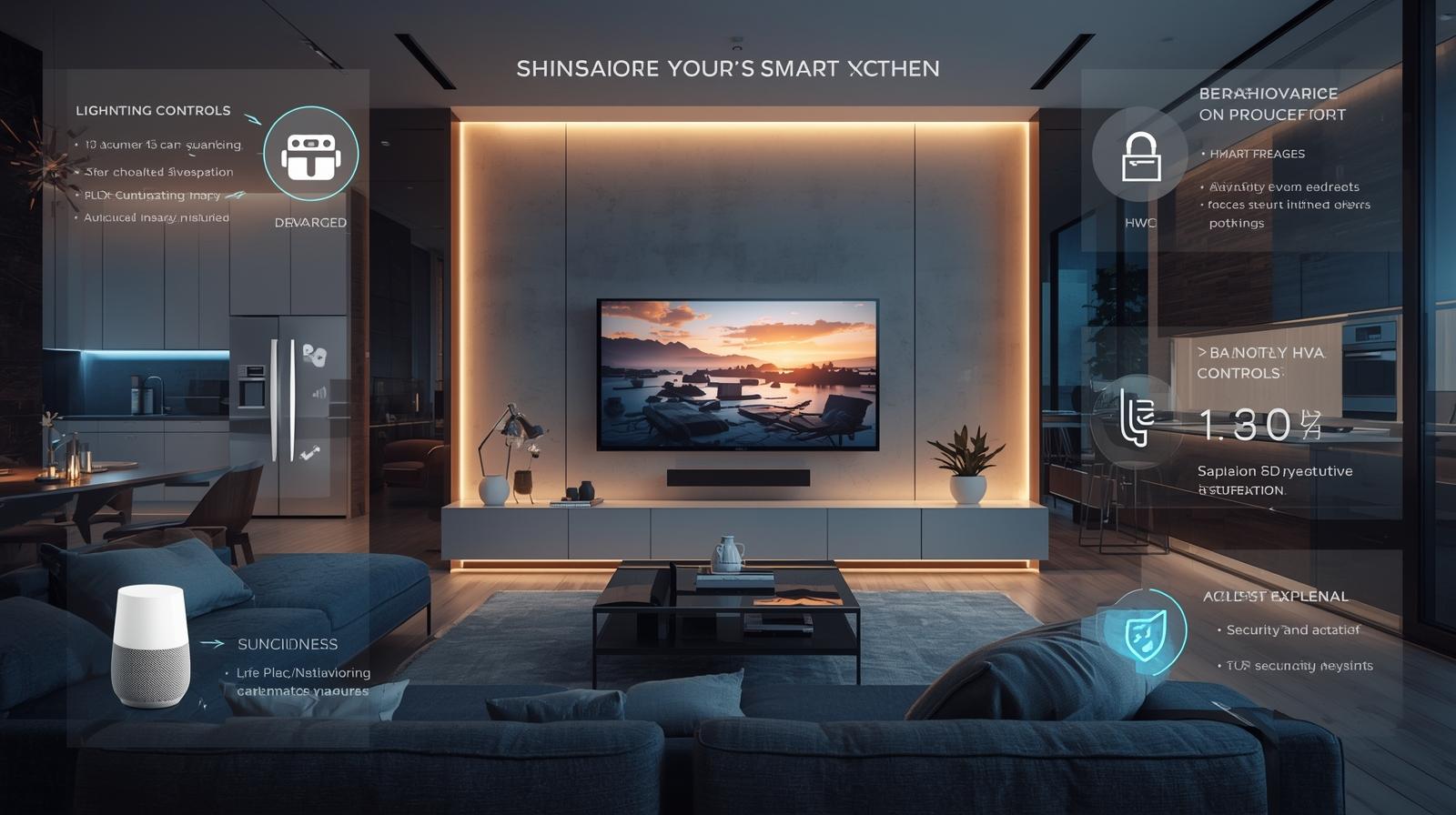
4. Wireless Connectivity Is Expanding Adoption
Wireless technologies are making smart home deployment easier and more flexible, particularly for retrofit applications.
MarketsandMarkets identifies wireless as the largest protocol and communication technology segment, with approximately 64% market share in 2025. Retrofit installations are also expected to experience rapid growth as homeowners upgrade existing properties without major structural changes.
5. Smart HVAC Is Emerging as a High-Growth Area
HVAC is becoming an important growth opportunity as consumers seek better comfort alongside lower energy consumption.
MarketsandMarkets expects Smart Home HVAC to register the highest CAGR among product segments, at approximately 20%. Connected thermostats, climate controls, sensors, and automated HVAC systems are helping make temperature management more responsive and efficient.
From Standalone Devices to Integrated Ecosystems
One of the most important changes in the market is the shift from individual connected products toward integrated smart home platforms.
Instead of operating a smart lock, thermostat, lighting system, camera, and appliance independently, consumers increasingly expect these devices to work together through centralized platforms and mobile or voice interfaces.
This ecosystem approach is creating opportunities across:
- Smart lighting
- Security and access control
- HVAC
- Entertainment
- Smart appliances
- Home healthcare
- Energy management
- Smart furniture
- Voice assistants and control interfaces
Asia Pacific: A Key Growth Engine
Asia Pacific is expected to be the fastest-growing regional market, supported by urbanization, increasing digital adoption, smart-city initiatives, expanding connectivity, and growing consumer awareness.
MarketsandMarkets projects the Asia Pacific smart home market to reach USD 41.05 billion by 2030, compared with USD 27.77 billion in 2025, representing an 8.1% CAGR.
China, in particular, is benefiting from large-scale IoT deployment, connectivity improvements, smart-home integration, and investments in energy-efficient technologies.
Key Challenges
Despite strong growth potential, the market faces several barriers.
Data security and privacy, high upfront costs, dependence on reliable connectivity, and fragmented device ecosystems can slow adoption. Interoperability remains particularly important as consumers increasingly expect products from different manufacturers to work seamlessly together.
The Road Ahead
The next wave of smart home growth will likely be defined by the convergence of:
AI + IoT + Wireless Connectivity + Cloud Computing + Energy Management + Smart Security
The opportunity is moving beyond simply connecting devices. The real value lies in creating intelligent, interoperable, secure, energy-efficient, and personalized living environments.
As smart homes become more autonomous and connected, companies that can combine hardware, software, AI, connectivity, and services into seamless ecosystems will be well positioned to capture the next phase of market growth.
Smart Home Market Trends – FAQs
1. What is driving the growth of the Smart Home Market?
The major growth drivers include increasing adoption of AI and IoT, demand for home security, energy-efficiency requirements, wireless connectivity, smart appliances, and growing consumer preference for automation and convenience.
2. How large is the Smart Home Market?
According to MarketsandMarkets, the global Smart Home Market is projected to grow from USD 230.76 billion in 2026 to USD 450.20 billion by 2032, at a CAGR of 11.8% during the forecast period.
3. Which technology is driving smart home adoption?
Artificial Intelligence, IoT, wireless connectivity, cloud computing, voice control, and automation are among the key technologies accelerating smart home adoption.
4. Which smart home application is growing rapidly?
Smart HVAC is expected to be one of the fastest-growing product areas, driven by demand for energy efficiency, automated temperature control, and improved indoor comfort.
5. Why is wireless connectivity important for smart homes?
Wireless technologies simplify installation, reduce the need for extensive wiring, and make it easier to connect and control multiple smart devices, particularly in existing homes and retrofit projects.
6. What role does AI play in smart homes?
AI enables smart home systems to learn user preferences, automate routines, optimize energy consumption, improve security monitoring, and deliver more personalized experiences.
7. What are the major challenges facing the Smart Home Market?
Key challenges include data privacy and cybersecurity concerns, high initial costs, interoperability issues, connectivity dependence, and fragmented technology ecosystems.
8. Which region offers strong growth opportunities?
Asia Pacific is expected to be among the fastest-growing regions, supported by urbanization, increasing IoT adoption, smart-city initiatives, improving connectivity, and rising consumer awareness.
9. What are the major opportunities in the Smart Home Market?
Major opportunities exist in smart security, HVAC, energy management, connected appliances, smart lighting, home healthcare, entertainment, and AI-powered automation.
10. What is the future of the Smart Home Market?
The market is moving from standalone connected devices toward integrated, AI-enabled, secure, and energy-efficient smart home ecosystems where multiple devices and services work together seamlessly.
About MarketsandMarkets™
MarketsandMarkets™ has been recognized as one of America’s Best Management Consulting Firms by Forbes, as per their recent report.
MarketsandMarkets™ is a blue ocean alternative in growth consulting and program management, leveraging a man-machine offering to drive supernormal growth for progressive organizations in the B2B space. With the widest lens on emerging technologies, we are proficient in co-creating supernormal growth for clients across the globe.
Today, 80% of Fortune 2000 companies rely on MarketsandMarkets, and 90 of the top 100 companies in each sector trust us to accelerate their revenue growth. With a global clientele of over 13,000 organizations, we help businesses thrive in a disruptive ecosystem.
The B2B economy is witnessing the emergence of $25 trillion in new revenue streams that are replacing existing ones within this decade. We work with clients on growth programs, helping them monetize this $25 trillion opportunity through our service lines – TAM Expansion, Go-to-Market (GTM) Strategy to Execution, Market Share Gain, Account Enablement, and Thought Leadership Marketing.
Built on the ‘GIVE Growth’ principle, we collaborate with several Forbes Global 2000 B2B companies to keep them future-ready. Our insights and strategies are powered by industry experts, cutting-edge AI, and our Market Intelligence Cloud, KnowledgeStore™, which integrates research and provides ecosystem-wide visibility into revenue shifts.
To find out more, visit www.MarketsandMarkets™.com or follow us on Twitter , LinkedIn and Facebook .
Contact:
Mr. Rohan Salgarkar
MarketsandMarkets™ INC.
1615 South Congress Ave.
Suite 103, Delray Beach, FL 33445
USA: +1-888-600-6441