The global smart homes market is entering a transformative era driven by rapid technological innovation, growing consumer demand for convenience, and increasing adoption of connected devices. Smart homes, once considered futuristic luxury concepts, are now becoming mainstream across residential communities worldwide.
Powered by Internet of Things (IoT), Artificial Intelligence (AI), cloud computing, and automation technologies, smart homes are reshaping the way people interact with their living environments. From intelligent lighting and smart security systems to connected kitchen appliances and energy management tools, the market is witnessing explosive growth as consumers prioritize safety, comfort, and efficiency.
According to MarketsandMarkets, the global smart home market was valued at USD 84.5 billion in 2024 and is projected to reach USD 116.4 billion by 2029, growing at a CAGR of 6.6% during the forecast period. The market expansion is fueled by rising internet penetration, increasing disposable income, and the growing popularity of smart devices worldwide.
What is a Smart Home?
A smart home refers to a residential setup where connected devices and systems can be remotely controlled and automated through smartphones, tablets, or voice assistants. These systems communicate through internet-enabled platforms, allowing homeowners to monitor and manage household operations efficiently.
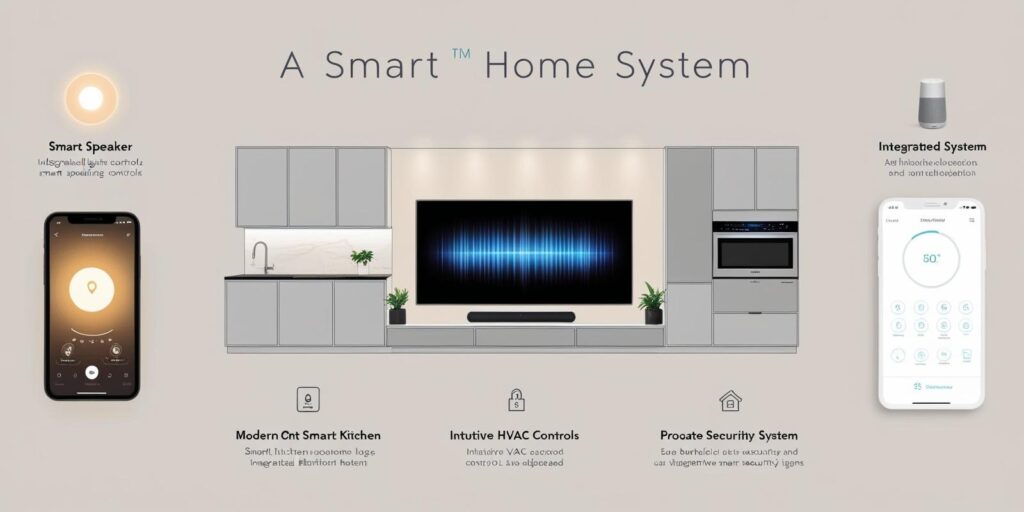
Smart home technologies typically include:
- Smart lighting systems
- Security and access control solutions
- HVAC automation
- Smart entertainment systems
- Connected kitchen appliances
- Energy management solutions
- Voice-controlled assistants
The primary objective of smart homes is to improve convenience, enhance security, reduce energy consumption, and provide personalized living experiences.
Key Drivers Fueling the Smart Homes Market
1. Rising Adoption of IoT Devices
The rapid expansion of IoT ecosystems is one of the biggest catalysts for smart home growth. Smart devices can now seamlessly connect and exchange data, enabling intelligent automation and real-time monitoring.
Consumers are increasingly adopting smart speakers, connected cameras, thermostats, and intelligent appliances to simplify everyday tasks. As IoT infrastructure becomes more affordable and accessible, the smart homes market continues to expand rapidly.
2. Growing Demand for Energy Efficiency
Energy conservation has become a global priority due to rising electricity costs and environmental concerns. Smart home systems help optimize energy usage through automated lighting, intelligent thermostats, and smart appliances.
Energy management solutions allow homeowners to monitor consumption patterns and reduce wastage, leading to lower utility bills and reduced carbon emissions.
MarketsandMarkets highlights that increasing demand for low-carbon emission solutions and energy-saving technologies is significantly contributing to market growth.
Download PDF Brochure @ https://www.marketsandmarkets.com/pdfdownloadNew.asp?id=121
3. Increasing Focus on Home Security
Modern consumers are placing greater emphasis on residential security and remote monitoring capabilities. Smart security systems, including connected cameras, smart locks, motion sensors, and alarm systems, are becoming standard features in modern households.
Real-time notifications and remote access provide homeowners with enhanced control and peace of mind, especially for urban populations and working professionals.
4. Rapid Urbanization and Digital Transformation
Urbanization and smart city initiatives are accelerating demand for connected living technologies. Consumers are increasingly embracing digital lifestyles that integrate automation, AI, and cloud connectivity into their homes.
Developers and real estate companies are also integrating smart technologies into residential projects to attract tech-savvy buyers.
Emerging Technologies Transforming Smart Homes
Artificial Intelligence (AI)
AI-powered smart home systems can learn user behavior and automate functions accordingly. From adjusting room temperatures based on preferences to optimizing lighting schedules, AI enhances personalization and convenience.
Voice assistants powered by AI are becoming central hubs for smart home ecosystems, enabling users to control devices through natural language commands.
Cloud Computing
Cloud-based platforms allow users to manage smart devices remotely while enabling real-time data storage and analytics. Cloud integration also supports software updates, predictive maintenance, and cross-device synchronization.
Smart Sensors and Automation
Advanced sensors are enabling homes to respond intelligently to environmental conditions. Motion detection, occupancy sensing, temperature monitoring, and predictive automation are improving overall efficiency and safety.
5G Connectivity
The rollout of 5G networks is expected to accelerate smart home adoption by enabling faster communication between devices with lower latency and greater reliability.
Smart Home Market Segmentation
The smart homes market can be segmented into several categories based on product type and application.
By Product
- Lighting Controls
- Smart Speakers
- HVAC Controls
- Security & Access Controls
- Smart Kitchen Appliances
- Entertainment Systems
Among these, smart security and smart speakers are witnessing particularly strong growth due to rising consumer awareness and voice-assistant adoption.
By Offering
- Behavioral Smart Homes
- Proactive Smart Homes
Behavioral systems respond to user commands, while proactive systems use AI and predictive analytics to automate decisions based on user behavior.
By Installation Type
- New Construction
- Retrofit Installations
Retrofit installations are growing rapidly as existing homeowners upgrade traditional homes with connected technologies.
Regional Market Insights
North America
North America remains one of the leading smart home markets due to high internet penetration, strong consumer purchasing power, and early adoption of advanced technologies.
The United States continues to dominate the regional market with growing demand for connected security systems and AI-powered automation.
Europe
Europe is experiencing strong growth driven by aging populations, energy efficiency regulations, and increased adoption of assisted living technologies.
According to MarketsandMarkets, countries such as the UK, Germany, and Scandinavian nations are major contributors to smart home adoption due to favorable demographic and technological factors.
Asia-Pacific
Asia-Pacific is emerging as one of the fastest-growing regions due to urbanization, rising disposable income, and expanding middle-class populations.
Countries like China, Japan, South Korea, and India are witnessing increasing investments in smart infrastructure and connected living solutions.
Challenges Facing the Smart Homes Industry
Despite rapid growth, the smart homes market faces several challenges.
Privacy and Cybersecurity Risks
As more devices become connected, concerns regarding data privacy and cyberattacks are increasing. Smart home systems collect large volumes of personal data, making cybersecurity a critical priority for manufacturers and consumers.
High Initial Costs
Although prices are gradually declining, the upfront cost of smart home installation can still be a barrier for many consumers.
Interoperability Issues
Compatibility between devices from different manufacturers remains a challenge. Lack of universal standards can limit seamless integration within smart home ecosystems.
Consumer Awareness
In some regions, limited awareness about smart home benefits continues to slow market adoption.
Future Trends in Smart Homes
AI-Driven Predictive Homes
Future smart homes will increasingly anticipate user needs through predictive analytics and machine learning algorithms.
Sustainable Smart Living
Eco-friendly homes with integrated renewable energy systems and energy optimization tools are expected to gain traction.
Health Monitoring and Assisted Living
The integration of health monitoring systems into smart homes is becoming increasingly important, especially for elderly populations.
MarketsandMarkets notes that assisted living technologies are playing a significant role in driving smart home innovation.
Voice-Controlled Ecosystems
Voice assistants are expected to become more advanced and central to home automation experiences.
Key Takeaways
- The global smart home market is projected to reach USD 116.4 billion by 2029.
- IoT, AI, cloud computing, and automation are major growth drivers.
- Smart security and energy management systems are witnessing high demand.
- North America and Europe remain leading markets, while Asia-Pacific shows strong growth potential.
- Cybersecurity, interoperability, and affordability remain key industry challenges.
- Assisted living and healthcare integration are shaping future smart home innovations.
Frequently Asked Questions (FAQs)
1. What is driving the growth of the smart homes market?
The market is primarily driven by increasing adoption of IoT devices, rising demand for energy-efficient solutions, growing security concerns, and advancements in AI and automation technologies.
2. Which smart home products are most popular?
Smart speakers, security systems, lighting controls, HVAC automation, and smart kitchen appliances are among the most widely adopted products.
3. How does AI improve smart homes?
AI enables smart homes to learn user preferences, automate routines, optimize energy usage, and improve personalization through predictive automation.
4. What are the biggest challenges in the smart homes market?
Cybersecurity risks, interoperability issues, high installation costs, and lack of consumer awareness are major challenges facing the industry.
5. What is the future of smart homes?
The future of smart homes includes AI-driven automation, sustainable energy management, advanced healthcare monitoring, and seamless integration across connected ecosystems.
The smart homes market is rapidly transforming modern lifestyles by delivering intelligent, connected, and highly personalized living experiences. As technologies like AI, IoT, and cloud computing continue to evolve, smart homes will become more efficient, secure, and accessible to mainstream consumers.
Businesses, technology providers, and investors that embrace this digital transformation early will be well-positioned to capitalize on the enormous opportunities emerging within the connected living ecosystem.
The future of living is smart — and that future has already begun.
About MarketsandMarkets™
MarketsandMarkets™ has been recognized as one of America’s Best Management Consulting Firms by Forbes, as per their recent report.
MarketsandMarkets™ is a blue ocean alternative in growth consulting and program management, leveraging a man-machine offering to drive supernormal growth for progressive organizations in the B2B space. With the widest lens on emerging technologies, we are proficient in co-creating supernormal growth for clients across the globe.
Today, 80% of Fortune 2000 companies rely on MarketsandMarkets, and 90 of the top 100 companies in each sector trust us to accelerate their revenue growth. With a global clientele of over 13,000 organizations, we help businesses thrive in a disruptive ecosystem.
The B2B economy is witnessing the emergence of $25 trillion in new revenue streams that are replacing existing ones within this decade. We work with clients on growth programs, helping them monetize this $25 trillion opportunity through our service lines – TAM Expansion, Go-to-Market (GTM) Strategy to Execution, Market Share Gain, Account Enablement, and Thought Leadership Marketing.
Built on the ‘GIVE Growth’ principle, we collaborate with several Forbes Global 2000 B2B companies to keep them future-ready. Our insights and strategies are powered by industry experts, cutting-edge AI, and our Market Intelligence Cloud, KnowledgeStore™, which integrates research and provides ecosystem-wide visibility into revenue shifts.
To find out more, visit www.MarketsandMarkets™.com or follow us on Twitter , LinkedIn and Facebook .
Contact:
Mr. Rohan Salgarkar
MarketsandMarkets™ INC.
1615 South Congress Ave.
Suite 103, Delray Beach, FL 33445
USA: +1-888-600-6441
