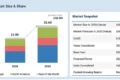
The South-East Asia e-axle market for electric two-wheelers is expected to reach USD 584 million by 2032, from USD 227 million in 2025, with a CAGR of 14.45%.
In South-East Asia, hub-mounted e-axles dominate the market due to their low cost, ease of integration, and minimal maintenance making them ideal for mass-market electric scooters used in urban commuting and delivery fleets. However, a shift toward adoption of e-axles in electric two-wheeler, where consumer demand for performance and range is driving OEMs to adopt more efficient, balanced integrated components solution to offer. Supply chain localization in India and Vietnam is fostering in-house development of motors and inverters, while government-led incentives are encouraging assembly of integrated e-axle units domestically. Additionally, the region’s dense traffic, short-trip usage patterns, and high fuel cost sensitivity are reinforcing the appeal of compact, low-voltage e-axle systems. As a result, the market is witnessing increased partnerships between local assemblers and global e-powertrain suppliers to create modular, scalable e-axle solutions tailored for ASEAN’s diverse electric two-wheeler fleet.
OEMs to drive the rapid growth of two-wheeler e-axles in South-East Asia
Vietnam’s two-wheeler e-axle market is growing steadily, supported by increasing demand for electric mobility, government incentives, and rising fuel cost concerns. Key OEMs in Vietnam such as VinFast are pursuing vertical integration strategies by developing e-axle components in-house, including motors and controllers, to reduce reliance on imports and improve cost control. For instance, In April 2024, VinFast announced the development of in-house electric drivetrain systems including motors and controllers for its upcoming electric scooters, aiming to localize up to 70% of its e-powertrain components by 2025 to reduce dependence on Chinese imports. Companies like Dat Bike and PEGA are targeting the budget segment by offering electric scooters equipped with integrated hub motor e-axles, suitable for short-distance commuting and last-mile delivery. For instance, in March 2025, Dat Bike launched its third-generation electric motorcycle with an upgraded hub motor e-axle system offering 25% higher efficiency and extended range, targeting fleet customers in urban areas. Similarly, in February 2025, PEGA expanded its scooter portfolio using modular e-axle platforms and began small-scale assembly of locally sourced inverter units. Government policies, including reduced registration fees and tax exemptions for electric vehicles, are supporting this transition. In response, Vietnamese e-axle manufacturers are increasing production capacity, focusing on local sourcing of components, and improving system efficiency to meet the needs of a cost-sensitive market and comply with the country’s long-term electrification goals.
Download PDF Brochure @ https://www.marketsandmarkets.com/pdfdownloadNew.asp?id=93624869
China is estimated to account for the significant share of the two-wheeler e-axle in South-East Asia market during the forecast period.
Chinese OEMs are expanding in the two-wheeler e-axle market by focusing on integration, modularity, and regional expansion. In March 2024, Yadea introduced a hub-mounted e-axle with higher torque density and 15% lower weight, targeting mass-market electric scooters. In February 2024, NIU Technologies enhanced its mid-mounted e-axle with proprietary controllers and CAN-based diagnostics, aligning with its connected vehicle strategy. In April 2024, Tailg started mass production of low-voltage hub e-axles for delivery and shared mobility, supported by local assembly in Vietnam and Thailand. In January 2025, Sunra launched a modular e-axle platform compatible with both hub and mid-drive layouts to address varied performance and regulatory requirements. These developments reflect a shift toward localized manufacturing, reduced system cost, and improved drivetrain efficiency. Chinese OEMs are standardizing components, simplifying architecture, and embedding basic control intelligence to scale across domestic and export markets. The focus remains on optimizing cost-performance balance and meeting region-specific technical and regulatory needs.
Rising Demand for Integrated and Cost-Efficient Powertrain Solutions
The growing shift toward electric two-wheelers is driving demand for compact, integrated, and cost-efficient e-axle solutions that combine motor, transmission, and controller into a single unit. Manufacturers are increasingly adopting such systems to simplify assembly, reduce vehicle weight, and improve energy efficiency. For manufacturers, this trend presents an opportunity to scale modular e-axle platforms across multiple vehicle models and markets. The integration not only lowers production costs but also enhances drivetrain reliability, making it a key growth driver in price-sensitive regions like South-East Asia and India. In January 2024, Musashi Seimitsu Industry Co., Ltd. announced the expansion of its integrated e-axle production line in Vietnam to cater to rising regional demand for high-efficiency powertrain modules.
Request Free Sample Report @ https://www.marketsandmarkets.com/requestsampleNew.asp?id=93624869