The United States smart home market is entering a strong phase of expansion, supported by growing consumer interest in connected living, advances in artificial intelligence (AI), improved digital infrastructure, and increasing demand for home security and energy efficiency.
According to MarketsandMarkets,The US Smart Home Market was valued at $60666.2 Million in 2026 and projected to reach to $92182.4 Million by 2031, representing a compound annual growth rate of 7.2%. The growth reflects the increasing integration of connected devices, automation platforms, IoT-enabled appliances, and intelligent control systems into homes across the country.
Connected Living Becomes a Mainstream Trend
Smart home technology is increasingly moving beyond individual connected gadgets toward integrated ecosystems in which lighting, security, HVAC, entertainment, appliances, and other systems can communicate with one another.
The United States is particularly well positioned to benefit from this transition because of its high disposable income, established digital infrastructure, strong technology ecosystem, and relatively early adoption of emerging consumer technologies. These factors are helping expand demand for connected home solutions across both residential and commercial applications.
Consumers are increasingly looking for technologies that provide more than convenience. Smart devices can help homeowners monitor energy consumption, improve security, automate routine activities, and remotely manage household systems. As awareness of these benefits increases, connected-home technology is becoming an increasingly important component of modern residential environments.
AI and Voice Control Transform Smart Homes
Artificial intelligence is emerging as one of the important forces shaping the next stage of U.S. smart home development. AI-powered systems can make connected devices more responsive and personalized by enabling automated decision-making and more intuitive interactions.
Voice assistants and voice-enabled devices are also contributing to adoption by simplifying how consumers interact with smart home systems. Instead of manually controlling individual devices, users can increasingly manage lighting, entertainment, thermostats, and other connected functions through voice commands.
MarketsandMarkets identifies the integration of AI and voice-activated controls as an important factor supporting market expansion through 2031.
Download PDF Brochure @ https://www.marketsandmarkets.com/pdfdownloadNew.asp?id=121
Home Security Remains a Key Growth Driver
Security and access control represent another major opportunity within the U.S. smart home ecosystem. Connected cameras, smart locks, access-control systems, sensors, and surveillance solutions allow homeowners to monitor and manage their properties remotely.
Growing consumer awareness of home safety, combined with improvements in connected security technology, is encouraging demand for intelligent security solutions. MarketsandMarkets highlights smart security systems among the primary growth catalysts for the U.S. market
The evolution of these systems is also creating opportunities for integrated platforms that combine security monitoring with other household functions. This convergence could encourage consumers to adopt broader smart home ecosystems rather than purchasing isolated devices.
Energy Efficiency Creates New Opportunities
Energy management is becoming increasingly relevant as consumers seek ways to improve household efficiency and control energy costs. Smart thermostats, HVAC controls, connected lighting, sensors, and other intelligent systems can help households monitor and manage energy use.
The U.S. market’s focus on energy efficiency is therefore creating opportunities for manufacturers and technology providers that can combine automation with measurable energy-saving benefits. According to MarketsandMarkets, demand for energy efficiency is one of the factors supporting smart home adoption in the country.
Smart Lighting, HVAC and Entertainment Set for Expansion
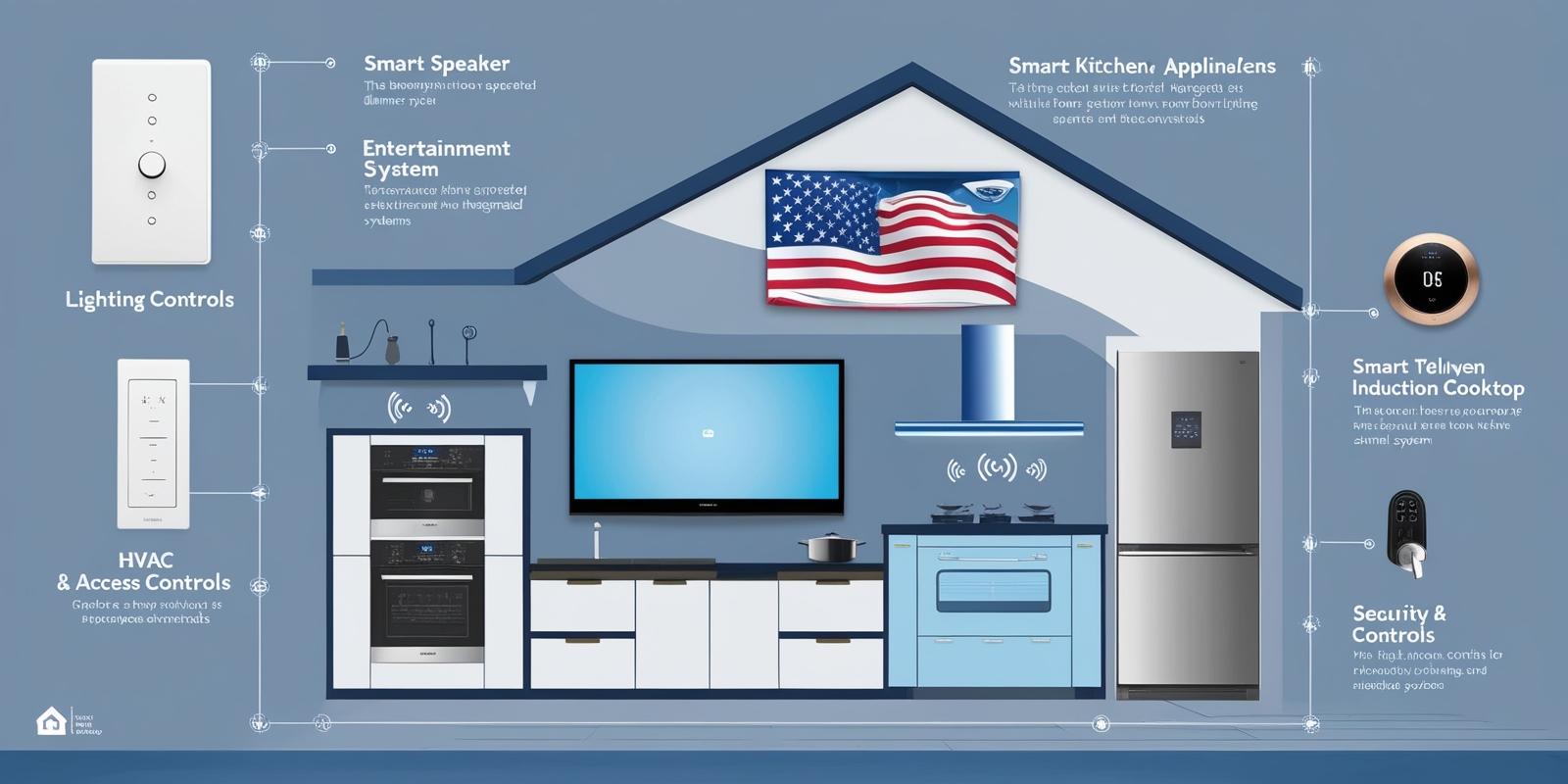
The U.S. smart home market covers a broad product ecosystem, including smart lighting solutions, HVAC systems and controls, smart locks, security and access-control systems, connected entertainment, kitchen appliances, healthcare solutions, gadgets, and smart furniture.
MarketsandMarkets expects accelerated adoption through 2031 in areas such as smart lighting, thermostats, security systems, and connected entertainment devices. This broadening product landscape provides multiple growth avenues for device manufacturers, software providers, system integrators, retailers, and technology platforms.
The market is also segmented across wired and wireless communication technologies, new and retrofit installations, and different control interfaces such as smartphone applications, voice assistants, wall panels, switches, and wearables.
Interoperability Could Unlock Wider Adoption
Despite strong market momentum, the smart home industry continues to face challenges related to device compatibility and ecosystem fragmentation. Consumers may hesitate to invest in connected products when devices from different manufacturers do not work seamlessly together.
Improved interoperability standards could help reduce this barrier. MarketsandMarkets expects better interoperability and greater consumer awareness to support wider adoption, particularly among mid-income households.
As ecosystems become easier to integrate, the market could shift further from standalone products toward comprehensive smart home platforms. This evolution may also encourage repeat purchases as consumers expand their connected-device portfolios.
Commercial Applications Add Another Growth Layer
Smart home technologies are not limited to individual homeowners. Commercial applications are also expected to contribute to market growth as businesses increasingly use IoT-enabled solutions to improve operational efficiency and reduce costs.
The expansion of intelligent building infrastructure, connected monitoring systems, and automated controls creates opportunities for smart home technology providers to serve a broader range of customers. Rising investments in smart city infrastructure and residential automation are also expected to support greater market penetration.
Competitive Landscape Intensifies
The U.S. smart home market features strong competition among technology companies, device manufacturers, platform providers, and solution integrators. Competition is increasingly centered on ecosystem integration, interoperability, product innovation, and the ability to deliver seamless user experiences.
MarketsandMarkets identifies companies including Honeywell, Schneider Electric, Siemens, Samsung, and others within the broader smart home ecosystem.
For market participants, long-term success will likely depend on combining reliable hardware with intuitive software, strong connectivity, security, and services that encourage consumers to remain within an integrated ecosystem.
Outlook for the U.S. Smart Home Market
The growth trajectory of the U.S. smart home market points toward a continued transition from basic connected devices to intelligent, interconnected living environments. With the market projected to increase from USD 60.7 billion in 2026 to USD 92.2 billion by 2031, the United States is positioned as an important growth engine for the global smart home industry.
AI-powered automation, smart security, energy management, voice interfaces, and increasingly interoperable connected ecosystems are expected to remain central to this expansion. As technology becomes more accessible and consumers become more familiar with connected living, smart home solutions are likely to become increasingly integrated into everyday residential life.
For manufacturers, investors, technology providers, retailers, and system integrators, this expanding market presents opportunities across hardware, software, services, installation, and integrated home automation solutions.
Frequently Asked Questions
1. What is driving the growth of the U.S. smart home market?
The market is being driven by increasing adoption of connected devices, AI-powered automation, smart security systems, voice assistants, and growing consumer demand for convenience and energy efficiency.
2. How large is the U.S. smart home market?
According to MarketsandMarkets, the U.S. smart home market is expected to grow from approximately USD 60.7 billion in 2026 to USD 92.2 billion by 2031, representing a 7.2% CAGR.
3. Which technologies are shaping the U.S. smart home market?
Key technologies include artificial intelligence, Internet of Things (IoT), voice control, smart sensors, connected security systems, smart lighting, and intelligent HVAC controls.
4. Why are smart home security solutions gaining popularity?
Smart cameras, locks, sensors, and access-control systems allow homeowners to monitor and manage their properties remotely, improving security while providing greater convenience.
5. What is the outlook for the U.S. smart home market?
The outlook remains positive, with expanding consumer adoption, improved device interoperability, AI integration, and demand for energy-efficient and automated homes expected to support continued market growth through 2031.